

DIY Circadian Tracking Wearable: HRV and Resting Heart Rate

Why build a DIY system for circadian HRV and resting heart rate?
Circadian rhythm affects nearly every physiological system, including autonomic nervous system activity. Two signals are especially useful for understanding that relationship: heart rate variability (HRV) and resting heart rate. HRV reflects beat-to-beat variations that can shift with sleep stage, stress, recovery, and daily activity. Resting heart rate provides a simpler readout of baseline cardiovascular workload, which tends to track recovery and sleep quality.
A DIY circadian tracking wearable can help you collect these signals consistently over time, then interpret them in a circadian context rather than as isolated “metrics.” The goal isn’t just to measure HRV and resting heart rate—it’s to map how they change across your day and night, and to do so with enough data quality that trends become meaningful.
This guide explains how to design and run a practical DIY circadian tracking workflow, from sensor choices and data integrity to analysis methods and common interpretation pitfalls.
Core concepts: HRV, resting heart rate, and circadian physiology
What HRV actually measures (and what it doesn’t)
HRV describes the variation in time between heartbeats, typically quantified using metrics derived from inter-beat intervals (IBIs). Different HRV metrics exist, and wearables may report different ones:
- Time-domain measures (e.g., RMSSD) emphasize short-term variability and are commonly used for recovery and stress monitoring.
- Frequency-domain measures (e.g., LF/HF) attempt to separate variability into frequency bands, but interpretation can be less straightforward without controlled conditions.
- Nonlinear measures (e.g., Poincaré-based or entropy metrics) may appear in advanced systems but often require careful signal processing.
For circadian tracking, the most important point is consistency: measure the same signal quality and compute the metric in a stable way. A DIY system can improve transparency because you can log raw or semi-processed data and reproduce the same pipeline.
Resting heart rate as a circadian and recovery signal
Resting heart rate (RHR) is usually computed from periods when you’re inactive, asleep, or otherwise below a motion threshold. RHR often increases with cumulative stress, poor sleep, illness, dehydration, and overtraining. It also follows daily rhythms—many people see lower values during sleep and gradual changes during waking hours.
Because wearables estimate RHR, your DIY approach should define how RHR is selected: for example, the lowest 5-minute average within a sleep window, or the median of detected “rest” intervals. That definition strongly affects comparability across days.
Why circadian context changes how you interpret HRV and RHR
HRV and RHR aren’t static. They fluctuate with:
- Sleep timing and regularity (especially consistency of wake time)
- Light exposure and melatonin-driven phase shifts
- Meal timing and late-night activity
- Exercise timing and recovery dynamics
- Stress and autonomic tone that can vary by time of day
When you track these signals across a full day/night cycle, you can distinguish circadian-driven patterns from random noise. The same “low HRV” day can mean different things depending on whether it occurs at your usual low point, after a late bedtime, or following a disruption in sleep duration.
Choosing the sensing approach: optical PPG vs ECG and motion handling
Optical PPG wearables: practical for DIY circadian tracking
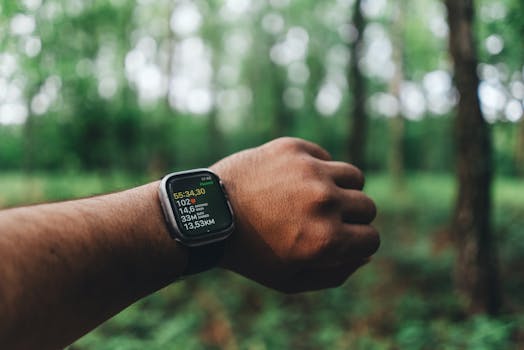
Most consumer wearables use optical PPG (photoplethysmography) with LEDs and a photodiode to detect blood volume changes. PPG can work well for HRV if the signal is clean, but it is sensitive to motion artifacts and poor contact.
For DIY projects, the advantage of PPG is accessibility: many microcontroller-friendly PPG modules exist, and you can often log data directly. If you choose PPG, plan for motion management and signal quality checks.
ECG options: higher fidelity but more complexity
ECG measures electrical activity and can provide more direct beat timing. ECG-based HRV can be more reliable under movement, but DIY ECG requires electrodes, skin preparation, and careful noise filtering.
If your goal is circadian patterns over long periods, both approaches can work. The decision usually comes down to how comfortable you are with electrode setup and how often you’ll wear the device during sleep versus daytime activity.
Motion artifacts: the hidden reason HRV looks “wrong”
HRV is derived from precise beat timing. A single missed or misdetected beat can distort HRV metrics. With PPG, motion can cause:
- False peaks that shift beat intervals
- Dropouts that create gaps
- Amplitude changes that confuse beat detection algorithms
Mitigation strategies include snug fitting, consistent placement, and motion-aware filtering. Regardless of sensor type, store quality indicators (signal strength, beat confidence, or artifact flags) so you can later exclude low-quality segments.
Designing your DIY wearable data pipeline for HRV and resting HR
Decide what you will log: raw beats, filtered beats, or summary metrics
There are three common logging levels:
- Raw waveform (PPG or ECG samples): best for transparency and custom processing.
- Detected beat timestamps (IBIs or R-peaks): reduces storage while preserving HRV calculation inputs.
- Only computed HRV and RHR values: simplest but limits your ability to correct processing errors later.
For circadian tracking, logging beat timestamps is often a good compromise. It allows you to recompute HRV metrics using consistent settings, and it helps you audit outliers.
Sampling and buffering: practical constraints for long wear
Circadian tracking means many hours of continuous data. Your pipeline should handle:
- Stable sampling rates (or at least documented timing accuracy)
- Clock drift (especially if you compute circadian features based on time)
- Battery and storage limits without data gaps
Time alignment matters because circadian interpretation depends on when events occur (sleep onset, wake time, and timing of HRV dips). If your device clock drifts, you’ll blur the phase relationships you’re trying to analyze.
Beat detection and HRV computation: use a consistent method
Your DIY system should use a beat detection method that works for your sensor and placement. Once chosen, keep it consistent across days. Then compute HRV metrics with stable parameters.
Common practical choices for sleep-focused HRV include calculating RMSSD from rolling windows (for example, 1–5 minute segments). The key is to define window length and overlap in a documented way. If you change window length later, you may introduce artificial trend changes.
Defining resting heart rate: don’t let the wearable “guess” differently each day
RHR needs a rule. Consider one of these DIY definitions:
- Sleep RHR: median heart rate during a verified sleep window.
- Rest RHR: median heart rate during low-motion intervals (e.g., accelerometer below a threshold).
- Minimum window RHR: lowest 5-minute average within a sleep period.
Whichever you pick, apply the same rule across days. Also log how you detected sleep or rest, because misclassification can dominate the RHR pattern more than any physiological change.
Creating circadian-aligned schedules: sleep windows, wake time, and stability
Track sleep timing explicitly
Circadian HRV patterns are strongly shaped by sleep timing. Even if you don’t build a full sleep stage model, you should at least define:
- Sleep onset time
- Wake time
- Time in bed duration
Many DIY systems can approximate sleep windows using a combination of motion data and heart rate trends. The main requirement is consistency: if sleep windows shift day to day due to algorithm changes, your HRV averages won’t represent the same physiological period.
Use consistent “analysis anchors”
To make circadian comparisons, pick anchors such as:
- Wake time (often the most stable circadian marker)
- Mid-sleep (center of the sleep window)
- Light exposure window (if you track it)
Then compute HRV curves relative to those anchors rather than absolute clock time. This helps separate “I went to bed late” from “my HRV rhythm changed.”
Account for weekends and schedule drift
Many people shift sleep timing on weekends. That shift can move HRV peaks and RHR troughs. If your DIY project aims to reveal circadian structure, you’ll get clearer results by tagging days with schedule changes (e.g., “weekday-like” vs “weekend-like”). The goal is not to judge the behavior, but to interpret the physiology correctly.
Data quality checks: how to keep HRV and RHR trends trustworthy
Use signal quality thresholds
Before trusting HRV metrics, apply quality filters. Examples include:
- Reject windows with too few valid beats
- Reject segments with high artifact flags (if your beat detector provides them)
- Reject abnormal beat intervals consistent with detection errors
When data quality is poor, HRV can drop or spike for reasons unrelated to autonomic activity. Quality filtering prevents “bad nights” from dominating your circadian interpretation.
Check for sensor contact changes
For PPG wearables, small changes in fit or skin temperature can alter signal amplitude. If you notice HRV variability changes coinciding with device adjustment, mark those days or segments. Consistent placement and snug fit reduce these confounders.
Detect outliers without erasing real physiology
It’s tempting to remove any day with unusual HRV. But illness, recovery after hard training, or acute stress can produce real changes. A better approach is to:
- Flag segments with poor quality separately from physiological outliers
- Keep a log of events (late alcohol, intense exercise, fever)
- Use robust statistics (like medians) for circadian summaries
This preserves real signals while protecting against measurement artifacts.
Analyzing circadian patterns: from daily curves to phase shifts
Build HRV “time-of-day” profiles
Instead of looking only at nightly HRV averages, compute HRV in time windows across the day. For example, calculate HRV every hour using rolling windows, then plot HRV versus time relative to wake time. You’re looking for:
- Regular peaks and troughs
- Consistency across weeks
- Shifts after schedule changes
Even without sophisticated modeling, a stable rhythm pattern can show how your autonomic balance changes across your day.
Compare sleep-phase HRV to daytime HRV
Many people see higher HRV during deeper sleep and lower values during wakefulness, but individual patterns vary. A useful DIY approach is to compute:
- Average HRV during sleep window
- Average HRV during waking low-motion periods
- Average RHR during sleep and waking rest
Then track whether the difference between sleep and wake HRV changes over time. A shrinking sleep-wake HRV gap can indicate that nighttime recovery is less effective.
Use RHR trends as a recovery context for HRV
HRV and RHR can move differently. For example, HRV might drop transiently with stress while RHR rises later as recovery lags. In analysis, treat RHR as context:
- If HRV is low and RHR is elevated the next day, that can suggest incomplete recovery.
- If HRV is low but RHR remains stable, it may be a localized autonomic shift rather than broad strain.
These are not medical diagnoses, but they help you interpret your own patterns more responsibly.
Look for phase shifts after circadian disruptions
Phase shifts occur when the timing of your internal rhythm moves relative to clock time. With DIY tracking, you can look for:
- HRV peak occurring earlier or later than usual after travel or schedule changes
- Sleep-wake RHR patterns moving with sleep timing
- Longer-term drift over multiple days
If you log wake time consistently, you can often detect whether changes are due to circadian phase or due to day-to-day stressors.
Practical guidance: building a DIY workflow you can actually maintain
Establish a baseline period
Before you draw conclusions, collect data for at least 2–3 weeks. Circadian rhythms and HRV patterns stabilize over time, and one or two unusual days won’t represent your normal rhythm.
During baseline, avoid making major changes to your routine. Then you can evaluate how interventions (sleep schedule changes, light exposure adjustments, training modifications) affect your circadian HRV and resting heart rate profile.
Standardize pre-wear conditions
Small variations can affect signal quality and outcomes. Consider standardizing:
- Wear location and tightness
- Time of day you put it on (especially if you want sleep HRV)
- Skin prep for ECG electrodes (if used)
For PPG, consistent contact quality is often more important than sensor brand.
Log key variables that influence circadian physiology
HRV and RHR are sensitive to many factors. A simple log can dramatically improve interpretation:
- Sleep schedule (bedtime and wake time)
- Alcohol intake
- Caffeine timing
- Exercise timing and intensity
- Exposure to bright light in the morning and evening
You don’t need complex tracking at first. The goal is to identify which external factors align with changes in your HRV rhythm.
Use existing tools thoughtfully (including wearable ecosystems)
Some people will combine DIY sensing with existing platforms for convenience. That can be helpful if those platforms provide reliable HRV and RHR computations and allow data export. For example, certain consumer devices can output HRV and resting heart rate time series, which you can then re-analyze in a circadian framework.
If you rely on a platform’s computed HRV, document the metric type and how it defines windows and sleep periods. DIY value increases when you can verify or recreate the processing steps; if you can’t, treat the platform output as measured data with known limitations.
Interpreting results responsibly: common pitfalls and how to avoid them
Don’t treat HRV as a single-number “score”
HRV is influenced by breathing patterns, posture, stress, and sleep architecture. Two days with the same average HRV can have very different rhythms across the night. Circadian tracking helps because it emphasizes patterns over time rather than isolated values.
Watch for algorithm drift in beat detection
If you update firmware, change sensor settings, or alter filtering parameters, your HRV computation may change. That can look like a real physiological shift but actually be a processing change. Keep a record of device configuration and processing pipeline versions.
Separate “sleep disruption” from “autonomic recovery”
HRV can drop after awakenings or fragmented sleep. Resting heart rate can rise if sleep is curtailed. If you only track averages, you might miss that the main driver was a brief period of disruption. If possible, analyze HRV by segments within the sleep window rather than one summary number.
Consider breath and relaxation effects
Breathing rate and depth influence HRV, particularly time-domain metrics. A DIY system can’t always control breathing, but you can interpret day-to-day changes more accurately by noting relaxation practices, meditation, or paced breathing sessions.
Safety and limitations: what DIY circadian HRV tracking can and can’t do
DIY circadian tracking is educational and can support personal awareness, but it is not a medical diagnostic tool. HRV and resting heart rate signals can be affected by a wide range of conditions, and wearable-derived metrics can be inaccurate when signal quality is poor.
If you have known cardiovascular issues, symptoms such as chest pain, fainting, severe shortness of breath, or sustained abnormal heart rhythms, seek medical evaluation rather than relying on DIY metrics. For most people, the safest use is trend-based self-monitoring combined with attention to sleep, recovery, and lifestyle factors.
Summary guidance: keeping your circadian HRV and RHR system reliable
A DIY circadian tracking wearable for HRV and resting heart rate can provide meaningful insights when you treat the project as a measurement system, not just a gadget. The most important practical steps are:
- Choose a sensing approach (PPG or ECG) that you can wear consistently and that you can log reliably.
- Log beat timing or raw waveform when possible, and compute HRV with a consistent method.
- Define resting heart rate using a stable rule tied to sleep or rest windows.
- Align analysis to circadian anchors like wake time and sleep onset, not just clock time.
- Apply signal quality checks to prevent artifacts from masquerading as physiological changes.
- Track context variables such as sleep timing, caffeine, alcohol, and exercise to interpret changes responsibly.
When these elements are in place, you’re not just collecting HRV and resting heart rate—you’re building a longitudinal view of how your autonomic system responds across your circadian cycle.
FAQ: DIY circadian tracking wearable HRV and resting heart rate
How long should I track before I can see circadian HRV patterns?
For most people, 2–3 weeks of consistent data is a practical minimum to observe stable time-of-day rhythms. Longer periods (a few months) improve reliability, especially if your schedule varies.
Is HRV from a wearable accurate enough for circadian tracking?
Often, yes for trend monitoring, provided you manage signal quality and use consistent processing. Accuracy drops when motion artifacts or poor contact corrupt beat detection—circadian analysis makes quality filtering even more important.
What HRV metric is best for DIY circadian tracking?
Many DIY projects use time-domain metrics such as RMSSD because they’re commonly available and robust for short windows. The best choice is the one you can compute consistently from your logged beat timing and that matches how your analysis windows are defined.
How should I define resting heart rate if my wearable estimates it automatically?
For DIY analysis, define RHR using a stable rule: for example, the median heart rate during your sleep window, or during low-motion rest periods. If you use a wearable’s computed RHR, document the platform’s rule and keep it unchanged across time.
Why does my HRV sometimes drop even when I feel fine?
HRV can change due to sleep fragmentation, stress, caffeine timing, dehydration, illness early in its course, or even breathing and posture differences. It can also be affected by measurement artifacts. Quality flags and segment-level analysis can help distinguish physiological change from data issues.
Can I use DIY circadian tracking to improve sleep?
It can support sleep improvement by highlighting patterns—such as HRV and RHR shifts after late caffeine or inconsistent wake times. Use the data as feedback for lifestyle adjustments, and prioritize evidence-based sleep hygiene and medical guidance when needed.
What are the biggest mistakes in DIY HRV tracking?
The most common issues are inconsistent sensor placement or fit, changing processing parameters without tracking it, failing to filter low-quality segments, and analyzing averages without considering sleep timing and circadian anchors.
23.01.2026. 05:10