

Compression Therapy for Muscle Soreness: What the Evidence Shows

Compression therapy and delayed muscle soreness: why the question matters

Compression therapy—often delivered via sleeves, socks, or pneumatic devices—has long been used to support recovery after exercise. The specific claim many people care about is whether compression reduces muscle soreness, especially delayed onset muscle soreness (DOMS) that peaks 24–72 hours after strenuous activity. The evidence is mixed, but it is not meaningless: many studies show benefits in some outcomes (such as perceived recovery or swelling), while effects on soreness itself are smaller and more variable than marketing claims suggest.
This article summarizes what the compression therapy muscle soreness evidence currently indicates, explains why results differ between studies, and provides practical guidance for using compression in a way that matches what the research supports.
What counts as “muscle soreness,” and how studies measure it
To interpret findings, it helps to understand how soreness is defined and measured. DOMS typically refers to tenderness, pain during movement, and reduced range of motion following unfamiliar or high-intensity exercise. Researchers usually quantify soreness using one or more approaches:
- Subjective pain ratings (e.g., visual analog scales or Likert scales), where participants report soreness at rest or during specific movements.
- Functional performance measures such as range of motion or strength recovery, which can indirectly reflect soreness and muscle function.
- Biomarkers like creatine kinase (CK) or inflammatory markers. These do not measure soreness directly, but they can indicate physiological stress.
Because soreness is subjective, study results can be influenced by expectations, differences in exercise protocols, and the timing and duration of compression. This is one reason the literature can look inconsistent even when the underlying effect is modest.
How compression might influence recovery: plausible mechanisms
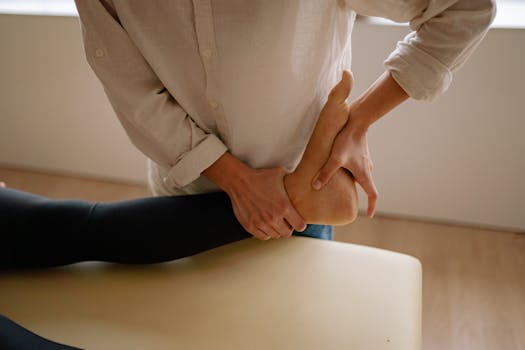
Several biological and mechanical mechanisms are proposed for compression therapy. Not all are equally supported, and not all would necessarily translate into less soreness.
1) Improved venous return and fluid movement
Compression increases external pressure on the limb. In theory, this supports venous return and helps shift interstitial fluid, which may reduce swelling and the sensation of heaviness. If soreness is partly driven by tissue stress and fluid accumulation, then reducing swelling could improve comfort.
2) Modulation of sensory input
Compression can alter cutaneous sensation and may dampen pain perception through sensory gating. This could influence reported soreness even if muscle tissue damage is unchanged.
3) Effects on muscle temperature and blood flow
Some protocols increase skin blood flow and local temperature. However, increased blood flow does not automatically mean less DOMS, since soreness is more closely tied to muscle fiber disruption and inflammation than to circulation alone.
4) Reduced muscle oscillation
External compression may limit muscle vibration and mechanical stress during movement. This is more relevant for during-activity support than for post-exercise recovery, but it can still influence how participants move while soreness is developing.
These mechanisms suggest why compression might help with comfort and swelling. The key question is whether those changes are large enough to produce consistent reductions in soreness ratings.
What the research says about compression and DOMS
Across randomized and controlled studies, the pattern is generally this: compression often improves some aspects of recovery, but the effect on DOMS soreness is variable and frequently smaller than expected.
Studies that show reduced soreness
Some investigations report lower soreness ratings in the first 1–3 days after exercise, particularly when compression is applied soon after the workout and continued for a meaningful duration. Benefits are more likely when:
- The exercise is designed to create substantial muscle damage (e.g., eccentric loading).
- Compression pressure is sufficient and consistent across the treatment period.
- Outcome measures include soreness during movement, not only at rest.
In these studies, participants often describe improved comfort and easier mobility, aligning with the idea that compression affects swelling, sensory input, or both.
Studies that show minimal or no soreness change
Other studies find no significant reduction in DOMS compared with control conditions. Differences in results can stem from:
- Timing: compression started later may not influence the processes most linked to soreness development.
- Intensity and type: light compression may not create the same physiological effect as higher-pressure garments, while pneumatic devices may produce different pressure patterns.
- Duration: short treatments may be insufficient to change symptom trajectories.
- Control conditions: some “placebo” garments still apply some pressure, reducing detectable differences.
Importantly, even when soreness is not reduced, other recovery outcomes can still improve, such as perceived recovery or swelling.
Compression timing, pressure, and duration: what seems to matter
Because soreness develops over time, timing is a major practical variable. While protocols vary widely, the evidence tends to support a few general guidance points.
Start soon after exercise when possible
Applying compression soon after training may align better with early post-exercise changes in fluid distribution and inflammatory signaling. If you are trying compression for soreness management, consider using it in the immediate post-workout window rather than waiting until the next day.
Use consistent, adequate compression
“Compression” is not one standardized product category. Pressure levels and garment fitting affect the applied force. Too little compression may not create meaningful physiological changes. Too much, or improper fitting, can be uncomfortable and counterproductive. For many people, a properly fitted sleeve/sock that stays in place during the session is more likely to deliver consistent pressure than a loose garment.
Duration should be enough to be physiologically relevant
Many studies use treatments lasting on the order of tens of minutes to a few hours. Very brief exposure may be less likely to influence soreness trajectories. That said, longer is not always better; comfort and tolerance matter, and there is limited evidence to define a single optimal duration for all athletes.
Single session vs repeated use
DOMS peaks at a predictable time course. Some protocols apply compression only once after the workout, while others repeat sessions during the following day(s). Repeated use may better match the soreness timeline, but the best schedule depends on how the participant responds and how the study defines “recovery.”
Garments vs pneumatic compression: how to think about differences

Compression can be delivered as a static garment (sleeves, socks, tights) or as a pneumatic system that cycles pressure (often in segments). The evidence for soreness reduction does not clearly favor one category across all studies, but the delivery pattern can influence outcomes.
Static compression
Static garments apply consistent pressure as long as they fit correctly. They may be more practical for daily use, and some studies suggest they can reduce soreness in certain contexts—especially when worn for multiple hours post-exercise.
Pneumatic compression
Intermittent pneumatic compression can create rhythmic pressure changes that may enhance fluid movement. Some research reports improvements in recovery-related measures and comfort after intense exercise, though soreness outcomes still vary by protocol.
For evidence-based expectations, it is reasonable to treat both methods as potentially helpful for comfort and swelling, with soreness reduction less consistent than recovery-related perceptions.
Does compression reduce inflammation or muscle damage?
DOMS is linked to muscle fiber disruption and an inflammatory response. Researchers sometimes examine whether compression affects markers such as CK, C-reactive protein, or other inflammatory indicators. The overall pattern is that compression may influence some measures, but it does not reliably “turn off” muscle damage processes.
This distinction matters: even if compression does not meaningfully reduce CK or the extent of muscle disruption, it could still reduce discomfort through effects on swelling, sensory perception, or movement tolerance. Conversely, if muscle damage is unchanged, soreness may persist even when biomarkers improve slightly.
Practical guidance: using compression to manage soreness responsibly
If you want to apply compression therapy in a way that matches the evidence, the goal should be symptom management and functional recovery support—not an expectation of complete elimination of DOMS.
Choose a protocol aligned with study patterns
- Timing: consider using compression soon after training.
- Consistency: use the same approach across sessions so you can evaluate your personal response.
- Duration: choose a duration that is long enough to plausibly matter (often at least tens of minutes), while staying within comfort limits.
Fit and comfort are not optional
A common reason compression “does nothing” is poor fit. Garments that shift, wrinkle, or leave gaps may not apply pressure where it is needed. If you experience numbness, tingling, or worsening pain, stop and reassess fit or pressure level.
Pair compression with fundamentals of recovery
Compression is only one part of recovery. Sleep, adequate carbohydrate and protein intake, hydration, appropriate training load, and progressive warm-up strategies often have a larger impact on DOMS than any single modality. Compression may be best viewed as an add-on to these core factors.
Track outcomes that matter to you
Because soreness is subjective, track something specific: soreness ratings during stair climbing, squats, or walking; range of motion; or how quickly you return to normal training. If you notice no benefit after a few consistent sessions, it may not be worth continuing for your particular situation.
Safety considerations and who should be cautious

Compression therapy is generally well-tolerated when used properly, but it is not risk-free. People should be cautious or consult a clinician before using compression if they have:
- Known or suspected deep vein thrombosis (DVT) or significant clotting disorders.
- Severe peripheral arterial disease or critical limb ischemia.
- Uncontrolled heart failure or conditions where fluid shifts may be problematic.
- Open wounds, severe skin infections, or fragile skin where pressure could cause injury.
Also consider comfort and tolerance. Excessive pressure, prolonged use without breaks, or compression that causes numbness or color changes can be signs that the setting is inappropriate.
Evidence-based expectations: what you can realistically conclude
The compression therapy muscle soreness evidence supports a cautious, practical conclusion: compression may reduce soreness and improve perceived recovery for some people, especially when applied soon after exercise and used at an adequate, tolerable pressure for a meaningful duration. However, effects are not uniform, and soreness reduction is often modest rather than dramatic.
When compression helps, the benefit often shows up as improved comfort and mobility, which can make training feel easier during the peak DOMS window. When it does not, it may still have value for swelling or subjective recovery—yet expectations should remain grounded in the variability seen across studies.
Prevention guidance: reducing DOMS before it starts
If your main issue is recurring soreness, prevention strategies can reduce the need for symptom management later:
- Progressive overload: increase intensity or volume gradually to let tissues adapt.
- Eccentric exposure: introduce eccentric-heavy work in smaller doses across weeks rather than one large shock.
- Warm-up and movement: a thorough warm-up and light activity after training can support mobility and comfort.
- Recovery nutrition and sleep: prioritize protein distribution and sufficient total calories, plus consistent sleep.
Compression can be a supportive tool, but adaptation is the most reliable way to reduce DOMS over time.
FAQ

Does compression therapy reliably reduce DOMS?
No. Research shows mixed results. Some studies find reduced soreness and improved comfort, while others show minimal differences. Effects appear more likely when compression is applied soon after exercise and used with adequate pressure and duration.
When should compression be used to target muscle soreness?
Most evidence-based protocols use compression soon after the workout, often continuing for tens of minutes to several hours depending on tolerance and the device/garment type. Repeated use during the first day or two may help match the DOMS timeline.
Are pneumatic compression devices better than sleeves?
Not consistently. Pneumatic devices can create intermittent pressure patterns that may influence fluid movement, while sleeves provide static compression. Study outcomes vary, and the most important factors are proper fit, pressure level, timing, and duration.
Will compression lower muscle damage markers like CK?
Sometimes, but not reliably. Compression may influence certain recovery-related measures, yet it does not consistently prevent muscle damage. Soreness reduction, when it occurs, may come more from comfort and swelling/sensory effects than from fully blocking damage.
Is compression therapy safe for everyone?
Not necessarily. People with conditions such as suspected or confirmed DVT, severe peripheral arterial disease, or certain cardiovascular issues should consult a clinician before using compression. Stop if compression causes numbness, tingling, or worsening pain.
16.03.2026. 23:17