

Meditation Makes Anxiety Worse: Troubleshooting Guide

How you’ll know meditation is making anxiety worse
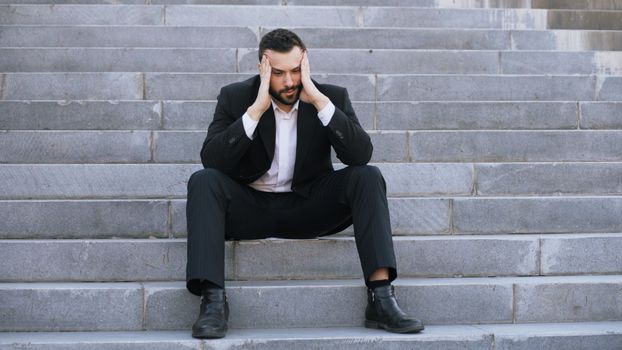
When meditation is helping, your body usually feels calmer within minutes and your mind feels less reactive over days. When meditation makes anxiety worse, the shift is more obvious and faster. You may start a session expecting relief and instead notice anxiety rising like a volume knob turning up.
Common symptoms you might experience include:
- Physical escalation: racing heart, tight chest, shaky hands, nausea, dizziness, or a “can’t get a full breath” sensation during or soon after practice.
- Thought intensification: intrusive worries become louder, more frequent, or more convincing while you sit.
- Emotional rebound: you feel worse after the session ends, sometimes with irritability or a sense of dread that wasn’t there before.
- Body scanning backfires: focusing on sensations increases panic-like feelings, especially around breathing, throat, stomach, or head pressure.
- Sleep disruption: you meditate in the evening and later struggle to fall asleep, or you wake up with heightened anxiety.
- Avoidance cycle: you begin skipping meditation because it “always makes things worse,” which can increase fear of practice and reinforce anxiety.
A key diagnostic detail: does the anxiety peak during practice (often within 1–10 minutes), or does it peak after (often within 15–60 minutes)? The timing helps narrow the likely cause and what you should adjust first.
Real-world scenario: You try a 20-minute mindfulness session because you’ve heard it reduces stress. After 5 minutes, you notice your breathing feels “wrong.” You start monitoring it more closely. The tightness grows, your mind starts predicting something bad will happen, and you end the session feeling worse than when you started. That pattern—heightened monitoring of bodily sensations plus threat-focused thinking—often points to a mismatch between practice style and your current nervous-system state.
Most likely causes when meditation increases anxiety
“Meditation makes anxiety worse” is not a moral failure and it’s not proof that you’re doing it wrong in a vague way. It usually means the practice is interacting with your nervous system in a way that amplifies threat. Several mechanisms are common.
1) You’re using attention in a way that triggers hypervigilance
Many mindfulness practices train you to notice sensations. That can be helpful. But if your anxiety system is already on high alert, “noticing” can become “checking.” You may repeatedly scan your body, monitor breathing, or track discomfort until it grows. This is especially common with techniques that emphasize continuous internal awareness.
Hypervigilance can create a feedback loop:
You notice sensation → label it as dangerous → tension increases → sensation becomes stronger → you notice again.
2) Breathing-focused meditation becomes a panic amplifier
If you do breath counting, breath watching, or extended focus on nostrils/throat sensations, you may inadvertently intensify respiratory sensations. For some people, anxiety about breathing is the core problem. In that case, any practice that turns breathing into an object of scrutiny can worsen symptoms.
3) You’re going too long, too fast, or too intense
Starting with 20–45 minute sits when your baseline anxiety is high is a frequent trigger. Long sessions can lead to fatigue, rumination, and a sense of “I can’t escape this feeling,” which can increase anxiety.
Intensity matters too. If your practice includes breath retention, fast pacing, or aggressive concentration, it may push your system into an arousal state rather than a settling one.
4) You’re practicing in a posture or environment that increases discomfort
Pain and discomfort are not neutral. If your posture causes back pain, tingling, or joint strain, your mind may interpret those sensations as danger. Caffeine, dehydration, poor sleep, and a loud or chaotic environment can also raise baseline arousal.
5) The technique doesn’t match your current mental health context
Some practices are more activating than others. For example, open monitoring (noticing whatever arises) can feel destabilizing for some people with high anxiety. Guided practices may help; silent sitting may not.
If you have a history of panic attacks, trauma, dissociation, or severe anxiety, certain meditation formats can be too exposing. That doesn’t mean meditation is “bad.” It means you need a safer, better-matched approach.
6) You’re unintentionally adding performance pressure
If you sit expecting calm and then judge yourself for feeling anxious, the judgment becomes additional threat. “Why am I like this?” adds fuel. Even subtle pressure—“I must do it right”—can keep your nervous system in threat mode.
Step-by-step troubleshooting and repair process
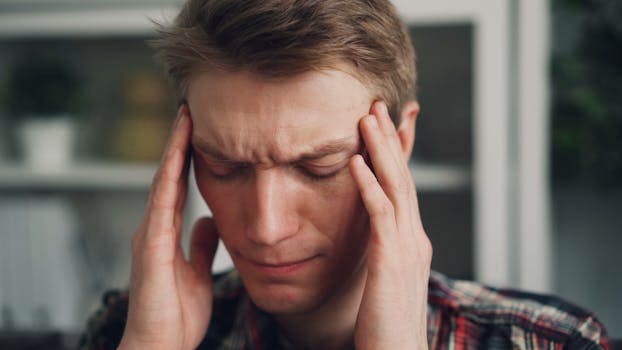
Use this as a structured diagnostic. Your goal is to identify what component is amplifying anxiety and replace it with a stabilizing version. Work through the steps in order; don’t jump to advanced changes before you’ve tested the basics.
Step 1: Stop the current practice for 48 hours
If meditation consistently worsens your anxiety, pause it long enough to interrupt the feedback loop. You’re not “giving up.” You’re collecting data and preventing further sensitization.
During this 48-hour window, choose calming activities that don’t require intense internal attention:
- Gentle walking (10–20 minutes)
- Warm shower or light stretching
- Breathing exercises that are not breath-scrutinizing (for example, breathing with a steady external anchor like a count on a clock tick)
- Grounding through sensory input (notice 5 things you can see, 4 you can touch, etc.)
If your anxiety drops back toward your baseline, that supports the idea that the specific meditation format—not anxiety itself—is the trigger.
Step 2: Record a “session timeline” for 3 tries
On your next attempt (after the 48 hours), keep the session short and take notes. The goal is to map cause and timing.
Write down:
- Session length (e.g., 5 minutes)
- When anxiety began (e.g., minute 3)
- What your attention was doing (breathing? body scan? counting? repeating a phrase?)
- Any physical triggers (tight chest, dizziness, heat, tingling)
- What thoughts appeared (fear of losing control, catastrophic predictions, “something is wrong”)
- How you ended the session (stayed until it passed? stopped early? forced focus?)
After 3 attempts, you’ll usually see a pattern. Common patterns include: “anxiety spikes when I focus on breathing,” “anxiety rises when I scan sensations,” or “anxiety rises after I notice I’m anxious.”
Step 3: Reduce the variables to one simple anchor
For troubleshooting, complexity is the enemy. Choose a practice that uses a single, low-demand anchor.
Good starter anchors for anxious nervous systems often include:
- Sound: silently note “hearing” when you notice sound changes
- Touch: feel contact points (feet on floor, hands on thighs)
- Visual stability: gaze softly at a neutral spot without analyzing it
Avoid anchors that require constant internal monitoring for now (breath scrutiny, detailed body scanning, counting every inhale). Your aim is to calm, not to investigate.
Step 4: Set a “stop rule” so you don’t train panic persistence
If anxiety rises, you don’t need to “push through.” Pushing through can teach your brain that you must tolerate rising threat to get through a session—then the next session starts with anticipatory fear.
Choose a stop rule such as:
- Stop if anxiety reaches a 7/10
- Or stop if physical panic sensations intensify
- Or stop if you feel trapped or unsafe
Then end the session with a grounding action: stand up, drink water, and do 60–90 seconds of slow, comfortable breathing while focusing on external cues (for example, the feeling of the chair or the sound of your environment).
Step 5: Adjust duration and frequency immediately
Start with 2–5 minutes for 3–5 days. If anxiety worsens even at 2 minutes, don’t increase duration. The issue is likely technique fit.
If 2–5 minutes feels neutral or slightly helpful, then increase by 1–2 minutes every few sessions, not daily. A reasonable troubleshooting ramp is to reach 10 minutes over 2–4 weeks, depending on your response.
Solutions from simplest fixes to more advanced fixes
Choose the first option that matches your situation. If it doesn’t work, move down the list. This is not a one-size plan; it’s a sequence of controlled adjustments.
Fix 1: Switch to an external-attention practice for 1–2 weeks
Internal monitoring can be the trigger. Try practices that keep attention mostly on the outside world.
Try one of these:
- Sound labeling: “hearing” when sound changes
- Texture grounding: feel clothing at your arms, feet contact, or the chair pressure
- Walking awareness: notice heel-to-toe movement and weight shifts
Keep it short. If anxiety rises, stop using the practice and return to grounding.
Fix 2: Replace breath focus with “breath permission”
If breath-focused meditation worsens your anxiety, stop trying to control breathing. Instead, use a softer method.
One practical approach:
- Sit comfortably.
- Notice that breathing happens automatically.
- Use a gentle count that doesn’t require monitoring sensation (for example, count 1 on an exhale you notice, then 2 on the next exhale, up to 10, then restart).
- If you get overwhelmed, return to touch points and stop counting.
This reduces the “inspect my breathing” element that often fuels panic.
Fix 3: Change posture to remove discomfort signals
Physical discomfort can be interpreted as danger. Make posture a stabilizer, not a test.
Try:
- Sitting in a chair with feet flat
- Using a cushion so your knees and hips are comfortable
- Keeping your neck neutral (avoid looking down)
- Avoiding long lotus-style sitting while you’re troubleshooting anxiety
During meditation, perform a quick “comfort scan” at the start: if you notice pain, fix it immediately before you begin focusing.
Fix 4: Shorten sessions and add a “warm-up”
If anxiety rises when you start abruptly, add a 60–120 second warm-up before the anchor practice.
Warm-up options:
- Slow walking for 2 minutes
- Gentle shoulder rolls and unclenching jaw
- Two minutes of progressive muscle relaxation (brief, not intense)
Then start the meditation anchor at a very low dose (2–5 minutes). This can lower baseline arousal before attention training begins.
Fix 5: Use guided meditation with external structure
Silent meditation can become a blank space where anxious monitoring takes over. Guided practice can reduce “self-generated tracking.”
Look for guidance that emphasizes:
- External anchors (sound, touch)
- Gentle pacing
- Short instructions
- Explicit permission to stop or redirect when anxiety rises
When you have a script, you’re less likely to spiral into “Why is this happening?”
Fix 6: Reduce cognitive load—stop trying to “clear the mind”
If your technique includes “empty the mind” or “stop thoughts,” you’re likely increasing pressure. Instead, treat thoughts as mental events, not problems to solve.
Use a simple redirect phrase:
- “Noted.”
- Then return to your anchor (sound or touch).
If returning to the anchor feels like effort, shorten the session. Effort itself can raise anxiety.
Fix 7: Avoid body scanning during high-anxiety periods
Body scanning can be useful, but it’s often too activating when you’re already anxious. For troubleshooting, pause it entirely for at least 1–2 weeks.
Replace with:
- Touch grounding
- Walking awareness
- Brief, non-analytical sensation noticing (for example, “warmth where my hands rest” rather than scanning every region)
Once anxiety stabilizes, you can reintroduce body scanning gently and briefly (1–2 minutes) rather than long scans.
Fix 8: Address the timing—don’t meditate at the peak of your anxiety
Many people try meditation when anxiety is already high—after stressful work, before bed, or during an emotional conflict. That can make the practice feel like it’s causing the problem when it’s actually exposing you to it at the wrong time.
Try a scheduling test:
- Choose a time when anxiety is typically lower, such as mid-morning or early afternoon.
- Try 2–5 minutes for 5 days.
- Only then consider evening sessions.
If morning sessions are fine but evening sessions worsen anxiety, you’ve identified a timing interaction.
Fix 9: If you use apps or music, adjust sensory input
Some people use meditation apps, binaural beats, or ambient soundtracks. If your anxiety spikes, the audio may be part of the trigger—especially if it becomes something your mind monitors.
For troubleshooting:
- Try meditation in silence for 3 sessions.
- Or use a simple, steady background sound (fan or white noise) rather than changing tracks.
- Avoid anything that includes sudden cues or music swells while you’re anxious.
Also check volume. If it’s loud enough to demand attention, it can keep you alert rather than relaxed.
Fix 10: If trauma or dissociation is involved, use safety-first modifications
If you experience dissociation, flashbacks, or a strong “unsafe” feeling during meditation, stop the current practice immediately. In these cases, the issue isn’t simply anxiety. It’s a safety mismatch between your nervous system and the technique.
Safety-first modifications include:
- Keeping eyes open
- Using strong external grounding (feel feet, name objects in the room)
- Avoiding long periods of inward focus
- Using guided practices designed for nervous-system regulation
Professional support can be particularly important here because the right intervention depends on your history and your current stability.
When you should consider replacement or professional help
Most cases can be improved with technique adjustments and pacing. But there are times when you should treat this as a safety and mental-health priority rather than a “fix it yourself” problem.
Consider stopping meditation as a self-practice and seeking help if you notice any of the following
- Persistent worsening: your anxiety stays elevated for more than 24–48 hours after sessions, even when sessions are very short.
- Panic escalation: you develop panic attacks that are new or increasing in frequency.
- Breathing-related fear intensifies: you become more afraid of normal breathing sensations over time.
- Functional impairment: you avoid work, school, or daily responsibilities because meditation triggers symptoms.
- Trauma symptoms: flashbacks, dissociation, or feeling emotionally unsafe during practice.
- Suicidal thoughts or severe depression: if these are present, urgent professional support is needed.
When “replacement” means changing the type of mindfulness, not abandoning it
You may not need to abandon mindfulness; you may need a different form. If your current practice is primarily internal monitoring (breath scrutiny, long body scans), replace it with regulation-oriented methods that emphasize safety and external grounding.
Examples of safer replacements to consider (in your own troubleshooting context):
- Short grounding practices (touch and sound)
- Walking awareness
- Guided nervous-system regulation approaches rather than purely concentrative sitting
Think of this as swapping the “engine” of your practice. The goal is to reduce threat activation while building tolerance gradually.
Professional help: what it can look like
If you’re working through the steps above and your anxiety still reliably worsens, professional support can help you identify the mechanism. A clinician can also screen for panic disorder, generalized anxiety disorder, OCD-spectrum patterns (if you’re stuck in checking/monitoring), or trauma-related responses.
Therapeutic approaches that often pair well with meditation troubleshooting include:
- Cognitive-behavioral strategies to reduce threat interpretation and monitoring loops
- Exposure-informed pacing to rebuild safety around sensations gradually
- Trauma-informed regulation if dissociation or trauma symptoms are present
You don’t need to wait until things are unbearable. If meditation is consistently worsening your symptoms, that’s enough reason to involve a professional.
A practical troubleshooting plan you can start today

Here’s a structured plan you can follow without guessing. It’s designed for the most common pattern: anxiety increases during internal attention, especially breathing or body scanning.
Day 1–2: Pause and stabilize
- Stop the meditation style that worsens anxiety.
- Do 10–20 minutes of gentle walking or light stretching once daily.
- Use grounding when anxiety rises: name 5 things you see, 4 you can touch, 3 you can hear, 2 you can smell, 1 you can taste.
Day 3: First test with a 2-minute external anchor
- Sit in a chair with feet flat.
- Choose one anchor: sound or touch.
- Set a timer for 2 minutes.
- If anxiety rises above 7/10, end early and ground for 60 seconds.
Day 4–6: Build to 5 minutes only if it stays neutral
- Do 2–5 minutes, once daily.
- Keep the same anchor.
- Do not add breath scrutiny or body scanning during this phase.
Day 7–14: If stable, introduce a “soft” breath element only if needed
- If your anxiety stays stable, you can add a gentle exhale count (not sensation monitoring).
- Keep sessions at 5–8 minutes.
- If anxiety rises, return to sound/touch anchors.
This plan prevents the most common troubleshooting mistake: returning to the exact same technique that triggered the problem and calling it “restarting.” You’re not restarting. You’re running controlled tests.
Common patterns and what to do next
Use these pattern matches to choose the next step quickly.
If anxiety spikes when you focus on breathing
Stop breath-watching and switch to touch or sound. If you want breathing involvement, use “breath permission” with exhale counting that doesn’t require tracking sensations. Keep sessions under 5 minutes until stable.
If anxiety spikes when you do body scanning
Pause body scanning. Replace with grounding through contact points. If you reintroduce scanning later, keep it brief and non-exhaustive—focus on one area (like hands) rather than scanning the entire body.
If anxiety spikes because you notice you’re anxious
This is a monitoring loop. Reduce performance pressure. Use a simple label (“noted”) and return to your anchor. Consider guided practice with structured timing so you’re less likely to self-analyze mid-session.
If anxiety gets worse after meditation ends
That suggests rebound or rumination. Shorten sessions and end with a grounding routine: stand up, feel your feet, look around the room for 30–60 seconds, and do a slow exhale-focused breath while focusing on external cues.
If anxiety worsens only at night
Try morning or early afternoon practice during the troubleshooting phase. Evening mindfulness can interact with fatigue and bedtime worries. Keep sessions shorter and avoid intense inward attention close to sleep.
Notes on “meditation makes anxiety worse troubleshooting” outcomes
It’s normal to want a single answer: one technique, one fix. But anxiety is rarely caused by one factor. Your nervous system responds to attention style, duration, timing, posture, and your interpretation of sensations.
So your troubleshooting success looks like this:
- Your anxiety stops spiking reliably during practice.
- You can complete a short session (2–5 minutes) without panic escalation.
- Any discomfort that appears is shorter-lived and less threatening.
- Over 1–4 weeks, your baseline anxiety around meditation decreases.
If you don’t see those changes after adjusting technique and pacing, treat it as a sign to get personalized support.
When you’re ready to continue, do it with a safety-first progression
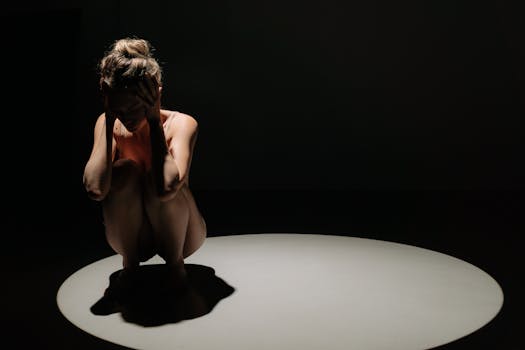
Once you find a practice style that doesn’t reliably worsen anxiety, build gradually. Don’t jump back to the original format that triggered the problem. Instead, increase only one variable at a time—usually duration—while keeping the anchor stable.
A cautious progression might look like this:
- 2–5 minutes for several days
- Then 6–8 minutes
- Then 10 minutes
- Only after stability, consider more complex practices
Your goal is not to “force calm.” Your goal is to teach your system that meditation can be safe, predictable, and manageable—even when thoughts or sensations arise.
Guidance you can use immediately if symptoms feel intense
If you’re in the middle of a session and anxiety is escalating, use a simple interruption protocol:
- Open your eyes.
- Change posture (sit back, uncross legs, place both feet on the floor).
- Ground using touch: notice chair pressure or the feel of your hands.
- Do 3–5 slow exhale breaths while looking at something stable in the room.
- End the session. Don’t “finish the timer” if you’re in danger of panic escalation.
This interrupts the loop and gives your brain evidence that you can stop when needed.
With careful troubleshooting—short sessions, external anchors, reduced breath scrutiny, and appropriate pacing—you can often find a mindfulness approach that supports you rather than intensifying anxiety.
06.06.2026. 06:13