

CGM Time in Range Variability: What It Means and Why It Matters

Why CGM time in range variability deserves your attention
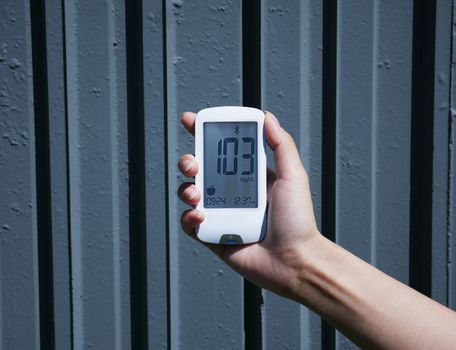
If you use a continuous glucose monitor (CGM), you likely look at time in range (TIR) because it summarizes how often your glucose stays within a target band. It’s a powerful metric. But two people (or two weeks for you) can have the same TIR and still have very different glucose experiences. That difference is often captured by CGM time in range variability.
Variability matters because it reflects how stable your glucose is—how much it swings around your target range. Stability influences symptoms, your risk of hypoglycemia, and your confidence in interpreting what your body is doing. Even when your average numbers look acceptable, variability can mean you spend short windows repeatedly bouncing high and low, which can be harder to notice without a CGM.
This article helps you understand what CGM time in range variability is, how it’s calculated, what patterns commonly drive it, and how you can use it in practical day-to-day decisions. You’ll also see a real-world scenario and a prevention-focused approach to reducing harmful swings.
Defining CGM time in range variability
CGM time in range variability refers to how much your time spent in your target glucose band changes across days, weeks, or even within the same day. It’s not only about the total minutes in range. It’s about the consistency of that performance.
To make this concrete, imagine two weeks of CGM data:
- Week A: You stay in range fairly steadily—most days look similar.
- Week B: You alternate between very good days (e.g., 90% in range) and very poor days (e.g., 45% in range).
Both weeks might produce the same average TIR. But Week B is more variable, and that variability can translate into more frequent periods of hyperglycemia or hypoglycemia, more “surprise” glucose behavior, and greater day-to-day decision fatigue.
Variability can be assessed in multiple ways, depending on the software or reporting system you’re using. Some reports emphasize day-to-day swings in TIR percentage. Others focus on how often you cross into or out of range, or how long you remain outside the range once you leave it.
How CGM time in range is measured (and where variability enters)

Before you interpret variability, you need a clear sense of TIR itself. Most clinical CGM targets define a range such as:
- 70–180 mg/dL (commonly used in many guidelines)
- Some individuals use narrower targets or different bands based on clinical context.
Your CGM records glucose readings frequently (often every 1–5 minutes, depending on the device). Time in range is calculated by determining the proportion of those readings that fall within the target band over a specific period (commonly 24 hours, 7 days, or 14 days).
Variability then describes how that proportion changes across time windows. For example:
- Day-to-day TIR variability: How much your percent in range differs from one day to the next.
- Within-day variability: How your glucose repeatedly moves into and out of range during the day.
- Stability of “time outside range”: Whether you have brief excursions versus prolonged time above or below the band.
Even if your overall TIR is strong, frequent exits from range can increase variability and may increase risk. The goal is not just “more minutes in range,” but also more predictable glucose patterns.
Common ways to quantify time in range variability
Different CGM platforms and analytics tools may report variability differently. The concept is consistent, but the method can vary. Here are the most common approaches you may see.
1) Day-to-day variability in TIR percentage
This method compares the percent of time in range across multiple days. If your TIR is 70% on Monday, 90% on Tuesday, 60% on Wednesday, and 88% on Thursday, your variability is likely higher than someone whose TIR is 80–83% every day.
Some reports use a statistical measure such as standard deviation to express the spread. Others may show the range between best and worst days.
2) Frequency of transitions across the range boundary
Another lens is how often you cross into and out of your target band. Two people can have identical TIR percentages but different “event counts.”
For example:
- One person may have a single long period in range with brief excursions.
- Another person may bounce frequently—entering and leaving range many times.
Frequent transitions often increase variability and can make glucose management feel less reliable.
3) Variability in time spent above and below range
Variability isn’t only about in-range time. It also includes how inconsistent your time is outside the band—especially time in hypoglycemia or prolonged time above range.
Some reports focus on:
- Time below range (TBR) and its variability
- Time above range (TAR) and its variability
This matters because a week with low TBR but high variability may still include occasional dangerous dips. Conversely, a week with moderate TBR but very consistent patterns might be easier to manage.
What drives CGM time in range variability
Variability is rarely random. It usually reflects a mismatch between your glucose physiology and your inputs—food, insulin, activity, stress, sleep, illness, and even timing of measurements.
Carbohydrate timing and absorption differences
Carbohydrates don’t always absorb at the same speed. A meal with mixed fibers and fats can delay glucose rise. A meal that’s mostly refined carbohydrates can spike quickly. Even with the same grams of carbs, the absorption profile can change.
That difference often shows up as variability: one day your post-meal glucose stays stable; another day it overshoots and then takes longer to recover.
Insulin dosing timing, correction behavior, and delays
For people using insulin, variability can result from:
- Insulin taken too early or too late relative to meals
- Insulin stacking (multiple active insulin doses overlapping)
- Correction timing that doesn’t match the direction and speed of glucose change
CGM variability can also be influenced by how you respond when you see a trend arrow. If you correct aggressively on one day and conservatively on another, you may create a “yo-yo” pattern.
Physical activity that changes day-to-day
Activity is one of the most common sources of variability. It can lower glucose during the activity and sometimes for hours after. The effect depends on:
- Intensity and duration
- Timing relative to meals and insulin
- Baseline glucose and insulin on board
- Muscle glycogen status
A walk after dinner may have minimal impact one evening and a significant impact another evening, especially if insulin timing differs.
Stress, sleep quality, and circadian effects
Stress hormones can increase glucose output from the liver. Poor sleep can worsen insulin sensitivity. Even if your diet is consistent, these factors can shift your glucose response.
When your sleep changes from one night to the next, you may see variability the following day—sometimes as a higher baseline or a more pronounced post-meal rise.
Alcohol, caffeine, and hydration
Alcohol can cause delayed hypoglycemia, particularly when taken with insulin or sulfonylureas. Caffeine can increase glucose in some people. Hydration status can affect sensor performance and readings.
These effects can create “clusters” of variability around social events or travel days.
Sensor performance and data completeness
CGM variability can be influenced by data quality issues such as compression lows (from lying on the sensor), signal loss, or sensor warm-up. If a week has fewer valid readings, the calculated TIR may become less reliable.
It’s important to check whether your CGM report indicates adequate data capture. Variability that appears suddenly after a sensor change or during frequent signal gaps may partly reflect measurement rather than true glucose changes.
Interpreting variability: what patterns are most concerning
Not all variability carries the same risk. Two key questions help you interpret what you’re seeing:
- How often do you leave the range?
- How far and how long do you stay outside?
A pattern with brief excursions near the edges of the target band may be less concerning than a pattern with repeated deep dips or prolonged highs.
High variability with frequent low excursions
If your variability is driven by time below range (TBR), the priority is safety. Even if your average TIR looks decent, recurrent low excursions can increase risk and can also lead to counter-regulatory surges that worsen the next hours.
Look for:
- Multiple low periods across days
- Low periods occurring at similar times (e.g., overnight or after a specific meal)
- Trend arrows that suggest you are crossing thresholds faster than expected
High variability with prolonged high excursions
If variability is driven by time above range (TAR), it can reflect mismatched dosing, delayed insulin action, or meals that are consistently absorbed differently than you anticipate.
Look for:
- Long plateaus above the band after meals
- Repeated evening highs
- Patterns that correlate with specific food types or timing
“Balanced” variability: both highs and lows
Some people experience a cycle: a high leads to a correction, the correction contributes to a low, and then glucose rebounds upward. This can create high variability even if the total time in range is acceptable.
In these situations, the issue is often not just “more insulin” or “less insulin,” but timing and responsiveness—how quickly insulin or carbohydrate decisions match your actual glucose trajectory.
A real-world scenario: same TIR, different variability
Consider you and a partner who both use CGM and target 70–180 mg/dL. Over two weeks, your reports show:
- You: 75% TIR on average
- Your partner: 75% TIR on average
On paper, that looks similar. But when you review variability, the picture changes.
Your week: Each day is fairly steady—around 70–80% TIR. You have one mild high after lunch and one mild low after exercise, but they are brief.
Your partner’s week: Some days are excellent (90%+ TIR). Other days are poor (40–55% TIR). The poor days include a late-afternoon spike that lasts 3–4 hours, followed by a late correction that sometimes produces an overnight dip.
Both of you have the same average. Yet your partner’s variability likely reflects inconsistent absorption, correction behavior, and activity timing. That inconsistency can be harder to manage and can increase the likelihood of hypoglycemia even if the total minutes in range seem “fine.”
This scenario illustrates why CGM time in range variability is not a “nice-to-have.” It helps you identify whether your success is consistent or fragile.
How to review your CGM reports for variability
You can use variability as a practical diagnostic tool. The key is to review with a structured approach rather than reacting to single readings.
Step 1: Confirm you have enough data
Before interpreting variability, check that you had sufficient CGM wear time during the period you’re reviewing. If a week includes many gaps, variability may be exaggerated by missing data.
Step 2: Compare day-to-day TIR patterns
Look for days that are outliers—your best and worst days. Ask what was different about them:
- Were meals timed differently?
- Was there more or less activity?
- Did you sleep less?
- Was there stress, illness, travel, or alcohol?
Step 3: Identify the “when” and “how long” of excursions
Don’t just note that you went high or low. Note when it started and how long it lasted. For example:
- “High begins 60–90 minutes after lunch and lasts 3 hours.”
- “Low occurs 2–3 hours after dinner and persists for 45 minutes.”
These details often point directly to meal composition, insulin timing, or activity effects.
Step 4: Look at trend direction
CGM trend arrows and glucose velocity can help you understand whether your body is changing faster than expected. If you repeatedly cross out of range with steep downward or upward trends, your correction or carbohydrate timing may be late.
Step 5: Connect variability to real inputs
Use your logs or memory to connect variability to:
- Carb intake and timing
- Insulin doses and correction timing
- Exercise sessions
- Stress/sleep changes
Even a simple note like “late dinner” or “intense workout” can explain a big portion of variability.
Practical guidance to reduce harmful variability

Reducing variability usually requires improving consistency in inputs and matching them to your glucose response. You don’t have to change everything at once. Focus on the highest-impact drivers first.
Stabilize meal timing and composition when possible
If your worst days cluster around specific meals, consider making those meals more consistent for a short trial period. You’re not trying to eat the same food forever. You’re trying to reduce uncertainty.
For example:
- If lunch is often a mixed meal, keep it similar in carb type and portion size for 1–2 weeks.
- If dinner timing varies widely, aim for a more consistent dinner start time.
Then compare variability metrics week to week.
Review insulin-to-meal timing (or dosing schedule) in relation to glucose onset
If you see post-meal highs consistently, your insulin may be late relative to carbohydrate absorption. If you see post-meal lows, dosing may be early or too strong.
A practical approach is to look at glucose onset timing:
- How long after eating does glucose begin to rise?
- How long after insulin does glucose begin to fall or stabilize?
Small adjustments can matter, especially when you’re trying to reduce oscillations.
Use corrections with attention to trend speed
Variability often worsens when corrections are applied without considering how fast glucose is moving. If your glucose is rapidly rising, corrections may need to account for that momentum. If it’s slowly rising or flattening, aggressive corrections can overshoot.
In practice, this means you should align correction decisions with:
- Current glucose level
- Trend direction
- How much insulin is already active (if applicable)
If you use an insulin pump with automated features, the device may already adjust for trends. Still, the pattern you see in variability can signal that carbohydrate timing or meal size is inconsistent.
Plan for activity effects rather than reacting during the event
Because activity effects can be delayed, variability often decreases when you plan rather than improvise. A real-world method is to treat exercise as a “time block” with expectations:
- Before exercise: assess your starting glucose trend.
- During exercise: monitor for changes, especially if intensity increases.
- After exercise: recognize that lows can occur later, not only immediately.
If your CGM shows that lows repeatedly happen 2–4 hours after workouts, that timing is a clue. Your prevention strategy can be targeted to that window.
Protect sleep and reduce overnight surprises
Overnight variability is particularly important because you may not feel symptoms of lows. If your variability is driven by nighttime TBR or repeated late-evening TAR, investigate:
- Bedtime timing and dinner timing
- Alcohol intake
- Late-night snacks (or lack of them)
- Stress and sleep duration
Even one consistent change—like shifting dinner earlier by 60–90 minutes—can reduce overnight variability for some people.
Consider sensor-related factors when variability spikes suddenly
If variability increases sharply after a sensor change or during periods with frequent compression or signal loss, verify sensor integrity. Compression lows can create patterns that look like true glucose instability. Signal gaps can distort TIR calculations.
Also remember sensor warm-up periods. Many CGM systems have a settling time after insertion during which readings may be less stable.
How variability fits into long-term risk and decision-making
Time in range variability is increasingly recognized as more than a statistical detail. It can reflect how frequently your body experiences excursions that may contribute to risk over time.
While TIR is often a primary goal, variability can influence:
- Hypoglycemia risk when variability includes repeated drops
- Hyperglycemia burden when variability includes prolonged highs
- Behavioral fatigue when your glucose is unpredictable day to day
In other words, variability can be both a physiological issue and a practical quality-of-life issue. If your glucose is stable, you can make decisions with more confidence. If it’s unstable, decisions become reactive, and that can create a cycle that increases variability further.
Using CGM time in range variability with your clinician
Variability can be a valuable conversation topic. When you discuss CGM results, consider bringing:
- Your TIR trend over 2–4 weeks
- Days that are outliers (best and worst)
- Patterns by time of day (morning, afternoon, overnight)
- Notes on meals, activity, sleep, and stress
Clinicians often look beyond a single summary number. Variability helps you describe the shape of your glucose experience—how predictable it is and where it tends to break down.
If you’re adjusting insulin regimens, pump settings, or dosing strategies, variability can serve as an outcome measure: you want less swing, fewer excursions, and more consistent performance, not just a higher average.
Prevention guidance: building consistency into your routines
Reducing CGM time in range variability is ultimately about building a routine that matches your body. You can’t control everything—illness, stress, and schedule changes happen. But you can reduce avoidable variability.
Create “anchors” for meals and activity
Anchors are consistent behaviors that reduce uncertainty. Examples:
- Eating within a consistent time window
- Keeping lunch carb portions similar day to day
- Planning exercise at similar times when possible
Even if the exact meal changes, consistency in timing helps your insulin or glucose response become more predictable.
Variability patterns often emerge within 1–2 weeks. If you make a change—like adjusting meal timing or refining correction timing—review the next 7–14 days. Look for changes in both:
- Your average TIR
- Your variability (how consistent your TIR is)
CGMs are sensitive. A single reading can reflect transient factors like compression, sensor noise, or a brief activity effect. Chasing one number can increase variability because it encourages overcorrection.
Instead, interpret the pattern: what happened over the previous 1–3 hours, and what did your glucose do afterward?
Summary: what to do with CGM time in range variability
CGM time in range variability tells you whether your glucose control is consistent or fragile. Two people can share the same TIR average while experiencing very different glucose patterns. Variability highlights day-to-day swings, frequent transitions across the target boundary, and inconsistent time spent above or below range.
To use variability effectively:
- Confirm you have adequate CGM data capture before interpreting results.
- Review outlier days and connect them to real-world inputs (meal timing, insulin timing, activity, sleep, stress, illness).
- Focus on “when” and “how long” excursions occur, not just the fact that they occurred.
- Adjust routines to reduce uncertainty—especially around meals, corrections, and activity timing.
If your variability includes frequent lows or prolonged highs, treat it as a safety-relevant signal and discuss it with your clinician. With a structured review cycle, you can move from reactive management to more predictable glucose control—where time in range is not only high, but also reliably achieved.
13.01.2026. 14:52