

SpO2 vs ODI: Which Is More Accurate for Oxygen and Sleep Monitoring?

What SpO2 and ODI measure—and why “accuracy” can mean different things
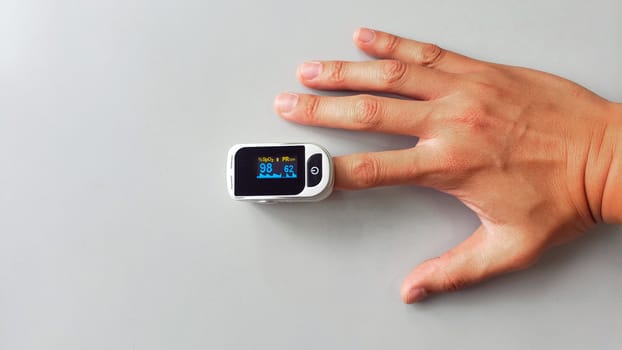
“SpO2 vs ODI which is more accurate” depends on what you mean by accuracy: capturing the true oxygen level at a moment in time, or summarizing how often oxygen drops during sleep. SpO2 (oxygen saturation) and ODI (oxygen desaturation index) are related but not interchangeable.
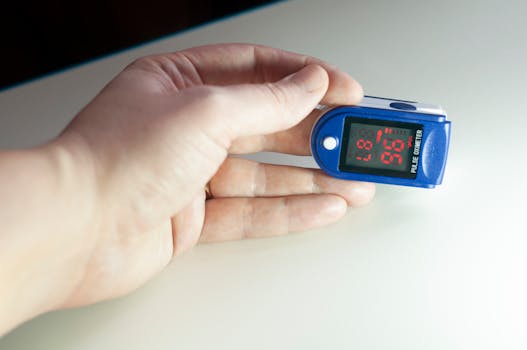
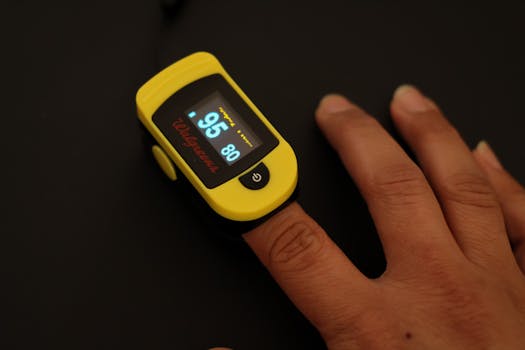
SpO2 is a measurement of blood oxygen saturation, typically derived from pulse oximetry using red/infrared light absorption through a fingertip, ear, or wrist sensor. It aims to estimate the percent of hemoglobin saturated with oxygen at each moment.
ODI is a derived metric that counts the number of oxygen desaturation events over a defined time window (most commonly sleep time). ODI is usually based on the frequency of drops in SpO2 by a threshold (commonly 3% or 4%) from a baseline, often with a minimum duration and recovery criteria. In other words, ODI is not directly measured—it’s calculated from SpO2 signals.
Because ODI is computed from SpO2, it inherits the limitations of the underlying SpO2 signal. However, ODI can still be more clinically actionable in certain contexts because it summarizes event frequency rather than instantaneous oxygen levels.
Quick summary: ODI often wins for sleep event detection, while SpO2 wins for direct oxygen level tracking
If your goal is detecting and summarizing oxygen desaturation events during sleep, ODI often provides a more practical representation of respiratory physiology and disease burden. If your goal is tracking oxygen saturation directly—for example, observing trends during exertion or assessing immediate risk—SpO2 is the more direct and interpretable measure.
Neither metric is universally “more accurate” in all settings. Accuracy is shaped by sensor quality, motion artifacts, perfusion, signal processing, and how the ODI algorithm handles noisy SpO2 data.
Side-by-side: SpO2 vs ODI accuracy, measurement basis, and common failure points
| Dimension | SpO2 | ODI (derived from SpO2) |
|---|---|---|
| What it measures | Estimated blood oxygen saturation (%), point-in-time | Number of desaturation events per hour (based on SpO2 drops) |
| How it’s obtained | Pulse oximetry signal processed to estimate saturation | Algorithm counts threshold drops in SpO2 over time (e.g., ≥3% or ≥4%) |
| Accuracy target | Closeness of SpO2 estimate to true arterial oxygen saturation (SaO2) | Correct classification of desaturation events and their frequency |
| Sensitivity to motion/artifacts | High—motion, poor contact, low perfusion can distort readings | Medium to high—events can be missed or falsely triggered depending on filtering |
| Effect of signal quality | Directly affects each SpO2 value and trend | May still yield stable event counts if filtering is robust; can also amplify errors if thresholds are crossed due to noise |
| Time resolution | Often higher temporal resolution (updates every second or faster depending on device) | Lower effective resolution; summarizes events over minutes/hours |
| Interpretation | Direct oxygen level estimation; useful for hypoxemia trends | Event burden indicator; useful for sleep-disordered breathing patterns |
| Common algorithm differences | Varies by device (wavelength calibration, filtering, averaging) | Varies by ODI definition (3% vs 4%, event duration rules, baseline handling) |
| Clinical comparability | Can be compared across devices cautiously; depends on validation and conditions | Comparability depends strongly on ODI definition and how “sleep time” is determined |
| Typical best use | Monitoring oxygen saturation behavior in real time | Quantifying frequency of oxygen drops during sleep |
Detailed measurement and signal processing differences that change accuracy
1) SpO2 accuracy: depends on oxygen saturation estimation, not just the sensor
Pulse oximeters estimate oxygen saturation through optical absorption. Accuracy is influenced by:
- Perfusion: Low blood flow (cold extremities, vasoconstriction) can reduce signal reliability.
- Motion: Movement can create inconsistent light paths and artifacts.
- Skin and device factors: Dark skin, nail polish, tattoos, and sensor placement can affect signal quality.
- Physiologic conditions: Changes in ventilation and circulation can alter how quickly SpO2 responds.
- Device signal processing: Averaging, noise rejection, and calibration vary across brands and models.
In practice, SpO2 may be reasonably accurate for many stable conditions, but it can diverge during rapid desaturation, poor perfusion, or significant motion—situations that are common in sleep monitoring.
2) ODI accuracy: depends on how algorithms detect and count desaturation events
ODI is calculated from SpO2 time series. That means ODI accuracy is determined by:
- Threshold definition: Commonly ≥3% or ≥4% drops. A stricter threshold can reduce false positives but may miss milder events.
- Event duration and recovery rules: Algorithms may require sustained drops and a minimum recovery time before a new event is counted.
- Baseline estimation: ODI depends on what the algorithm treats as baseline saturation. If baseline drifts due to noise, event boundaries can shift.
- Sleep time estimation: If a device estimates sleep versus wake differently, the denominator (events per hour of sleep) changes.
- Filtering strength: Strong smoothing can reduce noise-triggered events but may blunt true rapid desaturations.
Because ODI aggregates events, it can sometimes look “more stable” than SpO2 even when individual SpO2 values are noisy. But stability is not the same as accuracy—ODI can be systematically biased if the algorithm misclassifies events.
Real-world performance differences: where each metric tends to be stronger
During sleep: ODI is often more actionable, but SpO2 quality still governs results
Sleep introduces motion, variable breathing, and frequent transient oxygen changes. Many wearable oximeters provide continuous SpO2, but the signal can degrade with wrist movement or poor fit. ODI’s event-count approach can be more clinically useful because it focuses on desaturation frequency tied to respiratory events.
However, if SpO2 is intermittently unreliable, ODI may undercount (missed events) or overcount (noise-induced threshold crossings). Devices that incorporate robust motion handling and improved sensor contact detection tend to produce ODI values that track respiratory event burden more consistently.
During daytime or exertion: SpO2 often provides clearer meaning than ODI
Outside structured sleep, oxygen saturation may fluctuate rapidly with activity, posture, or breathing pattern. SpO2 trend interpretation can be more straightforward: you can see whether saturation is generally stable or repeatedly dipping.
ODI can still be computed, but “events per hour” may be less meaningful without a clear sleep/wake context and without standardized event definitions. In these settings, SpO2 is usually the more interpretable metric.
In borderline or mild disease: ODI can compress nuance
Two signals can produce similar ODI counts while the oxygen saturation profiles differ. For example, one pattern may involve frequent shallow desaturations; another may involve fewer but deeper drops. ODI may not capture depth and time-under-curve nuance unless you also examine nadir values or time spent below thresholds.
SpO2, by contrast, provides the underlying curve from which depth and duration can be inferred, though it still depends on measurement quality.
Pros and cons breakdown
SpO2: strengths and limitations
- Pros
- Direct oxygen level estimate: Useful for observing real-time oxygen saturation trends.
- Higher temporal detail: Better for examining how quickly saturation changes and how low it goes.
- Independent interpretability: You can discuss SpO2 values even when ODI definitions differ.
- Cons
- Susceptible to artifacts: Motion and poor perfusion can create erroneous readings.
- May lag during rapid changes: SpO2 response time and averaging can blur fast desaturation.
- Device-to-device variability: Different oximeter models may not agree under the same conditions.
ODI: strengths and limitations
- Pros
- Event frequency summary: Captures how often oxygen desaturation occurs, which is clinically informative in sleep-related breathing disorders.
- Less focus on instantaneous noise: Aggregation can reduce the impact of momentary SpO2 fluctuations.
- Often easier to compare when ODI definitions and sleep time estimation are consistent.
- Cons
- Depends entirely on SpO2 signal quality: If SpO2 is wrong, event counting is wrong.
- Definition sensitivity: ODI varies by threshold (3% vs 4%) and event rules; numbers may not be directly comparable across platforms.
- Can miss depth information: ODI counts events but doesn’t fully describe how severe each desaturation was.
Best use-case recommendations for different buyers
The “best” choice depends on the monitoring goal and the environment.
For clinicians and sleep-focused diagnostics
If the goal is to quantify oxygen desaturation burden during sleep, ODI is typically the more directly relevant metric. It aligns with how many sleep studies characterize oxygen-related events and can be used to track changes in desaturation frequency over time.
That said, ODI should be interpreted alongside SpO2-derived features such as minimum saturation, average saturation, and time spent below clinically meaningful thresholds. If a device provides only ODI, it may conceal whether desaturations are mild versus severe.
For people monitoring oxygen trends day-to-day
If the goal is to understand oxygenation stability—for example, watching for sustained low saturation or evaluating how oxygen responds to posture or activity—SpO2 is usually the more informative measure. It provides a direct signal that can be interpreted without relying on a desaturation threshold definition.
Even then, the quality of the SpO2 signal matters. Using devices that maintain stable contact and provide signal quality indicators can reduce misinterpretation from poor readings.
For researchers comparing across devices or algorithms
ODI can be useful for standardizing outcomes, but only when the ODI definition is explicit and consistent (threshold, event duration, baseline method, and denominator based on sleep time). If those elements differ, ODI comparisons can become misleading even if the numbers look precise.
SpO2 curves can support deeper analysis—such as event depth, recovery kinetics, and variability—yet they require careful handling of motion artifacts and missing data.
For devices that generate both metrics (common in sleep wearables and home monitoring)
Many home monitoring and consumer sleep tracking systems compute ODI from the SpO2 stream and display both SpO2 and ODI summaries. In these cases, the most robust approach is to treat SpO2 as the underlying measurement and ODI as the derived event summary. When SpO2 signal quality is poor, ODI can become less trustworthy; when SpO2 is stable, ODI can be more reliable as a summary.
For example, if a wearable shows an ODI spike but simultaneously indicates low signal quality or frequent dropped readings, the ODI may reflect sensor artifact rather than true respiratory physiology. Conversely, if SpO2 shows repeated threshold dips with stable signal quality, ODI is more likely to reflect real desaturation events.
Final verdict: which metric suits your need for accuracy
Choose SpO2 when you need direct accuracy of oxygen saturation levels. It is the better metric for understanding oxygenation trends, identifying nadirs, and interpreting the severity of changes moment-to-moment. Its accuracy is limited by sensor signal quality, but the meaning of the values is straightforward.
Choose ODI when you need accurate counting of oxygen desaturation events during sleep. ODI is often the more useful summary for sleep-related breathing disorders because it converts the SpO2 curve into an event frequency tied to desaturation thresholds. Its accuracy is only as good as the SpO2 signal and is strongly affected by how the ODI algorithm defines and counts events.
Most scenarios: ODI tends to be the stronger choice for sleep event burden, while SpO2 tends to be the stronger choice for tracking the actual oxygen level. The most accurate interpretation usually comes from using both—treating SpO2 as the measurement foundation and ODI as the clinically oriented summary.
25.01.2026. 23:15