

Humidity Mold Risk: Hygrometer Condensation Action Thresholds

What you’ll notice when humidity is high enough for mold to start
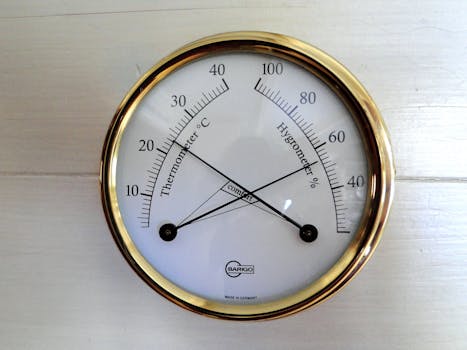
Mold risk rarely shows up all at once. It usually begins with subtle clues that your indoor air is staying too wet for too long, especially where surfaces cool down. If you’re using a hygrometer and you’ve noticed one or more of the following, you’re likely dealing with humidity-driven conditions that can support mold growth and dust-mite proliferation.
- Visible condensation on windows, mirrors, cold exterior walls, or ducts—often appearing overnight or during colder weather.
- Musty odor that returns after cleaning, even if the room looks “mostly dry.”
- Spotting or staining near corners, behind furniture, around window frames, or in closets.
- Peeling paint, bubbling drywall, or soft spots on surfaces that stay damp longer than a day.
- High hygrometer readings that don’t drop after normal ventilation, plus inconsistent readings that seem to “lag” behind weather changes.
- Symptoms for occupants such as persistent allergies, irritated eyes/throat, or increased coughing that correlates with humid periods.
These symptoms point to the same underlying issue: moisture is accumulating faster than your home can remove it, and condensation is creating microclimates on cool surfaces. The goal of troubleshooting is to identify where the moisture is coming from, where it is condensing, and whether your hygrometer is giving trustworthy readings.
Why humidity creates mold risk: the most likely causes behind condensation and growth
High indoor relative humidity (RH) is the main driver, but mold risk depends on how long surfaces remain damp and whether condensation occurs. Condensation happens when the surface temperature drops below the dew point of the air. That’s why two rooms with the same RH can behave differently—one may have cooler surfaces due to exterior exposure, poor insulation, or thermal bridging.
1) Persistent indoor moisture sources
Even “normal living” can elevate RH, particularly in tighter homes. Common contributors include cooking without venting, showers without adequate exhaust, drying laundry indoors, aquarium or humidifier use, and gas appliances that vent combustion moisture indoors when ventilation is insufficient.
2) Inadequate ventilation and air exchange
When indoor air is not replaced or dehumidified effectively, RH rises during weather transitions and cold snaps. This is especially common in homes with:
- Bathroom fans that are weak, not ducted outside, or run too briefly
- Kitchen exhaust that recirculates instead of venting outdoors
- Whole-home ventilation that is off, misconfigured, or undersized
- Air sealing that reduces infiltration without adding balanced ventilation
3) Cold surfaces and thermal bridging
Condensation often forms where surfaces are colder than the rest of the room: exterior corners, behind furniture, under window sills, inside closets with exterior walls, and around poorly insulated ductwork. Thermal bridges can create localized dew point conditions even if average RH seems “acceptable.”
4) Hygrometer issues: placement, calibration, and sensor lag
Humidity readings are only useful if the sensor sees representative air. Many “mold risk” misunderstandings come from hygrometer placement or device behavior:
- Sensor placed near windows, exterior walls, or supply vents where temperature swings distort RH
- Sensor exposed to direct airflow or radiant heat/cold from a wall
- Sensor lag that hides peaks (RH spikes) that drive condensation
- Calibration drift—especially for lower-cost sensors
- Using a single sensor for a whole house when RH varies by zone
Set practical condensation and mold-risk action thresholds using hygrometer readings

Action thresholds should be tied to what actually matters: preventing sustained RH high enough to promote condensation on common surfaces. While exact outcomes vary with temperature, insulation, and airflow, these thresholds are widely used for moisture control decision-making.
Relative humidity thresholds that generally reduce mold risk
- Target range for ongoing control: keep indoor RH roughly in the 40–50% band when practical.
- Watch zone: sustained RH around 50–60% increases the chance of condensation in cold areas, especially overnight.
- Action zone: sustained RH above 60% is a strong indicator that you need to intervene (ventilation, dehumidification, source control, or insulation/air sealing).
- High-risk zone: RH consistently above 65% for multiple days is likely to support mold growth in susceptible materials if condensation occurs or materials remain damp.
Condensation-trigger thinking: dew point and surface temperature
Even if you keep RH “just below” 60%, condensation can still happen on cold surfaces. The practical approach is to combine hygrometer data with spot checks:
- When RH is elevated, look for dew point conditions on windows and exterior wall areas.
- If you see condensation overnight, treat that as evidence that local dew point is being reached, even if your sensor reads slightly lower.
- Focus on cool spots—closets, behind furniture, window frames, and exterior corners—because those are where RH-to-condensation conversion becomes real.
If you want a simple way to estimate the risk without advanced tools, track whether your RH is high and whether condensation appears. If both are present, you’re in the zone where mold can establish itself.
Step-by-step troubleshooting process: verify readings, find moisture pathways, and stop condensation
Use this workflow in order. Many homes only need the early steps, but the later steps become necessary once you confirm that moisture is persistent or that condensation is occurring in hidden locations.
Step 1: Confirm hygrometer accuracy and placement
- Move the hygrometer away from windows, exterior walls, vents, and direct sun. Place it in the occupied zone, typically 3–5 feet from exterior surfaces.
- Allow it to stabilize after moving (often 1–2 hours, sometimes longer).
- Check whether the device shows spiky peaks you might miss. If your hygrometer app provides min/max or recent history, review it for overnight spikes.
- If you have access to a reliable reference method, consider calibrating or verifying it with a known humidity calibration approach. Even a small drift can change whether you cross action thresholds.
If your readings look inconsistent with what you observe (for example, the hygrometer shows 45% while windows are dripping), placement or sensor behavior is likely masking the true conditions.
Step 2: Map where condensation is actually happening
- During the period you typically see condensation (often early morning), inspect window glass, frames, and nearby walls.
- Check exterior corners and areas behind furniture (leave a small gap and observe for a day).
- Look inside closets with exterior walls and on surfaces behind hanging items.
- Inspect bathroom ceiling corners and behind/around exhaust fan grilles.
Condensation spots tell you where dew point is being reached. That location becomes your priority for ventilation, insulation, and air sealing.
Step 3: Identify the moisture source by timing
Moisture patterns are diagnostic. Use the hygrometer’s history or manual notes.
- If RH spikes after showers or cooking and doesn’t drop within a few hours, ventilation or ducting is inadequate.
- If RH rises steadily overnight or during cold weather, you may be dealing with whole-home ventilation imbalance, insufficient dehumidification, or envelope heat loss causing localized condensation.
- If RH increases after laundry, the issue may be indoor drying without adequate exhaust or dehumidification.
- If RH increases after HVAC cycles, you may have duct leakage, airflow patterns that cool surfaces, or problems with the HVAC’s moisture management.
Step 4: Measure ventilation performance where it matters
For troubleshooting, you don’t need fancy equipment to start.
- Run bathroom and kitchen exhaust fans and verify they are ducted outdoors.
- Check for airflow reversal (sometimes exhaust dampers fail, pulling humid air back in).
- Listen for fan performance changes and inspect for lint buildup in ducts and fan housings.
- Ensure fans run long enough after moisture events. Many systems are turned off too quickly.
If your home uses smart home automations for fans or dehumidifiers, temporarily simplify the logic to confirm that the equipment is actually running when humidity rises.
Step 5: Remove the “hidden dampness” causes
Before you invest in complex dehumidification strategies, rule out moisture intrusion and material issues.
- Inspect for leaks under sinks, around toilets, and near water supply lines.
- Check window weep paths and caulking condition.
- Look for condensation on ductwork in unconditioned spaces or crawlspaces.
- Verify crawlspace or basement moisture controls if applicable (standing water, poor drainage, or wet insulation).
Even a well-ventilated home can develop mold if water is entering through the building envelope or if duct condensation is supplying moisture to the air.
Solutions from simplest fixes to more advanced actions
Start at the top. Each step should reduce RH and, crucially, reduce condensation on surfaces. If a step doesn’t change the pattern within a reasonable time window (often 24–72 hours depending on the moisture source), move to the next.
Simple fixes: immediate moisture control and condensation prevention
- Improve spot ventilation during moisture events: run bathroom fans during showers and for at least 20–30 minutes after. For cooking, use the range hood on high during high-steam cooking.
- Increase air movement to reduce localized stagnation: use a ceiling fan or gentle circulation to prevent dead air in corners and behind furniture.
- De-clutter exterior-wall zones: keep furniture and storage slightly away from exterior walls and avoid blocking air circulation near windows.
- Stop indoor drying when RH is already elevated: if laundry pushes RH into the watch/action zone, switch to an approach that vents moisture outdoors or dehumidifies the drying space.
- Set a conservative humidity target: if you have HVAC-based dehumidification or a standalone dehumidifier, aim for a steady RH in the 40–50% band rather than chasing short-term dips.
Intermediate fixes: ventilation, ducting, and control strategy
- Clean and verify exhaust fan ducting: remove lint, ensure ducts are properly routed outdoors, and confirm dampers function.
- Increase ventilation effectiveness: if your home is very tight, consider balanced ventilation (or adjust existing ERV/HRV settings). The goal is to reduce RH buildup without overcooling or creating new condensation points.
- Use zoned monitoring: if you suspect condensation in one area, add a hygrometer for that zone. One upstairs sensor can miss a basement or exterior-wall closet problem.
- Adjust HVAC airflow: if supply registers cool a surface or cause RH spikes, reposition vents or adjust fan cycling. The aim is stable indoor conditions without creating cold spots.
Advanced fixes: dehumidification and building-envelope interventions
- Upgrade dehumidification strategy: if RH repeatedly exceeds 60% or condensation persists, you may need a correctly sized dehumidifier. Proper sizing matters because underpowered units can run continuously without reaching the target band.
- Target the problematic microclimate: if condensation is confined to a closet or window area, dehumidify that zone or improve insulation/air sealing there rather than relying solely on whole-house RH changes.
- Air sealing and insulation at condensation-prone locations: weatherstrip exterior doors, seal attic penetrations, and address gaps around window frames. Improving thermal performance reduces the chance that surfaces reach dew point.
- Insulate cold ducts and pipes: condensation on ducts can feed moisture into the air. Proper insulation and vapor control reduce that hidden source.
- Address crawlspace/basement moisture: if these areas contribute to indoor humidity, fix drainage, ensure appropriate vapor barriers, and verify ventilation conditions.
When to repair, when to replace, and when professional help is the better move

The right next step depends on how severe the moisture damage is and whether you can stop the problem reliably.
Repair or adjust controls when the issue is “behavioral”
Consider repairing or adjusting equipment settings when you can correlate RH spikes with specific activities and the moisture drops after targeted changes. Replace or service items like:
- Exhaust fan motors, dampers, or duct routing that doesn’t expel outdoors
- Smart humidity control logic that turns equipment off too early
- HVAC dehumidification settings that are misconfigured for your climate
Replace materials only after you’ve stopped moisture and confirmed it’s dry
If you find staining, peeling paint, or soft drywall, removing visible growth without fixing the underlying humidity/condensation conditions usually leads to recurrence. The decision to remove materials is based on:
- Whether the material remains damp or re-wets
- How far the moisture has migrated (behind surfaces, inside cavities)
- The condition of insulation and drywall layers
Drying and moisture control come first. Then evaluate materials. If building cavities are involved, professional inspection can prevent missed pockets.
Professional help is warranted in these situations
Call a qualified building moisture specialist, HVAC professional, or mold remediation professional when any of the following apply:
- Condensation is persistent despite stable RH control and verified ventilation
- You suspect water intrusion (roof leaks, plumbing leaks, basement/crawlspace seepage)
- Mold growth is extensive, recurrent, or located behind walls/ceilings
- You have health concerns that require careful assessment
- You can’t identify the moisture source after systematic troubleshooting
Professionals can measure moisture content in materials, evaluate envelope thermal performance, and verify HVAC/dehumidification capacity more precisely than typical consumer monitoring.
How hygrometers should be used during troubleshooting so you don’t chase false signals
During troubleshooting, treat your hygrometer as a diagnostic instrument, not a verdict. Use it to confirm trends and to validate whether your interventions are changing the environment.
- Track time windows: focus on overnight and post-activity periods (showers, cooking, laundry).
- Use min/max data if available: condensation risk often follows peaks, not averages.
- Validate with surface observations: if you see condensation, you’re already at or beyond dew point locally—use that as ground truth.
- Don’t overreact to brief spikes: a short RH rise after a shower is normal; sustained elevated RH indicates the system isn’t removing moisture fast enough.
If you use smart home humidity monitoring, ensure sensors are not placed near HVAC returns or exterior walls where they read “temperature-influenced” humidity. Devices such as Room sensors and multi-sensor stations can be helpful when placed correctly, but they still require calibration-aware interpretation.
Putting it all together: a condensation-first plan for lowering mold risk
The most reliable way to reduce humidity mold risk is to stop condensation and keep RH in a safer band long enough to dry materials. Your troubleshooting should follow three parallel tracks:
- Validate the measurement: confirm hygrometer placement and reliability, then review overnight and post-activity humidity behavior.
- Locate condensation: inspect windows, exterior corners, closets, and behind furniture to identify dew point hotspots.
- Eliminate the moisture pathway: improve exhaust performance, reduce indoor moisture sources, correct ducting/ventilation balance, and address cold surfaces through insulation and air sealing.
When you consistently prevent condensation and keep indoor RH roughly in the 40–50% range (or at least below the action threshold when conditions are unavoidable), mold risk drops dramatically. If you still see condensation after correcting ventilation and source control, the remaining work is usually envelope-related—thermal bridging, insulation gaps, or hidden moisture intrusion—where professional assessment may be the fastest route to a durable fix.
15.04.2026. 23:39