

Tuning Forks vs Sound Therapy vs Percussive Therapy: What Works?

How these three sound-based approaches differ in practice
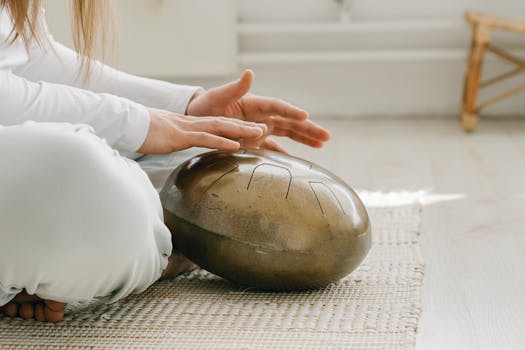
If you’re exploring sound for relaxation, focus, pain support, or nervous-system calming, you’ll quickly run into three popular paths: tuning forks, sound therapy, and percussive therapy. They all use vibration and rhythm, but the way energy is delivered to your body—and the level of control you have—can be very different.
In simple terms, tuning forks create a precise vibratory tone at specific frequencies. You place them on or near the body, and the vibration transfers through tissues. Sound therapy typically uses recorded audio (often binaural beats, solfeggio-style tones, or ambient soundscapes) played through speakers or headphones to influence perception and relaxation. Percussive therapy delivers structured impacts or oscillations, often with devices that create tapping, pulsing, or mechanical vibration patterns.
So the real question isn’t “which is best?” It’s “which one matches your goal, your tolerance for intensity, and your need for precision?”
Quick summary: the strongest overall option for most people
For most buyers trying to improve relaxation, reduce perceived stress, and build a consistent at-home routine, sound therapy is usually the most approachable overall. It’s easy to start, scales from 10–20 minute sessions to longer protocols, and you can match your audio to your day without needing specialized training.
That said, if your top priority is targeted, localized vibration (for example, focusing on a specific knot of tension in the neck or jaw), tuning forks often win for precision. If your goal leans toward mechanical stimulation—such as mobility support, post-workout recovery routines, or “wake-up” sensations—percussive therapy can feel more immediately active.
Side-by-side comparison: tuning forks vs sound therapy vs percussive therapy

| Category | Tuning Forks | Sound Therapy | Percussive Therapy |
|---|---|---|---|
| How it works | Single-frequency vibration from a metal fork; direct contact or near-contact transfers mechanical energy into tissue | Audio tones and/or binaural beat tracks; played through speakers or headphones to influence brainwave patterns, relaxation response, and perception | Mechanical tapping, pulsing, or percussive vibration; delivered via device or practitioner technique to stimulate tissue and movement |
| Typical session length | 5–20 minutes per area; total sessions often 10–30 minutes | 10–45 minutes depending on protocol; many people use 20–30 minutes | 5–20 minutes depending on intensity and body area |
| Frequency control | High precision (specific fork frequencies, e.g., 128 Hz, 256 Hz, 512 Hz depending on set) | Variable (depends on track design; binaural beats specify carrier frequencies; ambient content varies) | Moderate to high (depends on device settings; “pulse rate” and impact pattern are adjustable in many systems) |
| Targeting | Localized: you can place a fork on/near jaw, temples, sternum, spine, or other areas | Global: sound reaches you through hearing; some systems add guided “focus points,” but physical targeting is limited | Localized: devices and techniques can target shoulders, back, hips, calves, and more |
| Intensity feel | Quiet-to-moderate; vibration can be surprisingly strong at contact points | Generally gentle; can be calming or neutral depending on audio design | Often noticeable and “active”; may feel like tapping, thumping, or vibrating pressure |
| Best for | Localized tension support, mindfulness rituals, precise “tone placement” routines | Stress reduction, sleep support, focus/meditation practice, consistent daily use | Recovery routines, mobility support, stimulating circulation and muscle “wake-up” |
| Learning curve | Low, but you need to learn safe placement and timing | Very low; press play and follow duration | Medium; intensity and technique matter more |
| Home setup | Fork set (often includes a handle/carry case) + optional mallet; minimal space | Phone/tablet + audio tracks or a dedicated sound machine; headphones optional but common | Device (percussion massager) or practitioner-led sessions; may require charging and attachments |
| Typical equipment examples | 128/256/512 Hz tuning fork sets; fork holders; resonance bowls (adjacent, not the same) | Sound therapy apps, binaural beat tracks, dedicated sound machines, resonance audio devices | Percussive massage guns; vibration plates; structured tapping tools |
Real-world performance differences: what you’ll notice during sessions
Let’s ground this in what tends to happen when you actually use each approach.
Tuning forks: you feel it at the contact point
When you strike a tuning fork and place it near your jaw, neck, or sternum, you often notice a localized tingling or pulsing that doesn’t feel like “background sound.” It’s more like your tissues are responding to a steady mechanical vibration.
In a practical scenario, imagine you’re working at a desk for 6–8 hours and your jaw and temples get tight. A 10-minute routine might look like: 1–2 minutes per placement point, moving slowly from temple to jaw to upper neck. You’re not just listening—you’re interacting with the vibration in a targeted way.
Because tuning forks use specific frequencies, you can also experiment with which tone feels most comfortable to you. Many people report better results when they keep sessions short and repeat daily rather than pushing long sessions.
Sound therapy: you control duration and environment
Sound therapy often performs best when you treat it like a daily “sensory environment.” Put on headphones or play through speakers, set a timer for 20–30 minutes, and let your nervous system settle.
For example, if you struggle with falling asleep, you might use a consistent 25-minute track at the same time each night. Over 2–3 weeks, the biggest difference may be routine rather than a single “magic frequency.” Your brain learns that this audio means “downshift.”
Sound therapy can also be easier to scale. If you only have 12 minutes, you can still run a short session without changing equipment or technique.
Percussive therapy: stimulation is more physical and immediate
Percussive therapy often feels more “active.” If you use a percussive massage gun after training, you might notice a quick warming sensation and transient muscle looseness. That doesn’t automatically mean it’s better for anxiety reduction, but it can be excellent for post-workout recovery routines.
In a real-world scenario: you finish a leg day, sit down, and spend 8–12 minutes on quads and calves with moderate intensity. Many people feel reduced tightness by the next morning, especially when combined with light stretching and hydration.
The performance difference here is simple: tuning forks and sound therapy are often used for quiet downshifts, while percussive therapy is more about mechanical stimulation.
Pros and cons breakdown for each approach
Tuning forks: strengths and limitations
- Pros
- Precision: you’re working with specific frequencies (depending on the fork set, often in the range of 128 Hz, 256 Hz, 512 Hz, and more).
- Localized effect: you can place vibration near specific body areas (jaw, temples, chest, spine).
- Minimal setup: no speakers required; works in small spaces.
- Ritual-friendly: easy to pair with breathwork or meditation.
- Cons
- Limited “coverage”: you can’t easily treat your whole body at once without moving.
- Technique matters: contact method, placement distance, and timing can change how it feels.
- Not ideal for everyone: some people dislike the vibration sensation, especially if they’re sensitive to tactile stimulation.
- Safety considerations: avoid direct use over sensitive areas without guidance; if you have neurological or medical conditions, you should be cautious and consult a professional.
Sound therapy: strengths and limitations
- Pros
- Ease of use: press play, set a timer, and you’re done.
- Scales well: 10 minutes for a quick reset or 45 minutes for deeper sessions.
- Great for routine: consistent audio cues can build a conditioned relaxation response.
- Flexible formats: binaural beats, ambient drones, guided soundscapes, and custom playlists.
- Cons
- Less physical targeting: it’s mainly auditory; you can’t “place” vibration on a specific muscle the way you can with forks or percussive devices.
- Quality varies: some tracks are poorly designed or too loud; audio engineering matters.
- Headphone sensitivity: if you don’t tolerate headphones, it may be harder to get the intended binaural effect.
- Expectations risk: if you’re looking for a strong tactile sensation, sound therapy may feel subtle.
Percussive therapy: strengths and limitations
- Pros
- Immediate physical stimulation: many people feel a noticeable “wake-up” effect right away.
- Localized treatment: devices and attachments can target specific muscle groups.
- Supports recovery routines: commonly used after exercise for circulation and soreness relief practices.
- Adjustable intensity: many devices offer multiple speed/pulse settings.
- Cons
- More risk of overdoing it: too much pressure or intensity can increase irritation.
- Not primarily calming: it can be energizing rather than soothing, depending on settings.
- Technique still matters: angle, time per area, and attachment choice affect comfort.
- Noise and vibration: some devices are loud and may not fit quiet relaxation goals.
Best use-case recommendations for different buyers

Here’s how to choose based on what you’re actually trying to change in your day-to-day life.
Choose sound therapy if you want the easiest path to consistency
If you’re busy, travel often, or you want something you can use every day without setup friction, sound therapy is typically the best fit. It’s also a strong choice if your main goal is stress reduction, sleep support, or meditation.
Practical recommendation: aim for 20–30 minutes at the same time each day. Many people do better with shorter sessions repeated than one long session that disrupts sleep or focus. If you’re using binaural beats, keep volume moderate and choose tracks designed for your target state (relaxation vs focus).
Product direction (affiliate-friendly, not required): consider reputable sound therapy apps or dedicated sound machines that let you control volume, timer, and track selection. If you already own a quality speaker system, using that can also be enough—headphones are optional.
Choose tuning forks if you want targeted vibration for specific tension areas
If you deal with recurring tension—jaw tightness, temple strain, upper neck stiffness, or “stuck” feelings in specific spots—tuning forks offer a more direct interaction. You can spend 1–3 minutes per placement and move slowly, which makes the routine feel intentional.
Practical example: after a long day of computer work, you could do a 12–15 minute session focused on jaw/temples and upper neck. You might use a small set of forks (commonly sold in multi-frequency sets) and choose the tone that feels most comfortable. You’re not trying to “blast” your whole body—you’re giving your nervous system a localized signal.
Product direction: look for a tuning fork set that includes the frequencies you want and provides a safe striking method (often a mallet) and a carry case. Some buyers also like fork holders to reduce accidental contact and make placement easier.
Choose percussive therapy if you want mechanical stimulation for recovery and mobility
If your primary goal is post-workout recovery, mobility support, or reducing the “tight” feeling after training, percussive therapy is usually the most immediately relevant. It’s also a good fit if you prefer a more active sensation rather than a quiet listening experience.
Practical example: after strength training, spend 2–3 minutes per muscle group at a moderate setting. Many people find that starting with shorter sessions (like 6–10 minutes total) helps you learn your tolerance. If you’re sore, you may want to avoid pushing intensity too high.
Product direction: a percussive massage gun with adjustable speed, a reliable battery, and interchangeable heads is the most common entry point. If you already have a high-quality massage gun, you can tailor your protocol without adding new audio equipment.
Final verdict: which option suits your needs best?
Here’s the clearest way to decide between tuning forks vs sound therapy vs percussive therapy based on your goal.
Your best fit if you want...
- Most convenient daily relaxation: pick sound therapy. It’s easy to repeat and works well for sleep and stress downshifting.
- Localized vibration for specific tension areas: pick tuning forks. You get frequency precision and targeted placement.
- Physical stimulation for recovery and mobility: pick percussive therapy. It’s typically more active, and it matches post-training routines.
If you’re unsure, a smart approach is to start with the method that matches your lifestyle first: sound therapy if you’ll actually use it daily, tuning forks if you want targeted sessions, and percussive therapy if you’re building a recovery routine around movement.
In many real-world setups, people end up combining them over time—using sound therapy for relaxation and sleep, tuning forks for tension-focused moments, and percussive devices for recovery days. The “best” choice is the one that fits your body, your schedule, and the type of sensation you’re aiming for.
01.05.2026. 02:56