

Best HRV Wearable Features for Accuracy (Beginner Buying Guide)

Why HRV accuracy matters when you’re buying a wearable
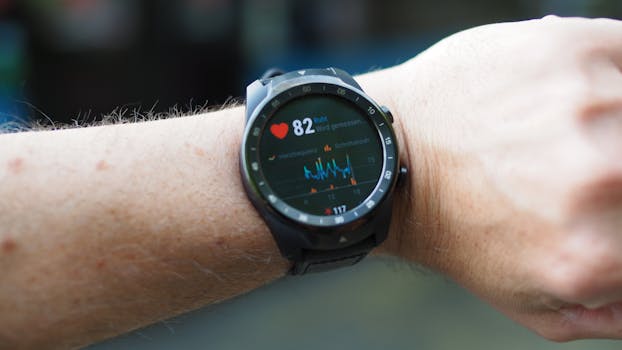
HRV (heart rate variability) is one of the most popular recovery and stress signals in fitness and health tracking. But if you’ve ever looked at your HRV trend and thought, “That can’t be right,” you’re not alone. HRV is sensitive to measurement quality. Small differences in how a wearable reads your heart signals, how it handles motion, and how it processes data can create big swings in your chart.
When you’re shopping for the best HRV wearable features for accuracy, you’re really buying three things at once: (1) a sensor that can capture clean pulse signals, (2) software that can turn those signals into reliable HRV metrics, and (3) settings and habits that reduce noise. If any of those are weak, your HRV may be inconsistent even when your body is stable.
Here’s a real-world scenario: you buy a new band, wear it for two weeks, and notice your HRV suddenly drops on days you did nothing different. Then you switch to a different sleep schedule the next week and your HRV jumps again. That pattern can be real—but it can also be a wearable measurement artifact. The goal of this guide is to help you choose features that reduce those artifacts so your HRV reflects you, not the device.
Understand HRV basics before you judge accuracy
HRV is usually calculated from the time intervals between heartbeats (often called NN intervals). Wearables don’t measure “HRV directly.” Instead, they estimate it from optical heart rate data (photoplethysmography, or PPG) or sometimes from ECG (electrocardiography). The accuracy of HRV depends on how well the device detects those heartbeat intervals and removes errors caused by movement, poor skin contact, and signal noise.
Two terms you’ll see often:
- Time-domain HRV (common examples: RMSSD, SDNN). These are calculated from the heartbeat interval timing. For daily recovery tracking, RMSSD is frequently used because it responds well to short-term changes.
- Frequency-domain HRV (examples: LF/HF). These can be harder for wearables to estimate reliably during everyday conditions unless the signal quality is excellent.
As a beginner, you don’t need to become a statistician. You just need to choose features that make the underlying heartbeat intervals more trustworthy.
The sensor and measurement method that drive HRV accuracy
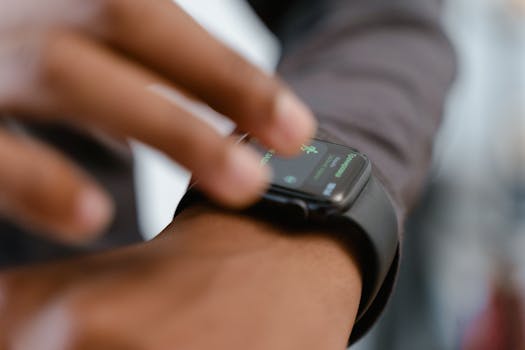
Choose the right heart signal source: PPG vs ECG
Most consumer wearables measure HRV using PPG (light-based sensors). PPG is convenient and works well during sleep for many people because you’re still. However, PPG is vulnerable to motion artifacts and poor contact.
ECG (electrodes measuring electrical activity) generally offers stronger signal fidelity. Some devices offer ECG on-demand (often by holding electrodes or using a chest strap), while others offer continuous ECG. If your top priority is accuracy, ECG-based measurement is typically more robust—especially if you plan to measure outside sleep.
Practical takeaway: if you mostly want HRV trends for recovery, a high-quality PPG wearable that measures during sleep can be very useful. If you want HRV readings during the day or during variable activity, look for ECG capability (or at least a device known for strong motion handling).
Look for multi-wavelength or advanced optical sensors
Not all PPP sensors are equal. Features that often correlate with better HRV accuracy include:
- Multi-wavelength LEDs (often red + infrared, sometimes additional wavelengths). More wavelengths can improve signal quality in different skin tones and conditions.
- Higher sampling of raw PPG. Higher effective sampling helps the algorithm detect heartbeat timing more accurately.
- Improved photodiode design and better optical filtering that reduces noise.
You don’t need to memorize sensor specs, but you should expect brands that take HRV seriously to describe their optical approach clearly. If the product page is vague about measurement technology, that’s a warning sign.
Sensor placement and fit matter more than you think
Even the best HRV algorithm can fail if the sensor can’t read clean signals. Wrist placement is convenient, but wrist HRV can be affected by arm movement and skin contact.
For best results:
- Wear the device snugly without cutting off circulation.
- Keep the sensor area clean and dry.
- Use the correct band size so the sensor stays aligned with your skin.
If you’re comparing devices, consider how each one fits your wrist. A slightly better fit can outperform a “better spec” wearable that rides loosely.
Motion handling and signal quality features that reduce HRV noise
Motion artifact detection and rejection
HRV is sensitive to errors in heartbeat detection. When you move, the PPG signal can distort. Strong wearables include motion detection and algorithms that attempt to reject bad intervals rather than blindly calculating HRV from noisy data.
Look for features like:
- Motion-aware HRV calculation (the device pauses or down-weights HRV when signal quality is poor)
- Signal quality indicators (even a simple “good contact” message can help)
- Confidence scores for HRV segments (more common in higher-end platforms)
What you want is consistency. A wearable that outputs an HRV number every time, even when the signal is poor, will look “busy” but won’t be reliable.
Sleep-focused HRV measurement windows
For most beginners, the most consistent HRV data comes from sleep. During sleep, you’re still, your breathing is steadier, and your heart signal is easier to track.
When evaluating accuracy features, check whether the wearable measures HRV continuously during sleep or uses defined windows (for example, nighttime monitoring). Some devices calculate HRV from sleep stages. Others provide a daily HRV value derived from multiple short segments.
Practical example: if you typically sleep 7–8 hours, a wearable that calculates HRV across the whole sleep period (rather than a single 10-minute snapshot) can smooth out random noise. That often produces a more stable trend line.
Sampling frequency, data processing, and how HRV is calculated
Higher-quality raw data usually matters
Even with the same sensor, HRV accuracy depends on how the device samples and processes the signal. While you won’t always find exact numbers, you can look for transparency such as:
- Descriptions of high-resolution PPG sampling
- Mentions of beat-to-beat interval analysis
- Evidence that the device uses artifact removal rather than simple averaging
If the brand only markets “HRV tracking” without explaining how it’s derived, it’s harder to trust the results—especially if you want accuracy beyond a basic wellness estimate.
RMSSD vs SDNN vs “proprietary HRV”
Many wearables report RMSSD because it’s commonly used for short-term recovery tracking. Others provide SDNN. Some show both. If you want a beginner-friendly path, RMSSD is often easiest to interpret as a “readiness” signal.
Be cautious with “proprietary HRV” metrics that aren’t clearly defined. They might still be useful for trends, but if your goal is accuracy, you should prefer metrics that map to standard HRV definitions.
How the wearable handles missing or low-quality intervals
Accurate HRV isn’t just about measuring well—it’s also about knowing when not to trust data. Great systems will:
- Exclude low-quality segments
- Flag unreliable readings
- Use enough valid intervals to compute HRV
If you consistently see HRV values on days when your signal quality should be poor (loose fit, restless sleep, cold hands), that can be a red flag.
Sleep tracking features that indirectly improve HRV reliability
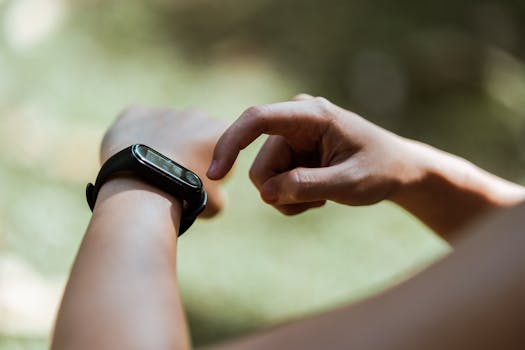
Sleep staging and consistent nighttime measurement
Some wearables calculate HRV by sleep stage (for example, during light sleep vs deep sleep). Even if you don’t use the stage details, staging can encourage better measurement consistency because the device knows when your body is likely stable.
Look for:
- Sleep stage tracking that’s been validated or broadly used
- Clear reporting of sleep duration and quality
- Ability to review HRV alongside sleep stages
If the app only shows a single HRV number with no context, you may not be able to tell whether a low HRV day was a true physiological change or a measurement issue.
Breathing rate and respiratory signals (useful context)
Some devices provide breathing rate and respiratory-related metrics. While breathing rate isn’t HRV itself, it can help you interpret HRV changes caused by stress, illness, or sleep disruption. If your wearable shows breathing patterns, it can make it easier to spot “real” changes.
For example, if your HRV drops and your breathing rate becomes more variable at night, that may reflect recovery strain or poor sleep rather than a random device error.
App features that help you verify accuracy over time
Trend stability and data history depth
HRV is best judged as a trend. A wearable that stores months of HRV history and lets you view rolling averages (like 7-day or 30-day patterns) helps you separate noise from signal.
When you evaluate an app, check whether it:
- Shows daily HRV with enough context (sleep time, HRV quality if available)
- Includes long-term charts (at least 90 days)
- Allows export or clear review of past readings
Practical note: if the app only keeps a short history, you’ll have a harder time learning your baseline.
Calibration prompts and fit reminders
Some wearables include guidance like “tighten the band” or “reposition sensor.” These prompts may feel minor, but they can improve measurement quality enough to change your HRV trend.
Look for:
- In-app sensor fit guidance
- Notifications if your signal is weak
- Quick checks after you put the device on
If you’re new to HRV tracking, these features reduce the learning curve.
What buyers should prioritize for accurate HRV (your decision priorities)
If you want accuracy—not just novelty—prioritize in this order:
- Measurement reliability during sleep (because that’s where HRV is most stable for most people)
- Strong motion artifact handling (especially if you want daytime HRV)
- Clear HRV definitions (RMSSD/SDNN rather than vague proprietary labels)
- Signal quality checks (contact indicators, confidence scores, or segment filtering)
- Long-term trend visibility in the app (so you can establish baseline)
- Fit and comfort (a wearable you wear consistently reads better data)
Next, decide what “accuracy” means for you. If you want to compare your HRV day-to-day to manage training load, consistency and noise reduction matter more than matching a lab-grade number. If you’re trying to validate HRV against medical-grade measurements, you’ll likely need ECG-based approaches or clinical-grade tools, not a wrist wellness band.
Common purchasing mistakes and misunderstandings
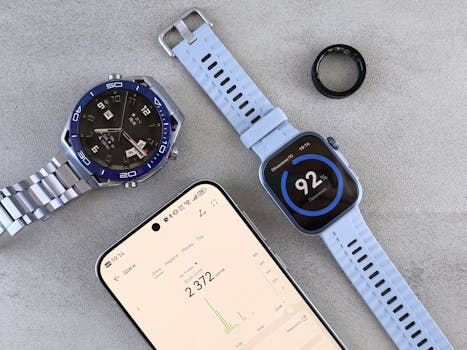
Buying for “HRV accuracy” without checking the measurement context
Many listings imply accuracy across the board, but HRV quality often depends on when and how it’s measured. A device may be excellent during sleep and inconsistent during workouts. If your expectation is “HRV anytime, anywhere,” you need to choose features that support that use case.
Expecting a wearable to match lab results instantly
HRV varies naturally. It also changes with stress, caffeine, hydration, illness, and even travel. If you compare your wearable HRV to a single reading from a lab device, you may see mismatch even if both are “accurate.” Instead, look for stable trends over 2–4 weeks.
Wearing the device too loose or too high/low
A loose band can cause intermittent signal dropouts. When the wearable fills gaps with low-quality intervals, HRV can jump around. This is one of the most common beginner mistakes.
Ignoring skin tone, temperature, and activity level
Cold hands can reduce blood flow and weaken optical signals. Sweaty skin can also interfere. If you live in a cold climate or track HRV in winter, you may need to adjust how snugly you wear the device and consider a measurement strategy that emphasizes sleep.
Chasing more metrics instead of better data
Some apps show many HRV variants and extra stress scores. More numbers aren’t automatically better. You’re better off with fewer, clearly defined HRV metrics computed from reliable intervals.
Practical buying checklist for HRV accuracy
Use this checklist before you buy. You can copy it into your notes:
- HRV metric clarity: Does it report RMSSD or SDNN with a clear definition?
- Measurement method: Is HRV primarily from sleep PPG, or does it offer ECG options (on-demand or continuous)?
- Sleep HRV coverage: Does it calculate HRV across the whole sleep period or just a short segment?
- Motion handling: Does the device mention artifact rejection, confidence scoring, or quality checks?
- Signal quality feedback: Can you see when readings are unreliable or when the sensor needs repositioning?
- App trend tools: Does the app show at least 90 days of HRV history and rolling averages?
- Data export or detailed review: Can you review past readings with context (sleep duration, sleep stage, etc.)?
- Comfort for consistent wear: Can you realistically wear it every night for 3–4 weeks?
- Battery life for overnight monitoring: Does it reliably last through a full night without charging mid-week?
- Charging and setup time: Can you keep settings consistent (time zone, wrist placement, reminders)?
Now apply it to your lifestyle. If you’re a beginner who wants recovery insights for training, you’ll likely get the best value from sleep-focused HRV. If you want HRV during stressful workdays, you should prioritize motion handling and consider ECG-capable options.
Final guidance: choose features that match your HRV goal
To get accurate HRV from a wearable, don’t just buy the one that “tracks HRV.” Buy the one that reduces errors. For most people, the biggest accuracy wins come from sleep-focused HRV measurement, strong optical sensing, and software that filters motion and low-quality intervals.
If you want a practical starting point, consider a wearable with:
- Reliable wrist HRV during sleep (PPG that’s designed for overnight tracking)
- Clear HRV metrics like RMSSD
- App tools that show trends and provide context
If your priorities are higher signal quality—especially for daytime or more controlled measurements—look toward devices that offer ECG-based HRV or ECG-compatible accessories (where available). Many people pair an ECG approach with sleep HRV trends to get both reliability and convenience.
Finally, give yourself a realistic timeline. Plan to wear the device consistently for 2–4 weeks before you judge accuracy. During that time, keep your band placement consistent and pay attention to signal quality prompts. Your baseline matters more than any single day.
Recommendation mindset: choose the feature set that supports stable measurements in the conditions you actually live in—sleep, rest days, or workouts. That’s how you end up with HRV data you can trust, not just data you can see.
02.04.2026. 04:55