

Best Wearable for HRV Accuracy: Optical vs Chest Strap

HRV looks simple—until your readings don’t match
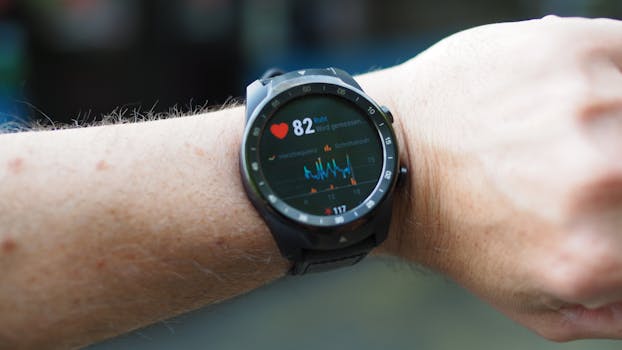
If you’re trying to use HRV to improve recovery, performance, stress management, or sleep decisions, you’ve probably noticed a frustrating pattern: two wearables can show different HRV numbers—sometimes by a lot. That’s not always user error. HRV is sensitive to how heartbeats are detected, how motion is handled, and how consistently you wear the device.
This buying guide is for the moment you’re ready to choose a wearable based on HRV accuracy—not just “it tracks sleep” or “it has a nice app.” You’ll learn what optical HRV measurement can and can’t do, where chest straps typically win, and how to prioritize features that actually affect accuracy for your routine.
By the end, you’ll know what to look for when comparing optical sensors versus chest straps, how to set them up correctly, and how to avoid the common mistakes that make HRV data unreliable.
Know what HRV is measuring (and why the sensor matters)
HRV (heart rate variability) is the variation in time between consecutive heartbeats. Most wearables estimate HRV from the pattern of R-R intervals (the time between peaks in your ECG signal). A key point: HRV isn’t a single number from a simple “heart rate” calculation. It’s derived from beat-to-beat timing—so the device needs to detect those beats precisely.
That’s why the sensor type matters. The two main approaches you’ll see are:
- Optical HRV (PPG): A wrist or finger sensor uses light to estimate blood volume changes with each heartbeat.
- Chest strap HRV (ECG-like): A strap uses electrodes to capture the electrical signal of your heart more directly.
In plain terms: optical sensors infer heartbeat timing from light signals. Chest straps measure electrical signals. When your body moves, optical signals can get noisier. Chest strap signals can stay cleaner, especially during exercise.
Optical vs chest strap: what actually changes accuracy
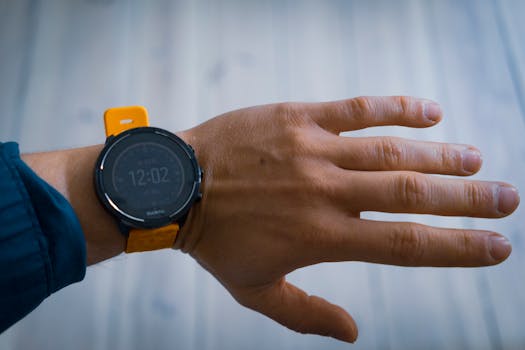
Optical sensors (wrist) and why readings vary
Optical sensors rely on PPG signals, which are influenced by skin contact, pressure, sweat, temperature, and motion. Wrist HRV can be accurate in stable conditions—like sleeping—when your wrist stays fairly still and your skin contact is consistent.
But optical timing quality drops when there’s motion. If you’re moving your arm, shifting your grip, typing aggressively, lifting weights, or even walking briskly, the PPG waveform can distort. Many watches try to filter the noise, but filtering can’t fully replace clean beat detection.
That’s why two optical wearables can disagree: their algorithms, signal processing, and quality-control steps differ. Some devices also show HRV as a single daily value even when the raw signal quality varies throughout the night.
Chest straps and why they often produce cleaner HRV
Chest straps typically use electrical measurement (often described as ECG or “ECG-like” depending on the product). Because the signal is closer to the heart and not dependent on blood flow optics, beat detection is often more consistent during movement.
For HRV accuracy, this matters most in three situations:
- Exercise and post-exercise recovery: When your heart rate is changing quickly and your body is moving.
- Awake, active tracking: If you want HRV during the day rather than only at night.
- Users with challenging optical conditions: Cooler skin, tattoos, dry skin, or looser watch fit can make optical readings less stable.
Chest straps aren’t perfect either. They can cause signal issues if the strap isn’t snug, if electrodes dry out, or if you have very sweaty skin and poor contact. But in general, they’re designed specifically for beat-to-beat measurement.
Important features and specifications that affect HRV accuracy
To choose the best wearable for HRV accuracy optical vs chest strap, focus on the details that influence signal quality and how the device outputs HRV.
1) Sensor type and measurement target
For HRV, the sensor is your foundation. If you’re deciding between optical and chest strap, you’re already deciding on the measurement method. Within each category, look for:
- Optical: multi-wavelength PPG (more than one LED color) can improve signal robustness.
- Chest straps: ECG-style electrodes and stable electrode design, plus good strap materials for consistent contact.
Also pay attention to what the device calls HRV. Many apps show RMSSD or “HRV” without explaining the metric. RMSSD is common for short-term HRV and is often used for recovery-style insights.
2) Sampling quality and noise rejection
Some devices provide “quality” indicators or only compute HRV when signal quality is sufficient. That’s a good sign. If your wearable silently estimates HRV even when the signal is poor, you may get numbers that look precise but aren’t trustworthy.
Practical tip: if the watch lets you review HRV signal quality (or flags it), favor that. If it doesn’t, you’ll rely more on consistent wearing habits and stable conditions.
3) HRV time window: nightly vs day vs training
HRV accuracy depends on when you measure it. Many optical devices are optimized for overnight sleep HRV. Chest straps are often more versatile for daytime and workout recovery.
Think about your goal:
- Sleep-focused recovery: wrist optical can be enough if you wear it snugly and consistently.
- Training load decisions: chest strap HRV is usually the safer bet.
- Stress response during the day: optical may work for some people, but chest straps often deliver more stable beat detection.
4) Real-time HRV vs summary HRV
Some devices provide rolling HRV estimates (more responsive, but also more sensitive to noise). Others provide daily summary metrics. Rolling HRV can be useful, but if your sensor struggles during movement, rolling values may jump around.
If you’re trying to detect subtle changes—like “my HRV is trending down for three days”—summary HRV with consistent measurement conditions can be more reliable.
5) Data export, app ecosystem, and integration
Accuracy isn’t only about the sensor. It’s also about what you can do with the data. Look for:
- Export options: CSV, Apple Health integration, Google Fit, or standard exports.
- Consistency across devices: If you switch apps or sync methods, HRV calculations can change.
- Workout integration: If you train, make sure the strap works smoothly with your preferred training platform.
For example, if you already use a training app or coach dashboard, confirm the wearable exports HRV in a compatible format before you buy.
What you should prioritize when choosing optical vs chest strap
You don’t need the “most accurate” device in every situation. You need the most accurate for your use case.
Prioritize conditions you can control
Optical accuracy improves when you control fit and stability. Before you rule out optical, commit to:
- Wearing the watch snugly (not tight to the point of discomfort, but secure).
- Keeping placement consistent (same wrist position each time).
- Using the same overnight routine for at least 7–14 nights.
If you can’t control those factors—say you frequently remove and re-wear your device, or your workouts involve lots of arm motion—chest strap accuracy becomes more compelling.
Prioritize the type of decisions you’re making
Ask yourself what you’ll do with HRV:
- If you’re adjusting bedtime and recovery habits: nightly optical HRV can be a practical starting point.
- If you’re deciding whether to do hard training today: HRV during the day or post-workout matters, and chest straps typically provide cleaner signals.
- If you’re experimenting with stressors (caffeine, travel, late workouts): you’ll want consistent beat detection. Chest straps often reduce the “device noise” that makes trends harder to interpret.
Prioritize comfort and adherence over theoretical accuracy
Here’s the real-world truth: the best sensor is the one you’ll wear correctly every day. Chest straps can be uncomfortable for some people, especially if you’re not used to them. If you only wear the strap twice a week, the data may be less useful than consistent wrist HRV.
So your priority should be: accuracy plus adherence. If you’re likely to wear a chest strap only for workouts, consider using it for training sessions and relying on optical for nightly trends.
Common purchasing mistakes and misunderstandings
Assuming “HRV number” means the same metric everywhere
Two devices can both show “HRV” but compute different metrics (RMSSD vs SDNN, different preprocessing, different time windows). Even with the same metric, algorithms may differ.
Misunderstanding to avoid: comparing your optical HRV directly to your chest strap HRV as if they should match. They won’t always. What matters more is within-device trend consistency.
Buying a chest strap but wearing it too loosely
Chest straps depend on electrode contact. If the strap shifts, dries out, or isn’t snug, you can get dropouts or noisy intervals. You may see missing segments or “HRV not available” messages.
Fix: tighten the strap slightly until it stays in place during movement, and ensure the electrodes have good skin contact.
Expecting optical HRV to be stable during arm movement
If you’re asking your wrist sensor to track HRV while you’re lifting weights or doing intervals, you’re asking for trouble. Optical HRV can still work, but it’s less reliable. For those use cases, chest straps (or at least measurement windows with minimal motion) usually perform better.
Changing devices or apps mid-experiment
If you run a 4-week experiment and then change the wearable, the app, or the export pipeline, your “trend” may be partly a calculation change. Try to keep your measurement setup stable for at least 2–4 weeks before judging outcomes.
Overreacting to day-to-day fluctuations
HRV responds to sleep, illness, stress, alcohol, hydration, menstrual cycle, training, and travel. A single low day can be noise. Look for patterns across several days, not one reading.
Practical buying checklist and decision framework
Use this to decide what to buy and what to test after purchase. It’s designed to help you avoid “buying blind” based on marketing claims.
Step 1: Choose your primary HRV use case
- Overnight recovery trends only: start with an optical wearable that’s known for stable sleep tracking.
- Training-day HRV and post-workout decisions: lean toward a chest strap.
- Both: consider pairing—optical for daily sleep trends and a chest strap for workouts.
Step 2: Verify sensor fit requirements
- For optical: confirm you can wear it snugly all night and that you can keep placement consistent.
- For chest strap: confirm it fits your chest comfortably and stays in position during movement.
If you’re between sizes, go with the option that allows a secure fit. A strap that’s too loose can ruin HRV quality.
Step 3: Check HRV output type
- Does it provide HRV as RMSSD (or another clear metric)?
- Does it show signal quality or indicate when HRV is unreliable?
- Can you view nightly segments or at least see when HRV is missing?
Step 4: Plan a 14-night validation period
After you buy, don’t judge accuracy after one night. Do this instead:
- Wear the device consistently for 14 nights.
- Try to keep bedtime within a 60–90 minute window.
- Record major confounders (late alcohol, illness, very hard training, travel).
Then evaluate whether your HRV trends are coherent within your own routine. You’re not trying to match someone else’s numbers. You’re checking whether your data behaves logically.
Step 5: Test movement sensitivity (for optical)
If you plan to use optical HRV during the day, run a simple experiment:
- For one week, measure HRV during a low-motion window (e.g., seated reading for 20 minutes).
- For another week, measure during moderate arm movement (e.g., brisk walking or light household chores for 20 minutes).
If your optical HRV becomes erratic during motion, that’s not necessarily a defect—it’s a measurement limitation. In that case, use optical for sleep and chest straps for training.
Step 6: Confirm compatibility with your ecosystem
- Does the strap pair with your phone and training apps reliably?
- Can you export HRV data if you want to analyze trends?
- Will firmware updates change the HRV output without warning?
For longevity and long-term insight, stable data access matters more than a flashy interface.
Real-world scenario: choosing correctly for a busy training week
Imagine you train 5 days a week and you want HRV to guide whether you do Zone 2, tempo, or a full rest day. You also sleep late some nights and travel occasionally.
If you buy only a wrist optical wearable and use it for daytime HRV, you’ll likely see “HRV spikes” and “HRV dropouts” on workout days. Those may be partly real (stress and recovery) but also partly signal noise from motion. You’ll end up second-guessing the data.
A better approach is hybrid:
- Use your optical device for overnight HRV trends (your wrist is mostly still, and sleep is repeatable).
- Use a chest strap during workouts to get cleaner beat-to-beat timing when your heart rate is changing and your arms are moving.
- Make decisions based on patterns: nightly trends for readiness, and post-workout recovery for how you feel tomorrow.
This reduces the chance that you’re reacting to measurement artifacts instead of your actual physiology.
Final buyer guidance: what “best” means for HRV accuracy
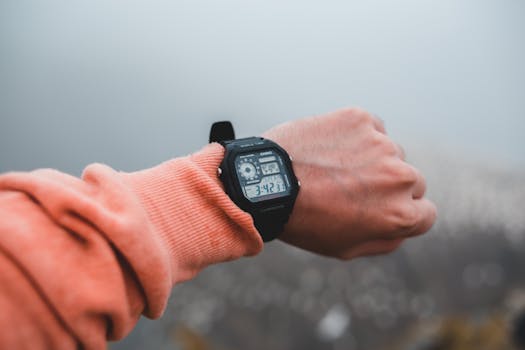
If you’re specifically optimizing for HRV accuracy, chest straps usually have the advantage because they measure electrical activity and are less dependent on skin optics and motion. Optical wearables can still be highly useful—especially for overnight HRV—because the conditions are stable and your data will be consistent when you wear the device correctly.
So how do you choose?
- Choose optical first if your main goal is sleep and recovery trends, you can wear it snugly, and you want a low-effort daily system.
- Choose a chest strap if you care about HRV during workouts, post-exercise recovery, or daytime stress tracking where motion is unavoidable.
- Choose both if you want the strongest blend of adherence (optical overnight) and measurement quality (strap during training).
When you’re ready to buy, look for a chest strap that provides reliable electrode contact and integrates smoothly with your phone and training apps, and choose an optical wearable that maintains consistent fit and offers clear HRV output. If you do a 14-night validation period and keep your measurement setup stable, you’ll get far more value from the data—regardless of which sensor type you start with.
In the end, the “best wearable for HRV accuracy optical vs chest strap” isn’t just about the sensor. It’s about matching the measurement method to your routine, then using consistent conditions long enough to see meaningful trends.
07.02.2026. 01:01