

Ankle Dorsiflexion ROM Plateau: Troubleshooting and Fix Plan

What it looks like when dorsiflexion stops improving
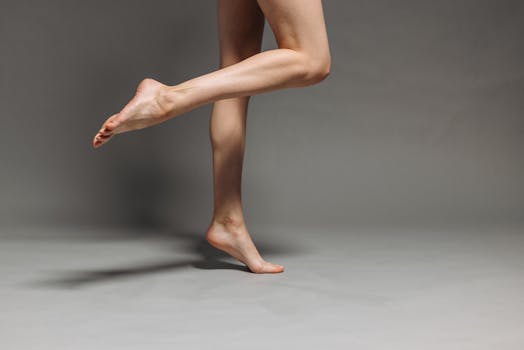
An ankle dorsiflexion range of motion plateau usually shows up as a stubborn “ceiling” during common mobility checks—especially the knee-to-wall test, kneeling ankle rocks, or deep squat positions. You may feel the limit as a tightness at the front of the ankle, a stretch that never gets a little easier, or a sense that the joint simply won’t glide further even when you apply effort.
Typical signs include:
- You can reach the same knee position week after week, with little or no change.
- Swelling or warmth after training makes the restriction feel worse, then returns to the same baseline the next day.
- You compensate by shifting the knee inward/outward, lifting the heel off the ground, or collapsing into pronation/supination to “find” the movement.
- Mobility work feels effective for a short time but the range doesn’t carry over into daily movement or workouts.
- As you push deeper, the sensation changes—stretch becomes pinching, sharp discomfort, or a hard stop.
When progress stalls, the goal is not to “stretch harder.” A plateau usually means one or more limiting factors are being missed: joint mechanics, tissue tolerance, foot/ankle alignment, mobility technique, or load management.
Most likely causes behind a dorsiflexion plateau
Plateaus are rarely caused by a single issue. In practice, the most common culprits fall into a few buckets. Use the troubleshooting steps below to narrow down which bucket is most relevant to your situation.
1) Technique and measurement errors
Many people chase a number that isn’t being measured consistently. Small differences in foot placement, knee tracking, or trunk position can create the illusion of a plateau. For example, if your knee travels less forward over time, you’ll “hit the same wall” even if tissue is adapting.
Also, some tests load the ankle differently than sport or daily tasks. Knee-to-wall mobility can be limited by how you brace the foot, how hard you press the whole foot into the ground, and whether you keep the heel down.
2) Calf and posterior chain stiffness that isn’t adapting
Limited dorsiflexion often involves the gastrocnemius and soleus. But not all “calf tightness” is the same. If you only stretch with the knee straight, you may be missing the soleus contribution. If you only stretch the soleus without addressing the gastrocnemius, your total range may still stall.
Another common issue is that you’re stretching, but not building tissue tolerance to repeated ankle dorsiflexion under load. Mobility without strength can feel good briefly and then fail to carry over.
3) Mobility without sufficient joint mechanics (stiffness at end range)
The ankle is a hinge joint that depends on joint surface glide. If your dorsiflexion limit feels like a hard block rather than a soft stretch, joint mechanics may be the limiting factor. This can be influenced by:
- Capsular stiffness
- Soft tissue restrictions around the anterior ankle
- Limited talar translation during forward knee movement
4) Anterior ankle impingement or painful end-range tissue
If you feel pinching at the front of the ankle as you push deeper, the plateau may be driven by impingement or tendon-related irritation. In these cases, more aggressive stretching often worsens symptoms, and the fix requires smarter loading choices and progression.
5) Prior injury, scar tissue, or altered mechanics
Previous ankle sprains, fractures, or significant soft tissue injury can change how the joint moves. Scar tissue and altered foot mechanics can reduce the ability to dorsiflex smoothly and consistently.
6) Foot alignment and load distribution issues
Foot position affects ankle mechanics. If you consistently roll to the inside (overpronation) or collapse the arch under load, the talus may not glide as effectively into dorsiflexion. Conversely, excessive rigidity or high-arched mechanics can also limit motion if the foot doesn’t absorb forces well.
7) Load management and recovery gaps
A plateau can be a “recovery plateau.” If you’re increasing training volume, sprinting, jumping, or spending long hours on your feet without enough recovery, calf and ankle tissues may never fully adapt. Inflammation and irritation can also mask true gains by keeping you guarded.
Step-by-step troubleshooting and repair process
Work through these steps in order. Each step either rules out a common cause or identifies a specific pattern you can address. Keep notes: which test changes, which symptoms flare, and how your movement looks.
Step 1: Confirm the plateau with a consistent test
Choose one mobility screen and repeat it exactly. A common option is the knee-to-wall method.
- Use the same wall distance, same foot angle, and same foot placement every time.
- Keep the heel down and ensure your foot stays fully grounded.
- Move your knee forward over the toes without twisting the torso.
- Record the result as either distance (in cm) or a consistent scoring method.
Repeat on the same time of day and with similar warm-up. If your measurement is inconsistent, your “plateau” may be a testing artifact.
Step 2: Identify the restriction sensation at end range
During the test, note what you feel:
- Soft stretch/tightness in the calf or behind the ankle: likely tissue length/tolerance issue.
- Hard block at the joint: possible joint mechanics restriction.
- Pinching at the front of the ankle: consider impingement or anterior tissue irritation.
- Pain that changes with loading: may point to tendon irritation or inflammation.
This sensation guide determines which next steps are safest.
Step 3: Check knee tracking and foot pressure
Even with good mobility, poor alignment can limit dorsiflexion gains. Pay attention to:
- Knee path: does your knee track forward or drift sideways?
- Heel behavior: does the heel lift as you push deeper?
- Foot pressure: are you losing pressure on the forefoot or collapsing the arch?
A useful cue is to keep the big toe mound and heel grounded while allowing the knee to move forward. If you’re “chasing” dorsiflexion by lifting the heel or rotating the foot, you may not actually improve talar translation.
Step 4: Separate gastrocnemius vs soleus limitation
Do two quick checks:
- Gastrocnemius bias: dorsiflexion with the knee straight (often shows limitations here).
- Soleus bias: dorsiflexion with the knee bent while keeping heel down.
If knee-bent dorsiflexion improves but knee-straight doesn’t, the gastrocnemius is likely the primary limiter. If both are limited, both muscles and joint mechanics are likely involved.
Step 5: Assess whether the plateau is irritation-driven
For 3–5 days, monitor:
- Resting soreness at the front of the ankle
- Swelling after training
- Morning stiffness
- Whether dorsiflexion feels better after light movement and worse after aggressive stretching
If symptoms flare, your “mobility program” may be exceeding tissue tolerance. In that case, the troubleshooting shifts toward calming load and building capacity more gradually.
Solutions from simplest fixes to more advanced fixes
Choose the section that matches what you found in the troubleshooting steps. Start at the simplest option for your pattern and progress only when symptoms remain stable.
Simple fix 1: Standardize your mobility practice and cues
For many plateau cases, the fastest improvement comes from consistency and better mechanics rather than new exercises.
- Pick one dorsiflexion drill (knee-to-wall, ankle rocks, or a controlled lunge into dorsiflexion).
- Use the same foot angle and spacing each session.
- Keep heel down and guide the knee forward, not inward.
- Stop the set when the restriction becomes pinchy or sharp.
Progress by increasing time under tension or reps—not by forcing deeper range immediately.
Simple fix 2: Use knee-bent and knee-straight calf work in the same week
If you suspect calf stiffness, you need both gastrocnemius and soleus contributions. A practical approach:
- Gastrocnemius-focused: calf stretching or controlled dorsiflexion work with the knee straight.
- Soleus-focused: similar work with the knee bent, emphasizing heel-down position.
Keep intensity moderate. If your plateau includes anterior pinching, reduce stretch depth and prioritize controlled end-range positioning.
Simple fix 3: Add loaded dorsiflexion capacity (not just passive stretching)
To move past a plateau, tissue often needs to tolerate dorsiflexion under load. Try controlled progressions:
- Perform ankle rocks or knee-over-toe drills with a slow tempo and full-foot contact.
- Use a stable support (wall, bench) to reduce balance compensation.
- Increase difficulty gradually by moving further forward, increasing hold time, or adding light bodyweight.
If you have access to resistance tools, a resistance band can help reinforce the forward knee position while keeping the heel down. The key is that the drill should build control, not provoke pain.
Simple fix 4: Improve foot mechanics under the same ankle demand
If your foot collapses as you dorsiflex, address load distribution without “taping harder.” Start with:
- Short-foot activation (lifting the arch without curling toes).
- Controlled balance while maintaining heel-down alignment.
- Short sets of dorsiflexion drills while actively maintaining arch support.
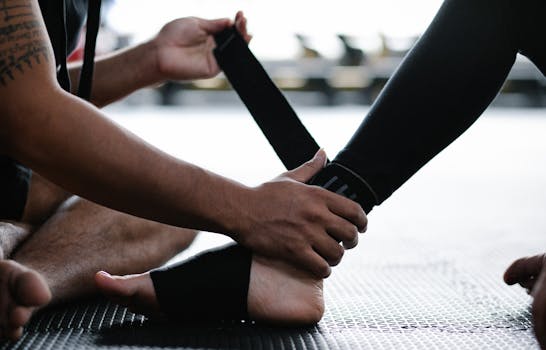
If you frequently overpronate, some people benefit from temporary support like taping to help the talus move more predictably. Use it to learn mechanics, not to mask the problem permanently.
More advanced fix 1: Restore anterior joint glide with manual or self-mobilization
When the restriction feels like a hard end range and stretching doesn’t change the ceiling, self-mobilization can help. A common approach is to focus on talar glide using gentle, controlled pressure and repeated movements.
Guidelines:
- Use low-to-moderate force and stop if you reproduce pinching pain.
- Combine mobilization with active dorsiflexion attempts immediately after.
- Perform a small dose consistently (several short sessions per week) rather than one aggressive session.
Work within a pain-monitoring framework: a mild stretch sensation is acceptable; sharp or worsening pain is not.
More advanced fix 2: Progress calf strength through dorsiflexed positions
Strength training can break a plateau because it increases tissue tolerance and improves movement control. Progress from tolerable to challenging:
- Start with controlled calf raises that allow the ankle to stay within a pain-free dorsiflexion range.
- Add tempo and pauses at the bottom if heel stays grounded.
- Progress toward deeper knee-bent variations to target soleus demand.
If your ankle pinches at depth, reduce range and build strength first. You’ll often earn the deeper range afterward through improved capacity.
More advanced fix 3: Address impingement-like symptoms with load modification
If you feel anterior pinching, the goal is not to stretch through it. Instead:
- Back off dorsiflexion drills that reproduce pinching for a short period.
- Switch to mid-range controlled loading where you can keep heel down without sharp symptoms.
- Build tolerance with gradual increases in range and volume only when symptoms settle.
In some cases, the plateau persists because the anterior structures are irritated. Aggressive stretching can keep the joint irritated and prevent adaptation.
More advanced fix 4: Rebuild post-injury mechanics and scar mobility
If you had a significant ankle sprain or prior surgery, plateauing is more likely. The ankle may be moving less smoothly due to altered tissue behavior or scar restrictions.
Approach:
- Use gentle mobility work that restores comfortable motion without provoking sharp pain.
- Include soft tissue work around calf and anterior ankle if it feels restricted, but avoid deep pressure that increases irritation.
- Progress into loaded dorsiflexion drills only when range feels smoother and less guarded.
This is one of the situations where professional assessment can accelerate progress, especially if you suspect joint surface changes or persistent scar-related limitation.
More advanced fix 5: Manage training load so adaptation can happen
When a plateau appears during a heavier training block, consider recovery as part of the plan.
- Reduce high-impact work temporarily if the ankle is irritated.
- Keep mobility consistent but reduce intensity if swelling or warmth appears.
- Prioritize sleep and overall training balance to allow tissue remodeling.
If your ankle tolerates mobility but not training, you may need to adjust the type of loading (e.g., fewer deep dorsiflexion positions during sessions) until symptoms calm.
When to consider replacement, imaging, or professional help
Most dorsiflexion plateaus respond to smarter troubleshooting and progressive loading, but some situations require a clinician’s input. Seek professional evaluation if any of the following apply:
- Pinching pain at the front of the ankle that persists or worsens despite load modification.
- Swelling that repeatedly returns after activity or a sense of catching/locking.
- Significant loss of motion after injury, especially if you suspect a structural issue.
- Neurologic symptoms (numbness, tingling, weakness) associated with movement.
- Dorsiflexion is limited on one side with a clear mechanical block after rehab attempts.
Imaging or specialist assessment may be appropriate if there’s concern for anterior impingement, tendon pathology, osteochondral lesions, or joint structural changes. A movement professional or physical therapist can also assess whether your plateau is primarily driven by gastrocnemius/soleus, capsular restriction, talar glide limitation, or foot mechanics.
Regarding “replacement”: the ankle joint itself is rarely the target of replacement for a mobility plateau. However, if you’ve been using worn equipment (e.g., unsupportive footwear, shoes with collapsed midsoles) and your foot mechanics are consistently unstable, it can indirectly affect dorsiflexion. Addressing footwear can be part of the troubleshooting, but it won’t replace the need for mobility and loading capacity.
If you want a practical decision rule: if you can improve your pain-free range with controlled drills but it won’t carry over to loaded positions, keep progressing capacity. If you can’t improve pain-free range and pinching persists, shift to joint-friendly loading and get assessed.
Putting it all together to move off the plateau

A true ankle dorsiflexion range of motion plateau is usually a sign that the current strategy doesn’t match the limiting factor. Start by verifying your measurement, then identify whether the end range feels like soft stretch, hard block, or anterior pinching. From there, apply the simplest fixes: standardize technique, cover both calf angles, and add controlled loaded dorsiflexion. If those don’t change the ceiling, progress to joint glide work and strength in tolerable ranges. If symptoms flare, treat the plateau as an irritation or mechanics issue rather than a “lack of stretching” problem.
With consistent mechanics, appropriate tissue tolerance, and gradual load progression, most plateaus respond. The key is matching the intervention to what your ankle is actually doing at end range.
03.01.2026. 14:13