

Dynamic vs Static Stretching for Mobility: What Works and When

Why mobility training needs the right stretch type
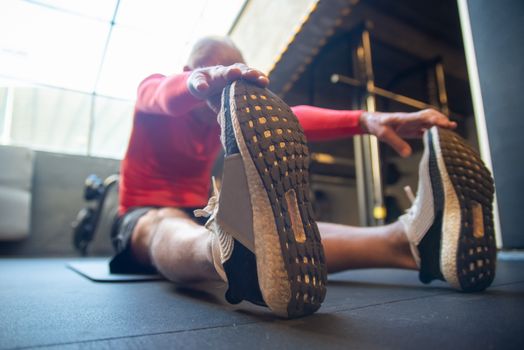
Mobility isn’t just “touching your toes.” It’s the ability to move a joint through a useful range of motion with control, strength, and comfort. If you stretch the wrong way at the wrong time, you can feel looser temporarily while actually reducing your ability to perform—especially right before training or sport.
This is where dynamic vs static stretching for mobility matters. Dynamic stretching prepares your nervous system and joints for movement. Static stretching can improve tissue tolerance and range over time, but it works best in specific contexts. Knowing when to use each helps you train more effectively and avoid common setbacks like lingering stiffness or reduced power.
Dynamic stretching: what it is and how it changes mobility
Dynamic stretching uses controlled, movement-based actions to take your joints through a range of motion. Instead of holding a position, you repeatedly move—often gradually increasing motion and intensity.
Think of it as “warming up the movement system.” Your muscles, tendons, and connective tissues respond to motion. Your nervous system also ramps up, coordinating how you recruit muscles as the joint moves.
What happens to your body during dynamic stretching
- Increased joint readiness: Repeated motion helps your joints tolerate movement and improves the quality of motion patterns.
- Neural activation: Because you’re moving, your brain and spinal cord adjust motor output quickly—useful before sprinting, lifting, or sport-specific drills.
- Temperature and blood flow: Even light dynamic work can raise local tissue temperature, supporting better movement mechanics.
- Improved coordination: You’re practicing the pathway your body will use during the workout.
Common examples you can use
Dynamic stretching tends to look like drills rather than holds. For example:
- Leg swings: front-to-back and side-to-side for hip mobility
- Walking lunges: slow reps with an upright torso for hip flexor and ankle readiness
- Arm circles and thoracic rotations: controlled moves for shoulder and upper-back mobility
- Hip hinges with bodyweight: moving through a safe range to prime the posterior chain
- Bodyweight squats to a comfortable depth: repeated reps to practice the movement pattern
How long and how intense should it be?
For mobility before activity, dynamic stretching is typically short and progressive. A practical starting point is 5–10 minutes total during your warm-up, using 1–2 sets of 5–10 reps per drill (or 30–45 seconds if you’re doing continuous movement).
Intensity should be “challenging but controlled.” If you’re bouncing, losing form, or forcing end ranges, you’re likely turning mobility work into strain. The goal is to prepare you for the next movement, not exhaust you.
Static stretching: what it is and why it can improve range
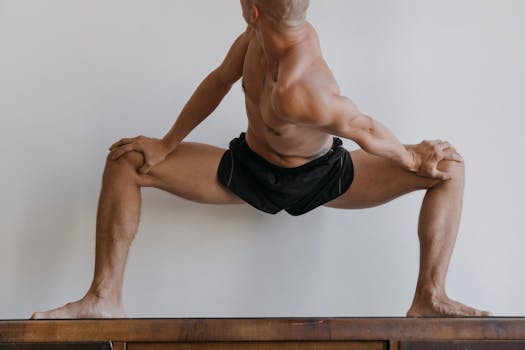
Static stretching involves moving into a position and holding it—usually at or near the point where you feel a strong stretch sensation, but not pain. The key feature is stillness.
Static stretching is best thought of as a tool for tissue tolerance and long-term range improvements. With repeated practice, many people notice increased comfort and range in targeted joints.
What happens during static stretching
- Mechanical adaptation over time: Connective tissues can become more tolerant of lengthened positions when you train them consistently.
- Reduced “protective stiffness”: The nervous system can learn that end-range positions are safe, which may reduce how strongly it resists.
- Better awareness of end range: Holding still helps you learn where your body actually limits you—often more useful than aggressive stretching.
How long to hold
For mobility work, common ranges are 30–60 seconds per stretch. Many people do best with 1–3 rounds depending on the session and how tight they are. If you’re new to static stretching, start closer to 20–30 seconds and build gradually.
While longer holds can feel good, they’re not automatically better. The quality of the hold—controlled breathing, stable positioning, and no sharp pain—matters more than chasing extreme angles.
Where static stretching fits: after training and on off days
Static stretching is often most effective when your body is already warm and you’re not about to demand high power or speed. That typically means:
- After your workout (cool-down phase)
- On separate mobility days when your goal is range and comfort
In these contexts, static holds are less likely to interfere with performance and can support long-term mobility goals.
Dynamic vs static stretching for mobility: the timing decision
When people ask about dynamic vs static stretching for mobility, the most useful answer is timing. Both approaches can contribute to better range, but they influence your body differently in the short term.
Before training or sport: prioritize dynamic work
Right before you lift, run, jump, or play a sport, your body needs readiness. Dynamic stretching supports that by moving you through relevant ranges and activating the systems you’ll use.
A common warm-up flow looks like:
- 2–5 minutes easy general warm-up (bike, brisk walk, row)
- 5–10 minutes dynamic mobility and movement prep
- 1–3 minutes transition into your first exercise (lighter sets or practice reps)
After training: use static stretching strategically
After you finish your main work, you can shift from preparation to recovery and mobility refinement. Static stretching can be used to:
- Cool down while maintaining or improving range
- Target tight areas you want to address consistently
- Improve comfort for daily movement
If you routinely finish workouts feeling “open” but still stiff later in the day, static stretching may help you bridge that gap—especially when paired with consistent weekly practice.
On off days: static stretching can be the main tool
Some people benefit from a dedicated mobility session 2–4 times per week. On those days, static stretching can be the primary approach, often supplemented with gentle dynamic movement to keep tissues warm and reduce stiffness.
Performance and safety: how wrong timing can backfire
Mobility training isn’t only about gaining range. It’s also about staying functional. The wrong stretching strategy at the wrong moment can affect your ability to produce force.
Why long static holds right before intense work can reduce output
Static stretching immediately before explosive activity may temporarily reduce performance in some people. The mechanism isn’t a single simple cause; it likely relates to changes in muscle-tendon stiffness and how your nervous system recruits force at that moment.
You don’t need to fear static stretching entirely before training. But if you notice that long holds make you feel weaker, slower, or less springy, adjust by:
- Reducing hold time (for example, use 10–20 seconds instead of 45–60)
- Switching to shorter dynamic drills
- Saving longer static holds for after your workout
How to avoid overstretching
Whether dynamic or static, your goal is “strong stretch sensation, not sharp pain.” A practical guideline:
- Stretch sensation: uncomfortable but tolerable, like a deep pull
- Pain: sharp, pinching, or lingering after you stop
If pain is present, reduce range and reassess technique. If pain persists, consider getting evaluated by a qualified professional, especially if mobility limitations are tied to injury, nerve symptoms, or joint instability.
Real-world scenario: building hip mobility for running

Imagine you’re a runner who can’t get comfortable hip extension, and your stride feels shortened. You notice that after sitting all day, your hips feel tight, and when you run you compensate with more lower-back arching.
Here’s a practical approach that uses both methods without mixing them randomly:
- Before a run (dynamic): 5–10 minutes total. Use 2 sets of leg swings (10 each side), walking lunges (6–8 steps each side), and controlled hip hinges (8–10 reps). Keep the range moderate and smooth.
- During the first 5 minutes of running: start slightly easier than your usual pace. Let the warm-up continue as you move.
- After the run (static): choose hip flexor and glute-focused stretches. Hold 30–45 seconds per position for 2–3 rounds. Breathe slowly and aim for steady tension, not forceful pushing.
- On a mobility day: repeat the static holds, plus a gentle dynamic sequence (a short set of squats to comfort, glute bridges, or light rotations) to keep movement quality high.
Over 3–6 weeks, many runners notice improved comfort and a better stride feel. The key is consistency and timing: dynamic work primes your running mechanics, while static stretching builds longer-term tolerance.
How to build a weekly mobility plan using both methods
You don’t need to pick one forever. Mobility improves when you repeat the right stimulus consistently.
A simple structure you can follow
- 2–4 days per week: dynamic mobility before training or on active days
- 2–3 days per week: static stretching after training or on separate mobility sessions
- Daily: short movement breaks (even 2–3 minutes) if you sit a lot
Select stretches based on your movement limits
Instead of stretching everything, pick 2–4 key areas tied to your goals. For example:
- Hip mobility if your squat depth is limited
- Ankle mobility if your knees move forward too early
- Thoracic rotation if your shoulders feel restricted during pressing
- Hamstring length and hip hinge control if your back rounds during bending
Then match the method to the moment: dynamic before performance, static for aftercare and range.
Use progression that respects your recovery
If you’re starting from scratch, progress gently. A practical progression might look like:
- Week 1: 20–30 second static holds, 1–2 rounds
- Week 2–3: move toward 30–45 seconds, 2 rounds
- Week 4+: add a third round or slightly increase range if you recover well
If you feel worse after mobility sessions—more stiffness that lasts into the next day—reduce intensity or shorten holds. Mobility should make you feel better, not create new tightness.
Practical guidance for your next session
Use these rules of thumb to choose dynamic vs static stretching for mobility without overthinking it.
Before training
- Choose dynamic drills that resemble your upcoming movement (squat pattern prep for squats, hip hinge prep for deadlifts, rotation prep for sport).
- Keep total dynamic time around 5–10 minutes.
- Use controlled reps: 5–10 reps per drill or 30–45 seconds per continuous movement.
- If you use any static stretching before training, keep it brief (around 10–20 seconds) and limited to areas that feel safe and helpful.
After training
- Use static stretching for 30–60 seconds per position.
- Target 2–4 areas that matter for your mobility and comfort.
- Do 1–3 rounds based on time and recovery.
- Keep breathing steady; don’t turn stretching into a breath-holding contest.
What about foam rolling and other mobility aids?
Tools like a foam roller or a massage ball can be useful for reducing discomfort and improving readiness. They’re not a replacement for stretching, but they can complement your routine. For example, you might roll tight tissues for 60–90 seconds, then follow with dynamic prep before training or static holds afterward.
If you use products for self-massage, keep the pressure tolerable. The goal is to create a better training environment, not to provoke intense soreness.
Summary: choose dynamic for readiness, static for range

Dynamic vs static stretching for mobility can be simple when you match the method to the purpose.
- Dynamic stretching prepares you for movement. Use it before training or sport to improve joint readiness, coordination, and warm-up quality.
- Static stretching supports long-term range and tissue tolerance. Use it after training or on off days to build mobility more steadily.
When you time these correctly, you get the benefits without the downsides. Keep holds controlled, avoid sharp pain, and progress gradually over weeks rather than chasing quick fixes in a single session.
Prevention guidance: keep mobility consistent and joint-friendly
Mobility gains are fragile if your routine is inconsistent or if you repeatedly overload sensitive ranges. To prevent setbacks:
- Be consistent: aim for at least 2–3 mobility-focused sessions per week.
- Track comfort: if mobility improves during the session but worsens the next day, reduce intensity.
- Prioritize control: smooth motion beats aggressive pushing.
- Respect the basics: sleep, hydration, and sensible training volume all influence how tissues respond to stretching.
- Address underlying limits: if a joint is painful or feels unstable, stretching alone won’t fix it. You may need assessment and targeted strengthening.
With the right mix of dynamic prep and static range work, you can build mobility that shows up in real life—during workouts, daily tasks, and sport.
26.04.2026. 04:38