

How to Tell Muscle Gain vs Fat Loss

Why it’s hard to separate muscle gain from fat loss

When you’re training and eating with purpose, your body often changes in multiple directions at once. You can lose fat while also gaining some lean mass, especially if you’re new to resistance training, returning after a break, or maintaining a calorie balance that supports recovery. The result is that the scale may move unpredictably, your clothes may fit differently day to day, and progress photos can look confusing even when you’re improving.
This is why learning how to tell muscle gain vs fat loss is less about finding a single “perfect” signal and more about combining several indicators. The most reliable approach uses trends over time, multiple measurement methods, and an understanding of what each metric can and cannot tell you.
Start with the basics: what each change looks like inside the body
Muscle gain and fat loss come from different biological processes, and that difference shows up in how your body responds.
What fat loss typically changes
Fat loss primarily reflects a sustained energy deficit over time. As fat tissue decreases, the body tends to:
- Lower total body fat percentage gradually
- Reduce “soft” or compressible areas (often around the waist)
- Improve metabolic efficiency and endurance for the same workload (not always immediately)
- Change skin appearance as fat under the skin decreases, which can make definition more visible
What muscle gain typically changes
Muscle gain reflects progressive overload and adequate recovery plus sufficient protein and calories. As muscle increases, the body tends to:
- Increase strength first, then muscle size (often with a time lag)
- Improve muscle “fullness” and shape, especially after training
- Make joints feel more stable and movements feel smoother
- Increase lean tissue, which may not lower the scale even during fat loss
Because both processes can happen simultaneously, the most useful question is not “which one is happening?” but “what pattern do my signals show over time?”
Use the scale correctly: when it helps and when it misleads
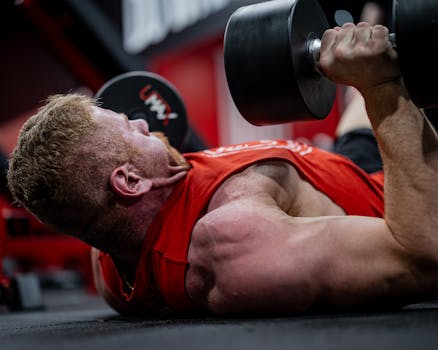
The body weight scale is simple, but it’s also blunt. It measures total mass, which includes water, glycogen, muscle, fat, bone, and gut contents.
How to interpret weight trends
- Fat loss with muscle gain: weight may stay the same or drop slowly, especially if water and glycogen fluctuate.
- Fat loss without much muscle gain: weight usually declines more consistently.
- Muscle gain with minimal fat loss: weight may rise while waist and body fat markers change little.
- Water masking: after hard training, high-sodium meals, or more carbohydrates, weight can temporarily increase even if fat is decreasing.
A practical way to read the scale
Track weight daily, but interpret it using a weekly average. Look for direction over 2–4 weeks rather than day-to-day changes. If your weekly average is trending down while waist measurements shrink, you’re likely losing fat. If your weekly average rises while performance improves and waist stays stable, muscle gain may be outpacing fat loss.
Body measurements: the most informative at-home signals
Body measurements can help you separate fat loss from muscle gain because different tissues change differently. Use the same method each time to reduce error.
Waist measurements for fat loss
Waist circumference—measured consistently at the same anatomical point—often reflects changes in abdominal fat and overall fat distribution. A common pattern for fat loss is:
- Waist decreases first or more noticeably than other measurements
- Clothing fits differently around the beltline even if weight doesn’t change much
For accuracy, measure at a consistent time of day (often morning) and avoid measuring right after a very salty meal or a heavy workout if you’re sensitive to water retention.
Upper-body and limb measurements for muscle gain
Muscle gains show up more in specific areas when training is targeted and progressive. Consider tracking:
- Upper arm (mid-belly) for biceps/triceps changes
- Chest and shoulder circumference for upper-body development
- Thigh circumference for lower-body hypertrophy
These measurements can fluctuate due to water and training pumps, so measure when you’re not “swollen” from a recent session—often 24–72 hours after training is a good compromise.
How to combine measurements into a clear picture
- If waist decreases while arm/thigh measurements increase, you’re likely doing both: losing fat and gaining muscle.
- If waist stays stable but arms/thighs increase, you’re likely gaining muscle with minimal fat loss.
- If waist decreases while limb measurements don’t change, fat loss may be outpacing muscle gain.
Progress photos: make them more reliable than “vibes”
Photos can be powerful, but only if you standardize them. Without consistency, it’s easy to misread lighting, posture, and pump.
How to take photos that actually show change
- Use the same location, lighting, and camera distance
- Take photos under similar conditions (ideally not right after training)
- Use consistent poses (front, side, back) and relaxed posture
- Track weekly or biweekly rather than daily
What changes look like
- Fat loss cues: more visible waist definition, reduced “softness,” clearer separation between muscle groups
- Muscle gain cues: increased shape and fullness in specific areas (delts, chest, arms, quads), sometimes with improved symmetry
Remember: muscle gain is often subtle at first, while fat loss can reveal definition more quickly. If both are happening, photos may show both increased muscle shape and improved leanness.
Performance and strength: a strong indicator of muscle gain
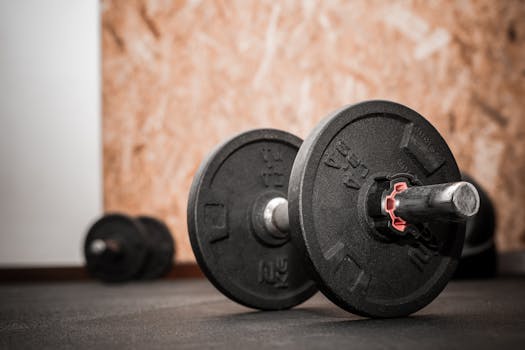
Training performance is one of the clearest ways to infer muscle gain. Even if the scale doesn’t move much, your body is adapting when you can do more work over time.
Signs your muscle is growing
- More reps at the same weight
- More weight for the same reps
- Improved technique and range of motion
- Less perceived effort for the same workout over weeks
Be cautious: performance can also change from fatigue and water
Strength and reps can temporarily improve due to better sleep, better fueling, or reduced fatigue—not only because of new muscle. That’s why trends over 4–12 weeks matter more than a single “good day.”
A practical approach is to track a few key lifts or movements (for example, squat/leg press pattern, push pattern, pull pattern). Consistent progress paired with stable or improving waist measurements strongly suggests muscle gain alongside fat loss.
Body composition tools: what they can tell you (and where they fail)
There are several ways to estimate body composition at home and in clinics. Each has error, and the biggest mistake people make is treating a single reading as truth.
Bioelectrical impedance (BIA) scales
BIA estimates body fat using electrical resistance. Hydration status, meal timing, and training can change readings. If you’re cutting calories and training hard, water shifts can make fat loss look slower or faster than it truly is.
- Best use: track long-term trends rather than exact numbers
- Consistency matters: same time of day, similar hydration, similar meal timing
DEXA and lab-based methods
DEXA can provide a more detailed breakdown, but it’s still not perfect and it’s not always practical. Even with lab methods, small changes can fall within the margin of error.
- Use it for periodic check-ins (for example, every few months)
- Interpret results as “direction” more than precision
Skinfold and circumference estimates
These methods depend heavily on technique. If the same person measures you consistently (or you learn a consistent method), they can be useful for tracking trends.
How nutrition and training influence the signals you see
Whether you’re leaning out, building muscle, or both depends on your calorie intake, protein intake, and training stimulus. Those factors also shape what your progress signals look like.
Calorie balance and the “scale vs waist” pattern
- Moderate deficit: you may see waist shrink and performance may hold up if training and recovery are solid. Muscle gain is possible but slower.
- More aggressive deficit: waist may drop faster, but muscle gain becomes harder and fatigue can rise—performance may stall.
- Near maintenance: muscle gain is more likely, and fat loss may be modest. Scale may stay stable or drift upward slightly.
Protein and recovery: the foundation for “muscle gain” signals
If protein and recovery are insufficient, you can still lose fat, but muscle gain signals (strength progress, muscle fullness, limb circumference) may be limited. Conversely, adequate protein and good sleep support training quality and adaptation.
Many people use protein targets in the range of roughly 1.6–2.2 g per kg of body weight per day, but the exact best number depends on body size, preferences, and adherence. The key is consistency and pairing protein with progressive training.
Training structure: progressive overload is the tell
To gain muscle, you need a stimulus that progressively challenges the muscle. This can be achieved through increased load, increased reps, improved form, or better exercise selection over time.
When muscle gain is occurring, you usually see at least one of the following: strength increase, rep volume increase, improved performance in key patterns, or improved ability to maintain form under fatigue.
Common pitfalls: why you might think you’re gaining fat—or not gaining muscle

Progress signals can be confusing. Here are frequent reasons people misinterpret what’s happening.
Water retention disguising fat loss
Water can increase due to higher carbohydrates, higher sodium, more total food volume, menstrual cycle changes, poor sleep, or muscle damage from new training. This can cause the scale to rise even while fat is decreasing.
To reduce confusion, rely on weekly averages and waist trends rather than single-day weight.
Training pumps and measurement timing
Measuring limbs right after a workout can inflate circumference due to blood flow and swelling. If you want to track muscle size, measure at a consistent time relative to training.
Posture and breathing changes in photos
Small differences in stance, rib position, and camera angle can change the apparent waist. Standardize the setup and focus on gradual changes.
Overreliance on a single device
BIA scales, for example, can swing with hydration. DEXA and other tools have measurement error too. The best practice is triangulation: combine scale trend, waist measurement, performance, and photos.
Putting it together: a practical way to judge what’s happening over 4–8 weeks
You don’t need to guess daily. Use a simple review process that emphasizes time and consistency.
Step 1: Track weekly averages, not daily noise
Look at your average weight across the week. Pair it with a weekly waist measurement. If both are moving in a favorable direction, fat loss is likely occurring.
Step 2: Check performance progress in your training log
Choose a few key movements and note whether you’re progressing in reps, load, or sets. If performance is improving while waist is decreasing, muscle gain is likely happening alongside fat loss.
Step 3: Confirm with photos and targeted measurements
Use photos and limb measurements as confirmation, not as the only evidence. If photos show more definition while arm/thigh measurements increase, that’s consistent with both processes.
Step 4: Expect mixed signals and adjust thoughtfully
It’s normal to have weeks where the scale stalls or photos look unchanged. What matters is the trend across multiple weeks. If performance is declining and waist isn’t changing, your deficit may be too aggressive or recovery may be insufficient. If waist is shrinking but performance is also dropping quickly, you may need more recovery or a less aggressive calorie approach.
When the goal is recomposition: what you should realistically expect
If you’re trying to gain muscle while losing fat, the changes will usually be slower than pure fat loss or pure muscle gain. Recomposition is often most noticeable when:
- You’re early in training or returning after a break
- You’re consistent with progressive resistance training
- You’re in a moderate calorie deficit or near maintenance (depending on your starting point)
- You prioritize sleep and protein
In these situations, the scale may not be the best headline metric. Waist and performance often tell a clearer story than weight alone.
Products and tools that can support measurement accuracy (without becoming the “truth”)

While no tool can replace consistent habits and trend analysis, certain measurement tools can make tracking more reliable. For example, a reliable tape measure with clear markings helps standardize waist measurements. A simple training log (paper or an app) improves the quality of performance trend data. If you use a BIA scale, treat it as a consistent trend instrument and follow the same conditions each time.
Some people also find that using a smartwatch or heart-rate-based training metrics helps maintain training intensity and recovery awareness. The key is to use such tools to support your training and consistency—not to chase single-day body composition numbers.
Summary: the most reliable signs of muscle gain vs fat loss
To determine what’s happening, focus on patterns across multiple indicators:
- Fat loss signals: waist circumference trends down, photos show less softness/greater definition, and weekly weight averages often drift downward (not always quickly).
- Muscle gain signals: progressive improvements in strength or reps, increased fullness/shape in targeted areas, and gradual increases in limb measurements when measured consistently.
- Recomposition signals: waist decreases while performance improves and photos show both leanness and more muscle shape.
Most importantly, avoid judging progress by one measurement, one photo, or one scale reading. Use consistent tracking over 4–8 weeks, and let the trend—not the noise—guide your interpretation.
Prevention guidance: how to avoid misreading progress
- Standardize measurement conditions: same time of day for photos and measurements, and consistent timing relative to workouts.
- Triangulate your evidence: combine scale trend, waist circumference, performance, and photos.
- Track training quality: if your weights and reps aren’t improving, muscle gain may be limited even if you’re eating well.
- Respect water fluctuations: expect temporary scale changes from carbs, sodium, sleep, and training stress.
- Give it time: muscle changes and visible recomposition often take weeks, not days.
03.04.2026. 10:55