

HRV Guided Fat Loss: A Step-by-Step Plan That Actually Fits Your Body

Set your goal: use HRV guided fat loss to train and recover smarter
HRV guided fat loss is a method for aligning your training intensity and recovery decisions with your heart rate variability (HRV). Instead of following a fixed “always go hard” plan, you use your HRV trend to decide when to push, when to maintain, and when to recover. That matters because fat loss isn’t only about calorie burn—it’s also about keeping stress manageable and consistency high.
Your job is simple: measure HRV daily, interpret the trend, and adjust your workout and lifestyle accordingly. Over time, you’ll build a routine where you recover well enough to stay consistent with a calorie deficit and training that preserves muscle.
Preparation: what you need before you start
Before you touch your training schedule, set yourself up so your HRV data is meaningful and repeatable.
- A wearable or HRV-capable device that records HRV (many fitness watches and chest straps do). Pick one device and stick with it.
- One consistent measurement window: ideally when you wake up, before caffeine and before you get out of bed.
- A simple tracking method: notes app, spreadsheet, or a journal. You only need 4 fields: date, HRV value (or score), sleep hours, resting heart rate (if available), and how you feel (1–5).
- Training access: gym, home setup, or both. You’ll need at least two training days per week to protect lean mass.
- Nutrition basics: choose your calorie target approach (see step 3). You don’t need perfection; you need a deficit you can repeat.
Timeline to start: plan for a 14-day “baseline” before making big adjustments. Your HRV will settle as you get consistent with measurement and routine.
Step-by-step: run an HRV-guided fat loss protocol
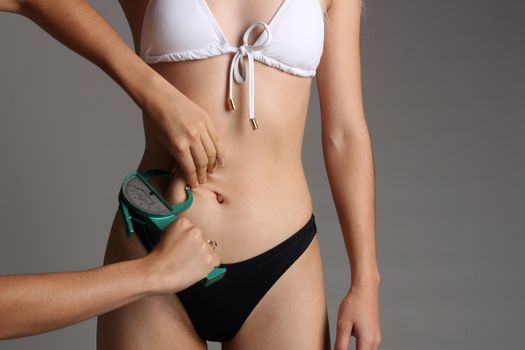
Step 1: Build your 14-day HRV baseline
For 14 mornings, record HRV and keep everything else as stable as possible.
- Measure HRV every day at the same time after waking.
- Log sleep duration (hours) and resting heart rate if your device provides it.
- Rate your readiness from 1 to 5 (1 = drained, 5 = great).
- Keep training roughly consistent (don’t radically change workouts during baseline).
Practical example: If you usually work out in the evening, keep that schedule for the baseline. If you normally drink caffeine after 10am, keep it the same. The goal is to reduce “noise” so HRV reflects your real recovery.
Step 2: Calculate your personal HRV thresholds
After 14 days, look at your HRV values (or HRV score). You’re not trying to hit a single perfect number. You’re creating decision bands based on your own trend.
Use this simple approach:
- Find your average HRV across the 14 days.
- Identify your upper range (days where HRV is clearly above your average) and your lower range (days where HRV is clearly below average).
If your device gives a numeric HRV in milliseconds (ms), a practical rule is to treat:
- High HRV day: about +5% to +10% above your average
- Low HRV day: about -5% to -10% below your average
- Mid HRV day: anything in between
If your device gives a score rather than ms, use the same idea: compare to your own 14-day average and set “high” and “low” based on where you consistently see your outliers.
Step 3: Set a fat loss structure you can sustain
HRV helps you choose training intensity and recovery. It doesn’t replace the fundamentals of fat loss.
Choose a calorie deficit you can maintain for at least 4 weeks. Two workable options:
- Time-based consistency: aim for a steady deficit daily (example: 300–500 kcal below maintenance).
- Protein-first deficit: keep protein consistent and adjust carbs/fats to maintain your deficit.
Protein target: aim for roughly 1.6–2.2 g per kg of body weight per day. This supports muscle retention while you’re cutting.
Weight check: weigh yourself 3–5 mornings per week and use the weekly average to judge progress. You’re looking for a downward trend, not a single scale day.
Step 4: Use HRV daily to choose training for the next 24–48 hours
Now you’ll make decisions based on the HRV reading you get each morning.
For each training day, decide which “mode” you’re in:
- High HRV mode (push): do your planned main workout with full effort.
- Mid HRV mode (maintain): do the workout, but keep intensity slightly lower (fewer hard sets, longer rests, or stop 1–2 reps before failure).
- Low HRV mode (recover): replace the hard session with low-stress movement (walk, mobility, light circuits) or take a complete rest day if HRV is significantly low.
Important: HRV guides intensity, not your entire lifestyle. You still eat in a deficit and you still move daily. You just alter training stress.
Step 5: Program your workouts around HRV modes
Here’s a clear structure you can follow for 4 weeks.
- 2 strength sessions per week (main lifts + accessory work)
- 1–2 conditioning sessions per week (choose a style you’ll actually do)
- Daily steps: aim for 7,000–10,000 steps depending on your baseline
Strength session template (use on High HRV days):
- Warm-up: 8–12 minutes easy + 2–3 ramp-up sets
- Compound lift: 3–4 sets of 4–8 reps
- Accessory: 2–3 sets of 8–12 reps
- Optional finisher: 1 light back-off set or core work
Strength session template (use on Mid HRV days):
- Do the same exercises, but use 2–3 sets instead of 3–4
- Stop with 2–3 reps in reserve
- Keep total volume about 70–85% of High HRV days
Low HRV day alternative:
- Option A: 30–45 minute walk + 15 minutes mobility
- Option B: 20–30 minutes easy bike/row + light bodyweight circuit (stop well before fatigue)
- Option C: full rest if HRV is low for 2+ consecutive days
Step 6: Add a simple recovery checklist when HRV drops
HRV drops are often a sign your body is absorbing stress—training, poor sleep, travel, illness, or even a heavy work week. Use HRV as a trigger to adjust your recovery for the next day.
On Low HRV mornings, do these immediately:
- Lower training stress (use the Low HRV mode)
- Get daylight: 10–20 minutes outside
- Hydrate: drink water before and after your morning routine
- Prioritise sleep: aim for your next night’s sleep to be within ±1 hour of your usual
- Reduce non-essential intensity (avoid heavy errands that spike stress, skip hard intervals)
Step 7: Evaluate weekly and adjust once you have momentum
At the end of week 1 and week 2, review:
- How many Low HRV days did you have?
- Did your training feel manageable?
- What happened to your weekly average body weight?
- Did your steps stay consistent?
Make one adjustment at a time. If weight isn’t trending down after 2–3 weeks, reduce calories slightly (for example, by 100–200 kcal/day) or add 1,000–2,000 steps/day. If HRV is frequently low, keep calories stable and reduce training volume first.
Common mistakes that stall HRV guided fat loss
- Changing measurement habits: measuring at random times makes the data less useful. Pick a consistent window.
- Overreacting to one low day: HRV can dip from a single late night, alcohol, or a stressful meeting. Focus on patterns across 2–3 days.
- Using HRV to justify skipping everything: you still need a training stimulus and a calorie deficit. HRV is for adjusting intensity, not abandoning the plan.
- Ignoring sleep quality: HRV often reflects recovery. If you’re consistently short on sleep, your HRV will not reliably guide you.
- Cutting calories too aggressively: big deficits can increase stress and lead to frequent Low HRV days. Aim for a deficit you can sustain.
- Training to failure on every set: failure increases stress. Even on High HRV days, keep most sets at 1–3 reps in reserve.
Additional practical tips and optimisation advice
Optimise your HRV data quality
HRV is sensitive. Improve reliability with small consistency habits:
- Measure after a similar amount of sleep (if you slept 4 hours one day, don’t over-interpret that day).
- Avoid heavy alcohol in the 24–48 hours before HRV measurement.
- Keep your morning routine stable: same sleep schedule window, same measurement behavior.
Use a “2-day rule” for major training decisions
If today’s HRV is low, it’s a nudge. If HRV is low for two consecutive mornings, treat it as a stronger signal. In that case:
- Skip the hardest session
- Reduce strength volume by 30–50% the next day
- Keep conditioning light (no max-effort intervals)
Pair HRV guidance with a muscle-preserving strength plan
Fat loss often fails because people lose muscle along with fat. Your HRV-guided approach should protect training consistency. Aim for:
- At least 8–12 quality sets per muscle per week (adjust based on your experience)
- Progressive overload on High HRV weeks: add reps or small weight jumps when you’re ready
- On Mid/Low HRV weeks: maintain technique and volume, then rebuild on High HRV weeks
Real-world scenario: busy work week with travel
Imagine you travel for work and your sleep schedule shifts by 2–3 hours. On day 1, your HRV is slightly low. You keep your strength session but cut volume by 20–30% (Mid HRV mode). On day 2, HRV is low again, and your readiness rating drops to 2/5. You switch to a 35-minute walk and mobility instead of training hard. You still eat in a modest deficit, keep protein consistent, and hit your steps. By day 4, HRV improves and you return to a full strength session.
This is HRV guided fat loss in practice: you don’t “quit,” you adapt stress so you can continue the deficit and preserve muscle.
Soft product integration: choose tools that support the routine
If you’re looking for equipment that makes this easier, consider a device that tracks HRV consistently and has a straightforward morning readout. Many people find it helpful to pair a chest strap for workout sessions (where accuracy may be higher) with a watch for daily HRV tracking. Brands vary, but the key is choosing one ecosystem and using it every day so your trends stay meaningful.
For training support, a simple strength app or workout journal helps you log sets and reps so you can reduce volume on Mid/Low HRV days without guessing. If you already track workouts, great—keep doing it.
Keep expectations realistic over 4 weeks
HRV guided fat loss isn’t a shortcut. It’s a way to reduce the chances you derail your plan due to excessive training stress. In 4 weeks, you should aim for:
- A consistent downward weekly average weight trend (even if it’s slow)
- Fewer “I’m wrecked” days where you skip workouts entirely
- Stable strength performance on High HRV days, with maintenance on Mid/Low days
If you’re losing weight but HRV keeps dropping, don’t just push harder. Back off training stress and consider a smaller deficit. If HRV looks stable but weight isn’t moving, adjust calories or steps first.
Stabilise your system and keep HRV guiding the next phase
Once you finish your first 4-week cycle, you’ll know your patterns. Continue measuring HRV, keep your thresholds updated every few weeks, and keep your training stress responsive. You’re building a feedback loop between your body’s recovery signals and your effort. That’s what makes HRV guided fat loss feel sustainable, not random.
12.06.2026. 08:34