

VO2max for Fat Loss: How Aerobic Fitness Affects Body Composition

Why VO2max matters for fat loss
VO2max is often described as the “ceiling” of your aerobic fitness—the maximum rate at which your body can use oxygen during intense exercise. While fat loss is ultimately driven by energy balance, VO2max can still play an important role in body composition because it influences how efficiently you move, how much total work you can sustain, and how your body responds to training.
In practical terms, higher aerobic capacity tends to make it easier to complete longer sessions at moderate intensities, maintain activity levels across the week, and recover well enough to train consistently. Those factors can indirectly support fat loss by helping you accumulate more metabolically relevant training volume and by improving metabolic flexibility—the ability to use fat and carbohydrates effectively depending on intensity.
This article explains how VO2max relates to fat loss, what physiological changes you can expect, and how to structure training to improve aerobic capacity without neglecting strength work and overall lifestyle.
Defining VO2max and what it measures
VO2max is measured as the maximum volume of oxygen your body can take in, transport, and use per unit time. In most lab settings, it’s quantified during a graded exercise test (for example, running or cycling with increasing difficulty). The final oxygen uptake rate at exhaustion is your VO2max.
Several systems contribute to VO2max, including:
- Cardiac output (how much blood the heart can pump)
- Oxygen delivery (blood volume and circulation)
- Muscle oxygen extraction (mitochondrial function and capillary density)
- Ventilatory efficiency (how well breathing matches metabolic demand)
Because VO2max reflects the integrated performance of these systems, training that improves VO2max often improves endurance and increases the amount of work you can perform at higher intensities. That’s where fat loss connections begin.
How improving VO2max can support fat loss
Fat loss depends on a sustained calorie deficit, but VO2max-related adaptations can make it easier to create and maintain that deficit through training and daily activity. The most relevant mechanisms are below.
More work at manageable intensities
As VO2max rises, many people can run or cycle at a higher percentage of their capacity while still feeling “controlled.” That means you can often spend more time in the moderate-intensity zone—where fat oxidation is meaningful—without crossing into an all-out effort that limits session duration.
Importantly, fat oxidation during exercise is not the same as overall fat loss. Still, doing more total work at sustainable intensities can increase energy expenditure and improve the likelihood you stay consistent.
Better metabolic flexibility
Training that raises aerobic fitness tends to improve how muscles switch between fuel sources. With improved conditioning, fat utilization at moderate intensities often becomes more efficient, while carbohydrate use is better regulated when intensity rises.
Metabolic flexibility matters because it supports endurance and helps reduce the “burnout” effect that can happen when exercise intensity is too high for your current fitness level.
Greater mitochondrial density and function
VO2max improvements are strongly linked to muscle adaptations such as increased mitochondrial content and enzyme activity. Mitochondria are the cellular structures that help oxidize fat and carbohydrates to produce energy. More capable mitochondria can make aerobic exercise more efficient and can support recovery between sessions.
Improved recovery and training consistency
Even when two people train the same number of days, the person with higher aerobic capacity often tolerates training stress better. Better recovery can allow more frequent sessions and higher-quality workouts, which supports total weekly energy expenditure.
Appetite and energy regulation (indirect effects)
Exercise can influence hunger and fullness signals, but the direction and magnitude vary widely between individuals. VO2max-focused training may help some people manage cravings by improving mood, reducing stress reactivity, and creating a more stable routine. However, appetite compensation can also occur—especially if training increases while dietary structure stays loose. For fat loss, consistency in intake still matters.
What VO2max training looks like in practice
Improving VO2max generally requires training that challenges the oxygen system—typically intervals at moderate-to-high intensity and aerobic work that builds endurance. The goal is not to “max out” every session, but to repeatedly create a stimulus that drives central and peripheral adaptations.
Interval sessions that target oxygen demand
Common VO2max-oriented formats include:
- High-intensity intervals (for example, 3–5 minute repeats with short recoveries)
- Shorter intervals (for example, 30–60 second efforts with recovery that allows partial readiness)
- Tempo-to-interval hybrids (longer controlled segments that build toward harder efforts)
These sessions should be hard, but not reckless. A useful rule is that intervals should be challenging enough to feel like your aerobic system is truly being taxed, yet you can maintain reasonable quality across reps.
Aerobic base that supports fat loss consistency
VO2max training works best when built on a base of easier aerobic work. Easy sessions help you accumulate volume, improve endurance, and reduce injury risk. They also help you keep moving on non-training days, which is often where fat loss differences appear.
For many people, a practical weekly mix is:
- 1–2 VO2max-stimulus sessions per week
- 2–4 easy/moderate sessions focused on time and consistency
- 1 strength training session (or more) to protect muscle and improve body composition
How to choose intensity without obsessing over lab numbers
Not everyone has access to a VO2max test, and you don’t need one to train effectively. The key is choosing effort levels you can repeat safely.
Use perceived effort and breathing cues
During VO2max intervals, you should feel that you are working near your upper aerobic limit. Breathing is heavy, and speaking full sentences is not possible. Over the course of the interval session, you should still be able to complete the planned work without collapsing into sloppy form.
Heart rate can help, but it’s not perfect
Heart rate tends to lag during sudden intensity changes and can drift with heat, dehydration, or stress. Still, it can guide consistency if you use it thoughtfully. Many people use a target range for interval work and adjust based on how the session feels rather than treating heart rate as a strict rule.
Power or pace can improve repeatability for cyclists and runners
If you’re using a bike trainer or a treadmill with pace control, you can target consistent outputs. The goal is repeatability: the effort should be similar across intervals, not progressively lower because you started too fast.
Sample weekly structure for VO2max-focused fat loss
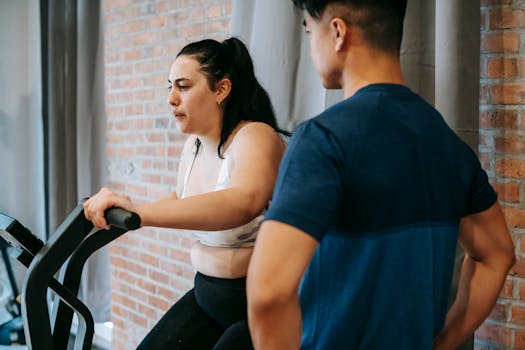
The right structure depends on training history, schedule, and recovery. Below is a general example that emphasizes fat loss support through consistency, muscle retention, and aerobic development.
- Day 1 (easy aerobic): 30–60 minutes at a conversational pace
- Day 2 (VO2max intervals): 1 warm-up, then 4–6 repeats of hard efforts (work:recovery often around 1:1 to 1:2), finish with a cooldown
- Day 3 (strength + easy movement): strength training plus short easy walking or cycling
- Day 4 (moderate aerobic): 30–60 minutes slightly harder than easy, steady and controlled
- Day 5 (VO2max stimulus or tempo): either another interval session (if recovery is good) or a longer controlled session that builds aerobic capacity
- Day 6 (easy aerobic): 30–60 minutes easy
- Day 7 (rest or light activity): walking, mobility, or very light cycling
If you’re new to interval training, start with fewer hard repeats and prioritize easy volume. VO2max improves with progression, not with immediate maximal effort.
Common mistakes that reduce fat loss results
VO2max training can support fat loss, but certain errors undermine outcomes.
Doing intervals too often or too hard
Intervals are demanding. If you schedule them too frequently or fail to recover, you may end up with accumulated fatigue, reduced daily movement, and poorer diet adherence. A better approach is to limit hard sessions and keep most training easier.
Ignoring strength training
During calorie deficits, muscle loss can occur. Strength training helps preserve lean mass and supports a healthier body composition. VO2max improves aerobic fitness, but it does not replace resistance training’s role in maintaining muscle.
Relying on exercise alone for the deficit
Exercise can increase calorie burn, but it can also increase hunger or lead to compensatory eating. Fat loss is more reliable when dietary structure is planned and exercise supports it rather than replacing it.
Skipping easy days
Easy aerobic work is not wasted. It builds the endurance engine that makes intervals safer and more effective. Without it, hard sessions become harder to tolerate and recovery suffers.
Nutrition and lifestyle factors that pair with VO2max training
VO2max-oriented training increases physiological stress. Your food and recovery habits determine whether you adapt or simply accumulate fatigue.
Prioritize protein to protect lean mass
During fat loss, protein intake supports muscle retention. Many people benefit from distributing protein across meals and including protein-rich foods at each meal.
Manage carbohydrates around hard sessions
Carbohydrates can support training quality. If you consistently under-fuel, interval performance often declines, which reduces the stimulus needed for VO2max gains. You don’t need to eat “perfectly,” but you do need enough energy to train the sessions you planned.
Sleep and stress are not optional
Sleep loss worsens recovery, reduces training quality, and can increase hunger. If you’re trying to improve VO2max and lose fat, protecting sleep and managing stress will improve both outcomes.
Use creatine and electrolytes thoughtfully if appropriate
Creatine is widely used to support strength and high-intensity performance, which can help you maintain muscle during a deficit. Electrolytes become more important as training volume and sweat rate increase. These are not requirements for everyone, but they can support performance when used appropriately.
How to track progress beyond body weight
Weight can fluctuate due to water retention, glycogen changes, and training stress. For VO2max for fat loss, it’s helpful to track multiple signals:
- Interval performance: can you complete the planned reps with similar effort?
- Endurance: do easy sessions feel easier over time?
- Recovery: are you less sore and able to train consistently?
- Waist or measurements: can indicate fat loss trends even when weight stalls?
- Fitness markers: improved pace or power at the same perceived effort
Some wearable devices estimate VO2max. These estimates can be useful for trend awareness, but they are not a replacement for a lab test or a reliable training log. The most actionable data is how your body responds to your plan.
Safety considerations and who should be cautious
VO2max training is safe for many people when introduced gradually, but there are important considerations.
- Start conservatively if you’re new: begin with longer easy sessions and modest tempo work before intervals.
- Watch for injury risk: running intervals can be tough on joints; cycling or rowing can reduce impact for some people.
- Consider medical guidance: if you have cardiovascular disease, uncontrolled hypertension, or symptoms like chest pain or fainting during exertion.
- Respect fatigue: if sleep worsens, resting heart rate spikes, or performance drops sharply for multiple days, reduce intensity and volume.
For fat loss, safety is also practical: sustainable training beats aggressive plans that lead to setbacks.
Summary: using VO2max training to improve fat loss outcomes
VO2max for fat loss is best understood as a fitness lever rather than a direct fat-burning switch. Improving VO2max supports fat loss by helping you sustain more aerobic work, improve metabolic efficiency, train more consistently, and maintain better overall conditioning during a calorie deficit.
Effective progress usually comes from a balanced weekly structure: a small number of VO2max-stimulus sessions, enough easy aerobic work to build endurance, and strength training to protect lean mass. Pair that with adequate nutrition, sleep, and recovery, and you’ll create an environment where fat loss is more likely to happen and stick.
Prevention guidance: build VO2max gradually, keep most sessions easier than the intervals, and track both performance and body measurements rather than relying on scale weight alone. If you do this, you’ll use aerobic fitness to support fat loss without turning training into a constant fight.
26.11.2025. 10:05