

Fat Loss Training Using Wearables: HRV, Resting Heart Rate & Sleep

Why fat loss training needs more than workouts
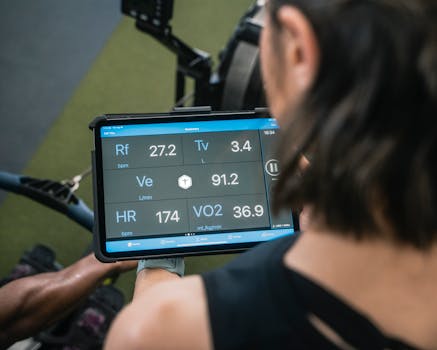
Fat loss is often treated like a numbers game—more steps, fewer calories, more cardio, repeat. But the training side is frequently where people get stuck: they train hard, feel “busy,” and still don’t see the body composition changes they expected. One reason is that fat loss depends on a sustainable training stimulus and recovery capacity. If recovery is repeatedly inadequate, training quality drops, stress builds, sleep worsens, and adherence becomes inconsistent.
Wearable devices can help you observe recovery and readiness in real time. In particular, heart rate variability (HRV), resting heart rate (RHR), and sleep metrics provide practical signals about how your body is handling training and daily stress. Used correctly, these signals can help you structure fat loss training so that intensity matches readiness, recovery is protected, and the overall program stays consistent.
This guide focuses on the educational “how” behind using wearables for fat loss training using HRV, resting heart rate, and sleep—not as magic metrics, but as actionable indicators. You’ll learn what these metrics mean, how to interpret short-term changes, and how to adjust training without turning every day into a data experiment.
What HRV, resting heart rate, and sleep actually measure
HRV: the variability in time between heartbeats
HRV typically refers to the variation in time intervals between consecutive heartbeats (often measured during sleep). In broad terms, higher HRV is often associated with greater parasympathetic (rest-and-recovery) activity and better autonomic flexibility, while lower HRV can reflect stress, fatigue, illness, inadequate recovery, or poor sleep.
Important nuance: HRV is highly individual. Two people can have the same absolute HRV value but very different meaning based on baseline and fitness level. That’s why most practical approaches emphasize trends and personal baselines rather than comparing your HRV to someone else’s.
Also note that HRV is influenced by many factors beyond training: hydration, alcohol, travel, caffeine timing, menstrual cycle changes, and even a late meal can alter autonomic signals.
Resting heart rate: a simple marker of recovery stress
RHR is the average heart rate measured at rest, usually reported by wearables as a daily or nightly value. When RHR rises above your normal baseline, it can indicate increased physiological stress, incomplete recovery, poor sleep, dehydration, or illness. When RHR stays stable or drops, it often suggests you’re recovering well.
Like HRV, RHR is best interpreted relative to your own baseline. Absolute RHR values depend on age, fitness, genetics, medications, and measurement method. The value of RHR is in the pattern: “Is this higher than usual for me?”
Sleep metrics: duration, regularity, and disruption
Sleep matters for fat loss training because it affects appetite regulation, hormonal balance, immune function, and the ability to perform high-quality workouts. Wearables usually estimate sleep duration, sleep stages, and sleep regularity (how consistent your bedtime and wake time are). They may also report sleep score or fragmentation indicators.
For training decisions, the most actionable sleep signals are often:
- Total sleep time (especially if it falls below your typical range)
- Sleep consistency (large shifts in bedtime or wake time)
- Sleep disruption (more awakenings or lower-quality sleep estimates)
Even when sleep stages are imperfect estimates, the overall sleep pattern still provides useful context for interpreting HRV and RHR.
Building a personal baseline before changing training

To use wearables responsibly, start by collecting enough data to establish your normal. In the first 2–4 weeks, focus on consistency rather than optimization. Keep training and lifestyle as steady as possible, then note typical ranges for HRV, RHR, and sleep.
Practical baseline steps:
- Track nightly HRV for at least 2 weeks. Look at the median or typical nightly value rather than one-off extremes.
- Track RHR trends over 1–2 weeks. Many people notice that RHR responds within 24–48 hours to heavy training and poor sleep.
- Record sleep duration and bedtime to understand your normal schedule.
- Log training stress in simple terms (e.g., “easy,” “moderate,” “hard”) so you can connect metrics to effort.
Once you have a baseline, you can begin using wearables to adjust training intensity and recovery days in a structured way.
How to interpret HRV and RHR changes for fat loss training
Use trends, not single-day judgments
Fat loss training is built on weekly progress, not daily perfection. A single low HRV night may be caused by an unusual event—late alcohol, travel, a stressful work day, a heavy meal, or simply normal variability. Similarly, a slightly elevated RHR can occur during a temporary stressor.
Instead of reacting immediately, consider a short window:
- 24-hour check: how did RHR look the next morning?
- 48-hour context: do HRV and RHR stay off baseline across multiple days?
- Sleep alignment: was the sleep short, fragmented, or shifted?
When multiple signals point in the same direction—low HRV plus higher RHR plus poor sleep—recovery needs become more likely.
Common patterns and what they often mean
These are not medical diagnoses, but they are common training interpretations.
- HRV down + RHR up + sleep worse: often indicates incomplete recovery or heightened stress. Training intensity may need to drop.
- HRV down but RHR stable + sleep normal: could be normal variability or a localized stressor. Consider a lighter day if performance feels off.
- RHR up with no change in HRV: sometimes reflects hydration issues, low-grade illness, or measurement variability. If you feel run-down, reduce intensity and prioritize sleep.
- HRV trending up + RHR stable or down: suggests recovery is improving. This may be a good time to schedule a quality session.
Performance cues matter. If your legs feel heavy, your breathing feels harder at the same pace, or your strength numbers are lower, treat that as a confirmation signal—even if wearable metrics are ambiguous.
Turning wearables into training decisions: practical rules
The goal of fat loss training using wearables HRV resting heart rate sleep data is not to “chase numbers.” It’s to make smart adjustments so you can train consistently and recover well enough to create the conditions for fat loss. Below are practical decision rules you can apply without constantly changing your plan.
Define your weekly training structure first
Before using metrics to modify sessions, decide the skeleton of your week. For many people, an effective fat loss training approach includes:
- Resistance training 2–4 days/week to preserve muscle and improve body composition
- Cardiovascular work 2–4 days/week (often a mix of easy steady and occasional harder intervals)
- Daily movement such as walking to support energy expenditure
Wearables then help you choose whether a scheduled session is “as planned,” “reduced,” or “recovery-focused.”
Use an “adjustment ladder” instead of a binary yes/no
Binary thinking leads to overcorrection. Instead, use three levels:
- Level 1 (On-plan): metrics near baseline and sleep is consistent. Train as scheduled.
- Level 2 (Reduced): one or more signals suggest mild stress. Do the session at lower intensity or lower volume.
- Level 3 (Recovery): multiple signals show poor recovery. Replace with mobility, easy walking, or a light technique session.
For example, if HRV is meaningfully below your baseline and RHR is elevated, you might keep the workout but reduce the hardest part: fewer intervals, fewer sets, shorter duration, or longer rest.
Example adjustments for common fat loss session types
Here are practical ways to modify sessions when recovery signals are not ideal.
- Interval cardio: if HRV is low and RHR is high, reduce interval count by 30–50% and keep effort more controlled (avoid near-max outputs). Consider swapping to steady-zone cardio.
- Resistance training: keep technique and range of motion, but reduce total sets or stop 1–3 reps earlier than usual (avoid pushing to failure). If your warm-up feels unusually hard, shorten the session.
- Long easy cardio: if you’re sleep-deprived, long sessions can become stressful. Instead, shorten duration and maintain an easy effort. You still accumulate movement without stacking fatigue.
- Walking and mobility: when signals are clearly negative, treat recovery days as training too. Easy walking supports circulation and energy expenditure without the same recovery demand as hard training.
This approach protects your ability to keep training across weeks—an essential factor in fat loss progress.
How to use sleep data to protect recovery and training quality
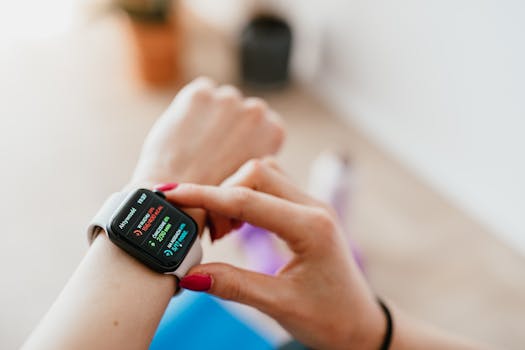
Sleep consistency often matters more than a single night
Wearables can show whether your bedtime and wake time vary widely. Large shifts can disturb circadian rhythm, which can then show up as lower HRV and higher RHR. For fat loss training, aim for regularity: a stable sleep window is often more valuable than chasing one perfect “sleep score” night.
If your sleep is consistently short, even great training programming may not translate into body composition changes because recovery and daily activity regulation get disrupted.
Use sleep signals to schedule hard training
A practical rule: schedule your highest-quality sessions after nights when sleep and recovery signals are at or above your personal baseline. Conversely, after nights with short or fragmented sleep, prioritize sessions that maintain movement and stimulus while reducing stress.
One reason this works is that sleep affects training performance. If you’re short on sleep, your ability to generate power, maintain form, and sustain cardio pacing can drop—leading to a lower-quality stimulus and potentially higher perceived effort.
When sleep issues are persistent
If you repeatedly see poor sleep for more than a week, treat it as a program constraint. Consider adjusting training load and also addressing common sleep disruptors: late caffeine, alcohol, late heavy meals, inconsistent bedtime, and excessive evening screen time. If symptoms suggest sleep apnea or another medical issue, consult a healthcare professional.
Where wearables fit in a fat loss plan (and where they don’t)
Wearables are supportive tools, not the primary driver of fat loss. Fat loss ultimately depends on energy balance and maintaining muscle. Training helps create the conditions for that balance by increasing energy expenditure, preserving lean mass, and improving metabolic health. Wearables help you do the training part with better recovery management.
They should also complement, not replace, foundational behaviors:
- Nutrition consistency: stable protein intake and an overall calorie deficit when appropriate
- Strength training quality: progressive overload or at least consistent effort
- Daily movement: regular walking or other low-intensity activity
- Stress management: because HRV responds to more than workouts
If you only use wearables to “optimize” training while ignoring sleep, nutrition, and lifestyle stress, the metrics may show persistent strain without meaningful improvement.
Monitoring recovery without overreacting: a sustainable workflow
Check metrics at predictable times
Constant checking increases stress and can lead to unnecessary changes. A sustainable workflow might look like:
- Morning review: glance at RHR and HRV trend from the previous night
- Evening review: note sleep duration and bedtime consistency
- Weekly review: assess how many sessions were reduced and whether performance improved overall
This keeps the system informational rather than obsessive.
Pair wearables with a simple readiness rating
Wearables can be complemented by a short readiness check. For example, rate how you feel in three areas: perceived energy, muscle soreness, and cardio tolerance. When you see a mismatch—low HRV but you feel great—use your subjective readiness to decide. When both align, trust the combined signal.
This reduces the chance of abandoning training based on a single noisy reading.
Look for weekly outcomes, not daily wins
Fat loss training is a long game. Weekly outcomes matter more than day-to-day fluctuations in HRV and RHR. Over time, the goal is to:
- Maintain consistent training attendance
- Reduce repeated “hard day” stacking when recovery is poor
- Improve training performance or at least keep it stable
- Maintain or increase daily movement
When the workflow is working, wearables should help you avoid the pattern of training too hard too often, then crashing for several days.
Common pitfalls when using HRV, resting heart rate, and sleep
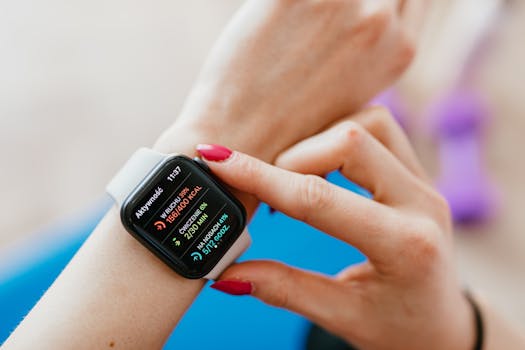
Comparing yourself to others
HRV and RHR vary significantly across individuals. Comparing your HRV to someone else’s can lead to incorrect conclusions. Use personal baseline and trends as your primary reference.
Changing the program every time a metric moves
Metrics fluctuate naturally. If you adjust training after every small change, you may end up with an inconsistent stimulus. Instead, use the adjustment ladder and focus on multi-signal patterns.
Ignoring non-training stressors
HRV is sensitive to stress. Work pressure, relationship stress, poor nutrition, alcohol, dehydration, and travel can all lower HRV and raise RHR. If you attribute every change to training, you’ll misread what’s driving the signal.
Over-trusting sleep stage estimates
Sleep stage tracking is often an estimate. The overall sleep duration, timing, and disruption patterns are usually more actionable than fine-grained stage percentages.
How to incorporate wearables into a typical fat loss training week
Below is a practical example of how someone might structure a week using recovery signals. The goal is to show a method, not prescribe a single perfect schedule.
- Day 1 (Resistance + short cardio): If HRV is near baseline and sleep was adequate, train as planned. If recovery signals are negative, reduce volume (fewer sets) and keep cardio easy.
- Day 2 (Easy cardio or walking emphasis): Even on good recovery days, keep intensity moderate. If HRV is low and RHR is elevated, prioritize walking and mobility.
- Day 3 (Intervals or tempo cardio): Schedule this when sleep quality and HRV are best. If not, swap to steady-zone cardio or shorten the session.
- Day 4 (Resistance): Use readiness cues. In reduced mode, keep technique and stop short of failure.
- Day 5 (Recovery day): When multiple signals suggest strain, use low-impact work and protect sleep.
- Day 6 (Optional light training): If recovery improves, you can add a light session. If not, focus on movement and consistency.
- Day 7 (Rest / routine): Use this day to reset. Review weekly trends to decide the next week’s load.
Over weeks, this method aims to keep you in the “sweet spot” where you train hard enough to drive change, but not so hard that recovery repeatedly collapses.
When to treat wearable signals as a health concern
Wearables can also help you notice patterns that merit medical attention. Consider consulting a healthcare professional if you experience:
- Persistent unexplained fatigue and consistently abnormal HRV/RHR trends
- Fever, chest pain, fainting, or shortness of breath
- Sudden and sustained changes in RHR that don’t align with training or sleep
- Sleep problems suggestive of sleep apnea (loud snoring, choking/gasping, severe daytime sleepiness)
Wearables are not diagnostic tools. They are indicators that something may be off. When symptoms are present, prioritize safety over training optimization.
Relevant wearables and how to interpret their metrics responsibly
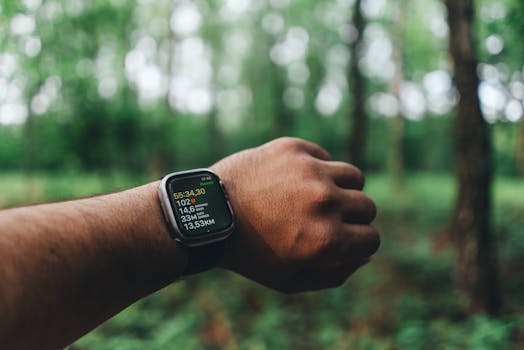
Many popular wearables report HRV, resting heart rate, and sleep estimates. Examples include Apple Watch, Garmin devices, Fitbit, Oura, Whoop, and others. While the general concepts are consistent, the measurement methods and definitions can differ (for example, how HRV is calculated, whether it’s based on wrist readings, and how sleep is scored).
To use wearables responsibly:
- Use one device consistently when possible, so baselines remain meaningful.
- Follow the device guidance for HRV measurement (for example, wearing position and comfort).
- Interpret relative changes rather than absolute values.
- Confirm with real-world performance and how you feel.
Even when two devices disagree on a day, the trend over time is often more informative than the exact number.
Summary: using HRV, RHR, and sleep to support fat loss training
Fat loss training improves when recovery is managed intelligently. HRV, resting heart rate, and sleep data from wearables can provide a practical window into your readiness—especially when you interpret them as trends relative to your own baseline. The most effective approach is to:
- Establish personal baselines over a few weeks
- Use multi-signal patterns (HRV + RHR + sleep) rather than single-day reactions
- Apply an adjustment ladder: on-plan, reduced, or recovery
- Protect sleep consistency and schedule hard sessions after better nights
- Prioritize safety and consult a professional if symptoms suggest a health issue
When used this way, wearables become a training support system: they help you keep the right balance between stimulus and recovery so your fat loss program remains consistent and effective over time.
FAQ: fat loss training and wearable recovery metrics
Do I need HRV to lose fat?
No. Fat loss can occur without HRV tracking. HRV is mainly a recovery management tool that can help you train consistently and avoid overreaching.
What does low HRV mean for my workouts?
Low HRV often indicates higher stress or incomplete recovery. If low HRV is paired with elevated RHR and poor sleep, consider reducing intensity or volume and prioritizing recovery.
Should I train harder when HRV is high?
Often, yes—if HRV is high relative to your baseline and sleep was adequate. But you should also consider how you feel and whether performance supports the change. The aim is better readiness, not maximal effort every day.
How long should I wait before changing my training based on wearables?
Use context. For most people, make decisions based on patterns across 24–48 hours and on how multiple metrics align, rather than changing the plan after one reading.
Can sleep tracking be wrong?
Yes. Sleep stage estimates can be inaccurate. However, sleep duration, timing, and disruption patterns are still useful for understanding recovery and interpreting HRV/RHR trends.
What if my HRV and resting heart rate disagree?
Disagreement can happen due to normal variability, measurement differences, hydration status, or non-training stress. Use subjective readiness and performance cues, and look at the overall trend over several days.
Are wearable metrics safe to use for training adjustments?
In general, adjusting training load based on recovery signals is safe for healthy individuals. If you have symptoms such as chest pain, fainting, persistent fever, or severe shortness of breath, seek medical advice rather than relying on wearable data.
16.02.2026. 06:50