

Hip Flexor Tightness vs Hip Joint Stiffness: How to Tell

Why this distinction matters
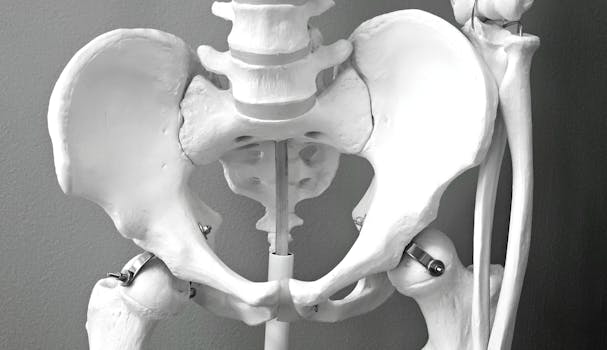
“My hip feels tight” can mean very different things. Sometimes the hip flexors—the front-of-hip muscles that lift your thigh—are overly tight or irritated. Other times the hip joint itself is stiff, with limited glide or mobility in the ball-and-socket. These two issues can feel similar at first, but the best way to improve them is not the same.
Knowing how to tell hip flexor tightness vs hip joint stiffness how to tell is useful because it changes what you should test, what you should avoid, and what kind of mobility work tends to help. It also helps you recognize when stiffness may be related to joint irritation, labral problems, arthritis, or inflammatory conditions that deserve clinical evaluation.
Quick definitions: what’s actually tight
Hip flexor tightness
Hip flexor tightness typically involves the muscles and their tendons at the front of the hip, commonly the iliopsoas (deep hip flexor) and the rectus femoris (a hip flexor that also crosses the knee). Tightness may be driven by prolonged sitting, reduced glute strength, repetitive hip flexion, or training patterns that keep the hip in a flexed position.
In many cases, the sensation is most noticeable when you lift your knee, walk with a long stride, climb stairs, or try to stretch the front of the hip.
Hip joint stiffness
Hip joint stiffness refers to limited motion at the joint itself. The hip is a ball-and-socket joint with a capsule, cartilage surfaces, and labrum that must move smoothly for full range of motion. When stiffness is present, range can feel “blocked,” “stuck,” or “guarded,” and motion may be limited in specific directions rather than simply feeling tight in one muscle group.
Joint stiffness may be influenced by mechanical factors (like impingement patterns), prior injury, degenerative changes, inflammation, or altered mechanics from weakness elsewhere.
How to tell: the most useful symptom clues
Where you feel it
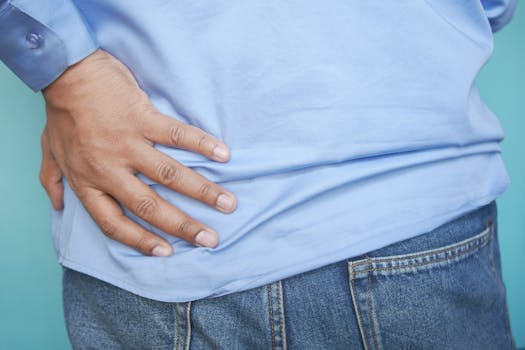
Hip flexor tightness usually feels more muscular and localized to the front of the hip or upper thigh. People often describe it as a “pull” or “pinch” that responds to gentle stretching or changes in posture.
Hip joint stiffness more often feels deeper in the groin or inside the hip. It can feel like the joint resists movement even when the muscles are warmed up. Some people describe a sense of restriction that doesn’t “give” with typical stretching.
Note: “pinch” in the front of the hip can occur with either condition, so location alone isn’t enough—look at movement patterns too.
When it shows up
- Hip flexor tightness: often worse after sitting, driving, or periods of reduced movement. It may loosen after a warm-up, especially if the issue is primarily muscular.
- Hip joint stiffness: may be worse with the first steps after rest, or it may persist despite warming up. It may also be more consistent across different activities rather than varying mainly with posture.
What movements are most limited
Hip flexor tightness commonly limits hip extension (standing up tall, walking backward, getting the leg behind you) and can also make knee-to-chest or high steps feel tight in the front.
Hip joint stiffness often limits a particular arc of motion—commonly flexion, internal rotation, or combined movements such as getting into a car, tying shoes, or crossing the leg over. The limitation can feel “mechanical,” like a stop point rather than a stretch sensation.
Practical self-checks you can do safely
These checks are designed to help you distinguish patterns. They are not a diagnosis. If you feel sharp pain, catching/locking, numbness, or symptoms that worsen quickly, stop and consider professional assessment.
1) The “warm-up response” test
Do a light walk or easy cycling for 5–10 minutes, then reassess.
- If the tightness eases noticeably and range improves, hip flexor tightness is more likely.
- If stiffness remains stubborn and the joint still feels blocked in a specific direction, hip joint stiffness becomes more likely.
2) Hip flexor stretch sensitivity vs joint resistance
Try a gentle hip flexor stretch (short stride lunge position) and compare sensations:
- More muscular: you feel a clear stretch/pull in the front of the hip and thigh, and it’s tolerable and improves with technique.
- More joint: you feel deep groin discomfort, a sharp pinch, or a hard stop in range that doesn’t behave like a typical muscle stretch.
If stretching produces a pinching sensation in the groin that feels like the joint is being compressed, be cautious. That pattern can be seen with joint-related issues and may not respond well to aggressive stretching.
3) Modified Thomas test (for front-of-hip muscle tightness)
The Thomas test is commonly used to assess hip flexor tightness. A modified version can be done at home:
- Lie on your back at the edge of a bed or bench.
- Bring one knee to your chest and hold it.
- Let the other leg hang off the edge and observe the hip position.
If the hanging leg stays lifted or the thigh can’t drop toward the surface, the hip flexors on that side are likely tight. This test helps more with muscular tightness than with joint stiffness, but it’s a useful starting point.
4) Range-of-motion check: internal rotation and combined motion
Hip joint stiffness often shows up when internal rotation is limited. A simple check:
- Sit or lie down and gently move the hip into internal rotation (turn the foot inward) within a comfortable range.
- Compare sides.
If one side has a clear mechanical limit or reproduces deep groin symptoms, joint stiffness is more likely. Hip flexor tightness can contribute to restricted motion, but it typically doesn’t create the same “blocked” feeling in internal rotation.
5) “Sitting vs standing” pattern
Try this observation over a day:
- If symptoms are strongly linked to sitting and improve when you stand and walk, muscular tightness is more likely.
- If symptoms stay prominent regardless of posture, or if getting into and out of positions that load the joint triggers a deep, consistent restriction, joint stiffness is more likely.
Common scenarios that point toward each cause
Signs that favor hip flexor tightness
- You feel a front-of-hip pull during lunges, knee raises, or stairs.
- Gentle stretching reduces the sensation within minutes.
- Hip extension feels limited (difficulty standing tall or walking with the leg trailing behind you).
- Glute activation cues (like squeezing the butt during movement) temporarily improve control.
- Your discomfort is more “stretchy” than “pinchy” or deep.
Signs that favor hip joint stiffness
- Deep groin pain or a “stuck” feeling during specific motions such as crossing the leg, getting in/out of a car, or tying shoes.
- Warm-up doesn’t restore the same range.
- Range feels blocked at a particular end range rather than gradually stretching.
- You notice catching, clicking with pain, or a sense of instability.
- Symptoms can be accompanied by stiffness after rest, or a more constant limitation.
How each one changes movement mechanics
Muscular tightness and the common compensation pattern
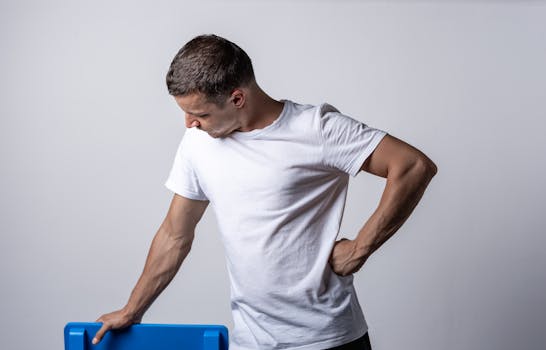
When hip flexors are tight, the body often compensates by increasing anterior pelvic tilt (tipping the pelvis forward) and using the hip flexors instead of the glutes. This can make walking feel like the front of the hip is “working too hard,” and it can also contribute to low back discomfort for some people.
In this pattern, improving hip flexor length alone may not be enough—glute strength and motor control matter. But the primary feel tends to be muscle-driven: the front hip muscles are overactive or shortened.
Joint stiffness and why you may feel it “inside”
When the joint capsule and surrounding structures don’t glide well, your body may protect the joint by limiting motion. That protection can reduce hip extension, internal rotation, or flexion depending on the underlying cause. As a result, you may notice stiff-feeling gait, difficulty with deep hip flexion positions, or reduced ability to rotate the hip without compensating through the spine or knee.
In joint stiffness, stretching the front of the hip vigorously can sometimes irritate the joint because the issue is not simply length—it’s joint mechanics and tolerance.
What to do next based on your pattern
Use the clues above to choose a sensible, low-risk next step. The goal is to improve function without provoking symptoms.
If it seems like hip flexor tightness
Focus on gentle mobility plus activation and strength. A practical progression:
- Gentle stretching: use a comfortable hip flexor stretch and avoid sharp groin pinching. Aim for a mild-to-moderate stretch sensation.
- Posterior pelvic tilt control: practice standing or in a lunge position by slightly tucking the pelvis to reduce excessive lumbar extension.
- Glute activation: include exercises like glute bridges or banded hip abduction to support hip extension mechanics.
- Hip extension practice: walking drills that encourage the leg to trail behind you can help retrain movement without aggressive end-range stretching.
Consistency matters. Changes in muscular tightness often show up over days to weeks, especially if sitting time is reduced and movement is frequent.
If it seems like hip joint stiffness
Approach mobility more cautiously. Joint stiffness often needs targeted mobility that respects symptom thresholds.
- Try pain-guided, small-range mobility: gentle movements that restore motion without sharp pinching are preferable to forcing end range.
- Use positions that reduce compression: some people tolerate hip flexion with less load better than deep flexion under bodyweight.
- Prioritize hip stability: strengthening the glutes and improving control can reduce unwanted stress on the joint.
- Consider assessment: if stiffness is persistent, deep groin pain is present, or you suspect mechanical impingement or labral irritation, a clinician experienced in hip mechanics can help identify the driver.
In cases where joint stiffness is inflammatory or degenerative, the right plan may differ significantly from a simple stretching routine.
Common mistakes that blur the diagnosis
- Stretching aggressively into a pinch: a sharp groin pinch suggests you may be stressing the joint rather than lengthening muscle.
- Assuming tightness equals stiffness: tight hip flexors can restrict motion, but joint stiffness can also coexist. The pattern of where and how the limitation feels is key.
- Ignoring strength and control: even if the issue begins as muscular tightness, persistent limitations often require glute and core coordination.
- Only testing in one position: stiffness can be direction-specific. Checking both extension and internal rotation (and how you feel in daily activities) improves accuracy.
When to get medical or physical therapy evaluation
Self-guided work is appropriate for mild, non-progressive symptoms. But certain signs warrant professional evaluation:
- Severe pain, pain that is rapidly worsening, or inability to bear weight.
- True locking or inability to move the hip through a range.
- Significant clicking/catching with pain or giving way.
- Numbness, tingling, or weakness down the leg.
- Night pain, unexplained fever, or systemic symptoms.
- Stiffness that persists for weeks without improvement or keeps returning.
These red flags don’t automatically mean something serious, but they do mean the cause may not be resolved with basic stretching and mobility alone.
Role of common tools and supportive options
While the core issue is usually movement quality and tissue tolerance, some tools can make practice more effective or comfortable.
For example, a hip flexor stretching strap can help you maintain a gentle angle without forcing end range. A thick foam roller may help some people reduce superficial muscle discomfort before mobility work, but it should not be used to “dig through” sharp joint pain. If you use bands, a mini resistance band can assist with glute activation patterns that counterbalance anterior pelvic tilt.
These supports are best viewed as aids for positioning and activation—not as solutions that replace targeted exercise.
Prevention: reduce the odds of both problems
Whether your limitation is muscular or joint-related, prevention strategies overlap around movement frequency, loading tolerance, and mechanics.
- Break up sitting: stand and move every 30–60 minutes.
- Train hip extension and glutes: walking, bridges, hip hinges, and controlled step-ups can support healthier hip mechanics.
- Respect end range: mobility should be controlled and symptom-guided. If a position pinches the groin, modify it.
- Progress gradually: increase training volume and intensity slowly to avoid flare-ups that can stiffen the joint or irritate tendons.
- Check footwear and stride: for some people, an overly short stride or certain walking patterns can keep the hip in flexion and reinforce the tightness cycle.
Summary: a simple way to decide what you’re dealing with
To differentiate hip flexor tightness vs hip joint stiffness how to tell, focus on three things: (1) where you feel it (front-of-hip muscle pull vs deep groin), (2) how it responds to warm-up and gentle stretching (eases vs remains blocked), and (3) which motion directions are most limited (muscle-like stretch vs mechanical end-range restriction).
If your symptoms behave like a muscle problem—front pull that improves with warm-up and gentle stretching—prioritize hip flexor mobility plus glute activation. If your symptoms behave like a joint problem—deep groin restriction, persistent stiffness despite warming, or pinching at end range—use pain-guided mobility and consider professional assessment, especially if symptoms persist.
With the right pattern recognition, you can choose safer, more effective mobility strategies and reduce the chance of irritating the wrong structure.
10.02.2026. 00:18