

Range of Motion Plateau Causes & Fixes: Step-by-Step Troubleshooting

Overview: how a range of motion plateau shows up

A range of motion plateau is when your movement improves for a while, then stops progressing despite consistent effort. The key issue is not that you are “stuck”—it’s that your body has adapted to the current stimulus or is protecting a limitation with pain, stiffness, or coordination changes.
Common symptoms that suggest a plateau (rather than a temporary bad day):
- You can reach the same endpoint for weeks, even though you keep stretching, mobilizing, or training.
- Range increases only briefly (for example, right after warming up), then returns to baseline.
- End-range feels the same every session: same tightness, same “block,” or same sharp boundary.
- Compensations appear (swaying, shifting, tilting, rib flare, hip hiking, lumbar extension) to “get more” without true joint motion.
- Stretching becomes less effective: the same stretch no longer produces a deeper sensation or better control.
- Discomfort pattern changes: you may feel more pinching at a specific angle or more muscular guarding than before.
Because plateaus can come from multiple mechanisms—tissue stiffness, motor control limits, joint mechanics, or load tolerance—your troubleshooting should be systematic. The goal is to identify which limiter is most active at your endpoint, then apply the right fix in the right order.
Most likely causes of a range of motion plateau
Below are the most common causes professionals look for when mobility stops improving. More than one can be present at the same time.
1) You’re training the wrong “range limiter”
Many people stretch at the joint angle where they feel tightness, but that sensation may be protective rather than informative. For example, you might be stretching the hamstrings while the true limiter is hip extension control, ankle mobility, or thoracic rotation mechanics. If the limiter isn’t addressed, the effort repeats without progress.
2) Adaptation to the same stimulus
Even good mobility work can plateau when the dose, intensity, and progression stay the same. Your nervous system and tissues adapt to the current range and loading pattern. When the stimulus no longer challenges the relevant tissues, you stop moving forward.
3) End-range stiffness from tissue tolerance
Some limitations are driven by tissue stiffness or reduced compliance. This can involve muscle-tendon units (e.g., hamstrings, hip flexors), joint capsule behavior, or connective tissue restrictions. If you only stretch without improving tolerance to end-range load and control, progress often stalls.
4) Protective guarding and fear of end-range
If end-range feels unstable, sharp, or “unsafe,” the nervous system may increase muscle tone to protect the joint. In this case, the plateau is less about flexibility and more about threat detection, coordination, and gradual exposure.
5) Mobility without strength or control
Range of motion improves when you can both reach and own the position. If you can stretch further but can’t control the new position, you may revert to your baseline during daily movement. This is common when stretching is not paired with end-range strength, isometrics, or movement-specific training.
6) Joint mechanics issues
For some joints, limited motion is tied to how the joint surfaces glide and how surrounding segments allow movement. Examples include:
- Hip extension influenced by pelvic position and lumbar contribution
- Shoulder overhead motion influenced by scapular control and thoracic mobility
- Ankle dorsiflexion influenced by tissue stiffness and foot/ankle mechanics
If mechanics are off, stretching alone may not change the joint’s actual motion path.
7) Mobility work is too aggressive or too inconsistent
Overdoing deep stretching can trigger guarding. Underdoing it (or doing it sporadically) may not create meaningful adaptation. Both can produce a plateau—one by increasing protection, the other by not providing enough progressive stimulus.
8) Pain, prior injury, or lingering inflammation
A plateau can be the body’s way of limiting motion due to ongoing irritation. Mild discomfort during stretching is one thing; sharp pain, swelling, or worsening symptoms suggest you should adjust the plan and consider professional evaluation.
Step-by-step troubleshooting and repair process
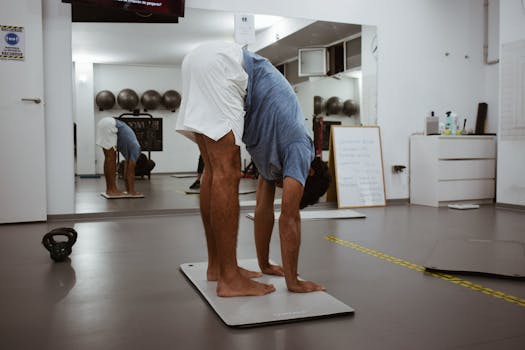
Use this sequence to identify what’s happening and apply the most appropriate fix. Keep it diagnostic: you’re looking for information, not just “more stretching.”
Step 1: Confirm the plateau with a simple, repeatable check
Pick one movement or test that reflects your goal (for example, a squat depth standard, shoulder overhead reach, hip hinge position, or kneeling ankle-to-wall distance). Measure or record the same way every time:
- Same warm-up
- Same footwear (or barefoot)
- Same setup
- Same time of day if possible
If you have “good days” and “bad days,” your issue may be recovery or nervous system state rather than true tissue limitation.
Step 2: Identify the limiter at end-range
During the range-limited position, note what you feel:
- Muscle tightness (stretchy, non-sharp) that relaxes somewhat with breathing
- Joint pinching (sharp, localized, reproducible)
- Instability (shifting, wobbling, “can’t trust it”)
- Numbness/tingling (not typical for simple stiffness—stop and reassess)
This helps you choose the right category of fix: tolerance and control, technique and mechanics, or medical/professional evaluation.
Step 3: Check for compensation patterns
Plateaus often persist because the body finds a workaround. For example:
- When reaching overhead, the low back arches and ribs flare instead of the thoracic spine moving.
- During hip flexor/hamstring stretching, the pelvis tilts and the spine takes over.
- During ankle mobility, the knee shifts away and the joint doesn’t glide.
Film yourself from the side and front if possible. If you can’t film, use tactile cues (hands on ribs, pelvis, or shoulder blade) to prevent the compensation from “winning.”
Step 4: Change one variable for a short test window
For 5–10 sessions, adjust one key factor and observe. Choose from:
- Increase or decrease stretch intensity slightly
- Change the tempo (slower breathing, longer holds, less aggressive end-range)
- Add end-range isometrics instead of only stretching
- Train the movement pattern where the plateau occurs
If the plateau breaks quickly, your previous approach likely wasn’t targeting tolerance or control. If nothing changes, you may need a different category of work (mechanics, joint-specific work, or professional assessment).
Step 5: Evaluate your recovery and load tolerance
Range improvements often require tissue readiness. Consider:
- Are you increasing strength training volume at the same time?
- Is sleep consistent?
- Do you feel more guarded after hard sessions?
If the plateau is accompanied by fatigue or increased soreness, reduce total intensity for a week and prioritize controlled mobility and lighter strength work.
Solutions from simplest fixes to more advanced fixes
Start with the least risky changes. If you don’t see progress, move down the list. The best plan is the one that matches the limiter you identified.
1) Reset your mobility technique and breathing
Many plateaus are caused by “chasing the end” with poor mechanics. Try this approach:
- Stop 1–2 degrees short of the first clear boundary.
- Use slow nasal breathing and exhale for 2–4 seconds during the hold.
- Hold for a shorter time (20–40 seconds) with good control, then repeat.
- Prioritize smooth motion over forcing range.
If the limiter is protective guarding, this often improves the nervous system’s comfort at end-range.
Practical note: if you use a foam roller, massage ball, or stretching strap, ensure you’re not turning the session into a painful “max-out.” Self-myofascial work should support mobility, not replace it.
2) Add end-range isometrics to build tolerance
To move past a plateau, you often need to teach your body that end-range is safe and controllable. Isometrics are a low-risk way to do this.
Choose a position that is close to your limit but not painful. Examples (adapt to your joint):
- Isometric hold at the end of your hip hinge range
- Wall-supported overhead hold at the edge of your reach
- Isometric kneeling position for ankle dorsiflexion without sharp pain
Progression template:
- 2–4 sets
- 20–45 seconds per set
- 1–3 times per week at first
If you feel sharp pinching, reduce the angle and keep the effort in a controlled, pain-free zone.
3) Train the movement pattern, not just the stretch
Range improves when the body can perform the movement under normal load. For many plateaus, you need to practice the exact pattern where you’re limited:
- If your squat depth stalls, practice controlled squats to a repeatable depth with a consistent tempo.
- If overhead reach stalls, practice overhead pressing mechanics with scapular control.
- If hip extension stalls, practice hip hinging and glute bridge progressions with proper pelvic position.
This step addresses the “mobility without control” cause by strengthening the pathways that move you through the range.
4) Use joint-friendly mobility drills to restore mechanics
If compensation is present, mechanics are likely part of the plateau. Joint-friendly drills can help create the correct motion path.
Common options include:
- Scapular mobility and control before overhead work (to improve shoulder mechanics)
- Thoracic rotation drills before reaching or pressing (to reduce rib and lumbar compensation)
- Pelvic control drills before deeper hip ranges (to prevent lumbar takeover)
- Ankle joint glides using a controlled wall or strap setup (if appropriate and pain-free)
Keep the intent mechanical: smooth, repeatable reps. Avoid aggressive end-range forcing during this step.
5) Progress stretching with a structured dose and timeline
Plateaus often persist because stretching is either too intense, too random, or too short-lived. Use a structured progression for 2–4 weeks:
- Frequency: 3–5 days per week
- Sessions: 5–15 minutes total for the target joint(s)
- Holds: 2–4 holds per exercise
- Hold length: 30–60 seconds
- Effort: stop short of sharp pain; aim for “strong but tolerable”
When you hit a plateau, change the type of stretch rather than only increasing intensity. For example, switch between:
- Long-hold static stretching
- Active stretching (using muscles to reach and hold)
- Positioning variations (same goal range, different limb angles to target different tissues)
6) Introduce active mobility and strength in the new range
If you can reach a bit more after stretching but don’t keep it during training, the missing piece is active control. Active mobility builds the ability to move through range without collapsing into compensations.
How to apply it:
- After a warm-up, perform 2–3 sets of controlled reps in the improved range (not max range).
- Use slow tempo and maintain alignment (pelvis/ribs/scapula).
- Stop the set if you lose control or begin to compensate.
Then pair it with strength work: goblet squats to a controlled depth, split squats, rows, or presses that allow you to practice the new mechanics.
7) Address training load conflicts and fatigue-related stiffness
Sometimes the plateau is not stiffness from lack of work; it’s stiffness from too much work. If your mobility work happens on the same days as heavy training, you may be repeatedly stretching tissues that are irritated or fatigued.
Fix:
- Move mobility to a different time of day or separate it from heavy sessions by 6–24 hours.
- Reduce intensity for 7–10 days: less aggressive end-range, more controlled reps and isometrics.
- Keep strength training, but avoid pushing new PRs while you’re trying to restore range.
This approach often breaks plateaus when guarding is driven by fatigue.
8) Use self-assessment tools to check pressure tolerance (without “injury testing”)
If you suspect tissue-specific stiffness (for example, a tight hip flexor or shoulder area), you can use gentle self-checks to guide where to focus. The goal is to find areas that respond to pressure and movement—not to provoke pain.
Examples:
- Light pressure with a massage ball while you move through a pain-free range
- Short foam rolling bouts followed by active mobility
- Targeted soft-tissue work before isometrics
Stop if you feel sharp pain, radiating symptoms, or worsening discomfort later that day or the next morning.
Guidance on when replacement, imaging, or professional help is necessary
Most range of motion plateaus improve with better mechanics, progressive tolerance work, and smarter dosing. However, some situations require professional evaluation to rule out structural or medical contributors.
Seek professional assessment if you have these warning signs
- Sharp or pinching pain that is reproducible at the same angle
- Swelling, warmth, or bruising after activity
- Neurologic symptoms like numbness, tingling, or weakness
- Night pain or pain that worsens despite reducing load
- Sudden loss of range after a specific event or pop
- Range is blocked (feels locked rather than stiff)
In these cases, professional care may include a targeted exam, movement analysis, and—when appropriate—imaging or referral. This isn’t about “giving up” on mobility; it’s about ensuring you’re not training around a problem that needs direct treatment.
When replacement is even a consideration
Joint replacement is not a typical solution for a mobility plateau. It’s generally considered only for advanced degenerative conditions with persistent pain and functional limitations that do not respond to conservative care. If you’re dealing with severe pain, progressive worsening, or significant daily function loss, a clinician can help determine whether your situation is in that category.
When to escalate your plan even without red flags
Even if you don’t have warning signs, consider professional help if:
- You’ve followed a structured plan for 6–12 weeks with no meaningful change
- Your plateau is accompanied by repeated compensations you can’t correct
- You can’t find a pain-free training strategy that allows you to practice the movement pattern
- You suspect a specific joint mechanic issue (for example, shoulder catching, hip impingement-type symptoms, or recurrent ankle stiffness after sprains)
A physical therapist or qualified movement professional can identify the actual limiter and tailor progression—often faster than trial-and-error.
Putting it all together: a practical troubleshooting roadmap
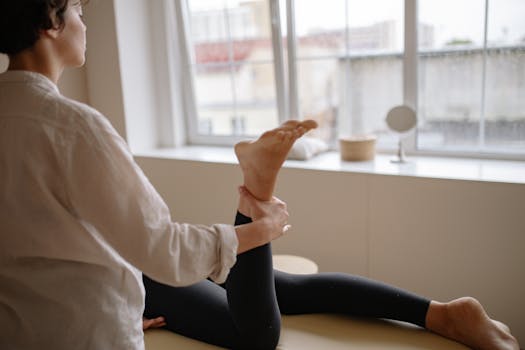
To resolve a range of motion plateau, treat it like a diagnostic process:
- Verify the plateau with a consistent check.
- Identify the limiter at end-range: stiffness, guarding, pinching, or instability.
- Spot compensations and correct them with technique and positioning.
- Start with simpler fixes: breathing, controlled angles, short holds, and better setup.
- Add end-range isometrics to build tolerance without provoking guarding.
- Train the movement pattern and include strength/control in the improved range.
- Adjust load and recovery if fatigue is likely contributing.
- Escalate to professional assessment if pain, neurologic symptoms, locking, or sudden changes are present, or if progress stalls despite a structured plan.
When you match the fix to the cause—rather than repeating the same stretch indefinitely—range of motion plateaus become solvable. The “breakthrough” usually comes from building tolerance and control at end-range, not from forcing deeper positions with the same routine.
12.01.2026. 04:34