

How Wearables Measure VO2max Accuracy: What to Know

Why VO2max estimates on wearables aren’t just “a number”
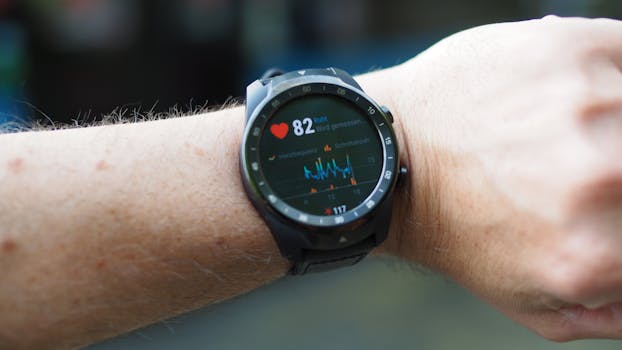
VO2max—the maximum rate at which the body can use oxygen during intense exercise—is one of the most informative markers of aerobic fitness. In a lab, it’s measured by analyzing breath-by-breath oxygen uptake while you progressively increase exercise intensity until you reach a physiological limit.
Wearables can’t directly measure that full lab process in the same way. Instead, they estimate VO2max using models that combine heart rate signals, movement data, and sometimes environmental or workout context. That’s why the results can be useful for tracking trends, but also why the “accuracy” of wearable VO2max depends heavily on who’s wearing the device, how it’s configured, and what kind of exercise was used to generate the estimate.
This article explains how wearables measure VO2max accuracy—meaning how they estimate VO2max, what drives error, and how to interpret the number in a scientifically grounded way.
What VO2max really measures in the lab
In laboratory testing, VO2max is typically determined by measuring oxygen consumption (VO2) from inhaled and exhaled air. During a graded exercise test (treadmill or cycle), workload increases stepwise or continuously until the subject reaches criteria consistent with maximal effort. VO2max is then taken as the highest oxygen uptake achieved, often with additional checks (such as plateauing of VO2 or meeting other maximal markers).
Because VO2max is derived from direct gas exchange, it reflects multiple physiological limits at once: oxygen delivery (cardiac output), oxygen extraction (muscle utilization), and the ability to sustain high intensity long enough to reach a maximal uptake state.
Wearables estimate VO2max without breath analysis, so they must infer those physiological limits indirectly—primarily from cardiovascular responses and workload proxies.
How wearables estimate VO2max from heart rate and workload
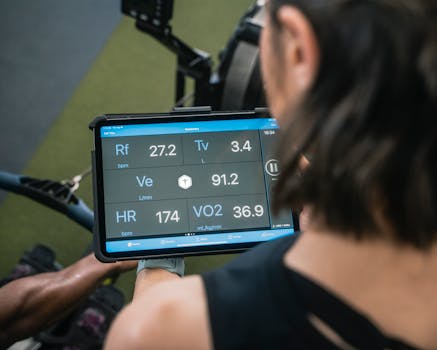
The core challenge for wearable estimation is that oxygen uptake isn’t measured directly. Instead, algorithms use relationships between heart rate (HR), running or cycling intensity, and expected oxygen demand.
Most wearable approaches build on the idea that, for a given person, there’s a link between:
- Exercise intensity (how hard you’re working)
- Heart rate response (how your cardiovascular system reacts)
- Estimated oxygen uptake (what the body should be consuming)
To translate those signals into VO2max, wearables often rely on models that assume a certain HR-to-VO2 relationship and then use your data to fit or validate that relationship over time. The model’s output is a VO2max estimate expressed in mL/kg/min.
In practice, wearable VO2max estimation typically depends on one or more of the following:
- Heart rate dynamics during steady or ramped efforts
- Movement-derived workload (pace, cadence, acceleration, or power proxies)
- Training history (baseline fitness and typical HR responses)
- Individual calibration (age, sex, height/weight, and sometimes resting HR)
The role of HR sensors: why signal quality matters
Wearables measure heart rate using optical sensors (photoplethysmography, or PPG) or, in some setups, electrical signals (such as chest straps). Optical sensors estimate blood volume changes by shining light into the skin and analyzing reflected light patterns.
Accuracy is affected by factors that can distort the PPG signal:
- Motion artifact during running, especially at higher intensities
- Skin contact and strap tightness
- Skin tone and tissue characteristics
- Sweat, hair, or compression that changes how reliably the sensor reads
- Arrhythmias or irregular rhythms that complicate beat detection
If heart rate is under- or overestimated at key moments, the algorithm may infer the wrong exercise intensity and produce a biased VO2max estimate. This doesn’t mean the wearable is “wrong” in a simple sense; it means the model’s inputs are noisy, and VO2max is sensitive to the inferred intensity range where you approach high effort.
For many people, the biggest improvements in wearable VO2max reliability come from better heart rate tracking quality—often achieved by ensuring a snug fit, minimizing sensor slippage, or using a chest strap when appropriate for training sessions that aim to produce a VO2max estimate.
Movement and intensity proxies: pace, cadence, and power-like signals
Because wearables don’t directly measure oxygen consumption, they also need a proxy for how much mechanical work you’re doing. Depending on the device and activity type, the algorithm may use:
- Running pace and acceleration patterns
- Cadence and stride characteristics
- Incline or grade (if GPS and sensors support it)
- Bike metrics such as estimated power or speed/route context
On a treadmill, pace may be stable, but GPS is absent and some motion cues differ from outdoor running. On a bike, speed changes can reflect wind and terrain, which can alter the relationship between mechanical output and physiological load. If the workload proxy is off, the model can misinterpret how hard you’re actually working.
Some wearables integrate multiple sensors—accelerometers, gyroscopes, GPS, and sometimes barometric pressure—to improve the estimate of intensity. Still, the underlying limitation remains: workload is inferred, not measured as directly as in a lab protocol.
Why algorithms often need “enough intensity” to infer VO2max
VO2max is reached near maximal effort. Many wearable estimation methods are designed to extract information from workouts that include sufficiently hard segments—typically sustained high intensity or a ramp-like increase.
If you only record easy or moderate sessions, the wearable lacks data from the physiological range where VO2max becomes identifiable. In that case, the algorithm may rely more on prior assumptions or trend-based modeling, which can increase uncertainty.
On the other hand, if you do intense sessions but heart rate tracking is poor, the algorithm might still struggle. Accuracy is therefore a joint outcome of:
- Cardiovascular data quality
- Workload/intensity coverage
- Consistency with the model’s assumptions
Individual calibration: the hidden driver of accuracy
Wearables often incorporate personal information such as age, sex, height, and weight. Some also use resting heart rate and typical HR responses to estimate baseline physiology. These details matter because the relationship between heart rate and oxygen uptake varies across individuals.
For example, two people running at the same pace may have different oxygen demands due to biomechanics, running economy, muscle efficiency, and training status. VO2max is also influenced by how well an individual can deliver and use oxygen, which affects how quickly heart rate rises relative to oxygen uptake.
Calibration improves accuracy, but it can also lead to systematic bias if the assumptions don’t match the wearer’s physiology. If your heart rate response is unusually high or low for your workload (for instance, due to heat stress, dehydration, or illness), the algorithm may interpret that as a VO2max difference.
Common sources of error in wearable VO2max estimates
Wearable VO2max accuracy is best understood as a probability distribution rather than a single fixed error. Several factors repeatedly show up as sources of error:
1) Heart rate drift during hard efforts
During intense exercise, heart rate can rise rapidly. Optical sensors may lag or lose tracking when blood flow and motion patterns change. If the algorithm needs peak or near-peak heart rate patterns to infer VO2max, lag and dropouts can reduce accuracy.
2) Heat, humidity, and altitude effects
Environmental conditions change cardiovascular strain. In heat, heart rate often increases at the same pace because the body is working harder to dissipate heat. At altitude, oxygen availability changes the physiological relationship between oxygen uptake and heart rate. Wearables may not fully account for these effects depending on model design and available sensor inputs.
3) Form and running economy
VO2max is not the same as “how fast you can run.” Running economy—how much oxygen you use at a given speed—can vary widely. Two athletes with the same VO2max may have different heart rate responses at the same pace due to efficiency differences. Wearables that infer intensity from pace may therefore misattribute economy differences to VO2max changes.
4) Activity type mismatch
Algorithms are often tuned for specific activities. A VO2max estimate derived from running data may not transfer cleanly to cycling, rowing, or strength training. Even within running, treadmill versus outdoor can change sensor cues and the HR-to-workload relationship.
5) Data gaps and inconsistent tracking settings
Missing GPS, incorrect user profile settings, or inconsistent heart rate recording can alter the model inputs. Some systems also use automatic detection of effort intensity; if a workout doesn’t trigger the expected conditions, the estimate may rely on less informative data.
What “accuracy” should mean for wearables: compare trends, not just values
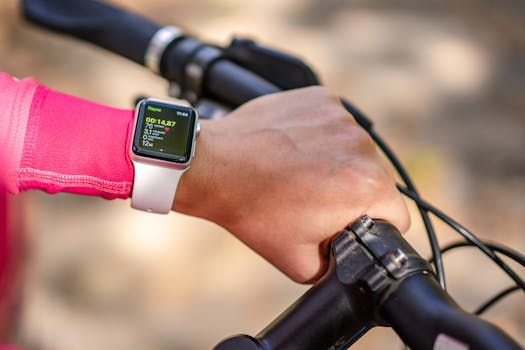
Because wearable VO2max is an estimate, the most practical way to use it is to consider:
- Relative change over time (trend validity)
- Consistency of conditions (similar workout type and intensity)
- Repeatability (does the number move in plausible directions?)
If your training improves aerobic fitness, you should generally see VO2max estimates rise or stabilize upward over weeks to months. If you reduce training, estimates often decline. Large jumps after a single unusual session can be a sign that the algorithm was influenced by measurement noise or environmental stress rather than true physiological change.
To interpret accuracy responsibly, treat wearable VO2max as a model-based indicator. It can be informative, but it’s not a replacement for lab-grade gas exchange when precise quantification is required.
Practical guidance: how to get the most reliable VO2max estimates
You can’t control the underlying algorithm, but you can improve the quality of the inputs and the relevance of the workout data.
Use consistent workout types
If you want the VO2max estimate to reflect fitness changes, generate estimates using similar activity modes. For example, if your device estimates VO2max primarily from running, do your key aerobic sessions in a similar way (outdoor versus treadmill, similar terrain if outdoors).
Include sufficiently hard segments
Choose sessions that include sustained hard effort rather than only easy running. The goal is to provide the algorithm with data from higher intensity ranges. Avoid “all-out” efforts that cause heart rate tracking to fail; instead, use controlled intervals or ramps where the sensor can maintain stable readings.
Improve heart rate signal quality
Before workouts intended for VO2max estimation:
- Ensure good sensor contact and proper strap placement
- Check for slippage after a warm-up
- Consider a chest strap if your optical readings frequently drop during hard running
Better heart rate data usually improves the stability of VO2max estimates, particularly when the model depends on near-peak response.
Record in stable conditions when possible
Try to reduce confounding factors when comparing sessions: avoid comparing a hot, humid run to a cool indoor treadmill session and expecting identical meaning. If you train in heat often, interpret VO2max estimates with that context in mind.
Keep your user profile accurate
Incorrect weight, height, or age can affect how the algorithm converts sensor signals into VO2max. Resting heart rate and typical calibration values can also influence model behavior, especially early in setup or after updates.
Do wearables measure VO2max “accurately” compared to lab tests?
Wearable VO2max estimates can be reasonably aligned with lab VO2max for some users under favorable conditions, but they’re not inherently lab-equivalent. The limitation is structural: without direct measurement of oxygen uptake, the device must rely on inferred relationships between heart rate, workload proxies, and oxygen consumption.
In other words, “accuracy” depends on whether the wearable’s model assumptions match your physiology and whether your workout provides the right information at the right intensity with high-quality signals.
Even when two people use the same device, their results can differ because:
- Heart rate sensor performance differs
- Running economy and biomechanics differ
- Environmental stress differs
- Training patterns differ
- Data quality differs (GPS stability, cadence tracking, movement patterns)
For many athletes and active users, the best use of wearable VO2max is as a directional metric—use it to understand whether your aerobic capacity is trending upward or downward, then support that interpretation with additional evidence such as pace at a given heart rate, interval performance, and recovery markers.
Common misconceptions about wearable VO2max
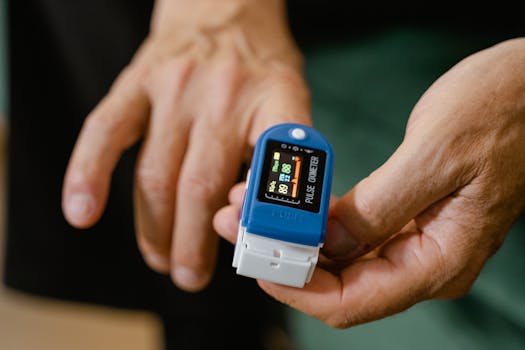
“If it’s on the screen, it must be exact.”
Wearable VO2max is an estimate produced by a model. It can be useful, but it’s not a direct physiological measurement.
“A higher number always means better fitness.”
Sometimes a higher estimate reflects measurement conditions (sensor quality, heat stress, unusual workout intensity) rather than a true aerobic improvement.
“VO2max estimates can be compared across different devices.”
Different manufacturers use different algorithms and training datasets. Even with the same workout, outputs may not be directly interchangeable.
How to sanity-check your wearable VO2max estimate
If you want to assess whether the wearable’s VO2max estimate is behaving plausibly, look for internal consistency:
- Training response: Do you notice improved endurance, faster recovery, or better interval performance when the VO2max estimate rises?
- Physiological plausibility: Does the value remain stable across similar workouts, or does it swing wildly?
- Heart rate behavior: At a given pace or power, does heart rate trend downward as fitness improves?
- Time course: Do changes occur over a realistic training timeline rather than immediately after one atypical session?
If the estimate changes without corresponding training effects, treat it as low-confidence and focus on repeatability and signal quality.
Prevention guidance: reduce the chances of misleading VO2max changes
To minimize misleading results, use a few prevention strategies:
- Avoid comparing across very different conditions (heat vs cold, altitude vs sea level, treadmill vs outdoor).
- Don’t rely on a single session; interpret the trend across multiple workouts.
- Maintain sensor fit and placement so heart rate data stays consistent.
- Use similar workout structures when generating estimates (similar interval duration and intensity).
- Re-check settings after device updates that may affect how the algorithm processes data.
If you have access to a lab test occasionally, it can provide a high-quality reference point. But even without lab testing, disciplined data collection and trend-based interpretation can make wearable VO2max far more meaningful.
Summary: what to trust in wearable VO2max accuracy
Wearables estimate VO2max by combining heart rate signals with movement-derived workload and individualized modeling. Their accuracy varies because optical heart rate measurement can be noisy during hard exercise, workload proxies can be imperfect, and physiological responses shift with environment, hydration, and training status.
For most people, wearable VO2max is best used as a trend metric: when workouts are consistent and heart rate tracking quality is high, the estimate can reflect real changes in aerobic fitness over time. When conditions differ or sensor signals degrade, the number may drift in ways that don’t represent true physiology.
Approach wearable VO2max as a model-based indicator—use it to guide training insights, then validate those insights with performance, repeatability, and how your body responds.
16.12.2025. 05:10