

VO2max Trends on Wearables: Judge Progress vs Noise

Why VO2max trends matter—and why they can mislead
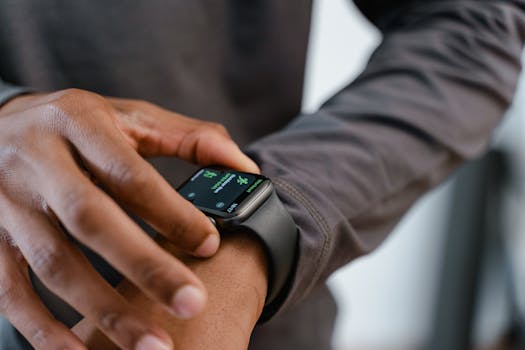
VO2max is one of the most informative markers of aerobic fitness. It reflects the maximum rate at which your body can take in, transport, and use oxygen during intense exercise. Because it’s strongly linked to endurance performance and health outcomes, many people want to track changes over time.
Wearable devices now estimate VO2max from everyday signals such as heart rate, movement, and sometimes inferred running or cycling effort. The result is a convenient trend line—often labeled “VO2max,” “cardiorespiratory fitness,” or “aerobic fitness.” However, those numbers are estimates, not direct lab measurements. That means the trend you see can reflect both real physiological change and measurement noise.
This article explains how VO2max trends on wearables behave, what causes apparent improvements or declines, and how to judge progress in a way that is more resilient to short-term variability. The goal is practical: help you interpret the pattern, not chase every point on the graph.
What wearables mean by VO2max (and what they don’t)
Most wearables do not measure VO2max directly. Instead, they use models that estimate VO2max from physiological and activity data. Common inputs include:
- Heart rate response to activity (often via optical heart rate sensors)
- Movement intensity (accelerometer and, for some devices, gyroscope signals)
- Activity context such as walking, running, or cycling
- Individual calibration factors (age, sex, resting heart rate, sometimes user-provided data)
These models are trained to map observed patterns to an estimated VO2max. The estimate is only as good as the data quality and the assumptions behind the model. In real life, conditions vary—sensor contact changes, you sweat, your pace fluctuates, and terrain affects mechanical efficiency. All of that can shift the estimate without any true change in your aerobic capacity.
Understanding this distinction is the foundation for judging progress vs noise. A single-day VO2max reading is not a meaningful “test.” A multi-week pattern, interpreted with context, is much more useful.
Why VO2max trends fluctuate: the anatomy of measurement noise
Wearable VO2max estimates can move up or down even when your fitness is stable. Several mechanisms explain why.
1) Heart rate signal variability
Optical heart rate sensors can misread during motion artifacts, loose strap fit, cold weather, tattoos, or high sweat. If the heart rate curve used by the device is noisier than usual, the estimated VO2max can shift.
This is especially relevant for activities like running where arm swing and wrist movement can distort readings. Even small changes in sensor quality can create apparent “fitness gains” after a day when the sensor happened to track well.
2) Changes in effort without changes in fitness
Your VO2max does not change quickly, but your ability to generate the same power or pace can. If you feel fresher, sleep better, or reduce stress, you might sustain a given pace with a lower heart rate. Wearables may interpret that lower heart rate response as improved aerobic fitness.
Conversely, accumulated fatigue, illness, dehydration, or heat can raise heart rate for the same pace, pulling the estimate down—even if your true VO2max hasn’t changed.
3) Model assumptions and activity mix
Many wearable systems infer VO2max from specific types of sessions (often steady, submaximal efforts). If your recent activity pattern changes—more intervals, more walking, more hills, or a different running cadence—the model may produce a different estimate even if physiological fitness is unchanged.
For example, VO2max estimation from treadmill vs outdoor running can differ due to stride mechanics and how heart rate stabilizes. Similarly, cycling estimates can behave differently because wrist-based heart rate signals may correlate differently with workload.
4) Statistical smoothing and update timing
Some devices don’t update VO2max continuously; they may compute it after accumulating sufficient data. That can create step-like changes: a value stays steady for days, then jumps when enough measurements arrive. The jump can look dramatic, but it might be a recalculation rather than a sudden fitness transformation.
What counts as real progress in VO2max estimates
Real improvements in aerobic fitness usually occur over weeks to months, not days. Therefore, the most robust way to evaluate wearable VO2max trends is to focus on:
- Direction across time (is there a consistent upward or downward drift?)
- Magnitude relative to typical variability (does it move more than the usual day-to-day jitter?)
- Consistency across conditions (does it improve during similar types of workouts?)
- Concordance with performance markers (pace at a given heart rate, recovery, longer sustained efforts)
Instead of asking, “Did my VO2max number change today?” ask, “Does my overall aerobic capacity appear to be trending in the same direction as my training response?”
Use trend windows, not single points
A practical approach is to evaluate the estimate over a window such as 4–8 weeks. Over that timeframe, true physiological change is more plausible, while random noise tends to average out. Shorter windows can still be informative, but they are more vulnerable to artifacts like a single low-quality heart rate session.
If your wearable reports VO2max as a single number per update period, compare the current estimate to the baseline from several weeks earlier, not just the previous day.
Look for stability after consistent training
When training is consistent—similar session types, similar intensity distribution, and reasonably stable sensor fit—VO2max estimates should become more “predictable.” If your estimate swings wildly while your training load and conditions are stable, that’s a sign the readings may be dominated by noise.
Check whether the estimate responds to known training effects
Aerobic fitness generally improves with a mix of steady endurance work and, for many people, some intensity that challenges the aerobic system. If you introduce a structured progression and the VO2max estimate rises alongside improved endurance performance, that supports the reading.
If your VO2max changes while your training quality and performance do not, treat it as suspect and prioritize more reliable signals such as heart-rate/pace relationships during comparable efforts.
How to separate progress from noise using your own data
Wearable VO2max estimates are best interpreted alongside other metrics that reflect physiological adaptation more directly. You don’t need lab testing to do this, but you do need a method.
1) Compare the same workouts across weeks
Choose a few repeatable sessions:
- A steady run/walk at a comfortable pace
- A similar route with comparable elevation
- A recurring interval set (same intervals, similar rest)
Then track whether your heart rate during those sessions is trending downward at the same pace or power. If VO2max is improving and heart-rate response is improving too, the case for real progress strengthens.
If VO2max rises but your heart rate response doesn’t improve, the VO2max change may be noise or model artifact.
2) Use resting heart rate trends as a context signal
Resting heart rate (RHR) often reflects recovery and autonomic balance. A persistent rise in RHR can indicate stress or insufficient recovery, which can also distort VO2max estimates by changing heart rate dynamics during activity.
If your VO2max estimate drops during a period when RHR is elevated, it may be a temporary stress effect rather than a true decline in aerobic capacity.
3) Watch for sensor-quality issues
Before concluding that VO2max changed, review whether your wearable recorded a clean heart rate trace during the key activities. Signs of poor signal include:
- Large step-like jumps in heart rate
- Unusually low or high readings compared to your typical pattern
- Long periods where the device appears to have difficulty tracking
Many platforms provide heart rate trace visuals. If signal quality is inconsistent, treat the corresponding VO2max updates as lower confidence.
4) Don’t overreact to short-term drops
VO2max estimates can dip after heavy training blocks, travel, or poor sleep. Aerobic fitness doesn’t vanish overnight, but heart rate physiology can shift quickly. A short-term decline is often a recovery signal in disguise.
When you see a drop, check whether it coincides with:
- Higher training load
- Reduced sleep duration
- Heat exposure or dehydration
- Illness symptoms
If yes, the “noise” may actually be a marker of current physiological state rather than true VO2max change.
Device differences: same concept, different models
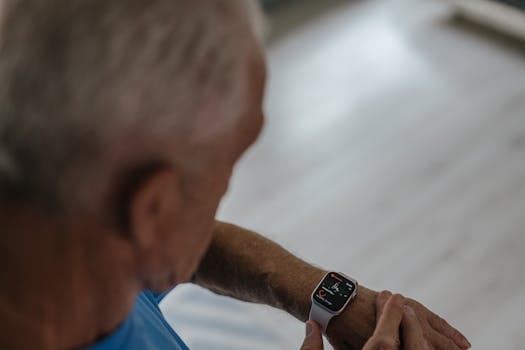
Even though many wearables report a VO2max estimate, the underlying algorithms differ. Differences can include:
- How the device selects “usable” data segments
- Whether it relies on treadmill-style protocols or activity-derived inference
- How it handles heart rate variability and motion artifacts
- Whether it uses additional inputs like GPS speed, cadence, or external power
Because of this, VO2max values are not always directly comparable across brands. More importantly for your purposes, the behavior of the trend can differ: one device may update more frequently, while another may smooth more aggressively.
To judge progress vs noise, it’s usually best to interpret within the same device and within the same measurement context. If you change devices, strap location, or measurement setup, expect a recalibration period where the trend may not reflect fitness.
Practical guidance for interpreting VO2max trends
You can make wearable VO2max trends more actionable by applying a few consistent rules.
Set a baseline and track for long enough
Start by collecting data for several weeks. Use the earliest stable estimate as a baseline, but don’t treat it as a definitive value. Then observe whether the estimate changes in a consistent direction over 4–8 weeks.
Use the trend direction to guide focus, not daily decisions
VO2max is a long-term attribute. If you adjust training day-to-day based on a single VO2max update, you’ll likely chase noise. Instead, use the trend to confirm that your aerobic work is producing expected adaptation.
When the trend improves alongside better endurance performance, it supports the current plan. When it doesn’t, consider whether training intensity distribution, recovery, or sensor tracking might be the limiting factor.
Interpret “improvement” during low-quality tracking cautiously
If you recently changed strap tightness, switched wrists, ran in colder conditions, or experienced heart rate dropouts, an upward VO2max jump may reflect better signal tracking rather than better physiology. Reversion to prior levels in subsequent weeks is a common clue.
When VO2max trends stall, check training specificity
Aerobic fitness responds to repeated aerobic stress. If your training is heavily skewed toward short, maximal efforts with limited aerobic base, VO2max may not rise as expected. Likewise, if you only walk casually without enough time spent at aerobic intensity, the wearable may show little change.
Stalling doesn’t necessarily mean you’re doing something wrong—it may mean the training stimulus is insufficient for measurable change, or that the wearable isn’t capturing the right intensity patterns.
Where “noise” can actually be useful: recovery and readiness
Although noise is frustrating, short-term changes can still provide insight. Heart rate dynamics during exercise are influenced by hydration, stress, sleep, and recovery. If your VO2max estimate drops while your resting heart rate rises and your heart rate for the same pace increases, that pattern often indicates reduced readiness.
In that sense, the estimate is not only a fitness metric; it can also reflect current physiological state. The key is separating:
- Long-term drift (likely fitness adaptation)
- Short-term deviations (likely readiness, recovery, or measurement artifacts)
Using both perspectives can make the wearable more informative without overinterpreting the number.
Common pitfalls that exaggerate or hide true progress

Several recurring issues cause people to misread VO2max trends.
Comparing across different training modes
Jumping between running and cycling, or between treadmill and outdoor running, can change how heart rate relates to effort. If your recent activity mix differs from earlier weeks, your VO2max estimate may reflect model context rather than fitness.
Training through illness or major stress
During illness or high stress, heart rate response can change quickly. VO2max estimates may drop even though your underlying aerobic capacity is largely intact. Treat these periods as readiness changes unless the decline persists for many weeks after recovery.
Ignoring movement artifacts
Loose straps, worn-out sensors, or inconsistent placement can degrade heart rate accuracy. A “better” VO2max number after a strap adjustment may not indicate improved fitness.
Expecting the graph to behave like a lab test
Laboratory VO2max testing is standardized. Wearables are not. Their estimates are influenced by day-to-day conditions. Treat the wearable VO2max estimate as a trend indicator, not a single measurement.
How to use other metrics to validate aerobic change
If you want a higher-confidence view of progress, pair VO2max trends with measures that often move in tandem with aerobic adaptation.
Heart-rate/pace or heart-rate/power relationships
One of the most practical validations is whether you can hold the same pace at a lower heart rate, or the same heart rate at a faster pace. Over weeks, this is consistent with improved aerobic efficiency and conditioning.
Performance durability
VO2max is about maximum aerobic capacity, but endurance improvements often show up as better ability to sustain effort. If your longer steady sessions become easier at the same perceived exertion, that supports the trend.
Recovery patterns and tolerance to training
If you can complete your planned workouts with less strain and recover faster, that often aligns with improved aerobic fitness. A wearable VO2max trend should not be the only evidence; it should match the way you perform.
Prevention guidance: make your data cleaner and your interpretation safer
You can reduce noise by improving measurement consistency and using a thoughtful interpretation framework.
- Keep sensor fit consistent (strap tightness, wrist placement, and device location).
- Prioritize repeatable workouts so the model sees similar effort patterns.
- Use multi-week windows rather than reacting to single updates.
- Check signal quality when VO2max changes unexpectedly.
- Contextualize with recovery using resting heart rate and training load.
Finally, remember that VO2max estimates are tools for trend awareness. The most reliable interpretation comes from combining the wearable’s output with your training response—how your body handles comparable sessions over time.
FAQ
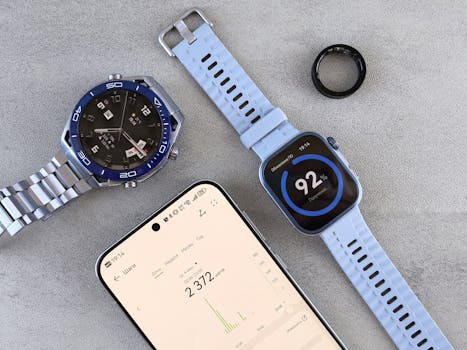
How quickly can VO2max actually change?
True VO2max changes typically occur over weeks to months. Short-term fluctuations on wearables are often influenced by recovery, sensor quality, and day-to-day physiological state rather than real changes in maximum aerobic capacity.
Why does my VO2max number go up after easy days?
Easy days can improve readiness, reduce heart rate for the same activity, and improve sensor tracking conditions. Wearables may interpret lower heart rate response as higher VO2max even if the change is primarily a short-term physiological and measurement effect.
Should I trust a single VO2max reading from my wearable?
No. A single estimate is low-confidence because it depends on model assumptions and variable input data. Look for direction and consistency over several weeks, and validate with heart-rate response and performance during comparable sessions.
Can poor heart rate tracking create false VO2max trends?
Yes. Motion artifacts, loose straps, cold weather, and signal dropouts can distort the heart rate patterns used by the algorithm, leading to apparent increases or decreases that don’t reflect true fitness changes.
Do VO2max estimates from different wearable brands mean the same thing?
Not necessarily. Different devices use different algorithms and data inputs. Even if both report “VO2max,” the absolute values may differ. For progress, interpret trends within the same device and with consistent measurement conditions.
What should I do if my VO2max trend drops for a few weeks?
First, check context: illness, high stress, reduced sleep, dehydration, heat, or a major training load increase. Then review sensor quality during key activities. If the decline persists after recovery and consistent tracking for several weeks, it may reflect a real training or recovery issue worth adjusting.
05.04.2026. 07:36