

Wearable Sensor Accuracy: Optical HR, SpO2, Accelerometer, Temperature

Why wearable sensor accuracy matters in performance technology
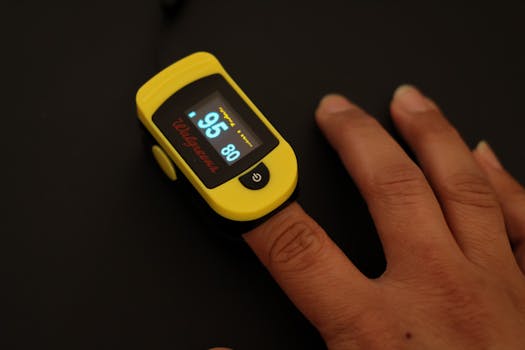
Wearable devices increasingly influence training decisions, recovery planning, and health monitoring. Yet the usefulness of any metric depends on how accurately it reflects the body signals being measured. Optical heart rate (HR) and blood oxygen saturation (SpO2) rely on light-based sensing, while accelerometers estimate motion and can indirectly support activity metrics. Temperature sensors add context for recovery and skin environment, but they are sensitive to placement and airflow. Understanding the measurement principles—and the most common sources of error—helps you interpret wearable data more reliably.
This guide explains how optical HR, optical SpO2, accelerometers, and temperature sensors work, why accuracy varies between people and conditions, and practical steps to improve measurement quality.
Optical HR accuracy: how light-based sensing captures heart signals
Most wearables estimate heart rate using optical sensors that emit light into the skin and measure changes in reflected or transmitted light. Blood volume in the skin changes with each heartbeat. Those small variations modulate the light signal, producing a pulse waveform from which HR is derived.
Key factors that affect optical HR accuracy
- Sensor contact and fit: If the device is loose, the optical path changes and motion artifacts increase. If it is too tight, it can alter local blood flow and comfort, potentially affecting the signal quality.
- Skin properties: Melanin content, skin thickness, and hydration influence how light penetrates and scatters. This can change signal strength and noise levels.
- Motion artifacts: Running, cycling, wrist rotation, and even subtle hand movements can create signal changes unrelated to blood flow. Many devices use signal processing to reduce this, but it is not perfect.
- Ambient light: Sunlight and indoor lighting can add interference. Better wearables incorporate filtering and adaptive algorithms, but the effect can still vary by environment.
- Perfusion and physiological state: Cold skin, low blood flow, dehydration, or post-exertion vasoconstriction can reduce signal quality.
Practical ways to improve HR reliability
- Ensure consistent placement. For wrist devices, align the optical sensor with the same skin area each time.
- Use a snug, comfortable fit and check it after warming up. Sweat can loosen bands, and changes in fit can alter readings.
- Consider measurement conditions. If you notice HR drifting during high-impact movement, try pausing briefly to let the signal stabilize and then resume.
- Watch for “signal quality” indicators when available. Many systems provide a quality metric or show unstable readings when the signal is poor.
For educational context, it helps to recognize that optical HR is usually most accurate at rest and during steady motion. During intense, irregular movement, the same algorithms that improve noise suppression can still struggle to fully separate motion from pulse-related modulation.
Optical SpO2 accuracy: interpreting oxygen saturation from skin signals
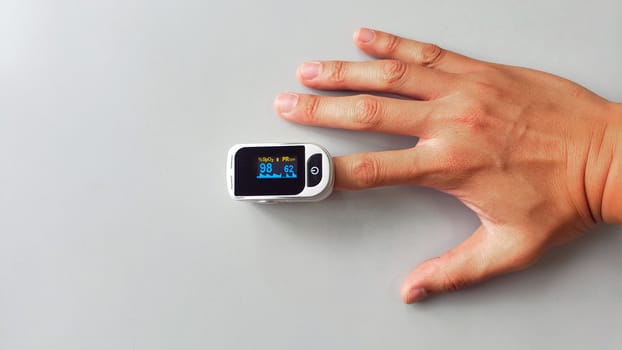
Optical SpO2 estimations use light absorption characteristics of oxygenated and deoxygenated blood. Typically, sensors emit multiple wavelengths (often red and infrared) and compute a ratio related to oxygen saturation. The device then applies calibration and correction models to estimate SpO2.
Why SpO2 is harder than HR
SpO2 signals are often smaller and more sensitive to artifacts than HR. In addition to motion and fit, SpO2 depends strongly on blood perfusion and the optical path through skin and tissue. Because oxygen saturation changes can be subtle, measurement errors can become significant relative to the physiological range you’re trying to detect.
Common sources of SpO2 error
- Motion and poor perfusion: Wrist movement and low blood flow (cold skin, poor circulation) can distort the absorption ratio.
- Skin tone and tissue composition: Optical models can behave differently across individuals due to differences in scattering and absorption. This can influence accuracy if the device’s calibration does not fully account for variability.
- Ambient light and sensor saturation: Bright light interference and sensor signal saturation can reduce the reliability of the computed ratio.
- Physiological factors: Edema, anemia, and changes in peripheral circulation can affect the optical signal. High altitude and respiratory conditions also change the underlying physiology, which can influence algorithm performance.
- Device calibration and algorithm design: SpO2 is not measured directly; it is estimated. Calibration assumptions and correction strategies drive accuracy across conditions.
Practical guidance for interpreting wearable SpO2
- Use SpO2 trends rather than single-point values. If the signal quality is unstable, avoid over-interpreting a brief dip.
- Stabilize the measurement. When checking SpO2 at rest, sit quietly and keep the device position constant.
- Be cautious during exercise. Many wearables show reduced reliability for SpO2 during movement because the optical signal is more contaminated by motion.
- Understand that SpO2 from wearables is not equivalent to clinical pulse oximetry. For education and safety, treat wearable readings as screening-level information unless validated against clinical devices for your context.
In performance technology settings, SpO2 can still be valuable for monitoring general trends, recovery patterns, or changes in oxygenation over time. The key is to evaluate the context: rest vs. activity, warm vs. cold skin, and consistent fit.
Accelerometer accuracy: motion sensing, step counts, and activity metrics
An accelerometer measures acceleration along one or more axes. From that raw motion data, wearable systems estimate steps, cadence, activity intensity, and sometimes posture or gait characteristics. Because acceleration is a direct measurement of motion rather than an optical inference, the sensor physics can be simpler—but the derived metrics are still sensitive to algorithm choices.
Where accelerometer accuracy can break down
- Placement and orientation: Wrist-mounted devices experience different motion patterns than waist- or ankle-mounted sensors. The same activity can generate different acceleration signatures.
- Movement style variability: Running form, arm swing, cycling posture, and carrying objects can all change the accelerometer pattern.
- Signal processing and classification: Step detection and activity classification depend on thresholds, filtering, and machine learning models. Those models may not generalize perfectly across users.
- Impact events: Sudden jolts can create spikes that are interpreted as steps or high-intensity movement unless the algorithm suppresses them.
- Low-motion activities: Activities like slow walking, certain strength training movements, or hands-only tasks may produce acceleration patterns that are hard to classify.
Practical steps to improve motion metric reliability
- Consistent wear location. Keep the device in the same position on the wrist and avoid rotating it around the arm frequently.
- Calibrate expectations. If step counts seem off, compare them against a known baseline (for example, a measured walk) rather than reacting to day-to-day noise.
- Interpret intensity metrics with caution. If you’re using accelerometer-driven “active minutes” or intensity estimates, remember they reflect classification logic, not direct measurement of energy expenditure.
- Account for the activity type. Cycling and rowing often require different motion interpretation than treadmill running because arm and wrist motion patterns differ.
Accelerometers are typically reliable for capturing the presence and timing of movement. The bigger variability usually appears in what the device decides those movements “mean” (steps, cadence, activity intensity), not in the raw sensing itself.
Temperature sensor accuracy: skin temperature vs. environment and device effects
Wearable temperature sensors—often thermistors or similar components—estimate temperature near the skin. However, the reading is influenced by both the body and the device environment. A temperature value is not a direct measure of core body temperature unless the sensor design and placement are specifically engineered for that purpose.
Why temperature readings vary
- Ambient temperature and airflow: Wind, indoor HVAC, and outdoor conditions can cool the skin surface and change the sensor’s reading quickly.
- Skin contact pressure: Tight bands can reduce airflow and change heat transfer; loose bands expose the sensor to more air.
- Sweat and evaporation: Sweating can initially raise skin temperature while evaporation later cools it. This produces dynamic changes that may not reflect internal physiology.
- Device heating: Charging, processor activity, and sensor operation can slightly affect local temperature.
- Time to stabilize: Temperature sensors may require a period to reach steady readings after you move from one environment to another.
Practical guidance for using temperature data
- Focus on relative changes over time. Temperature trends across days and similar conditions are often more informative than absolute values.
- Standardize measurement conditions when possible. For example, compare temperature readings at the same time of day and in similar ambient settings.
- Be cautious after major transitions. After entering cold or hot environments, wait for stabilization before interpreting the reading.
- Use temperature alongside other signals. Pairing temperature trends with HR or recovery indicators can help distinguish “environmental cooling” from “physiological change.”
In performance technology, temperature sensors are most useful as context—helping interpret recovery, sleep environment, or heat exposure—rather than serving as a direct proxy for internal body temperature.
How sensor fusion and algorithms shape overall accuracy
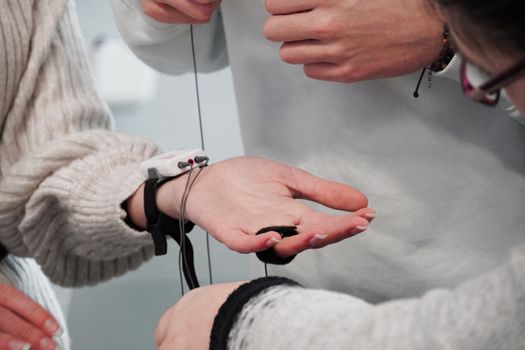
Many wearable systems do not treat HR, SpO2, motion, and temperature as independent measurements. Instead, they use sensor fusion—combining signals to improve robustness. For example, motion data can help identify when optical signals are corrupted by movement, and temperature can provide context for perfusion changes.
What to look for in real-world data
- Consistency across metrics: If HR is stable but SpO2 fluctuates wildly, the issue may be optical artifact rather than a true oxygenation change.
- Quality indicators: Some devices expose signal quality or confidence. When available, treat low confidence as a reason to avoid over-interpretation.
- Sampling and averaging behavior: Wearables may average over short windows. Rapid changes in physiology can be smoothed, delaying detection of true events.
- Latency: SpO2 and HR may update at different rates. Apparent mismatches can reflect processing time rather than physiological disagreement.
Even when sensors are physically accurate, algorithmic choices determine the final metric. Understanding that distinction helps you interpret readings more responsibly—especially when using data to guide performance decisions.
Common accuracy pitfalls in daily use (and how to avoid them)
Accuracy problems often come from predictable setup and behavior rather than “bad hardware.” The following issues are frequent in real-world monitoring.
- Inconsistent fit: A band that slides during workouts can degrade optical HR and SpO2. Check placement before sessions and re-tighten if necessary.
- Cold conditions: Cold skin reduces perfusion and can weaken optical signals. Warm up before relying on SpO2, and consider that readings may be less stable outdoors in winter.
- High-motion intervals: Sprinting, interval training, and upper-body dominant activities can increase motion artifacts. Optical HR may still work, but SpO2 is often less reliable during intense movement.
- Over-interpreting single values: A brief anomaly may reflect noise. Look for patterns across minutes or across repeated checks under similar conditions.
- Environmental transitions: Temperature and optical signals can shift as you move between indoor and outdoor settings. Allow stabilization time before making conclusions.
If your goal is performance monitoring, a useful approach is to treat wearable metrics as “contextual indicators” while still validating critical changes against a more reliable method when needed (for example, clinical oximetry for concerning oxygenation readings).
Putting wearable sensor accuracy into practice
To use wearable data effectively, align your expectations with how each sensor behaves:
- Optical HR: Usually strongest at rest and steady movement; more sensitive to fit and motion.
- Optical SpO2: Often more artifact-prone than HR; best interpreted at rest with stable contact and signal quality.
- Accelerometer: Typically reliable for capturing movement; derived activity metrics depend on classification algorithms and wear placement.
- Temperature: Best for trends and context; influenced by environment, airflow, sweat, and stabilization time.
In practice, you can improve reliability by maintaining consistent wear position, monitoring signal stability, and focusing on trends rather than reacting to isolated spikes. Many wearables also allow users to view signal quality or adjust measurement settings; while the details differ by device, the underlying principle is the same—better measurement conditions produce more trustworthy data.
For educational clarity, recognize that wearable readings are designed for broad usability. Accuracy varies by individual physiology, device fit, and activity context. When the stakes are high—such as suspected respiratory compromise—wearable SpO2 should not be treated as a definitive diagnostic tool.
Summary: improving confidence in wearable HR, SpO2, motion, and temperature
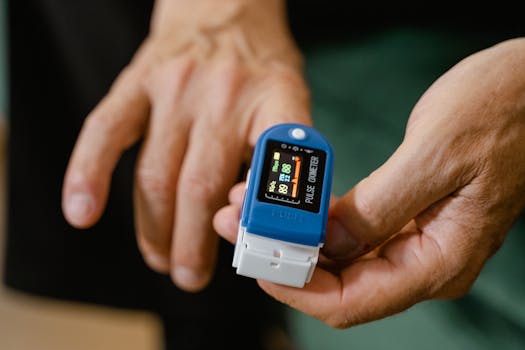
Wearable sensor accuracy is shaped by both physical measurement and the algorithms that convert signals into metrics. Optical HR depends heavily on sensor contact, skin perfusion, and motion suppression. Optical SpO2 is particularly sensitive to artifacts and should be interpreted with attention to rest vs. activity, fit stability, and signal quality. Accelerometers measure motion directly but rely on classification logic for steps and intensity. Temperature sensors provide useful context through trends, but they reflect skin and environment rather than core temperature.
By using consistent placement, stabilizing conditions for optical measurements, and interpreting metrics as trends with appropriate caution, you can make wearable data more reliable for performance technology and everyday monitoring.
27.01.2026. 04:15