

Foam Rolling vs Percussive Therapy vs Massage Gun Injuries

Foam rolling, percussive therapy, and massage guns: what you’re actually doing
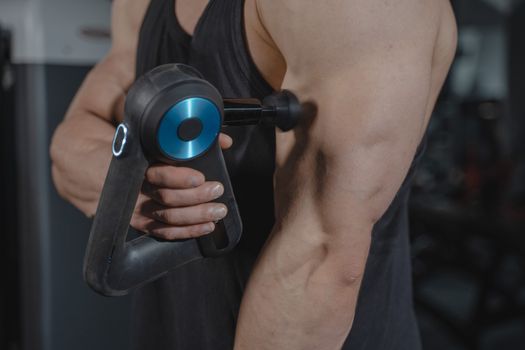
You’re probably using these tools for recovery, mobility, or to calm down tight muscles. But “recovery” isn’t one single thing. Foam rolling, percussive therapy, and massage guns load your tissues in different ways—so the injury risks and the best use cases aren’t the same.
Foam rolling is typically slow, bodyweight-driven compression of muscle and fascia. You control pressure and time, usually in 30–90 second passes over a region.
Percussive therapy is broader than “massage gun.” It can include devices that deliver rapid tapping or vibration-based stimulation, sometimes with adjustable intensity and contact patterns. In practice, many people mean a handheld percussive tool when they say “percussive therapy,” but the underlying principle is the same: short, high-frequency mechanical input.
Massage guns are a specific category of percussive devices. They deliver fast bursts through a head that contacts your skin. The speed and depth depend on the device and your technique. Most devices marketed for recovery can reach roughly 1,500–3,200 percussive impacts per minute (varies by model), and some allow multiple intensity levels.
Because the tissue response differs, the question “which one is safest?” depends on where you apply it, how hard you push, and when you use it (before training vs after, and during soreness vs during pain).
The strongest overall option for most people: foam rolling with conservative pressure
If you’re trying to minimize risk while still getting meaningful mobility and soft-tissue relief, foam rolling usually wins for most general users. It’s slower, more controllable, and easier to scale down when something feels sharp or wrong.
Percussive therapy and massage guns can be effective, but they’re also easier to misuse—especially on sensitive areas, tendons, or near joints where you don’t want deep, repeated impact.
Side-by-side: foam rolling vs percussive therapy vs massage gun injuries

Use this table to compare how each method loads your body and where injuries tend to come from.
| Method | Primary tissue interaction | How it feels | Common irritation mechanisms | Injury risk profile (general) | Best early guidance |
|---|---|---|---|---|---|
| Foam rolling | Slow compression of muscle + superficial fascia | Achy pressure, gradual “release” sensation | Over-compression, bruising, rolling directly on bony landmarks, too-long sessions | Lower to moderate; usually controllable if you avoid sharp pain | Start 20–40 seconds per spot, moderate pressure, avoid joints/bones |
| Percussive therapy | Rapid tapping/vibration; can create more stimulus than compression | Fast “knocking,” sometimes calming, sometimes irritating | Overuse (too many sessions), too much intensity, contact over tendons/nerve-rich areas, poor technique | Moderate; depends heavily on intensity and placement | Use low settings first, keep movement in small arcs, avoid “digging” |
| Massage gun | High-frequency percussive bursts through a small head | Pinpoint impact; can feel great or can feel sharp | Skin irritation, increased bruising, aggravation of tendon/ligament irritation, nerve sensitivity, over-treatment of inflamed tissue | Moderate to higher when misused; small head concentrates force | Use light-to-moderate pressure, correct attachment, avoid bony areas |
Real-world performance differences: what you’ll notice after 1–2 weeks
In the real world, the biggest differences show up in control, tolerance, and how quickly you can irritate something.
Scenario: You train 4–5 days per week and you’re dealing with tight calves and mild soreness after leg day. You try all three methods for 10–12 minutes total per session, 3–4 times per week, focusing on the same calf area.
- Foam rolling: You can usually keep it at a tolerable “pressure” level. If your calf is just tight, you often feel looser within the same session. If it’s truly inflamed, you may still feel uncomfortable, but you’re less likely to “overdo” the stimulus because you can slow down and reduce pressure.
- Percussive therapy: Many people notice quicker “wake-up” feelings—less stiffness, more movement—especially when the device is set to a moderate intensity. But if you stay on one spot too long or use high intensity, you can shift from “helpful” to “irritated” faster than with foam rolling.
- Massage gun: The pinpoint head can be great for breaking up localized tightness (like a stubborn trigger point feeling). The downside is that you can accidentally press into a tendon edge or a nerve-sensitive area and create a sharp, lingering flare. That’s where “massage gun injuries” are most likely to happen—often from technique and intensity, not from the concept itself.
Over 1–2 weeks, foam rolling tends to produce steadier improvements in mobility and tolerance. Percussive tools can improve feel quickly, but they demand more discipline: fewer minutes per spot, lower intensity at first, and smart placement.
Pros and cons breakdown for each method
Foam rolling: best balance of safety and practicality
Pros
- High control: You decide pressure by bodyweight and leverage.
- Lower risk of pinpoint overloading: The surface contact spreads force.
- Easy to scale: You can shorten sessions to 5–8 minutes or reduce pressure instantly.
- Good for general mobility: Particularly for quads, hamstrings, glutes, and calves.
Cons
- Less precise: It’s harder to target a tiny sore spot without moving around.
- May be too uncomfortable: If you’re already very sore or dealing with a sensitive injury, aggressive rolling can feel like it’s “making it worse.”
- Technique matters: Rolling directly on bones or joints (like the knee cap area) can cause bruising or sharp pain.
Where injuries usually come from: excessive time on one spot, too much pressure, and rolling over bony structures (hip bones, spine, knee joint line).
Percussive therapy: faster stimulation, higher technique demands
Pros
- Can improve short-term mobility: Many people feel a “ready to move” effect faster than with foam rolling.
- Useful for localized tightness: Depending on device design and head shape, you can target muscle areas effectively.
- Adjustable: Many percussive units let you choose intensity and sometimes head styles.
Cons
- More likely to irritate if you chase pain: If you treat sharp discomfort as a “good sign,” you can flare tissue.
- Harder to judge pressure: With high-frequency input, you may not feel damage immediately—then soreness ramps up later.
- Overuse risk: Doing percussive work too frequently (for example, daily on the same area at high intensity) can keep tissue in a reactive state.
Where injuries usually come from: staying in one spot too long, using high intensity, or applying to tendon-heavy areas (Achilles insertion, patellar tendon region) and nerve-sensitive zones.
Massage guns: powerful, but “injuries” are often technique issues
Pros
- Strong for targeted relief: The small head can help when tightness is very localized.
- Time-efficient: You can cover a region in 3–8 minutes if you use good form.
- Great for pre-session warm-up: Many athletes use it briefly to reduce stiffness before training.
Cons
- Pinpoint force can bruise tissue: If you press too hard, you can create bruising-like soreness after.
- Higher risk near joints and tendons: The same precision that targets muscle can also target the wrong structure.
- Not ideal during acute injury flare-ups: If you’re in a painful, inflamed phase, aggressive percussive input can worsen symptoms.
- Can trigger nerve irritation: Areas like the inner forearm, side of the neck, or other nerve-sensitive regions should be avoided.
Where “massage gun injuries” commonly happen: people apply the gun to bony areas, use maximum intensity, or treat pain as a signal to push harder—then experience increased soreness, swelling, or a lingering sharp sensation.
Best use-case recommendations for different buyers
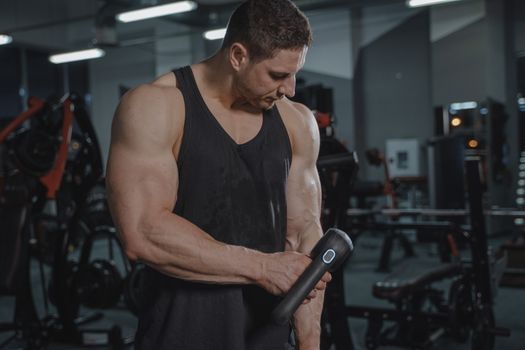
If you’re new to recovery tools
Choose foam rolling first. Start with 2–4 sessions per week, 10–15 minutes total. Use moderate pressure and stop when you feel sharp, electric, or joint-like pain.
Once you’re comfortable, you can add percussive work 1–3 times per week—briefly and at low settings. Many people pair foam rolling on bigger muscle groups with a massage gun only on areas that tolerate percussion well (for example, mid-belly calf or glute muscle).
If you’re an athlete who needs fast pre-training mobility
Consider massage guns or percussive therapy as a short warm-up add-on. Keep it brief—often 30–60 seconds per muscle group and avoid lingering on one tender spot.
Practical example: if you’re doing a 45-minute lower-body session, you might do foam rolling the day before for general mobility, then use a massage gun for 2–4 minutes total right before training to reduce stiffness. Foam rolling alone can be a bit too “heavy” right before training for some people, while percussive work can feel more energizing.
If you’re dealing with persistent tightness but not sure what’s safe
Lean toward foam rolling and low-intensity percussive work. If you suspect tendon involvement—like Achilles, patellar tendon, or hamstring tendon—be cautious with percussive tools. The small head of a massage gun can make it easy to overload a tendon edge.
In these cases, use foam rolling on the muscle belly (not directly on the tendon) and consider percussive therapy only on tolerated muscle regions. If you feel sharp pain, numbness, or tingling, stop.
If you’re trying to manage soreness after workouts
For general post-workout soreness, foam rolling tends to be the safest starting point. Percussive therapy and massage guns can help some people feel better, but the injury risk increases when you use them to “punish” soreness.
Rule of thumb: if your soreness is improving day-to-day, gentle soft-tissue work is usually fine. If symptoms are worsening or you have focal pain that feels like injury (not just muscle fatigue), skip percussion and consider professional guidance.
Product-style recommendations (affiliate-friendly, technique-focused)
If you want to buy once and stay consistent, here’s how to think about it without overcomplicating your search:
- For foam rolling: Look for a standard EVA foam roller or a textured roller with moderate density. If you’re sensitive, a softer roller can reduce the temptation to push too hard.
- For percussive therapy / massage guns: Choose a device with multiple intensity levels and a comfortable head (often rubberized or with multiple attachments). The ability to start low matters more than raw power.
- Attachment matters: When using a massage gun, a larger, flatter head often spreads contact more than a small pinpoint head. That can reduce the chance of overloading a single spot.
Brands vary, but the features that reduce “injuries” are usually the same: controllable intensity, stable grip, and attachments that let you distribute force.
Final verdict: which option suits your needs—and where injuries are most avoidable
Foam rolling vs percussive therapy vs massage gun injuries comes down to one practical truth: the more concentrated the force and the faster the stimulation, the easier it is to irritate tissue if your technique isn’t dialed in.
Pick foam rolling if: you want the best overall safety-to-benefit ratio, you’re new to recovery tools, and you’re working on general mobility for quads, hamstrings, glutes, and calves. It’s also your best choice when you want a method you can scale down instantly.
Pick percussive therapy if: you’re experienced enough to use low-to-moderate intensity, you want quicker short-term mobility changes, and you can commit to smart placement (muscle belly, not tendon edges or joints).
Pick a massage gun if: you need time-efficient, targeted relief and you’ll use conservative pressure—especially avoiding bony areas and nerve-sensitive regions. Massage guns can be great, but they’re also where misuse most often leads to bruising-like soreness or lingering irritation.
Clear winners by buyer type:
- Most people: Foam rolling (best overall starting point).
- Performance-focused warm-up: Percussive therapy/massage gun (brief, low intensity).
- Most cautious approach to prevent injuries: Foam rolling first, percussion second, and always stop for sharp pain, tingling, or worsening symptoms.
If you want one simple strategy: use foam rolling as your foundation, then add percussive therapy or a massage gun selectively—short sessions, correct placement, and intensity that never forces sharp discomfort. That’s the path that delivers results while keeping the injury risk low.
25.02.2026. 06:03