

How to Adjust Training When Symptoms Flare

Why training has to change when symptoms flare
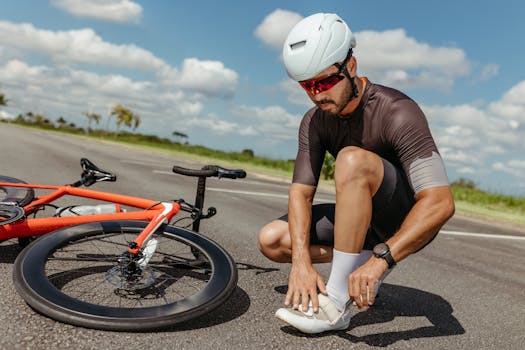
Symptoms that flare—pain, stiffness, swelling, radiating sensations, numbness, unusual fatigue, or loss of function—are information, not failure. When your body signals that capacity has dropped, continuing the same training load often turns a manageable irritation into a longer recovery. The goal isn’t to stop moving; it’s to adjust the training stimulus so you maintain conditioning while protecting the tissues and the nervous system that are currently under stress.
Learning how to adjust training when symptoms flare is about matching intensity, volume, and movement demands to your current tolerance. This is especially important in rehab and injury prevention, where the line between “productive stress” and “too much too soon” is often narrow and individual.
Start with symptom triage: what kind of flare is it?
Before changing your plan, clarify what “flare” means for you. Different symptom patterns call for different adjustments.
Use a simple flare classification
Consider these practical categories:
- Mechanical flare: Symptoms worsen with specific movements or positions (for example, bending, overhead activity, running). Often improves when you modify the movement.
- Inflammatory flare: Symptoms include increased warmth, swelling, visible inflammation, or pain that ramps up and lingers.
- Nervous system flare: Symptoms feel more neurological—tingling, numbness, burning, radiating pain, or symptoms that change with nerve tension. These can be sensitive to loading and duration.
- Overload/energy flare: More generalized fatigue, poor sleep, unusual soreness, or a “heavy” feeling that suggests your recovery capacity is reduced.
Track what happens after training
Two timing windows are especially useful:
- During: If symptoms spike immediately, the movement or intensity is likely too high.
- After: A flare that escalates over the next 24–48 hours often indicates the training dose exceeded your current tolerance.
Use a consistent scale (for example, 0–10 pain, or “same/better/worse” function) so you can compare days rather than relying on memory.
Know red flags that require medical evaluation
Training modifications are not a substitute for clinical assessment when symptoms suggest a more serious issue. Seek urgent or professional evaluation if you have progressive neurological deficits, loss of bowel/bladder control, severe unexplained swelling, fever, significant trauma, or symptoms that rapidly worsen despite load reduction.
Establish safe training rules during a flare

When symptoms flare, your training rules should reduce uncertainty. The most useful approach is to define acceptable symptom behavior and then adjust the plan to stay within it.
Use a symptom-guided intensity ceiling
Many people benefit from a simple guideline: keep symptoms within a manageable range during the session and avoid a clear “after worsening” pattern. For example, you might aim for:
- During exercise: Symptoms do not rise sharply (or remain at a tolerable level you’ve identified as safe).
- After exercise: Symptoms return to baseline within a predictable window (often by the next day, depending on the condition and your history).
If symptoms steadily climb during the session, stop the aggravating activity and switch to a lower-demand option.
Separate pain from protection
Not all pain is harmful, but pain that changes your movement quality, increases guarding, or creates fear can increase risk. During a flare, choose activities that allow you to move with good mechanics, stable control, and confidence.
Limit “dose stacking”
A common reason flares linger is that multiple factors stack together: hard training plus poor sleep plus a long walk plus stressful work postures. During a flare, reduce the total load for a few days—often by cutting volume first and then intensity—so you don’t keep re-triggering the same sensitized tissue.
Adjust volume first: the fastest lever to reduce flare-ups
When symptoms flare, volume is often the easiest variable to change without losing all training benefit. If you cut intensity too aggressively, you may lose conditioning; if you cut volume, you still get movement practice and cardiovascular stimulus.
Reduce total work while keeping frequency
Instead of doing a full-length session, consider:
- Shorten the session duration (for example, 30–50% less time).
- Reduce sets or rounds while keeping the same movement pattern quality.
- Increase frequency with smaller doses (for example, two shorter sessions rather than one long one).
This approach helps maintain rhythm and mobility without repeatedly pushing the flare-sensitive tissues.
Choose “sub-threshold” versions of the same movement
If your flare is tied to a specific movement, keep the pattern but reduce the demand:
- Decrease range of motion (ROM) to the pain-free or near-pain-free zone.
- Reduce load (weight, resistance, incline, or speed).
- Slow down tempo to improve control and avoid symptom spikes.
Even small adjustments can make a big difference in symptom response.
Modify intensity and load: how to scale without losing progress
Intensity changes how much stress the body absorbs. During a flare, you generally want to reduce peak stress while still providing a training stimulus that supports recovery.
Use perceived effort and symptom response together
Perceived exertion (RPE) is useful, but symptoms are the limiting factor during a flare. A practical strategy is to set an RPE ceiling and then apply symptom rules. For example, you may cap effort so that symptoms stay stable and do not worsen after.
Prioritize low-impact intensity options
When impact aggravates symptoms, swap in lower-impact cardio that keeps conditioning while reducing mechanical load. Options often include:
- Stationary cycling with comfortable resistance
- Swimming or pool walking (if water movement doesn’t aggravate your symptoms)
- Rowing only if it doesn’t increase irritation and you can maintain comfortable mechanics
- Incline walking at a pace that doesn’t trigger symptoms after
The best choice is the one that lets you train without increasing the flare’s intensity or duration.
Adjust strength training intensity and mechanics
Strength training can be appropriate during flares if it’s scaled correctly. Consider:
- Reduce load: Use lighter resistance to maintain form and avoid symptom spikes.
- Shorten ROM: Train through the range that feels stable and repeatable.
- Shorten time under tension: Use fewer reps or easier tempo.
- Use isometrics strategically: If a position triggers pain with movement, an isometric hold in a tolerable angle can help manage symptoms while you regain control.
Isometrics are not a cure by themselves, but they can be a useful bridge during a flare when movement is sensitive.
Choose exercises that maintain function without re-irritating the flare
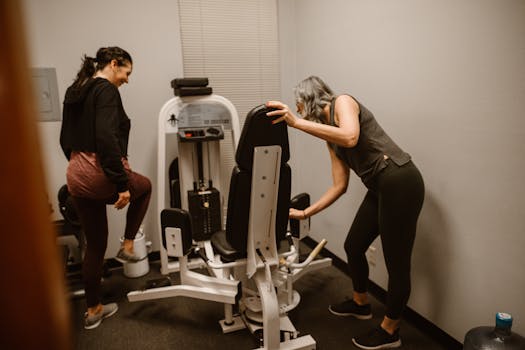
Exercise selection is where many plans succeed or fail. During a flare, aim to keep training relevant movement capacities while temporarily avoiding the most provocative actions.
Keep the “movement intent,” reduce the “movement threat”
A useful rehabilitation principle is to preserve the skill you need (for example, hip hinge, squat mechanics, shoulder control), but remove the triggers. That might mean:
- Replacing barbell work with lighter, supported variations
- Using supported single-leg work if unsupported loading increases symptoms
- Choosing cable or band resistance if free weights irritate a region
Natural progression matters: you’re not abandoning the movement, you’re temporarily changing the conditions.
Use symptom-modifying modifications
Small technical tweaks can dramatically change symptom response:
- Footwear and surface: Softer surfaces may reduce impact; stable shoes may improve control.
- Warm-up adjustments: A longer, gentler warm-up can lower sensitivity before harder work.
- Breathing and bracing: Poor pressure management can increase pain in some conditions; practice stable breathing while lifting lightly.
- Range and speed: Avoid end-range or fast reps during the flare; return later when symptoms settle.
Be cautious with stretching during early flares
Stretching can help in some situations, but during a flare it can also increase irritation if it aggressively loads sensitive tissues. Instead of pushing into discomfort, use gentle mobility to restore motion without provoking a strong symptom response. If symptoms increase and persist after stretching, scale back.
Manage flare recovery with pacing and rest that actually helps
Rest is not the same as inactivity. The challenge is to reduce symptom triggers while still promoting circulation, mobility, and nervous system downshifting.
Apply activity pacing to avoid the “boom-bust” cycle
Many flares worsen because of pacing errors: you feel better, you do more, symptoms spike, then you do less, and recovery takes longer. During a flare, use pacing:
- Break activities into smaller blocks with recovery between.
- Use a conservative progression for steps, walking time, or daily errands.
- Stop earlier in the day if symptoms are trending upward.
Use recovery days as planned training modifications
Recovery days can include:
- Gentle mobility or range-of-motion work
- Light cardio that doesn’t aggravate symptoms
- Low-load strength or isometric holds
- Soft tissue techniques that feel soothing without increasing irritability
What matters is that the “recovery” stimulus is still aligned with your symptom response.
Warm-up and cool-down: reduce sensitivity before and after
Flares often come with increased sensitivity. A structured warm-up can lower the threshold for tolerating movement, while a cool-down helps you return to baseline.
Warm-up that matches the flare
Instead of a generic warm-up, choose one that mimics the session’s movement demands at low intensity:
- Start with easy range and gentle movement
- Progress gradually to the first “working” set
- Avoid immediately loading end-range positions
Cool-down to monitor your response
During cool-down, notice symptom behavior. If symptoms climb during cool-down, that often indicates the session load was too high or the exercise selection needs adjustment.
Progression back to normal: criteria for when to increase load

Adjusting training is only half the process. The other half is knowing when it’s safe to increase intensity, volume, or range again.
Use objective and functional criteria
Progress when you can consistently meet criteria such as:
- Symptoms are stable during training (no sharp spikes)
- Symptoms return to baseline within your expected timeframe
- Movement quality improves or remains consistent
- Daily function is improving (walking tolerance, lifting tolerance, sleep comfort)
Progression should be gradual. A flare that fully resolves one day can still be sensitive the next—especially if you reintroduce the same loading pattern too quickly.
Increase one variable at a time
When you’re ready, increase cautiously:
- Add volume first (more reps or time) while keeping intensity modest
- Then add intensity (load or speed)
- Then add range (if it had been limited)
If symptoms begin to rise again, step back to the last successful version of your plan.
Expect a “settling period” after the flare
After symptoms settle, tissues and the nervous system may still be adapting. It’s common for mild reactivity to show up when you return to higher-demand training. The solution is usually not to “push through,” but to reduce the next session’s dose and rebuild gradually.
Common mistakes that prolong flares
Recognizing patterns helps you adjust faster and more effectively.
- Resting completely without a plan: Total inactivity can reduce tolerance and make return harder.
- Trying to “test it” with your usual workout: A single high-load session can undo progress.
- Ignoring after-effects: If symptoms worsen later that day or the next day, the training dose was too high.
- Overdoing stretching or mobility: Aggressive stretching during early sensitivity can increase irritation.
- Increasing intensity before volume: Volume often determines total stress; increasing intensity too soon can trigger another flare.
Practical examples of flare adjustments
These scenarios show how to apply the principles above. Use them as templates, not prescriptions.
If running flares your symptoms
- Temporarily replace running with cycling or pool work.
- Keep leg strength training light and pain-free through a comfortable range.
- Reduce walking time if it provokes symptoms, and build back gradually.
- When ready, reintroduce running as intervals at lower speed with shorter total time.
If lifting flares a specific joint or tendon area
- Reduce load and shorten ROM to avoid the painful end range.
- Consider isometric holds in a tolerable position to maintain capacity while symptoms settle.
- Keep volume modest and focus on control and form.
- Progress by adding reps first, then load, then range.
If sitting or overhead activity increases symptoms
- Modify posture demands: take more frequent movement breaks.
- Use supported or neutral-grip options if overhead positions are provocative.
- Train mobility gently rather than aggressively stretching into discomfort.
- Build tolerance by gradually increasing time in the position that triggers symptoms, not by “powering through.”
How rehab tools and aids can support flare management

While training adjustments drive the results, certain tools can help you execute safer sessions and manage discomfort. These should support your plan rather than replace it.
Compression and support
Some people find that compression sleeves, braces, or supportive garments reduce discomfort during activity. If you use these, treat them as symptom-management aids and still follow your training rules (volume reduction, intensity ceiling, and monitoring after-effects). If support masks pain without improving function, your training dose may still be too high.
Heat and cold
Temperature can influence comfort and perceived stiffness. Use it to support movement quality, not to “override” symptom warnings. If cold or heat consistently changes how symptoms respond during training, incorporate it into your routine—while still scaling the workout load.
Assistive or supportive equipment
Changing exercise conditions can reduce flare triggers. For example, using a stable bench for supported movements, a resistance band for controlled loading, or a lighter variation that allows better mechanics can keep training productive during sensitivity.
Summary: a flare plan that protects progress
When symptoms flare, the most effective response is not to abandon training, but to adjust the training stimulus. Start by triaging the flare type and tracking symptom behavior during and after sessions. Then apply safe training rules: reduce volume first, cap intensity based on symptom response, and choose exercises that preserve function without re-irritating sensitive tissues. Use pacing and planned recovery to avoid boom-bust cycles, and progress back to normal only when symptoms are stable and daily function is improving.
If flares are frequent, unpredictable, or escalating, consider working with a qualified clinician or rehab professional to refine your diagnosis and build a long-term load strategy. That step can make future flare management faster, safer, and more consistent.
02.04.2026. 23:05