

Shoulder Impingement Rehab: Scapular Control & Rotator Cuff Loading

Goal: restore shoulder mechanics by training scapular control before heavy cuff work

Shoulder impingement rehab works best when you treat the problem as a movement and control issue, not just a painful tendon. In most cases, symptoms improve when the scapula can upwardly rotate, posteriorly tilt, and maintain position while the arm moves. Once scapular control is reliable, you can progressively load the rotator cuff through safe ranges to restore strength and reduce re-irritation.
This guide shows a practical, how-to progression for shoulder impingement rehab that prioritizes scapular control and then layers in rotator cuff loading. You’ll use a small set of drills, simple cues, and clear progression rules so your exercises match your current tolerance.
Prep: set up your environment and choose the right tools
Before you start, you need a stable space and a few basic training tools. The goal is to control scapular motion and load the cuff without pinching or compensating.
- Exercise space: a clear wall area for positioning drills and a stable floor for bodyweight work.
- Mirror (optional but helpful): lets you check shoulder shrugging, rib flare, and trunk rotation.
- Resistance options: a light resistance band (yellow/green), a medium band (red/blue) if tolerated, and a pair of light dumbbells (or water bottles).
- Support: a small towel for wrist/forearm comfort and a bench or chair for incline work.
- Timing tool: a timer so you can control rest and tempo during isometrics and eccentrics.
- Symptom tracking: a simple 0–10 pain scale or notes to monitor whether pain rises, stays steady, or settles after each session.
If you’ve had recent surgery, a traumatic tear, or severe night pain that’s rapidly worsening, get clinical guidance before progressing load. For most non-surgical cases, you can follow this plan with careful symptom monitoring.
Step 1: establish a pain-safe range and your “no aggravation” rule
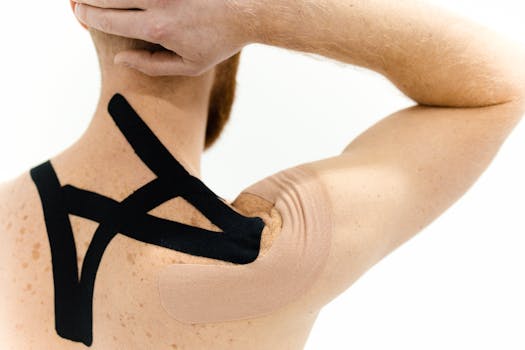
Before training scapular control, you need a range where the shoulder can move without sharp pinching. This prevents you from reinforcing the very mechanics that irritate the structures.
- Pick a baseline motion: perform a slow arm raise in the scapular plane (roughly 30–45 degrees in front of your body) to the point where pain becomes sharp or increases quickly.
- Define your working range: choose a height where pain stays at or below a mild level (commonly 0–3/10) and doesn’t spike during the set.
- Use the “24-hour response” rule: if symptoms increase noticeably later that day or the next morning, reduce range, reduce load, or shorten the session.
- Set exercise tempo: start with controlled reps (about 2–3 seconds up, 2–3 seconds down) so you can control scapular motion.
Practical example: if raising your arm above shoulder height causes a sharp pinch, your early work should stay below that height, even if you feel you “should” be able to go further.
Step 2: train scapular position at rest (rib cage and posture control)
Scapular control starts with trunk and rib positioning. If the ribs flare and the upper traps dominate, the scapula typically loses posterior tilt and upward rotation during reaching.
- Set a neutral rib position: stand tall and gently control your ribs (avoid over-arching the low back).
- Practice “down and back” without shrugging: think of lengthening through the crown of your head while allowing the shoulder blade to glide slightly down and back. Stop before you feel a strong upper trap contraction.
- Hold for quality: perform 5–8 holds of 5–10 seconds, focusing on smooth scapular positioning rather than force.
- Check compensation: ensure your neck doesn’t tense and your head doesn’t jut forward.
This step may feel too simple, but it prevents many people from doing scapular drills while their body posture is still driving poor mechanics.
Step 3: add scapular motion drills before arm loading
Next, you’ll train the scapula to move correctly during shoulder motion. These drills are specifically aimed at upward rotation and posterior tilt control—key contributors to reducing impingement stress.
3A) Wall slide with scapular control
- Stand with your back to a wall, feet about one step away.
- Lightly press your forearms and wrists toward the wall.
- Slide your arms up to a comfortable height while maintaining rib control and avoiding shrugging.
- Keep the movement smooth: 6–10 reps, slow tempo.
Stop short of any pinching. If your shoulder hikes, reduce height or slow down.
3B) Scapular retraction with reach (scapula-first pattern)
- Stand or kneel holding a light band anchored at chest height.
- Start with the scapula moving first: gently pull the shoulder blade back and slightly down without bending the elbow hard.
- Maintain that position as you extend the arm forward only a short distance.
- Perform 2–3 sets of 8–12 reps.
Focus on keeping the shoulder blade from winging or drifting upward.
Step 4: use isometrics to calm symptoms and prepare the cuff for loading
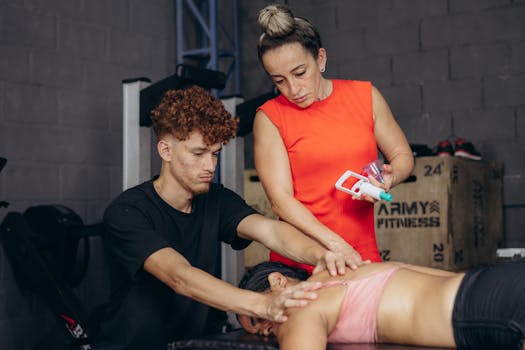
Isometrics are a practical bridge between control drills and dynamic strengthening. They help you regain tolerance without provoking movement that irritates the shoulder.
- Choose one or two angles: typically arm slightly away from your side (about 20–45 degrees) and in a pain-safe range.
- Set a stable position: use a wall or band to create gentle resistance.
- Drive gently: press into the wall or band without moving your shoulder.
- Tempo: hold 20–30 seconds with effort around 30–60% of maximum.
- Repeat: 3–5 holds per angle.
- Symptom check: pain during isometrics should remain mild and settle quickly after.
Practical example: if reaching forward causes pinching, you can use an isometric press into a wall with the arm in a comfortable position, then progress to controlled band work only when you tolerate it.
Step 5: begin rotator cuff loading with low-risk exercises
Once scapular control drills are comfortable and isometrics don’t flare symptoms, start rotator cuff loading. Early loading should emphasize tendon-friendly positions and controlled scapular positioning.
5A) Side-lying external rotation (short lever, light load)
- Lie on your non-painful side or on the painful side if comfortable; use a light dumbbell or band.
- Keep your elbow tucked near your body (not flared).
- Maintain scapular position: think “elbow stays glued” while the shoulder blade stays stable, not shrugging.
- Rotate outward within your pain-safe range.
- Perform 2–3 sets of 8–15 reps.
5B) Band external rotation with scapular stability
- Anchor a band at elbow height.
- Stand tall with ribs controlled and shoulder blade set (no shrug).
- Keep the elbow at your side or slightly forward.
- Rotate outward slowly, then return under control.
- Do 2–3 sets of 10–15 reps.
Stop the set if you feel the shoulder “roll forward” or pinch. Reduce range and load rather than forcing the movement.
5C) Scapular plane scaption (light dumbbells or cable) with control
- Hold a light weight and raise the arm in the scapular plane (slightly forward of your body).
- Maintain scapular upward rotation and posterior tilt by keeping the motion smooth and avoiding shrugging.
- Raise only to your pain-safe height.
- Use 2–3 sets of 6–12 reps.
This is not overhead training. It’s a controlled loading drill to restore functional mechanics in a tolerable range.
Step 6: progress cuff loading using tempo, range, and isometric-to-dynamic transitions
Progression should be systematic. You’re aiming to increase capacity without losing scapular control or irritating the shoulder.
- Use tempo first: if you can do the reps without pinching, slow the lowering phase (eccentric) to 3–4 seconds.
- Then add range: increase height by small increments only if symptoms remain mild and scapular motion stays controlled.
- Then add load: increase resistance gradually (a small band jump or a small dumbbell increase), keeping the same rep quality.
- Consider an isometric-to-dynamic pairing: do one or two isometric holds at the top of your pain-safe range, then follow with controlled reps through that same range.
Practical example: week to week, you might move from 2 sets of 10 reps with a light band to 3 sets of 12 reps with slightly more resistance, while maintaining shoulder blade stability.
Step 7: integrate scapular control during reaching and functional arm use

Rehab should transfer to real life. Many people can perform cuff exercises but lose scapular control during daily reaching, lifting, or overhead tasks.
- Practice controlled reach patterns: stand facing a wall and lightly slide your hand upward while keeping rib control and avoiding shrugging.
- Add a light load: use a very light dumbbell or band resistance only after your reaching pattern stays stable.
- Use a “scapula sets first” cue: initiate motion by setting the shoulder blade gently, then allow the arm to move.
- Train both directions: include controlled lowering (eccentric control) because it often triggers symptoms when you move too fast.
If reaching still produces a pinch, return to Steps 3–5 for a few sessions before trying functional loading again.
Step 8: decide when to advance to higher-demand strengthening
When scapular control is consistent and dynamic cuff work no longer flares symptoms, you can progress to more demanding patterns. This is where many people move too quickly—so use clear criteria.
- Criteria for progress: you can complete cuff exercises with mild pain only, stable scapular mechanics (no shrugging or anterior rolling), and no worsening later that day.
- Increase one variable at a time: either increase load or range, not both.
- Prioritize controlled external rotation and posterior shoulder work: these help restore balance and mechanics.
- Keep the arm path controlled: avoid fast, jerky reps that “catch” at the painful arc.
Relevant equipment note: cable systems or bands can be helpful here because they offer smooth, adjustable resistance. If you don’t have cables, a band anchored at the correct height can still support good progression.
Common mistakes that sabotage shoulder impingement rehab
- Training through sharp pinching: mild discomfort can be acceptable early, but sharp pain usually indicates you’re moving into an irritated range.
- Letting the upper trap take over: shrugging during wall slides, scaption, or external rotation often means scapular control isn’t ready for that load yet.
- Rib flare and trunk compensation: excessive arching or twisting can change scapular mechanics and increase stress at the front/top of the shoulder.
- Skipping isometrics when symptoms are irritable: dynamic work can become a flare-up cycle if the shoulder isn’t ready.
- Adding load before you can control the eccentric: many impingement patterns worsen during lowering. Train the “down” phase with control.
- Overhead chasing: overhead training is not the starting point. Build capacity first in pain-safe and functional ranges.
Additional practical tips to optimize scapular control and cuff loading

Use cues that match the movement
- For scapular control: “keep ribs down,” “shoulder blade glides,” and “no shrug.”
- For cuff loading: “elbow stays where it is,” and “rotate smoothly, don’t twist the trunk.”
Match exercise selection to your typical symptom pattern
If your symptoms are worst during reaching forward, emphasize scapular-first reaching drills and short-range external rotation. If symptoms are worst during abduction, prioritize scapular plane scaption in a tolerable range and controlled lowering.
Build a simple session structure
A practical flow that many people tolerate well:
- Scapular position at rest (Step 2)
- Scapular motion drills (Step 3)
- Isometrics for symptom calm (Step 4)
- Rotator cuff loading (Step 5)
- Functional reach integration (Step 7)
Start with 20–35 minutes total. If you’re flaring afterward, shorten the session and reduce range for the next visit.
Progress by quality, not by pain tolerance
It’s common to feel “stronger” during a flare, but that often means you’re compensating. Progress when you can:
- Maintain scapular mechanics without shrugging
- Move through the range smoothly
- Lower with control
- Experience stable or improving symptoms later that day
Don’t ignore shoulder blade endurance
Scapular control isn’t just a one-time drill—it’s an endurance requirement. If symptoms return quickly during the day, include slightly higher rep scapular control work (wall slides, retraction with reach) at a low effort level.
Use bands and light weights strategically
When choosing resistance, aim for a load that lets you keep technique. With bands, you can fine-tune tension. With dumbbells, you can control tempo and range. Either approach works as long as your scapula stays stable and your cuff moves smoothly.
Example 2-week progression you can follow
This is a practical template. Adjust based on your pain response and your ability to maintain scapular control.
Week 1 (control and symptom tolerance)
- Wall slide with scapular control: 2 sets of 6–10 reps
- Scapular retraction with reach: 2–3 sets of 8–12 reps
- Isometric external rotation or press: 3–5 holds of 20–30 seconds
- Side-lying external rotation or band external rotation: 2–3 sets of 8–15 reps
- Scapular plane scaption: 2 sets of 6–10 reps within pain-safe height
Week 2 (add tempo and controlled volume)
- Wall slide: 3 sets of 8–12 reps (slower tempo)
- Scapular retraction with reach: 3 sets of 10–12 reps
- Isometrics: 2–3 holds at the top of your pain-safe range, then 1–2 sets of dynamic reps
- External rotation: 3 sets of 10–15 reps with slightly more tension or slower lowering (3–4 seconds)
- Scapular plane scaption: 3 sets of 6–12 reps, aiming for better control on the way down
If symptoms increase, keep the same load and range for an additional week rather than pushing harder.
How to know you’re progressing (and not just enduring)
Good progress in shoulder impingement rehab shows up as improved control, reduced sensitivity to reaching, and smoother strength gains. You’ll notice:
- Less pinching at similar arm positions
- Better scapular movement during slides and reaching
- Improved ability to control the lowering phase
- Stable or reduced pain the next day after training
When you reach a plateau, it usually means the scapular control work needs more consistency or the loading is too aggressive for your current stage. Reduce range, slow tempo, and rebuild control before increasing demand again.
02.12.2025. 11:22