

VO2max vs Lactate Threshold vs Running Economy

Why these three metrics matter for runners
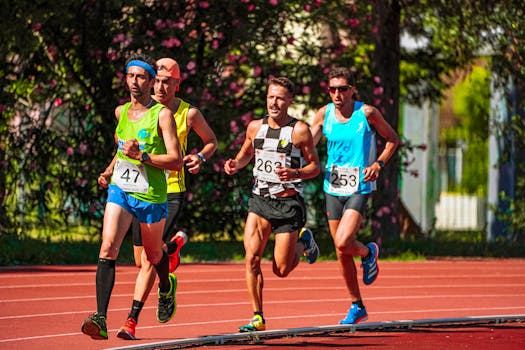
Endurance performance isn’t determined by a single number. For distance runners, three physiologic concepts explain a large share of the variation in how fast athletes can run and how long they can sustain that speed: VO2max, lactate threshold, and running economy. They describe different parts of the performance chain—how much oxygen your body can use, how efficiently you can sustain effort without rapid metabolic “spillover,” and how little energy you need to move at a given pace.
When these variables are misunderstood, training plans often overemphasize one quality while neglecting the others. A runner may have a high VO2max but still underperform because they fatigue early at threshold or because their mechanics and energy cost are inefficient. Conversely, an athlete with modest VO2max can excel if their lactate threshold is high relative to VO2max and their running economy is strong.
This guide breaks down what each metric means, how it’s measured, what it implies for training, and how to use the information without getting lost in lab jargon.
VO2max: your ceiling for oxygen use
What VO2max actually represents
VO2max is the maximum rate at which your body can take in, transport, and use oxygen during intense exercise. It’s typically expressed as milliliters of oxygen per kilogram of body mass per minute (mL/kg/min). In practical terms, VO2max reflects the upper limit of aerobic energy production—the “ceiling” that sets how much energy you can generate when effort is extremely high.
How VO2max influences race performance
VO2max matters most when race pace approaches or depends on a large portion of maximal aerobic power. For middle-distance events and for the final stages of longer races, having a higher VO2max can help you sustain faster speeds before fatigue overwhelms you.
However, VO2max alone doesn’t guarantee performance. Two athletes with similar VO2max can run very different times if one has a higher lactate threshold or better running economy.
Common ways VO2max is assessed
In a lab setting, VO2max is measured through a graded exercise test while respiratory gases are collected (metabolic cart). The test increases intensity until the athlete reaches criteria consistent with maximal effort. Field estimates exist, but they are typically less precise than direct measurement.
In running practice, VO2max is also indirectly reflected by how well you perform on hard intervals that demand near-maximal aerobic contribution. Still, without physiological testing, you’re inferring rather than measuring.
Lactate threshold: the speed you can hold without runaway fatigue
What lactate threshold means
Lactate threshold describes the exercise intensity at which lactate production begins to rise faster than lactate clearance. Lactate is often described as “the cause of fatigue,” but the more accurate view is that it’s a marker of metabolic stress and a contributor to the acid-base environment in working muscles.
Threshold is commonly defined using blood lactate measurements during incremental testing. Two terms you may see are:
- LT (lactate threshold) or LT1: a lower intensity point where lactate begins to climb more noticeably.
- LT2 (often associated with a higher threshold): a more pronounced rise in lactate, frequently used to approximate a “sustainable hard” intensity.
In training discussions, many coaches use “threshold” to mean the highest pace you can sustain for a prolonged period, often corresponding to a high fraction of VO2max.
Why threshold is so predictive for many runners
For 10K to half-marathon distances, and for marathon preparation in particular, lactate threshold often correlates strongly with performance because it governs how quickly you can run while keeping metabolic stress manageable. A runner whose threshold is high relative to their VO2max can sustain a faster pace before fatigue accelerates.
How lactate threshold is measured
During a graded test, blood samples are taken at increasing speeds or power outputs. Lactate concentration is plotted against intensity, and threshold is identified using a specific criterion (for example, a fixed lactate value or a breakpoint in the curve). Because methods differ, reported threshold numbers aren’t always interchangeable between labs.
In practice, you can also approximate threshold using performance tests (like sustained time trials) and by pairing them with lactate data when available. Wearables can estimate effort, but they do not directly measure lactate; they should be treated as supportive tools rather than definitive threshold measurements.
Running economy: how efficiently you turn oxygen into forward motion
Defining running economy
Running economy is the energy cost of running at a given speed. Two runners can have the same VO2max and similar threshold, yet one may use less oxygen to cover the same distance. That efficiency reduces the relative strain at a given pace and can delay fatigue.
What influences running economy
Running economy is shaped by multiple factors:
- Biomechanics and movement efficiency (stride mechanics, contact time, posture).
- Muscle-tendon function (elastic recoil and stiffness).
- Neuromuscular coordination (how well the body recruits and times muscle activity).
- Strength and stability (especially for maintaining mechanics under fatigue).
- Training history (including mileage, surface, and the balance of easy and harder work).
Importantly, economy is not “just technique.” It’s a performance outcome that emerges from how your musculoskeletal system behaves when you run at speed.
Measuring running economy
In a lab, running economy is often measured during steady-state running at set speeds while oxygen consumption is recorded. The lower the oxygen cost at that speed, the better the economy.
In the real world, economy is harder to quantify directly. Coaches may infer it from pacing consistency, heart-rate/effort stability at given speeds, and observed changes after targeted training blocks. Some advanced testing environments can measure oxygen cost, but most runners rely on practical indicators.
How these three traits interact
It helps to think of these metrics as different “levers”:
- VO2max sets the maximum aerobic power available.
- Lactate threshold determines how much of that power you can sustain for long periods.
- Running economy governs how much oxygen you need to run at a given pace.
For many runners, the performance improvements that matter most come from raising threshold and improving economy, often with VO2max as a supporting trait. For athletes who are very new to structured training or who have low aerobic capacity, VO2max development can be a major driver early on.
As training age increases, improvements often become more specific: small changes in economy or threshold can produce meaningful time gains even if VO2max doesn’t rise dramatically.
Training implications: what to emphasize and when
Training to raise VO2max
VO2max responds well to high-intensity work that drives near-maximal oxygen uptake. This typically includes intervals that are hard enough to challenge the aerobic ceiling, often with short-to-moderate recovery so intensity stays high.
Examples of session types (conceptually, not as a strict prescription) include:
- Short intervals with high effort (commonly used for aerobic power).
- Longer intervals that still keep a large fraction of the session at very high intensity.
Because these sessions are physiologically demanding, they should be placed with care in the weekly schedule. They also tend to carry a higher injury risk if volume and recovery are mismanaged.
Training to improve lactate threshold
Lactate threshold tends to improve with sustained training at intensities near threshold, plus longer efforts that build the ability to tolerate and clear metabolic byproducts. These workouts often feel “comfortably hard” at first and then gradually more demanding as the session progresses.
Threshold-focused training commonly includes:
- Steady runs at or near threshold intensity.
- Repeat segments that collectively accumulate meaningful time at threshold.
- Tempo-style efforts that build tolerance without requiring maximal surges every segment.
Consistency and progression matter. Many runners improve threshold by gradually increasing the total time spent at threshold rather than by repeatedly seeking maximal efforts.
Training to enhance running economy
Running economy can improve through a combination of aerobic base, neuromuscular work, and strength development. You’re aiming to reduce the oxygen cost of running—often by improving how effectively force is applied and how well mechanics hold under fatigue.
Useful ingredients often include:
- Regular easy running that builds aerobic support and supports efficient movement.
- Strides or controlled faster running to sharpen coordination and leg stiffness.
- Strength training (especially posterior chain, calves, and trunk stability) to support efficient mechanics.
- Technique focus during quality sessions, such as maintaining posture and minimizing excessive braking.
Economy improvements may show up as the ability to hold pace with lower perceived effort or more stable heart rate during steady runs.
Using testing and wearables without getting misled
When lab testing is worth it
Direct measurement of VO2max and lactate threshold can be valuable if you want precise guidance and if you’re preparing for a specific performance goal. The most useful scenario is when you can translate results into training zones and then re-test after a structured block.
Even then, it’s the trend that matters. A single test provides a snapshot; repeated testing reveals which adaptations actually occurred.
Why “numbers” can be inconsistent
Threshold values can differ depending on the definition used (fixed lactate vs breakpoint) and the protocol used by the testing facility. VO2max can vary with test design, treadmill vs track mechanics, and the athlete’s ability to reach true maximal effort.
Running economy results can also shift based on speed selection and how the test is performed. That’s why it’s best to interpret metrics in context and focus on training outcomes rather than chasing a specific lab number.
Role of devices
Heart-rate monitors and GPS watches can support training by tracking trends in effort, pacing, and consistency. Some devices estimate training load and aerobic/anaerobic balance, but they don’t replace physiological testing. If you use these tools, treat them as feedback for how your body responds, not as direct measures of VO2max, lactate threshold, or economy.
For a practical approach, you can pair device data with session structure: if your threshold workout paces improve at similar perceived exertion and heart-rate response over time, that’s a meaningful sign of adaptation.
Putting it into practice: a balanced approach
Most runners benefit from a blend of training stimuli because the three traits develop on different timelines and respond to different stressors. A practical framework is to anchor the week with aerobic base, then add targeted sessions that emphasize threshold and economy, and include VO2max work more selectively.
As a rule of thumb:
- Threshold training often provides the most direct “race-pace” benefit for many distance events.
- Economy work supports sustainability and can improve performance even if VO2max changes slowly.
- VO2max intervals are valuable, particularly for undertrained aerobic systems, but they should be dosed to match recovery capacity.
Periodization matters. If every week includes maximal-intensity sessions, threshold and economy work can suffer, and overall adaptation may stall. Conversely, if training is only easy running, VO2max and threshold improvements may be limited.
Summary and prevention guidance

VO2max vs lactate threshold vs running economy is best understood as a performance system rather than a single contest between metrics. VO2max reflects your aerobic ceiling, lactate threshold reflects how fast you can sustain high aerobic power before fatigue accelerates, and running economy reflects how efficiently you convert that aerobic power into forward motion.
To use these concepts effectively:
- Choose training emphasis based on your event demands and current training age.
- Build threshold consistency before assuming VO2max work will translate directly to faster race paces.
- Protect economy with strength, good mechanics, and neuromuscular sessions that are not overdone.
- Manage intensity and recovery so quality sessions remain high quality.
Finally, avoid the common prevention pitfall: chasing one metric so aggressively that it disrupts the rest of your training. Sustainable endurance performance comes from balancing aerobic development, metabolic tolerance, and movement efficiency—then letting the adaptations accumulate over time.
15.05.2026. 16:09