

Fat Loss Training Using Resting Heart Rate, HRV, and Sleep

Why your body signals matter for fat loss training
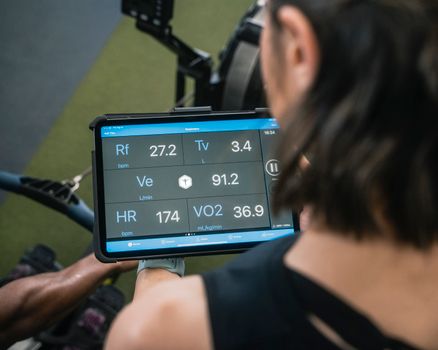
Fat loss isn’t only about the workout you do. It’s also about the recovery you earn between sessions. When training stress accumulates faster than you recover, performance drops, hunger often rises, and your consistency suffers. The most useful part is that your body gives measurable signals—especially through your resting heart rate (RHR), heart rate variability (HRV), and sleep.
When you track these signals correctly, you can make smarter decisions about training intensity and volume. Instead of guessing whether you’re “ready,” you use data that reflects how your autonomic nervous system and recovery state are trending.
This guide shows you how to apply fat loss training using resting heart rate HRV and sleep in an educational, practical way. You’ll learn what these metrics mean, how to interpret changes, and how to adjust training across the week so fat loss efforts stay sustainable.
Resting heart rate: what it tells you and how to use it
What resting heart rate actually reflects
Your resting heart rate is the average beats per minute (bpm) measured when you’re at rest. It’s influenced by many factors: hydration, illness, caffeine timing, stress, sleep quality, and training load. Over time, RHR tends to rise when your body is under more strain and fall when recovery improves.
For fat loss training, the key is not the absolute number. It’s the trend relative to your baseline.
Establishing your personal RHR baseline
To use RHR effectively, you need a baseline that reflects your normal variability. A practical method:
- Track RHR for 14–21 days while your routine is relatively stable.
- Use the morning reading (before caffeine, ideally after you’ve been awake briefly) and record daily values.
- Calculate your baseline as the average of the lowest 7–10 days (not the highest days). This reduces the influence of occasional bad nights.
Example: If your RHR baseline averages 52 bpm, values of 52–54 might be normal variability. Values consistently above 55–57 may indicate accumulating stress or insufficient recovery.
Interpreting RHR changes during a fat loss block
Use RHR as a “recovery pressure gauge.” Consider these common patterns:
- RHR at or below baseline: you’re likely recovered enough to train at your planned intensity.
- RHR mildly elevated (about 2–5 bpm above baseline): you may still train, but reduce intensity or volume, especially for high-impact work.
- RHR elevated more than 5 bpm above baseline for 2+ days: treat it as a recovery warning. Consider deloading, switching to lower-intensity sessions, or taking a full rest day.
- Sudden RHR spike plus symptoms: if you feel sick, unusually fatigued, or sore in a way that’s different from normal muscle soreness, prioritize recovery and consider medical guidance if needed.
Important: RHR is sensitive to dehydration and sleep disruption. If you had alcohol, late meals, heavy travel, or a very short night, RHR may rise even if training stress is appropriate. Use context.
How to adjust training when RHR is elevated
When RHR rises, your goal is to reduce the strain that’s likely to worsen recovery. In practice, that means:
- Choose lower-intensity cardio (e.g., brisk walking, cycling at a conversational pace) instead of high-intensity intervals.
- Reduce resistance training volume (fewer sets) rather than abandoning the session entirely.
- Keep technique quality high and avoid pushing to failure.
- Prioritize sleep that night and the next night.
For fat loss, you don’t need to “train harder” every day. You need to keep the weekly total sustainable. RHR helps you protect that sustainability.
HRV: the recovery and stress signal you can’t ignore
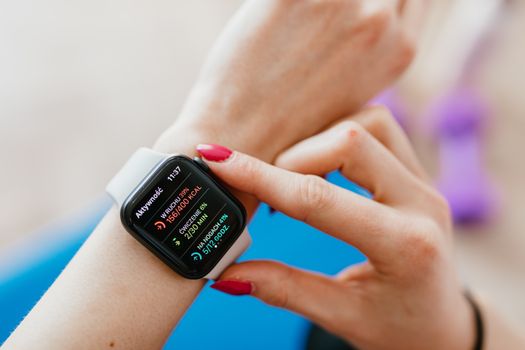
What HRV means in everyday terms
HRV (heart rate variability) measures the variation in time between heartbeats. Despite the name, it’s not “variability you want to increase at all costs.” It’s a marker of how adaptable your autonomic nervous system is—especially the balance between sympathetic (“fight or flight”) and parasympathetic (“rest and digest”) activity.
In general, higher HRV at rest is often associated with better recovery and readiness, while lower HRV can reflect stress, fatigue, poor sleep, or illness. Like RHR, the most useful approach is personal baseline and trend interpretation.
Baseline and trend: the most important rule
HRV has more day-to-day variability than RHR for many people. To interpret HRV, you should:
- Use the same device and measurement time (often overnight).
- Review the 2–4 week baseline rather than reacting to a single day.
- Focus on whether HRV is trending down for several nights or bouncing back after good sleep.
Practical starting point: once you have 2–3 weeks of data, identify your typical range. For example, if your overnight HRV usually sits around 60 ms (milliseconds) with a typical range of 50–70 ms, then repeated nights below 48–50 ms may signal recovery issues.
Common HRV patterns during a fat loss training week
Several patterns show up frequently:
- HRV drops after a hard workout: normal if it recovers within 24–72 hours and your next sleep is solid.
- HRV stays low for 3+ nights: likely indicates accumulated fatigue, insufficient sleep, or excessive stress (training, life stress, poor nutrition, illness).
- HRV rises after improved sleep: often confirms that recovery is the limiting factor.
This is where HRV becomes more than a number. It becomes a feedback loop for how your body responds to your training plan and lifestyle.
How to use HRV to guide training intensity
Instead of using HRV to “punish” yourself for low readiness, use it to choose the right training stimulus. A practical approach:
- HRV near baseline: proceed with planned intensity and key sessions.
- HRV moderately below baseline: reduce intensity (lower interval intensity, shorter hard blocks) or shift to technique-focused work and steady cardio.
- HRV significantly below baseline for 2–3 consecutive nights: consider a deload week or at least reduce high-intensity sessions for several days.
Because HRV responds to sleep and stress, HRV is often the earliest signal that your next day won’t feel as good as expected.
Real-world scenario: adjusting a week based on HRV and RHR
Imagine you’re six weeks into a fat loss training plan. You do two hard sessions per week: one interval workout and one heavy lifting day. You track RHR and HRV every morning and overnight.
On Tuesday, you complete your interval session. On Wednesday, your HRV is 15–20% lower than your baseline and your RHR is 3 bpm higher than usual. You feel a little flat, but not sick. Instead of forcing another hard session, you switch Thursday’s workout to a lower-intensity session: 35–45 minutes of easy cycling plus light mobility and a reduced-set upper-body routine. That night, you prioritize sleep and avoid late caffeine.
By Friday, your HRV rebounds toward baseline and your RHR is back near your typical range. You keep your planned lifting session, but you still avoid going to failure. Over the next two weeks, your weekly performance stays consistent, and you don’t accumulate the “constant soreness + poor sleep” cycle that often derails fat loss efforts.
This is the essence of using HRV and RHR: you don’t stop training; you modulate it to match your recovery capacity.
Sleep as the foundation: how it interacts with HRV and RHR
Why sleep quality drives fat loss readiness
Sleep affects fat loss in multiple ways. It influences appetite hormones, energy balance, training quality, and recovery. It also directly affects HRV and RHR. Poor sleep often lowers HRV and elevates RHR the next day, even if training is unchanged.
For your training decisions, sleep is the “common denominator.” If sleep is consistently short or fragmented, both RHR and HRV can become less reliable indicators of training stress because they’re being driven by sleep disruption.
What to track in sleep besides total hours
Total sleep time matters, but quality matters too. If your wearable provides it, consider:
- Sleep duration: aim for a consistent window, often 7–9 hours for many adults.
- Sleep regularity: roughly similar bed and wake times across the week.
- Sleep interruptions: frequent awakenings can reduce recovery even when total hours look adequate.
- Timing: late-night sleep shifts can disrupt autonomic recovery.
If you don’t have detailed wearable metrics, you can still use practical markers: how rested you feel, how quickly you fall asleep, and whether you wake up during the night.
Sleep thresholds you can use for training readiness
Here are practical rules you can apply:
- One short night (e.g., 5–6 hours): expect HRV to dip and RHR to rise. Consider reducing intensity the next day, especially for high-intensity interval training.
- Two consecutive short nights: treat it as a readiness problem. Reduce volume and intensity for 48–72 hours, then reassess.
- One poor-quality night (frequent awakenings): even with 7+ hours, you may see the same readiness impact. Rely on HRV and RHR trends rather than duration alone.
These thresholds help you avoid the trap of interpreting HRV and RHR as training-only signals when sleep is the primary driver.
How to protect sleep during a fat loss phase
Fat loss often coincides with lifestyle changes: more training, earlier mornings, and sometimes a calorie deficit. All of these can affect sleep. Protect it with concrete habits:
- Keep caffeine earlier in the day (many people do best by stopping 8–10 hours before bedtime).
- Choose a consistent wake time, even on rest days.
- Get morning light exposure when possible (10–20 minutes outdoors is a common practical target).
- Keep late meals moderate in size; very heavy late dinners can worsen sleep quality.
- If you train in the evening, avoid sessions that spike arousal too close to bedtime.
When sleep improves, HRV often rebounds and RHR stabilizes. That’s not just comfort—it’s training readiness you can measure.
Building a fat loss training plan around recovery signals
Use a weekly structure that supports adaptation
Fat loss training usually benefits from a repeatable weekly rhythm. Many people do best with a structure like:
- 2–3 strength training sessions (full-body or upper/lower split)
- 2–3 cardio sessions (a mix of steady and occasional intervals)
- 1–2 low-intensity movement sessions (walking, easy cycling, active recovery)
The recovery signals determine which days get the higher stimulus. You’re not changing the plan every day; you’re adjusting within it.
Match session type to readiness (practical decision rules)
Here’s a practical way to decide what to do on a given day using HRV, RHR, and sleep context:
- On days with HRV near baseline and RHR near baseline: do your planned hard session (intervals or heavy lifting).
- On days with HRV down and RHR up: do steady cardio, technique work, or reduce strength volume.
- On days after poor sleep (short or fragmented): prioritize low-intensity movement and keep strength work submaximal.
- On days with HRV low for multiple nights: consider a deload approach for 3–7 days (fewer sets, fewer intervals, and more recovery focus).
These decisions reduce the risk of “all gas, no recovery,” which is especially common during calorie deficits.
Strength training: where readiness signals matter most
Strength training is a major driver of lean mass retention during fat loss, but it’s also neurologically demanding. When readiness is low, you can still train, but you should adjust:
- Reduce sets by 30–50% on days when HRV is significantly below baseline.
- Keep intensity moderate: avoid max attempts, and stop 1–3 reps shy of failure.
- Use RPE or similar effort tracking: aim for an effort level that feels controlled rather than grinding.
If your goal is fat loss, you don’t need to chase muscular failure to get results. You need consistent training that doesn’t destroy recovery.
Cardio and intervals: how to modulate without losing progress
Intervals can be effective for fat loss by increasing total energy expenditure and improving fitness. But they also increase stress. When HRV and RHR indicate poor recovery, adjust intervals rather than removing cardio entirely.
Practical options:
- Replace intervals with steady cardio at a conversational pace for 30–60 minutes.
- Shorten interval sessions (e.g., fewer repetitions) while keeping effort moderate.
- Use perceived exertion: if you planned 10 hard efforts but feel unsteady or unusually fatigued, cut to 6–8 and extend recovery time.
For many people, the best fat loss outcome comes from a consistent weekly cardio routine more than from any single interval session.
Step count and low-intensity movement: the “recovery-friendly lever”
Low-intensity movement is a powerful tool because it supports energy expenditure without heavily taxing recovery. When RHR is elevated or HRV is low, prioritize:
- Extra walking (for example, adding 2,000–4,000 steps per day)
- Easy cycling or incline walking
- Short movement breaks (5–10 minutes) during the day
Not only does this help energy balance, it can also improve sleep quality when done earlier in the day.
Interpreting data correctly: common mistakes to avoid

Reacting to one bad night
One low HRV day doesn’t automatically mean you should skip training. HRV is sensitive to many factors: travel, stress, alcohol, dehydration, and even room temperature. Use patterns over 2–4 days.
Ignoring measurement conditions
If you use a wearable, measurement quality can vary. HRV readings may be affected by:
- Wearing the device loosely or incorrectly
- Sleeping at unusual times
- Device updates or changes in algorithms
RHR can also be affected by posture, time of day, and whether you had early caffeine. Keep measurement routines consistent.
Training harder because you feel “fine”
Some people feel okay even when their metrics show lower readiness. That can happen due to adrenaline or strong motivation. The issue is that you may pay for it later—often in the form of worse sleep and further HRV suppression. Over time, that leads to a cycle that stalls fat loss due to reduced training quality and inconsistency.
Confusing muscle soreness with recovery readiness
DOMS (delayed onset muscle soreness) is normal after strength training. It doesn’t always mean your autonomic recovery is poor. HRV and RHR provide additional context. If soreness is present but HRV and RHR are stable, you may still be ready to train with adjustments.
Practical weekly protocol you can start this week
Step 1: Choose your baseline window
For the next 14–21 days, track:
- Morning RHR
- Overnight HRV (as reported by your device)
- Sleep duration and how you feel upon waking
Don’t change your training drastically during baseline collection. Your goal is stable reference.
Step 2: Define your readiness rules
Once you have a baseline, decide your response thresholds. A simple framework:
- Good readiness: HRV within your typical range and RHR within about 0–2 bpm of baseline; sleep was at least “decent” (often 7–9 hours or stable quality).
- Moderate stress: HRV below typical range and RHR elevated by 2–5 bpm; sleep was short or disrupted.
- High stress: HRV low for 2–3 nights and RHR elevated more than 5 bpm; consider deloading or taking a recovery day.
Step 3: Plan sessions with flexible intensity
Pick your weekly training structure (for example, 3 strength sessions, 2 cardio sessions, and 2 low-intensity movement sessions). Then decide that:
- Hard days occur only when readiness is good.
- Moderate-stress days become “maintenance days” (less volume, lower intensity).
- High-stress days become “recovery days” (walks, light lifting, no intervals).
This approach maintains progress while reducing the likelihood of burnout.
Step 4: Review weekly, not daily
At the end of the week, look at what actually happened. Ask:
- Did your training feel consistent?
- Did HRV trends improve after your best sleep?
- Did RHR stay stable or gradually rise?
- Were there repeated high-stress days that signaled your plan was too aggressive?
Adjust the next week based on trends, not just one day’s data.
Nutrition, stress, and illness: why metrics can shift for reasons beyond training
Calorie deficit and recovery
Fat loss often involves a calorie deficit. In a deficit, recovery can be slightly slower, especially if protein intake and overall energy are inconsistent. That doesn’t mean you can’t train. It means you should expect HRV to be more sensitive to poor sleep and high training load.
If you notice HRV trending down across multiple weeks while training volume stays constant, consider whether the deficit is too aggressive or whether sleep and stress management are being neglected.
Hydration and electrolytes
Dehydration can elevate RHR and impair perceived recovery. If you train in heat, sweat heavily, or drink very little water, your RHR may rise even when you’re not “overreaching” from training alone.
Practical step: ensure you’re drinking enough fluids and getting appropriate electrolytes, especially if you’re doing longer sessions or sweating heavily.
Illness and early fatigue detection
HRV often drops when you’re fighting an infection. RHR may rise. If you see a sudden HRV decline combined with elevated RHR and symptoms (sore throat, unusual fatigue, body aches), treat it as a potential illness rather than pushing through.
In fat loss training, pushing through illness can prolong recovery and lead to a bigger setback than a short rest period.
Summary: using HRV, resting heart rate, and sleep to keep fat loss on track
Fat loss training using resting heart rate HRV and sleep works best when you use your metrics as trend-based recovery signals, not as daily judgments. RHR helps you see when your body is under strain. HRV provides insight into autonomic recovery capacity. Sleep ties it all together by influencing both metrics and your training quality.
If you want a simple, effective application:
- Build a personal baseline for RHR and HRV over 2–3 weeks.
- Use thresholds to categorize days as good readiness, moderate stress, or high stress.
- Match your training stimulus to readiness: hard sessions on recovered days, reduced intensity on stressed days.
- Protect sleep consistency—because sleep changes can look like training changes in your metrics.
That’s how you maintain consistency, reduce unnecessary fatigue, and support the conditions where fat loss is most likely to happen.
Prevention guidance: how to avoid the common recovery-data traps
Don’t chase perfect numbers
Your HRV and RHR will fluctuate. The goal is not “high HRV every day.” The goal is to avoid sustained downward trends that lead to performance decline and poor sleep.
Keep training changes proportional
If readiness is moderately low, adjust intensity or volume—not everything. If readiness is repeatedly low, consider a deload or a recovery week. Proportional changes prevent overcorrection.
Use context for every decision
Ask what else might have changed: travel, alcohol, late meals, work stress, dehydration, or a new medication. Metrics are powerful, but they’re not the only explanation.
Protect the basics even when data looks “fine”
Even if your numbers look good, prioritize sleep regularity, adequate protein, and consistent movement. Metrics help you fine-tune. Fundamentals help you build.
21.04.2026. 03:51