

Basal Body Temperature vs Ovulation Tests vs Cervical Mucus

Why track ovulation in the first place

If you’re trying to understand your cycle—whether for timing intercourse, avoiding pregnancy, or simply learning your fertility patterns—three methods often come up: basal body temperature (BBT), ovulation tests (usually LH urine tests), and cervical mucus. Each one reflects a different biological event. That’s the key to understanding the differences.
BBT is about what happened after ovulation. LH tests are about what may happen soon. Cervical mucus is about conditions that help sperm survive and move. When you know what each method is actually measuring, you can interpret your results with more confidence—and avoid the most common pitfalls, like relying on one signal too early or reading a single unusual day as a breakthrough.
This guide explains how basal body temperature vs ovulation tests vs cervical mucus works in real life: what you should expect, how quickly patterns appear, how to combine methods, and when to adjust your approach.
Basal body temperature: what it tells you and when
What basal body temperature measures
Your basal body temperature is your lowest body temperature during a 24-hour period, measured immediately after waking and before you move around. In many people, it rises after ovulation due to progesterone production from the corpus luteum.
That post-ovulation temperature shift is typically modest—often around 0.2°F to 0.5°F (0.1°C to 0.3°C). The rise usually becomes clear over several days rather than on a single day.
How to take BBT correctly
BBT is sensitive to routine and timing. To get meaningful data, you’ll want consistency:
- Take it at the same time each morning, ideally within 30–60 minutes.
- Measure immediately after waking, before talking, eating, or getting out of bed.
- Use the same thermometer (switching devices can disrupt comparisons).
- Record any factors that can affect temperature, such as fever, alcohol the night before, late nights, travel, or disrupted sleep.
If you sleep less than usual, wake up briefly and fall back asleep, or have an illness, your BBT readings may look “off.” That doesn’t automatically mean you didn’t ovulate—it may mean the temperature signal is temporarily distorted.
When BBT confirms ovulation
BBT is considered a confirmation tool. You typically see the temperature rise after ovulation has occurred. In practical terms, ovulation may happen on the day before the sustained rise or the day the rise begins, but the pattern is what matters.
Many people interpret BBT by looking for a sustained shift lasting at least 3 days. Some cycle-tracking methods also use more formal rules, but the core idea is consistent: progesterone-related warming persists in the luteal phase.
Common BBT interpretation mistakes
- Chasing the first warm day: A single elevated reading can be caused by sleep disruption or illness. The sustained pattern is the signal.
- Changing measurement timing: Even small timing changes can affect baseline temperature.
- Ignoring outliers without context: If you had a fever or slept poorly, you may need to interpret that day differently.
- Assuming BBT detects the exact ovulation day: It usually can’t, because temperature rises after ovulation.
Ovulation tests: how LH strips predict fertile timing
What ovulation tests measure
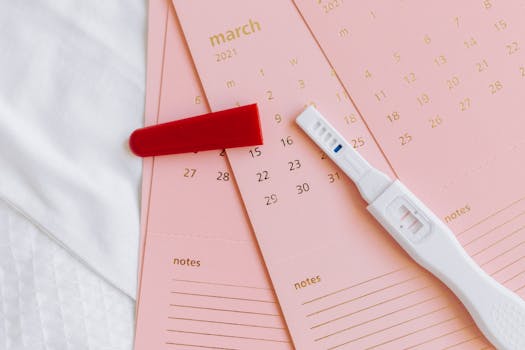
Most home ovulation tests detect luteinizing hormone (LH) in urine. LH surges before ovulation. The surge triggers the release of the egg (ovulation), often within about 24 to 36 hours for many cycles.
Some “ovulation tests” may also use other hormones or include different formats, but LH urine tests are the most common. The goal is to identify the LH surge window when ovulation is likely to be soon.
How to use LH tests effectively
To improve accuracy, timing and consistency matter:
- Test daily starting a few days before you expect ovulation (based on your cycle length).
- Follow the instructions for urine concentration and test timing.
- Consider testing twice daily when you start approaching your expected fertile window or when you consistently miss surges. Many people test once daily until they see a rising line, then switch to twice daily to narrow the peak.
- Don’t over-limit fluids unless the product instructions advise it. Over-concentrating urine can distort results.
How to interpret LH test results
LH tests typically show a line that becomes darker as LH rises. Interpretation varies by brand, but commonly:
- A positive test indicates the LH level has reached the threshold the test is designed to detect.
- The peak may be the first positive test or the strongest positive, depending on how quickly your LH rises and falls.
- A negative test means LH is below the detectable threshold at that time.
It’s normal for some people to see multiple positive days. Others may see just one. Either pattern can happen depending on your physiology and how often you test.
What ovulation tests can’t tell you
LH tests are predictive, not confirmatory. A positive LH test means your body may be preparing to ovulate, but it doesn’t guarantee that ovulation occurred in the way you expect.
Reasons ovulation may not follow a surge include cycle variability, hormone differences, and certain medical situations. Also, some fertility-related conditions can influence LH patterns. If you get repeated LH positives without a corresponding luteal phase pattern on BBT, it may be worth discussing with a clinician.
Common ovulation test mistakes
- Testing too late: If your surge happens earlier than you test, you can miss the peak.
- Testing too infrequently: With only one test per day, you may detect LH rise but not pinpoint the highest level.
- Misreading faint lines: Some people compare lines too casually. Use the product’s threshold guidance.
- Confusing other hormones: Certain fertility medications can interfere with LH tests.
Cervical mucus: the fertility environment you can observe
What cervical mucus indicates
Your cervix produces mucus that changes throughout the cycle. These changes reflect estrogen levels and the body’s preparation for possible conception. Cervical mucus can help sperm survive longer and move more efficiently.
Common mucus types you may notice:
- Dry or sticky days early in the cycle
- Creamy mucus as estrogen rises
- Watery or slippery mucus as fertility increases
- Egg-white mucus that stretches between fingers, often associated with peak fertility
Not everyone experiences the same exact textures. Some people notice more odor changes, others notice more slip, and some primarily notice dryness vs wetness.
How to check mucus in a practical way
You can check mucus by observing what you see on toilet tissue or in underwear, or by gently checking with clean fingers. The goal is consistency and awareness, not perfection.
A practical approach:
- Check once daily at a consistent time.
- Note the texture (dry/sticky/creamy/watery/slippery/stretchy) and whether it feels slippery.
- Record any unusual bleeding or strong irritation that could affect observation.
Remember that mucus can be influenced by hydration, arousal, infections, and lubricants. If you use vaginal products, those can also mask your natural mucus patterns.
When mucus patterns suggest ovulation is near
Cervical mucus typically becomes more abundant and slippery in the days leading up to ovulation. Peak mucus—often egg-white, very slippery, and stretchy—commonly occurs around the fertile window.
Ovulation may occur:
- On the day of peak mucus
- Or within 1–2 days after peak mucus begins to change
After ovulation, progesterone tends to make mucus thicker, stickier, or drier. That shift is one reason mucus can also help you recognize when fertility is decreasing.
Common mucus interpretation challenges
- Infections or irritation: These can cause unusual discharge unrelated to ovulation.
- Lubricants and soaps: They can change what you see or feel.
- Hydration changes: More water intake can make mucus appear more watery.
- Confusing semen with mucus: If you have intercourse, semen can temporarily alter discharge patterns.
If you notice persistent changes like itching, burning, or a strong odor, that’s a different issue than normal cycle variation. In those cases, you may want medical evaluation rather than relying on mucus tracking alone.
Basal body temperature vs ovulation tests vs cervical mucus: how they differ
To compare basal body temperature vs ovulation tests vs cervical mucus accurately, it helps to map each method to the biological timing it reflects:
- LH urine tests detect the LH surge that typically precedes ovulation by about 1 day (24–36 hours).
- Cervical mucus reflects estrogen-driven preparation and the fertility environment, often becoming most supportive in the days leading up to ovulation.
- BBT confirms ovulation after it happens through a progesterone-related temperature rise.
So, instead of thinking of these tools as competing, think of them as different “timestamps.” If you use all three, you can build a fuller picture: prediction (LH), environment (mucus), and confirmation (BBT).
What the “typical” pattern looks like
In a typical cycle, you might see:
- Several days of increasing wetness or slippery mucus as estrogen rises.
- An LH surge sign (often a positive test) during the fertile window.
- A sustained BBT rise starting after ovulation, often several days after the LH peak.
But real cycles aren’t always perfectly tidy. Some people get mucus that peaks without a clear LH surge. Others get an LH surge but mucus patterns are subtle. That’s why combining methods can reduce misinterpretation.
Why one method can feel “wrong” on its own
Consider this: if you’re only using BBT, you may feel like nothing is happening until after ovulation. If you only use LH tests, you may feel like you’re getting positive results but can’t confirm what actually occurred. If you only use mucus, you may see changes that are influenced by hydration, arousal, or discharge from other causes.
Each method has a different sensitivity to timing and external factors. Using multiple signals can help you distinguish “likely fertile window” from “confirmed ovulation.”
How to combine methods without getting overwhelmed

A step-by-step routine that fits real life
You can combine methods in a way that’s structured but not overly complicated:
- Start with mucus awareness early in your cycle. Note when mucus begins to change from dry/sticky toward wetter textures.
- Add LH testing once you enter your expected fertile window or once mucus becomes watery/slippery. If you tend to have short surges, consider testing twice daily as you approach the peak.
- Track BBT daily throughout the cycle for confirmation. Don’t stop once you get a positive LH test; the temperature shift is what helps confirm that ovulation likely occurred.
This approach reduces the “blind spot” of each method. Mucus helps you know when your body is becoming fertile. LH helps you predict the surge. BBT helps you confirm the aftermath.
Real-world scenario: interpreting a confusing cycle
Here’s a practical example. Suppose you track for the first time and notice creamy mucus for several days. On day 13, you see watery mucus. On day 14, you get a strong positive LH test in the afternoon. You also notice egg-white, stretchy mucus that day. Then, on day 15, your LH test is negative and your mucus becomes drier.
In the next few mornings, you see your BBT reading rise by about 0.3°F (0.15°C) and stay elevated for at least three days. In this scenario, you likely had ovulation around the time of the LH surge and peak mucus, and BBT is confirming the progesterone shift.
Now consider a second scenario. You get an LH positive test, but your mucus never becomes very slippery, and your BBT doesn’t show a sustained rise afterward. That doesn’t automatically mean something is wrong, but it does suggest you may have mis-timed the surge detection, missed the actual peak, or experienced cycle variability. If this happens repeatedly, it’s reasonable to talk with a clinician—especially if your cycles are irregular.
How to decide what to trust on a given day
When you’re trying to interpret day-to-day signals, you can use a simple hierarchy based on timing:
- Before ovulation: mucus and LH are your best guides for fertile timing.
- After ovulation: BBT is your best confirmation tool.
- When signals conflict: look for context (sleep disruption, illness, recent intercourse, lubricants, or testing frequency) before concluding that your body is “not following the rules.”
This kind of reasoning keeps you from overreacting to one odd reading.
What to do if your cycle doesn’t follow the “textbook” pattern
Irregular cycles and variable signals
If your cycles are irregular, you may see:
- LH surges that occur later than expected
- Longer fertile windows with gradual mucus changes
- BBT shifts that take more days to become clearly sustained
In these cases, tracking for more cycles can help you learn your personal rhythm. It also helps to rely on patterns rather than single-day events.
Short luteal phase or unclear BBT shifts
Some people notice that their temperature rise is brief or that they can’t clearly detect a sustained shift. This can be influenced by measurement inconsistency, illness, or normal variation. If you repeatedly observe a luteal phase that is consistently shorter than expected—often discussed as under 10–12 days—it may be worth discussing with a healthcare professional, especially if you’re trying to conceive.
When to consider medical evaluation
You don’t need to panic if your tracking isn’t perfect. But medical evaluation can be appropriate if you notice patterns like:
- Repeated LH positives without a clear progesterone-related BBT rise
- Very infrequent or absent ovulation signs over multiple cycles
- Severe cycle irregularity or significant changes after starting/stopping hormones
- Symptoms that suggest infection (itching, burning, strong odor, unusual discharge)
In these situations, a clinician can evaluate hormone levels, rule out other causes, and advise next steps.
Practical guidance for getting better results
Choose a consistent measurement window
Your tracking quality depends heavily on consistency. If you measure BBT at 6:30 a.m. one day and 9:30 a.m. the next, you’ll likely introduce noise. If you test LH at different times each day, urine concentration may vary.
Pick a schedule you can maintain for at least one full cycle. That alone improves interpretability.
Use your data to refine your timing
After one or two cycles, you’ll often learn your own pattern:
- How many days before peak mucus your LH tends to rise
- Whether your LH peak is brief or spans multiple days
- How quickly BBT rises after ovulation for you
Then you can adjust. For example, if you consistently miss LH positives, you might start testing earlier or test twice daily once mucus becomes watery/slippery.
Be careful with assumptions
Even with good tracking, fertility is not a single point in time. Sperm can survive for several days in fertile conditions, and ovulation timing can shift. That’s why mucus and LH are helpful for identifying a window rather than a single day.
BBT is best treated as confirmation. It answers “did ovulation likely occur?” more than “what should I do today?”
Summary: using BBT, ovulation tests, and cervical mucus together
When you’re comparing basal body temperature vs ovulation tests vs cervical mucus, the main takeaway is timing:
- Ovulation tests (LH) help you predict when ovulation may be near, often within 24–36 hours.
- Cervical mucus shows the fertile environment shaped by estrogen, often becoming slippery and stretchy near peak fertility.
- Basal body temperature confirms ovulation by showing a sustained progesterone-related rise, typically 0.2°F–0.5°F.
Using them together can reduce uncertainty: mucus and LH guide your fertile window, and BBT helps confirm what happened afterward. If your signals conflict, consider practical factors first—sleep disruption, illness, testing frequency, recent intercourse, and discharge changes from other causes—before assuming you’re “not ovulating.”
Finally, treat tracking as learning. Your body may change from cycle to cycle, especially with stress, travel, illness, or hormonal shifts. Over time, your patterns become clearer, and your interpretations become more reliable.
Prevention and safety guidance when tracking fertility
If you’re using cycle tracking for pregnancy prevention, it’s important to understand that no method is perfect. Fertility awareness requires careful, consistent data collection and correct interpretation, and it may not be suitable for everyone.
Tracking can be educational, but for contraception you should consider a structured fertility awareness method taught with clear rules and guidance from reputable clinical sources. If you have irregular cycles, recent hormonal changes, or medical conditions affecting ovulation, the risk of misinterpretation increases. When in doubt, consider professional guidance.
If you’re trying to conceive, tracking can also help identify patterns that may warrant medical input—especially if ovulation signs are absent or inconsistent over multiple cycles.
In all scenarios, your goal is the same: use the right tool for the right question—prediction with LH, environmental cues with mucus, and confirmation with BBT—while staying realistic about biological variability.
20.01.2026. 07:28