

HRV Guided Sexual Recovery Plan: A Step-by-Step Reset

What you’re trying to achieve with an HRV guided sexual recovery plan
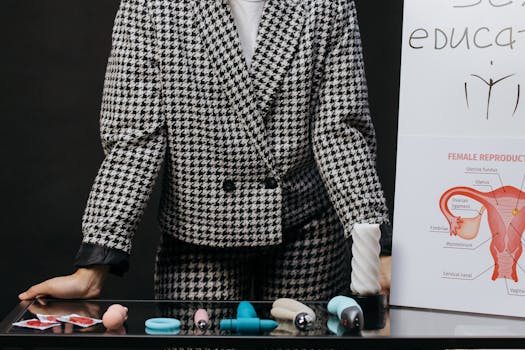
If libido has dropped, arousal feels harder to reach, or recovery after stress feels slow, your goal isn’t to “push harder.” Your goal is to guide your body back toward readiness. An HRV guided sexual recovery plan uses heart rate variability (HRV) as a practical signal of nervous system recovery—so you pace stimulation, rest, and arousal-building activities around what your body can handle right now.
Over 4–6 weeks, you’ll aim to:
- Stabilize your baseline stress load (better recovery between days).
- Rebuild arousal pathways using low-pressure, HRV-informed steps.
- Reduce the “all-or-nothing” cycle where you go too hard on a low-recovery day and then feel worse afterward.
- Create a repeatable routine you can scale up or down depending on HRV trends.
HRV isn’t a magic switch. It’s a feedback tool. You’ll use it to decide whether today is a “build” day, a “practice” day, or a “recover” day.
Preparation: what you need before you start
Before day one, set up your tracking and your environment so you can act quickly when HRV is low or trending upward.
1) Choose a reliable HRV metric
Pick one device or app and stick with it for the entire plan. HRV can vary across devices and algorithms, so switching tools mid-plan can confuse your signals.
Use one of these common HRV formats:
- RMSSD (often shown in milliseconds)
- SDNN (also often shown in milliseconds)
- “HRV score” (some wearables provide a proprietary score)
Whichever you use, you’ll track it consistently at the same time of day.
2) Set a daily measurement time
For most people, the easiest approach is to measure HRV first thing in the morning, after waking and before major movement. Choose a window like:
- Within 30 minutes of waking
- Same bedtime/rise routine as much as possible
If you’re using a wearable that measures during sleep, you can still use morning HRV as your daily anchor.
3) Prepare your “sexual recovery” environment
You don’t need anything extreme. You need consistency and low pressure. Set up:
- A private, comfortable space (bedroom or quiet room).
- Time blocks you can protect (even 10–25 minutes).
- A “stop rule” (you end the session when arousal becomes uncomfortable, not when you reach orgasm).
Practical example: If evenings are when you’re most likely to spiral into performance pressure, schedule your first sessions earlier—like 10:00–11:00 a.m.—when you’re calmer and less likely to rush.
4) Gather a few optional tools
These are optional but often helpful:
- Breathing support: a simple phone timer or breathing app for 4–6 minute sessions.
- Lubricant (water-based is a common default): comfort reduces friction and makes “practice” easier on low-recovery days.
- Comfort-focused aids: a vibrator or wand can be used gently, but only when HRV supports it (more on that below).
- Sleep consistency: a blackout curtain or a fan can help stabilize recovery.
If you want a soft recommendation for tracking, consider a wearable that provides daily HRV data and has a history you can export or review. Many people also pair this with a journal app to record subjective arousal, mood, and session outcomes.
Step-by-step: build your HRV guided sexual recovery plan
Follow these steps in order. You’ll create a simple decision rule based on HRV trend, then match sexual practice intensity to that signal.
Step 1: Run a 7-day baseline (no intensity changes yet)
For the first 7 days, you’re collecting data and learning your “normal.” Do not try to increase sexual activity during baseline. Instead:
- Measure HRV daily at your chosen time.
- Keep sexual activity consistent with your current routine (or reduce it if it’s chaotic and stressful).
- Write one line each day: sleep quality (0–10), stress (0–10), and any sexual interest (0–10).
By day 7, you should have a sense of your typical HRV range and how it responds to stress, poor sleep, alcohol, intense workouts, or travel.
Step 2: Define your “green, yellow, red” HRV days
Now turn HRV into actionable categories. Use your baseline week to set thresholds.
Choose one method:
- Percentile method: Green = top 30% of your HRV values, Yellow = middle 40%, Red = bottom 30%.
- Absolute difference method: Green = HRV at or above your 7-day average, Yellow = within 10–20% below average, Red = 20%+ below average.
Keep it simple. Your brain needs rules, not math.
Example: If your 7-day average HRV is 42 ms (RMSSD), then Red might be below 34 ms, Yellow between 34–38 ms, and Green above 42 ms.
Step 3: Start with a 14-day “recovery-first practice” schedule
For the next 14 days, you’ll use a consistent rhythm:
- Green days: short arousal-building practice
- Yellow days: low-intensity touch/attention practice only
- Red days: recovery and nervous-system downshift only (no sexual stimulation)
Use this default weekly rhythm:
- 2–3 Green days with practice
- 1–2 Yellow days with gentle practice
- 1–2 Red days with recovery only
Do not force the schedule. If you have more Red days than expected, shift practice to the next Green day.
Step 4: Use a 3-part session structure (10–25 minutes)
On Green and Yellow days, run the same session structure so your body learns what “safe practice” feels like.
Each session has three parts:
- 1) Downshift (3–5 minutes): slow breathing, relaxed jaw, drop shoulders.
- 2) Gentle arousal (6–12 minutes): attention on sensation, not performance.
- 3) Closure (2–5 minutes): stop while you still feel good; note the result in your journal.
Breathing cue you can use: inhale 4 seconds, exhale 6 seconds, for 10–12 rounds. If you feel lightheaded, reduce the pace.
Step 5: Match intensity to HRV color (specific instructions)
Here’s how you decide what to do once your HRV category is clear.
Green day actions
- Spend 6–12 minutes on gentle stimulation (hands only at first).
- Allow arousal to build naturally. If you feel pressure rising, reduce intensity by 20–30%.
- End the session within 1–3 minutes of your “comfortable peak,” not after exhaustion.
Yellow day actions
- Spend 5–8 minutes on non-demand touch or sensate focus (no goal for orgasm).
- Keep stimulation light and slow; focus on temperature, pressure, and breath.
- If you notice tension or numbness, stop early and switch to closure (breathing + relaxation).
Red day actions
- Skip sexual stimulation entirely.
- Do 10 minutes of downshift: slow breathing, a warm shower, or a short walk.
- Journal: “HRV low = recovery day.” This reduces the temptation to “fix it” by pushing.
Step 6: Track the response after each session (the part most people miss)
HRV is your “input signal,” but your body’s response is your “output signal.” After each session, record:
- Session stress level (0–10)
- Pleasure/sensation level (0–10)
- Any discomfort (0–10)
- How you slept that night (0–10)
Then compare it with the next morning’s HRV. If a certain practice consistently lowers HRV the next day, scale back intensity immediately.
Step 7: Add one “arousal skill” only after 10 successful days
After about 10 days of following the plan (with at least a couple Green days that felt positive), you can add one skill. Choose one:
- Breath-synced stimulation: keep stimulation aligned with exhale (slower on exhale, pause on inhale).
- Tempo change: try 60–90 seconds of slow touch, then 30–45 seconds slightly quicker—then return to slow.
- Attention training: for 2 minutes, focus only on sensation in one area (for example, external sensation), then broaden attention.
Only add one. If you add three changes at once, you won’t know what helped.
Step 8: Use week-by-week progression rules (increase only when HRV supports it)
Progression should feel boring and safe, not dramatic.
Week 1–2 (Rebuild safety): keep sessions short (10–25 minutes) and prioritize closure.
Week 3 (Build consistency): increase Green-day time by 2–5 minutes if next-day HRV is not dropping.
Week 4–6 (Stabilize libido): shift from “recovery-first practice” to “responsive practice.” That means you still follow HRV colors, but you allow slightly more autonomy on Green days.
If HRV is trending lower for several days, stop progression and return to Yellow-day intensity until HRV stabilizes.
Common mistakes that slow down sexual recovery
These are the most frequent reasons people feel stuck even when they’re trying to be careful.
1) Using HRV once and making big decisions
HRV is noisy. One low day can happen due to poor sleep, alcohol, dehydration, or stress at work. Use trends over 3–5 days, not a single data point.
2) Treating Red days like “a challenge”
On Red days, stimulation can reinforce the nervous system pattern you’re trying to undo. If you skip on Red days and you feel better over time, that’s data—not failure.
3) Confusing “more stimulation” with “more recovery”
More isn’t always better. When HRV is low, your body may interpret stimulation as additional load rather than comfort. The win is calm arousal, not intensity.
4) Not tracking subjective stress and discomfort
HRV gives you a physiological clue, but your feelings tell you whether the practice is safe. If you feel irritated, numb, or tense after sessions, lower intensity even if HRV looks “okay.”
5) Skipping the closure step
Closure is where your nervous system learns “we’re done and we’re safe.” Without it, you can end up in a lingering state of arousal without recovery.
Additional practical tips to optimize your plan
These adjustments help you get better signal quality from HRV and support libido recovery without adding pressure.
Strengthen HRV signal quality with 3 daily habits
- Sleep timing: aim for the same wake time within 60 minutes. Consistency often improves HRV trends.
- Hydration: drink water earlier in the day. Dehydration can affect HRV and comfort.
- Training load: avoid max-effort workouts on days you expect to practice. If you work out hard, schedule sexual practice 24–48 hours later and watch HRV.
Use a “session stop rule” you can follow
Try this rule: you stop when you notice one of these signals:
- Discomfort or pain (even mild)
- Rising performance pressure
- Numbness or dissociation
- Breath becomes shallow
This prevents the common rebound cycle where you push through and then feel worse the next day.
Real-world scenario: rebuilding after a stressful week
Imagine you had a high-stress work deadline. Your HRV Monday and Tuesday are in the Red range. Instead of trying to “reset” with intense sexual stimulation, you do this:
- Monday (Red): 10 minutes slow breathing + warm shower. No stimulation.
- Tuesday (Red): short walk, early bedtime. Journal: stress 8/10.
- Wednesday (Yellow): 6-minute gentle touch with a focus on breath and sensation. Stop early.
- Thursday (Green): 15-minute session with downshift → gentle arousal → closure.
By Friday, you notice your desire isn’t forced—it’s present. Your next morning HRV also trends upward. That’s the nervous system learning loop working.
Soft equipment guidance: comfort first, intensity second
If you use products like lubricant or a vibrator, treat them as comfort tools—not as a “fix.” Choose options that help you stay relaxed and reduce friction. A soft, water-based lubricant can make practice feel safer, especially if you’ve been tense or dry. If you use a device, start with very low settings and only on Green or strong Yellow days.
Consider keeping a small kit ready: lubricant, a towel, and an “off switch” (timer) so you don’t drift into long, demanding sessions.
Optimize with a simple weekly review
Once per week (10 minutes), review:
- How many Green days you practiced
- How many Red days you skipped (and how you felt afterward)
- Next-day HRV after practice days
- Your top two “works best” cues (for example, slower breathing or shorter sessions)
Then adjust only one variable for the next week. That keeps your plan coherent and your results interpretable.
When to pause and get support
If you have persistent pain, significant numbness, or symptoms tied to a medical condition, don’t rely on HRV alone. HRV-guided pacing can support nervous system recovery, but it isn’t a substitute for professional evaluation when pain or dysfunction is involved.
FAQ HTML placeholder
01.05.2026. 17:27