

Fertility Tracking Stack: Basal Body Temperature + Wearable HRV

Goal: build a fertility tracking stack that combines BBT and wearable HRV
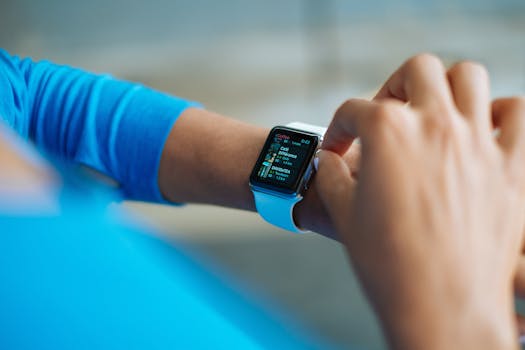
If you want more signal than a single metric can provide, you can build a fertility tracking stack that blends basal body temperature (BBT) with wearable HRV (heart rate variability). The goal is simple: use BBT for the clearest confirmation of ovulation and use HRV trends to support timing decisions before ovulation is confirmed.
Done well, this stack helps you answer two practical questions: “When am I likely approaching fertile days?” and “Did ovulation actually happen?” You’ll still rely on your body’s patterns, but you’ll reduce guesswork by using two complementary data streams.
Preparation: what you need before you start
Before you track anything, set yourself up to get consistent, high-quality data. In fertility tracking, consistency beats complexity.
Choose your BBT method
- BBT thermometer: Use a dedicated basal body temperature thermometer with high resolution (typically 0.01°C or better). If you want a wearable-friendly setup, consider a thermometer that syncs to an app or exports data easily.
- Temperature timing: Plan to take your temperature at the same time each morning, ideally within a 30-minute window.
- Keep it next to your bed: You should be able to measure without turning on bright lights or getting fully out of bed.
Choose your wearable HRV source
- Wearable HRV: Many popular wearables estimate HRV during rest. Look for HRV metrics that are available daily (or at least on most days) and that you can export or view historically.
- Consistency matters: HRV can shift with sleep quality, stress, alcohol, illness, and training. Your “stack” works best when you minimize random disruptions.
- Battery and syncing: Set reminders to charge and sync so you don’t lose days of HRV data.
Pick a tracking workflow (app or spreadsheet)
- Option A: Use a fertility tracking app that supports BBT entry and cycle charts. If your wearable HRV can be exported, you can add HRV notes manually or via CSV import (where available).
- Option B: Use a spreadsheet for the first cycle or two to learn your patterns. Keep it simple: date, BBT, HRV (resting/overnight), sleep duration, and any relevant notes (illness, travel, late night).
Set expectations for the first cycle
Your first cycle is for calibration, not perfection. Expect to learn which HRV metric your wearable shows most reliably and how your temperature baseline behaves. Most people need 2–3 cycles before the patterns become stable enough to make confident decisions.
Step-by-step: set up your fertility tracking stack

Follow these steps in order. If you start with BBT consistency and then layer HRV, you’ll get cleaner results.
1) Lock in your BBT routine
- Choose a wake-up time you can repeat. Aim for the same time each day, even on weekends.
- Measure immediately after waking, before getting out of bed.
- Record your BBT reading to two decimal places (or the smallest increment your thermometer provides).
- If you’re sick, traveling, or you slept fewer hours than usual, note it. Example: “Fever night 2, temp may be elevated.”
2) Configure your wearable for consistent HRV capture
- Wear your device snugly (not tight enough to cause discomfort, but secure enough to avoid slipping).
- Enable HRV tracking and ensure your device captures overnight/rest HRV.
- Keep bedtime and wake-time within a reasonable range. A 3-hour shift can noticeably change HRV.
- Sync daily (or at least every 1–2 days) so you don’t lose HRV history.
3) Choose your HRV “signal” (and don’t change it mid-cycle)
- In your wearable app, identify the HRV metric you can view historically (commonly shown as RMSSD or a similar HRV estimate).
- Use the same metric every day. If you switch from one HRV card to another, you’ll confuse the trend.
- Record the HRV value you see for that day’s rest window (or the nightly average, if your wearable provides it).
4) Start a cycle baseline log from day 1
- On the day your period starts (cycle day 1), begin your log.
- Write down day-by-day BBT and HRV.
- Add at least one line of context daily: sleep duration (rough estimate), alcohol (yes/no), and any unusual stress or illness.
5) Identify your ovulation confirmation point using BBT
- Watch for a sustained BBT rise. In many people, ovulation is followed by higher temperatures.
- Track when you see the first clear rise and when it becomes sustained (often several days in a row).
- Mark the likely ovulation window after you see the pattern become consistent.
Example: If your BBT sits around 36.3–36.5°C for several days and then rises to 36.8°C and stays elevated for 3+ readings, you’re likely seeing the post-ovulatory shift.
6) Use HRV trends to support timing before BBT confirms
- During the days leading up to ovulation, observe whether your HRV shows a trend change (often a shift in resting HRV or reduced variability followed by recovery—patterns differ person to person).
- Instead of hunting for a single “magic number,” look for directionality: “HRV is drifting down for 2–3 days” or “HRV jumps and then stabilizes.”
- When your BBT rise starts, treat HRV as supportive evidence, not the primary confirmation.
7) Combine signals into an action plan for fertile days
- Decide on your goal: conception, avoiding pregnancy, or general cycle awareness.
- For conception, use HRV trend shifts as an “approaching fertile window” cue and BBT rise as confirmation that you likely ovulated.
- For pregnancy avoidance, be more conservative. Use BBT confirmation to understand what already happened, and avoid relying on HRV alone for safety decisions.
Practical scenario: You have a cycle where your HRV gradually changes beginning cycle day 10. Your BBT baseline stays low until cycle day 14, then BBT rises for several days. In this case, you can treat cycle day 10–13 as “high attention days” and cycle day 14+ as “ovulation likely occurred.”
Common mistakes that break the stack (and how to fix them)
Even good gear won’t help if the process is inconsistent. Watch for these issues.
1) Changing your BBT time or measuring after you’ve already moved
If you take your temperature 60–90 minutes later than usual, you may see noise that looks like a pattern. Fix it by setting a consistent alarm and measuring immediately after waking.
2) Skipping days of HRV data
HRV is sensitive to sleep and recovery. If you miss HRV days, you lose the trend. Fix it by charging your wearable nightly and syncing before you go to bed the next day.
3) Interpreting HRV as a direct “fertility score”
HRV changes with stress, illness, caffeine, alcohol, and training. If you assume HRV equals fertility, you’ll overreact to normal life events. Fix it by logging context and focusing on personal trends rather than universal rules.
4) Expecting the first cycle to be accurate
Your body’s baseline and your wearable’s data quality need time. Fix it by tracking at least 2–3 cycles before making major decisions.
5) Editing your data after the fact
People often “adjust” readings mentally when they don’t fit expectations. That ruins pattern learning. Fix it by recording exactly what you measured and noting anomalies separately (e.g., “late night, 5 hours sleep”).
6) Using multiple HRV metrics in one cycle
Some dashboards show nightly HRV, recovery HRV, or different formulas. Mixing them can create artificial changes. Fix it by choosing one metric and sticking to it.
Additional practical tips and optimisation advice
Once your stack is running, you can improve signal quality quickly. These steps make a difference in real life.
Improve data quality with a “sleep hygiene” baseline
Since HRV is sleep-sensitive, aim for consistency: same bedtime window, minimize late alcohol, and avoid intense training late at night. Even small changes can reduce week-to-week HRV noise.
If you want a simple routine, try this for one cycle: stop caffeine 8 hours before bed and keep your wake time within 30 minutes. Then compare your HRV stability to the previous cycle.
Add two lightweight notes that help interpretation
- Night temperature disruptions: If you woke up, had a hot/cold room, or got up to use the bathroom, note it.
- Stress and alcohol: Write “stressful day” or “alcohol (1–2 drinks)” when relevant. HRV can shift even when your cycle is normal.
Use a dedicated thermometer and wearable pairing that reduces friction
Fertility tracking becomes sustainable when the workflow is easy. If you’re shopping, look for:
- BBT thermometer accuracy and simplicity: A device designed for basal measurements (high resolution, quick reading, and reliable calibration).
- Wearable with reliable HRV capture during rest: Choose a model with consistent nightly HRV display and a mature app for historical data.
- Export or easy viewing: You want to review past cycles without hunting through screens.
Many people pair a basic fertility app workflow (for BBT charts) with a widely used wearable ecosystem (for HRV trends). If your wearable offers HRV export, you can keep everything in one place. If not, manual entry is still workable—just keep it consistent.
Optimize your fertile-days plan with a 3-cycle learning loop
Here’s a practical way to refine your stack without overcomplicating it:
- Cycle 1: Track everything. Do not change your setup. Learn your BBT baseline and your typical HRV behavior around the time you ovulate.
- Cycle 2: Start marking “HRV trend start” (the day you first notice the direction shift) and compare it to your eventual BBT-confirmed ovulation timing.
- Cycle 3: Adjust your action window. For example, if HRV trend shifts consistently 3 days before BBT rises, you can treat those days as high-attention fertile days.
Handle anomalies like travel, shift work, and illness
If you travel or work shifts, HRV and BBT can both look messy. Instead of abandoning the cycle, tag anomalies and interpret cautiously.
- Travel: Note new time zones and sleep duration. Expect HRV variability.
- Illness: If you have fever or significant symptoms, treat HRV changes as illness signals first.
- Shift work: Use your best consistent wake-time routine, and note that it may shift ovulation estimates. BBT will still be useful for confirmation.
Know when to upgrade your tools
If you see recurring problems—like frequent missing HRV days, inconsistent temperature readings, or data you can’t review—upgrading can help. For BBT, a dedicated basal thermometer reduces measurement variability. For HRV, a wearable that captures overnight rest consistently reduces gaps.
When you upgrade, keep the workflow stable for at least one cycle so you can compare trends fairly.
Use your stack to make decisions you can actually act on
The fertility tracking stack is only useful if it changes your behavior in a grounded way. If your goal is conception, you can increase timing precision by using HRV trend shifts to start your attention window earlier than BBT alone would allow. If your goal is cycle awareness, your combined view helps you understand your cycle’s rhythm and identify when something is off.
Most importantly: treat BBT as confirmation and HRV as supportive context. That approach keeps your decisions grounded in the strongest signal while still benefiting from earlier cues.
Return to your routine: what to do after ovulation is confirmed
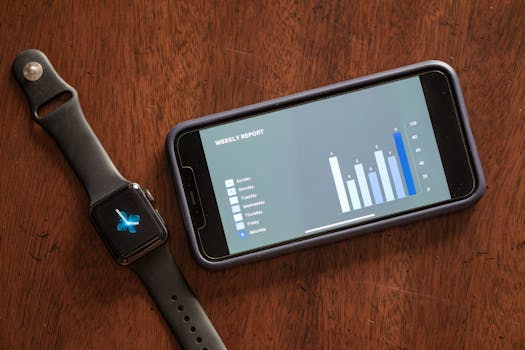
Once your BBT shows a sustained rise, keep recording for the rest of the luteal phase. This gives you a clean reference for next cycle calibration. Then, when your next period begins, review your notes:
- How many days did HRV trend shift before BBT rise?
- Did sleep disruption correlate with HRV anomalies?
- Were there stress or illness notes that explain outlier readings?
With each cycle, your stack becomes less about “finding ovulation” and more about predicting your personal pattern.
Commercial device pairing suggestions to consider
If you’re shopping, you’ll usually find the smoothest setup by pairing a basal thermometer (for consistent temperature readings) with a wearable that provides daily HRV during rest. Look for devices that:
- Make it easy to record BBT immediately on waking
- Show HRV historically in a stable metric
- Let you review trends across multiple cycles
When you’re ready, choose a fertility tracking app that supports BBT charts and cycle day tracking. Many users then add HRV context manually using the wearable app’s historical view. This hybrid workflow is often the fastest way to start without losing data to complicated integrations.
01.03.2026. 22:23