

Best Wearable Features for Recovery Tracking: What to Look For

Why recovery tracking matters (and why “rested” isn’t enough)
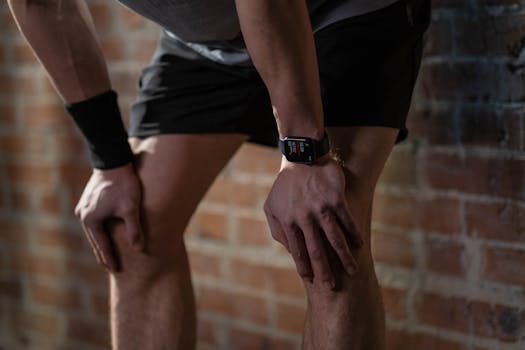
You can train hard and still feel like you’re getting worse. That’s the frustrating part of recovery: you don’t always notice it until performance drops, your mood changes, or you start getting random niggles. Many wearables can show “sleep” and “activity,” but recovery tracking is different. It’s about estimating whether your body has actually bounced back from a day (or week) of stress—physical, mental, and even illness-related.
If you want to use a wearable to guide training, you need the right signals and the right way the device turns those signals into something you can act on. The best wearable features for recovery tracking are the ones that are measurable, consistent, and understandable enough to influence decisions like when to do intervals versus an easy day.
In this guide, you’ll learn what to prioritize when shopping, what specs actually matter, and how to avoid common misunderstandings that lead to “pretty charts” with no real value.
Start with the core signals: HRV, resting metrics, and sleep quality
Recovery is not one thing. Wearables usually estimate it through a few key physiological signals. When you look at recovery features, focus on whether the wearable captures these signals reliably and whether it explains them in a way you can use.
HRV (heart rate variability): the most important recovery signal
HRV reflects how your autonomic nervous system is regulating your heart rate. In practical terms, higher or more stable HRV (relative to your own baseline) often suggests your body is coping better with stress. Lower HRV can indicate you’re still under-recovered.
When you shop, prioritize:
- Daily HRV tracking (not just occasional measurements)
- Time window clarity (many devices measure during sleep; others measure in a short daily session)
- Baseline awareness (a device should learn your personal range over 2–4 weeks)
- Trend visualization (7-day and 30-day views help you see patterns)
Important terminology: HRV is not “fitness level.” It’s a recovery and stress marker. You’ll get more value by watching trends and correlating them with how you feel and how you perform.
Resting heart rate (RHR): a simple stress barometer
RHR is often one of the most useful recovery indicators because it’s easy to track and usually changes in response to accumulated stress, poor sleep, or illness. Many people notice RHR rising by a few beats per minute when they’re not recovering well.
Look for:
- RHR measured consistently (ideally every morning)
- Clear “normal range” or baseline
- Day-to-day comparisons
Real-world scenario: If you do a hard strength session on Tuesday and your RHR is up by ~3–8 bpm on Wednesday and Thursday (relative to your baseline), you may benefit from choosing an easy ride or a mobility day instead of repeating another intense workout.
Sleep staging and sleep timing: recovery needs the “right kind” of rest
Sleep affects recovery more than most people realize. But “hours slept” alone can mislead you. Sleep staging (light, deep, REM) and sleep timing help you understand whether your night actually supported recovery.
When evaluating sleep features, prioritize:
- Sleep stage estimation (even if it’s not clinically perfect, it should be consistent)
- Sleep consistency (bedtime/wake time patterns)
- Awakenings and sleep fragmentation (frequent disruptions can reduce recovery)
- Sleep score transparency (more useful if it ties to measurable behaviors like duration, regularity, and estimated stages)
Practical note: If you’re training for endurance events, you’ll often see deep sleep and REM totals shift after long travel, late nights, or heavy training blocks. A wearable that shows these changes helps you plan recovery weeks more intelligently.
Beyond the basics: temperature, respiration, and skin signals that reflect recovery

Some recovery features go past HRV and sleep. These can add context—especially when you’re sick, overreaching, or trying to recover between workouts.
Skin temperature and trends: spotting stress and illness early
Many wearables estimate skin temperature continuously. A rise can sometimes correlate with illness or increased physiological stress. The key is trend direction and magnitude relative to your normal.
Look for:
- Continuous temperature sampling (not just occasional readings)
- Trend graphs over 7–14 days
- Context markers (e.g., “higher than your usual”)
Real-world scenario: You feel “off” on a Wednesday but you haven’t missed training yet. Your wearable shows skin temperature creeping upward and HRV dropping for two days. That’s a strong signal to reduce intensity and prioritize rest, hydration, and sleep. You may avoid turning a mild illness into a multi-week setback.
Respiration rate (breathing rate): helpful for recovery context
Respiration rate can reflect recovery status and autonomic balance. It’s also useful for understanding how your breathing changes with stress, anxiety, or poor sleep.
Prioritize:
- Respiration rate tracking during sleep or rest
- Consistency (you should be able to see trends rather than random spikes)
Not every wearable does respiration the same way. Some estimate it from optical sensors, while others use dedicated sensors. Either way, trends matter more than single-day values.
Blood oxygen (SpO2): useful, but don’t treat it as a recovery score
SpO2 can be relevant for recovery, especially if you suspect altitude effects, sleep-disordered breathing, or illness. However, it’s not a direct recovery metric in the way HRV is. Use it as context rather than the main decision-maker.
Look for:
- Night-time or sleep-related SpO2 reporting
- Clear data quality indicators (if the watch can’t read well, you’ll get misleading values)
Actionable readiness: how the wearable turns signals into decisions
Recovery tracking becomes valuable when it tells you what to do. Many wearables provide a “readiness,” “recovery,” or “training readiness” score. These can be helpful if you understand their logic and if the score is consistent for your body.
Readiness scores: what to verify before trusting them
When you see a readiness score, check whether the device uses multiple inputs, not just one metric. A good readiness model typically blends HRV, resting heart rate, sleep quality, and sometimes activity load.
Prioritize:
- Multiple input signals (HRV + RHR + sleep are common)
- Clear time basis (e.g., “based on last night” or “last 24 hours”)
- Trend stability (a score should not wildly swing without a reason)
- Action suggestions (easy/steady/hard guidance is more useful than a single number)
Practical example: If your readiness score drops for two mornings in a row, you might plan one recovery-focused day and one technique/mobility day, then reassess after a good night. If your readiness score stays high while you feel drained, you may need to check other factors like nutrition, hydration, stress, and total weekly load.
Training load and recovery integration
Some wearables connect recovery metrics with training load. This is where “recovery tracking” can become genuinely actionable. A high HRV day after a low-load session is different from a high HRV day after a week of hard workouts.
Look for:
- Training load estimation (often based on heart rate and activity)
- Recovery time suggestions or load-to-recovery balance
- Ability to review past patterns (e.g., “what happened after my last hard week?”)
Even if the algorithm isn’t perfect, the ability to connect effort to recovery is what helps you avoid overreaching.
Sensor quality and measurement reliability: the “boring” feature that matters most
A recovery score is only as good as the data feeding it. Many people buy a wearable because it looks good on paper, then struggle with unreliable readings due to fit, skin contact, or sensor limitations.
Fit and optical sensor contact: how to get clean HRV data
HRV and HR readings depend on stable contact with your skin. If your device slips or sits too loosely, you’ll see missing data, noisy HRV, or inconsistent sleep metrics.
When shopping, consider:
- Adjustable bands that keep consistent pressure
- Comfort for overnight wear (you want 7–8 hours of contact)
- Data quality indicators in the app
- Support for different skin types (some sensors do better than others)
Practical tip: If your HRV readings are missing more than 1–2 nights per week, it’s often a fit or wear-position issue—not a “you problem.” Try wearing the device slightly higher on the wrist, tighten the band for sleep, and ensure the sensor area stays clean.
Battery life and measurement continuity
Recovery tracking isn’t a one-day event. You need continuous data for patterns to emerge. If the battery forces you to recharge every other day, you’ll lose the consistency that makes HRV and readiness useful.
Look for:
- At least 4–5 days of battery life for everyday wear (more is better if you track sleep)
- Overnight charging strategy that doesn’t interrupt your sleep tracking
Even a short gap can break trend lines. Consistency beats intensity.
Subscription vs. local processing
Some platforms require subscriptions for advanced recovery analytics, while others keep core metrics in the app. Consider what you’ll actually use month-to-month.
Before buying, check:
- Whether HRV and sleep staging are included without a subscription
- Whether readiness insights are paywalled
- How long historical data is retained if you stop paying
This is one of the most overlooked “specs.” It can turn a good recovery tool into a limited one later.
Prioritize features based on your training style and recovery goals
Not every recovery feature matters for every person. Your best wearable features for recovery tracking depend on how you train, how you sleep, and what you want to change.
If you train hard: prioritize HRV + sleep + readiness trends
If your goal is to avoid overreaching during a block of intervals, strength, or endurance events, focus on:
- Daily HRV (sleep-based or consistent daily measurement)
- Resting heart rate trending
- Sleep stage and sleep fragmentation
- Readiness guidance that connects to training decisions
This setup helps you decide when to push and when to pull back.
If you’re recovering from injury or returning to training: look for sleep consistency and stress context
When you’re returning after a break, your body may feel “weird” for reasons that aren’t purely fitness. You’ll likely benefit from:
- Sleep timing regularity (consistent bedtime/wake time)
- HRV trends to monitor nervous system recovery
- Temperature or illness indicators if you’re prone to getting run down
Use recovery tracking as a compass, not a verdict. If pain is limiting you, you still need to listen to your body and your clinician or physio.
If you struggle with sleep: prioritize sleep staging, awakenings, and respiration context
Sleep quality is the foundation. If your recovery is inconsistent because your sleep is inconsistent, prioritize:
- Sleep staging and sleep disruption metrics
- Respiration rate during sleep (context for stress and breathing patterns)
- SpO2 night data if you suspect breathing issues
Then pair it with your recovery numbers. If HRV is low but sleep looks decent, your stress may be driven by something else (workload, mental stress, under-fueling, or hydration).
Common purchasing mistakes and misunderstandings
Most buying regret comes from assuming recovery tracking works like a simple thermometer. It doesn’t. Here are the errors to avoid.
Thinking a single “recovery score” is enough
A readiness number can be useful, but it’s rarely the whole story. One bad night, a late meal, alcohol, travel, or stress can temporarily shift HRV and RHR. Always look for patterns over at least 7–14 days.
Ignoring measurement gaps
If the wearable misses HRV during sleep or doesn’t capture enough nights, your insights will be noisy. Before you commit, check how the device handles motion artifacts and whether it provides data quality cues.
Overreacting to normal fluctuations
Your HRV can vary day-to-day. A drop of 5–15% might be normal, depending on your baseline and training. Instead of making drastic changes based on one day, use a “two-day rule”: if the trend persists for 2 mornings and you feel worse, then adjust training.
Choosing only based on marketing terms
“Recovery” can mean anything: HRV tracking, sleep staging, temperature trends, or a proprietary score. Don’t buy the term. Buy the underlying sensors and the clarity of the output.
Forgetting that recovery is also nutrition, hydration, and stress
A wearable can’t fix under-fueling. If your recovery metrics worsen while your training load stays high, check the basics: protein intake, total calories, hydration, and sleep schedule. Recovery tracking is most powerful when it guides behavior you can control.
A practical buying checklist: decide in 10 minutes
Use this decision framework before you purchase. It’s designed to help you verify what you’re actually getting for recovery tracking.
Step 1: Confirm the “must-have” recovery metrics
- HRV tracking: daily or nightly, with trend views
- Resting heart rate: morning RHR and baseline comparison
- Sleep tracking: sleep stages and sleep fragmentation (not just total hours)
Step 2: Check for recovery context features
- Skin temperature trends (continuous or frequent sampling)
- Respiration rate during sleep/rest
- SpO2 night data if you want breathing/illness context
Step 3: Make sure the wearable can turn data into decisions
- Readiness or recovery score that uses multiple inputs
- Time window clarity (e.g., “based on last night”)
- Action prompts (easy/medium/hard guidance is better than a single number)
- Training load integration if you want load-to-recovery balance
Step 4: Verify reliability and usability
- Comfort for overnight wear (you’ll track recovery most during sleep)
- Battery life: aim for 4–7+ days if you want consistent overnight tracking
- Data quality indicators for HR/HRV
- Band fit adjustability to maintain sensor contact
Step 5: Check app features you’ll actually use
- 7-day and 30-day trend charts for HRV/RHR/sleep
- Export or detailed history if you like reviewing patterns
- Subscription requirements for recovery analytics
How to use your recovery wearable effectively after you buy it
The best wearable features for recovery tracking won’t help if you don’t use them with intention. Here’s a simple way to get value quickly.
Give it a baseline period: 14 days to learn your normal
For most people, HRV and RHR stabilize enough to interpret trends after about 2 weeks. During this time, focus on consistency: wear it overnight, keep band fit stable, and don’t change your training plan drastically.
Use a two-signal confirmation approach
Instead of reacting to one metric, look for at least two signals aligning. For example:
- HRV down + RHR up for 2 mornings
- Sleep fragmentation up + readiness score down
- Temperature up + HRV down (possible illness/stress)
If only one metric changes, consider lifestyle factors before you reduce training.
Adjust training for 24–48 hours, then reassess
Recovery changes don’t always respond instantly. Plan a short adjustment window:
- When readiness is low: choose easy sessions, technique work, or rest for 1–2 days
- When readiness rebounds: resume harder training gradually
This prevents the common trap of “panic adjusting” every time a number dips.
Final buyer guidance: what you should recommend yourself to buy
When you shop for recovery tracking, buy the features that create reliable signals and help you make decisions. The most useful combination for most athletes and active people is:
- Daily HRV with clear trend history
- Morning resting heart rate and baseline comparison
- Sleep staging plus sleep disruption metrics
- Readiness guidance that blends multiple inputs
- Optional context like skin temperature and respiration rate
If you want a wearable that’s often strong for recovery analytics and training insights, you may naturally gravitate toward brands such as Garmin (with training readiness and recovery concepts), Apple Watch (with strong sleep and health ecosystem integration), or Oura (well-known for recovery-focused insights). The right choice still comes down to whether the device’s recovery metrics match your needs and whether you can wear it consistently.
Before you commit, double-check the buying checklist: confirm HRV + sleep + RHR, ensure the device can measure overnight without gaps, and verify whether the readiness features you want are included long-term. If you do that, you’ll end up with a recovery tracker that helps you train smarter—not just track more.
In the end, the best wearable features for recovery tracking are the ones that consistently show you what your body is already telling you. Your job is to listen, interpret trends, and adjust your training with confidence.
27.12.2025. 16:02