

Breathwork Troubleshooting HRV Drops: Fixes You Can Try Today

What HRV drops after breathwork looks like (and what it usually means)

You start a breathwork session expecting calm, improved recovery, or a clean “downshift” into parasympathetic dominance. Instead, your HRV drops on your tracker—sometimes immediately, sometimes later in the session. That can feel worrying, especially if you’ve been using breathwork to support stress resilience.
Common symptoms you might notice:
- HRV falls within 1–5 minutes of starting paced breathing, even though you feel “okay.”
- HRV dips after the inhale-heavy phase (for example, in 4–6 breaths/min protocols).
- HRV stays lower for the rest of the day or your morning baseline is reduced for 12–24 hours.
- HRV is noisy (large swings every few minutes), making it hard to tell whether the pattern is real or sensor-related.
- You feel wired or heavy in the chest—not always panic, but a subtle “effort” that wasn’t present before.
It helps to interpret HRV drops correctly. HRV is not a direct “breathwork score.” It’s a measurement of the time variation between heartbeats, influenced by breathing mechanics, autonomic state, hydration, sleep, caffeine, and measurement quality. A drop can be real, but it can also be a tracking artifact.
Your goal is to determine which it is—because the fixes differ.
Most likely causes of HRV drops during or after breathwork
There are a handful of explanations that show up again and again. Start with these, in this order.
1) The session is too intense for your current nervous system state
If you’re doing longer breath holds, aggressive nasal occlusion, or fast respiratory rates without adaptation, you can push your body into a stress response. That can reduce HRV, especially during the “effort” parts of the protocol.
Real-world scenario: You did breathwork after a late afternoon caffeine hit and a short night of sleep. You run the same protocol you used last week. This time HRV drops by 20–40 ms within the first few minutes. You also notice you’re bracing your core and swallowing more often. That combination (physiological load + body tension) often points to overreaching for the day.
2) Your breathing pattern is creating measurement interference
Some breathwork protocols intentionally change respiratory rhythm. HRV trackers can be sensitive to how that rhythm interacts with sensor signal processing. If your tracker is wrist-based, motion, poor contact, or uneven breathing cadence can create misleading HRV changes.
Key clue: your heart rate might look “stable,” but HRV looks chaotic or drops in a way that doesn’t match your subjective calm.
3) You’re hyperventilating (even if you don’t feel like it)
Hyperventilation can lower CO2 and shift autonomic balance. Some people interpret the sensation of reduced air hunger as calm, but the physiology can still be moving away from optimal recovery.
Hyperventilation risk is higher with:
- Too fast a respiratory rate (for many people, consistently above ~6–8 breaths/min can be “too much” depending on the protocol).
- Long inhale / short exhale patterns.
- Breath-holding that leads to rebound (you exhale hard afterward).
4) Breath holds or “CO2 tolerance” work are too long or too frequent
Breathwork troubleshooting HRV drops often comes down to breath-hold parameters. If your holds are longer than what your body can tolerate comfortably on that day, HRV may drop and your body may stay in a heightened state afterward.
A practical guideline: if you’re new to breath holds, you typically want shorter holds and longer recovery intervals. “More intensity” isn’t the same as “more benefit.”
5) Dehydration, low electrolytes, or recent alcohol/caffeine
HRV is sensitive to overall recovery status. Dehydration and electrolyte imbalance can alter heart rate dynamics and reduce HRV. Alcohol the night before can affect HRV for 12–24 hours in many people. Caffeine can also bias your autonomic balance for hours.
If HRV drops only on certain days, check your inputs: water intake, caffeine timing, and sleep duration.
6) Measurement contact issues (especially with wearable sensors)
Wrist devices are convenient, but they’re also susceptible to:
- loose strap fit
- cold skin
- movement during breathing
- poor skin contact due to sweat or lotion
- tight gripping or bracing during the session
Sometimes “HRV drops” is actually “signal quality drops.”
7) You’re doing breathwork at the wrong time relative to your circadian rhythm
HRV naturally varies across the day. If you compare your afternoon HRV to your morning baseline, you may misinterpret normal variance as a breathwork effect. Track the same time window for at least 1–2 weeks before concluding the protocol is causing the drop.
Step-by-step troubleshooting and repair process (do this in order)

Use this sequence like a diagnostic checklist. Don’t jump to advanced fixes until you’ve verified the simple ones.
Step 1: Confirm the drop is real (not a sensor artifact)
- Keep your breathing steady for 2–3 minutes and check whether HRV stabilizes or stays low.
- Try the same session while seated still, with minimal hand movement.
- Adjust your wearable fit (snug, not tight) and warm your wrist if it’s cold.
- Compare HRV on two consecutive days using the same time-of-day window.
If the HRV drop happens only when you move, or only when your tracker is loose, you’ve likely found the problem.
Step 2: Reduce intensity immediately (for the next 3 sessions)
For troubleshooting breathwork troubleshooting HRV drops, the fastest repair is to simplify the protocol.
Try this “low-load” reset for 3 sessions:
- Do 5–8 minutes total.
- Use gentle nasal breathing.
- Use a slower pace but without forcing deep inhales (aim roughly 6 breaths/min, which is about a 5-second inhale + 5-second exhale pattern for many people).
- No breath holds for now.
- Keep the exhale slightly longer than inhale (for many people, exhale 5–7 seconds when inhale is 4–6 seconds).
Then observe: does HRV stop dropping? If yes, your prior protocol was likely too intense or too CO2-shifting for your current state.
Step 3: Check your subjective effort level
HRV drops often correlate with physical bracing. During the session, ask yourself:
- Are you clenching your jaw?
- Are you pushing the inhale (over-expanding the chest)?
- Are you contracting your abdomen to “force” the rhythm?
- Are you needing willpower to keep the pace?
If you answer “yes” to any, your breathing is likely more effortful than you think. Effort increases sympathetic activity, which can reduce HRV.
Step 4: Add a recovery buffer between sessions
If you do breathwork multiple times daily, HRV can drop because your system never fully returns to baseline. For troubleshooting:
- Limit to one session per day for 5–7 days.
- Place it at the same time each day.
- Keep total duration between 8–15 minutes until HRV is stable.
After you see HRV stability for several days, you can gradually increase frequency.
Step 5: Control known HRV confounders for 7–10 days
For a clean experiment, standardize:
- Caffeine: avoid within 6–10 hours of session time.
- Alcohol: avoid for at least 48 hours before testing.
- Hydration: aim for consistent water intake (for many people, 1.5–2.5 L/day depending on body size and activity).
- Sleep: keep bedtime and wake time within 60 minutes day-to-day.
If HRV stops dropping when these variables stabilize, the breathwork may not be the root cause.
Solutions from simplest fixes to more advanced fixes
Work through these in order. Stop when your HRV pattern improves and your body feels comfortable.
Start with the simplest fixes (often the real cause)
1) Shift to “no-hold” paced breathing
Remove breath holds entirely while troubleshooting. Use gentle pacing and let the breath be easy.
Try a protocol like:
- Inhale 4–5 seconds
- Exhale 6–8 seconds
- Total time 8–12 minutes
If your HRV rebounds quickly and stays steady, you can reintroduce holds later only after you’re stable.
2) Reduce session length
If you currently do 20–45 minutes, cut down to 8–15 minutes for a week. Longer sessions increase the chance of fatigue, bracing, or subtle overbreathing.
3) Use a slower pace than you think you need
Many people accidentally speed up when they focus. If your pacing is guided by an app, double-check the target:
- If you’re aiming for 5 breaths/min (12 seconds per breath cycle), but you’re actually doing 7–8 breaths/min, the CO2 shift may be stronger than intended.
- Conversely, if you’re too slow and feel “air hunger,” you may be straining.
The goal is smooth breathing, not maximum control.
4) Improve sensor contact
Before blaming physiology, fix measurement quality:
- Wear the device snugly but comfortably.
- Keep the sensor area clean and dry.
- Warm up your hands/wrist if it’s cold.
- Minimize body movement during the session.
If you use a chest strap HRV monitor, consider using it temporarily to validate whether the wrist data matches. Some breathwork enthusiasts pair a chest strap with breathing apps for cleaner HR signal capture—this can be especially helpful during troubleshooting.
Intermediate fixes (protocol and physiology adjustments)
5) Avoid long “inhale-first” patterns
If your protocol emphasizes deep inhales (for example, strong diaphragmatic expansion on every inhale), try shifting to:
- gentle inhales (not maximal)
- slightly longer exhales
- no breath holds during troubleshooting
Long inhales can mechanically change breathing dynamics and increase effort in some people, which can reduce HRV.
6) Add a longer exhale without forcing air out
A longer exhale should feel like relaxing, not pushing. If your exhale becomes effortful, shorten it by 1–2 seconds.
Practical adjustment: If you’re using a 4s inhale / 8s exhale pattern and you feel you’re “working” to empty your lungs, try 4s inhale / 6s exhale for a week.
7) Reintroduce breath holds only after HRV stability
Once HRV stops dropping during no-hold sessions:
- Reintroduce holds at short durations (for many people, starting around 10–20 seconds or a comfortable “first plateau” before discomfort).
- Keep holds infrequent (for example, 1–2 holds per minute or fewer).
- Maintain longer recovery exhales after each hold.
If HRV drops again, reduce hold length by 25–50% and extend recovery time.
Advanced fixes (when you’ve ruled out basics)
8) Standardize your baseline measurement
Instead of judging HRV only during the session, measure baseline:
- Before breathwork, sit quietly for 5 minutes.
- Record HRV during minutes 3–5 only.
- Then compare to HRV during the first 5 minutes of breathwork.
This reduces noise from settling time and movement. It also helps you see whether the drop is immediate (protocol-related) or delayed (fatigue or physiological stress).
9) Test one variable at a time
If you changed multiple things—pace, hold length, duration, posture—your results are hard to interpret. For the next 3–5 sessions:
- Keep posture constant (seated or lying down).
- Keep duration constant.
- Change only one variable (for example, exhale length) and keep everything else fixed.
This is the fastest way to identify the specific trigger.
10) Use a more reliable HRV measurement setup temporarily
If you suspect the wearable is the bottleneck, consider temporarily using a chest strap HRV monitor or a validated HRV device. Many people find that chest straps provide cleaner R-R interval detection during controlled breathing.
Soft product mention: if you’re already invested in breathwork apps, pairing them with a dedicated HRV monitor (rather than relying only on smartwatch HRV) can make troubleshooting faster because you’ll know whether the HRV drop is real.
11) Adjust posture and breathing mechanics
Posture changes breathing dynamics and can reduce effort. Try:
- lying down with knees supported
- seated with an upright spine and relaxed shoulders
- hands resting on thighs to reduce bracing
If HRV drops only in one posture, the issue may be mechanical effort rather than the breathing pattern itself.
When replacement, a different protocol, or professional help is necessary
Breathwork troubleshooting HRV drops is usually solvable through protocol changes, measurement checks, and recovery adjustments. But there are situations where you should escalate.
Consider pausing breath holds and simplifying if you see repeated strong drops
If your HRV drops consistently (for example, 20–40% lower than your baseline) across multiple days even after switching to no-hold paced breathing, pause the protocol and reassess inputs: sleep, caffeine, hydration, stress level, and medication changes.
Also stop if you notice symptoms like chest pain, faintness, severe dizziness, or shortness of breath beyond normal breathwork sensations. Those are not “normal HRV learning moments.”
Replace or stop using the wearable if measurement quality is unreliable
Signs you may need replacement (or at least a different measurement method):
- HRV data is frequently missing or highly erratic when you’re still.
- HRV changes don’t correlate with how you feel across many sessions.
- Heart rate readings are clearly inaccurate compared with manual pulse checks.
If you can, validate with a second device for 1–2 weeks. If the second device doesn’t show the HRV drop, the wearable may be the culprit.
Get professional help if you have relevant medical history or concerning symptoms
If you have a history of arrhythmia, cardiovascular disease, uncontrolled hypertension, panic disorder, or if breathwork triggers intense anxiety or physical symptoms, it’s wise to involve a qualified clinician. A sports medicine doctor, cardiologist, or a breathwork-informed therapist can help you choose safer parameters.
Breathwork is generally low risk for healthy individuals when performed gently. But HRV changes are still tied to heart physiology. Don’t push through red flags.
Know when to switch protocols rather than “turn up” intensity
If you’re using a protocol that relies on aggressive CO2 tolerance (long holds, hard exhale holds, or frequent breath holds), and it repeatedly reduces HRV, you may simply need a different approach. Many people do better with:
- longer exhale paced breathing
- shorter sessions
- no-hold or minimal-hold phases during recovery
Think of troubleshooting as finding the “dose” your body tolerates today, not forcing the same protocol every time.
Practical example: fixing a consistent HRV drop in a 10-minute routine

Here’s a realistic scenario you can mirror. You’ve been doing breathwork 5 days per week. Your usual protocol is 15 minutes of paced breathing with a 20-second hold. Lately, your HRV drops during the session and your morning baseline the next day is lower.
You follow the troubleshooting process:
- Step 1: You sit still and tighten the wearable fit. HRV becomes less noisy, but it still drops during holds.
- Step 2: For 3 sessions, you remove holds and do 10 minutes of gentle nasal breathing: inhale 4–5 seconds, exhale 6–8 seconds.
- Step 3: You notice you were bracing during the inhale during the hold protocol. In the new version, breathing feels effortless.
- Step 4: You reduce to one session per day and standardize session time.
- Step 5: You stop caffeine within 8 hours and hydrate more consistently.
Result: HRV no longer drops during the 10-minute no-hold routine. After 5 days, you reintroduce holds at a shorter duration (about 10–12 seconds) and only once per minute with a gentle, longer recovery exhale. HRV stays stable.
That pattern strongly suggests the original HRV drop wasn’t “breathwork itself,” but the combination of hold intensity, recovery spacing, and day-to-day physiological load.
What to do when HRV improves but you still feel “off”
Sometimes HRV stabilizes, but you still feel restless, tight, or emotionally activated. In that case, HRV may be telling only part of the story. Breathwork can be a powerful interoceptive experience—especially if you’re sensitive to breathing changes.
Use a conservative approach:
- Shorten the session by 30–50%.
- Remove breath holds entirely.
- Reduce exhale length by 1–2 seconds if it feels intense.
- Switch to a more comfortable pace and keep it easy for 1–2 weeks.
HRV is valuable, but your body’s comfort is the real safety signal.
How to track progress without getting stuck on single-session numbers
During troubleshooting, it’s easy to overreact to a single dip. Instead, evaluate patterns.
Try this approach for 2 weeks:
- Record HRV baseline (5 minutes seated before you start).
- Record HRV during the first 5 minutes of the breathwork session.
- Note whether you used holds, and your approximate pace (breaths per minute).
- Track sleep and caffeine timing.
Progress usually looks like: fewer days with HRV drops, smaller magnitude of drops when they occur, and faster recovery to baseline by the next morning.
If you keep seeing consistent HRV drops despite simplifying and standardizing, that’s a strong signal to stop pushing that protocol and consider a different approach—or get professional input if you have medical risk factors.
Breathwork troubleshooting HRV drops: your next best action
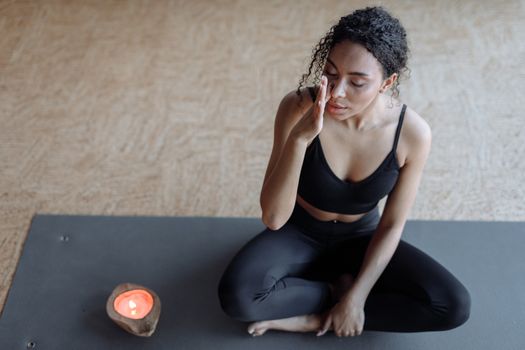
If you want one immediate move, do this for your next session:
- Skip breath holds.
- Use gentle nasal breathing with a slightly longer exhale (roughly 4–5 seconds inhale, 6–8 seconds exhale).
- Keep it 8–12 minutes.
- Keep your wearable fit consistent and minimize movement.
Then compare HRV baseline to HRV during the first 5 minutes. If HRV stops dropping, you’ve likely found the lever—intensity, CO2 shift, measurement quality, or recovery spacing. From there, you can reintroduce complexity gradually and safely.
If you still get repeated, significant HRV drops along with concerning symptoms, pause breathwork and seek professional guidance. Your nervous system deserves a cautious, data-informed approach.
06.01.2026. 14:27