

Chest Strap vs Optical Wearable HRV Accuracy: Which Wins for Autonomic Data?

How chest straps and optical wearables measure HRV (and why accuracy differs)
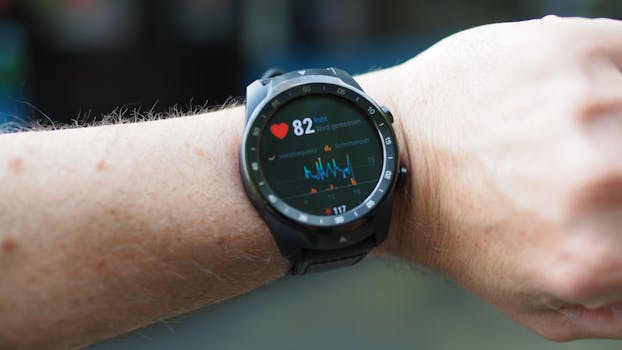
HRV (heart rate variability) is one of the most useful signals you can track for autonomic regulation—especially if you’re working on recovery, training load, sleep quality, or stress management. But HRV accuracy depends heavily on how your device detects heartbeats.
When you compare chest strap vs optical wearable HRV accuracy, you’re really comparing two different sensing approaches:
- Chest straps use ECG-style electrical sensing (or very close equivalents). They detect the heart’s electrical activity directly, then compute RR intervals (time between R-peaks) for HRV metrics like RMSSD and SDNN.
- Optical wearables (wrist or finger) use photoplethysmography (PPG). They measure blood volume changes in skin microvasculature and infer pulse timing from the optical waveform.
Both can be good—but they behave differently under motion, temperature changes, skin tone and blood flow, and even how tightly you wear the sensor. Those factors are why one method often looks “more accurate” in lab-like conditions, while the other can be more convenient and still useful for trend tracking.
Quick summary: the strongest overall choice for HRV accuracy
If your priority is high-fidelity HRV data—especially during workouts, cooldowns, or any situation where you might move—a chest strap typically wins. It generally produces cleaner RR interval detection and fewer artifacts during motion.
If your priority is ease of use and you mostly care about nightly or resting HRV trends, a well-tuned optical wearable can be “accurate enough” for many people—particularly when you compare month-to-month patterns rather than single-night values.
Side-by-side: chest strap vs optical wearable HRV accuracy
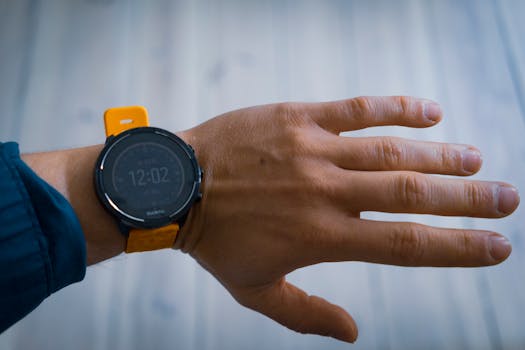
Below is a practical, side-by-side comparison focused on what actually changes HRV accuracy in real life.
| Category | Chest Strap HRV (Electrical) | Optical Wearable HRV (PPG) |
|---|---|---|
| Primary signal | Electrical heart activity (ECG-like) | Optical blood volume pulse waveform (PPG) |
| Beat-to-beat timing | Usually more consistent RR interval detection | Can be accurate at rest; more sensitive to waveform distortion |
| Motion sensitivity | Generally better during movement; still depends on fit and strap quality | More likely to introduce artifacts during walking, training, or hand movement |
| Skin/temperature effects | Less affected by skin temperature and surface blood flow | More affected by cold hands, poor peripheral perfusion, and sweat |
| Fit/placement | Must be snug and correctly positioned; less “variable” than wrist pressure | Wrist tightness and sensor contact pressure strongly affect signal quality |
| Common failure modes | Loose strap, poor contact, signal dropouts if mispositioned | Motion artifacts, weak PPG signal, incorrect peak picking |
| HRV stability for single sessions | Often more stable session-to-session | Often stable for nightly/resting use; can fluctuate more for short sessions |
| Best HRV use window | Rest, recovery windows, post-workout, and sometimes during light movement | Mostly resting or sleeping HRV; training HRV depends on device and conditions |
| Typical data workflow | Pairs to apps/trackers; you may wear it during sessions | Often always-on convenience; HRV computed automatically |
Real-world performance differences: where accuracy shows up
Accuracy isn’t just about “which is better.” It’s about how often you’ll see HRV values that look plausible and repeatable when you expect them to.
Scenario 1: post-workout recovery tracking
Imagine you finish a run at 7:00 AM. You want HRV to reflect recovery and autonomic shift over the next 30–120 minutes. With a chest strap, you can start a recovery session and get relatively clean RR interval timing as long as the strap remains stable.
With an optical wearable, the HRV estimate may still be usable—but if your arm is moving, you’re cooling down, or your skin perfusion is changing, the device may misinterpret pulses. That can lead to HRV spikes or dips that don’t match how you feel.
In practice, many athletes use chest straps for acute recovery windows because it reduces “artifact-driven HRV.”
Scenario 2: overnight HRV trend tracking
Now say you want HRV as a recovery barometer based on sleep. Here optical wearables can perform surprisingly well. During sleep, your wrist is relatively still. That reduces PPG waveform distortion and improves peak detection.
However, optical HRV still depends on contact quality. If your wrist is cold, if you wear the device too loosely, or if you sleep with your arm tucked under your body, you may see missing or lower-quality readings. Chest straps, by contrast, are less affected by wrist position, though they can still drop out if the strap shifts.
Bottom line: for overnight trends, optical wearables can be consistent enough to guide training decisions—especially when you compare averages across weeks.
Scenario 3: cold mornings and “why did my HRV tank?”
Cold conditions are a classic optical HRV problem. When peripheral blood flow drops, PPG can weaken. You might see HRV values that don’t line up with your perceived recovery.
Electrical sensing from a chest strap generally stays more stable in cold environments. If you live in a colder climate or train outdoors early, this alone can justify a chest strap for HRV accuracy.
Pros and cons breakdown for each method
Chest strap strengths
- Higher beat-to-beat timing reliability: RR intervals are typically cleaner, which improves HRV metric calculation like RMSSD.
- Better performance during movement: more robust against the kinds of motion artifacts that can confuse wrist PPG.
- More consistent across conditions: less dependent on skin blood flow and sensor pressure.
- Strong for recovery windows: useful if you want HRV during post-exercise or guided breathing sessions.
Chest strap trade-offs
- Comfort and compliance: you must wear it, and some people find it annoying for all-night use.
- Fit matters: if it’s too loose or incorrectly positioned, you’ll get signal dropouts.
- Setup friction: you may need to pair it, charge it, and position it correctly every time.
Optical wearable strengths
- Always-on convenience: HRV is available without remembering to start a session.
- Great for resting and sleeping trends: when you’re still, PPG quality tends to improve.
- Lower barrier to entry: quick to use for baseline tracking and long-term pattern recognition.
- Comfort: you’re already wearing it for sleep, activity, and recovery.
Optical wearable trade-offs
- More artifact risk: motion, arm position, and muscle tension can distort the PPG waveform.
- Skin and temperature sensitivity: cold hands and reduced peripheral perfusion can degrade the signal.
- Pressure dependence: if the sensor is too loose, accuracy drops; if too tight, it can still affect comfort and signal.
- Single-session variability: you may see larger swings in short windows compared to chest straps.
Best use-case recommendations for different buyers
The “best” choice depends on what you’re trying to do with HRV—and how you plan to measure it.
Choose a chest strap if you want HRV precision during dynamic moments
Pick a chest strap when any of the following are true:
- You want HRV during post-workout recovery (e.g., 10–60 minutes after training).
- You plan to do breathing sessions, cool-downs, or relaxation drills where you’ll be moving slightly.
- You train in cold weather or environments where wrist PPG often struggles.
- You care about session-to-session comparability more than convenience.
For practical integration, many people pair chest straps with training/recovery apps that support HRV metrics and export. If you’re already using devices like Garmin or similar ecosystems, you’ll often find chest strap options that integrate cleanly with your workflow.
Choose an optical wearable if you want HRV without extra steps
Optical wearables are often the best fit if you:
- Mostly monitor sleep HRV and morning readiness trends.
- Want a low-friction way to see how stress, sleep, and training load influence your week.
- Don’t want to wear anything extra during the day.
- Are comfortable using HRV as a trend signal rather than a precise measurement for short windows.
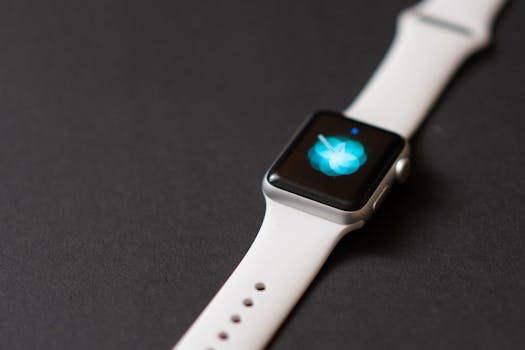
In this category, products like Apple Watch (via its HRV features) and popular wrist-based HR sensors can be convenient for daily tracking. Just remember: convenience can’t fully eliminate PPG artifacts, so treat day-to-day changes as directional unless your readings are consistently stable.
Use both if you want the most confidence
If you’re serious about autonomic regulation and want to reduce uncertainty, a two-device approach can be powerful:
- Use an optical wearable for baseline and trend (sleep, overall recovery patterns).
- Use a chest strap for validation sessions—for example, one morning per week, or during specific recovery windows after hard training.
This is especially useful if you’ve ever seen a “weird” HRV day and you’re not sure whether it’s physiology or sensor noise.
Final verdict: which option suits your needs?
Chest strap vs optical wearable HRV accuracy comes down to what you value most: signal fidelity or convenience.
Best overall accuracy for HRV
Chest strap is the better choice when you want reliable beat timing, fewer artifacts, and more confidence in acute HRV changes—especially around movement, cold conditions, and post-workout recovery windows.
Best overall convenience for HRV trends
Optical wearable is the better choice when you want always-on HRV, effortless sleep tracking, and trend-based insights that help you adjust training and recovery without extra gear.
How to decide quickly (without guesswork)
- If you care about precision during short windows, choose a chest strap.
- If you care about consistency over weeks and minimal effort, choose an optical wearable.
- If you care about both, use an optical device for daily monitoring and a chest strap to validate key sessions.
In the autonomic regulation space, confidence matters. If your goal is to interpret HRV as a meaningful recovery signal—not just a number—chest straps usually give you the cleanest path to trust. Optical wearables can still be excellent for long-term trend tracking, but they’re most reliable when you’re resting or sleeping and your sensor contact is stable.
18.03.2026. 04:39