

Indoor Air for Better Sleep Recovery: CO2, Humidity & HRV

Why indoor air can change how you recover at night
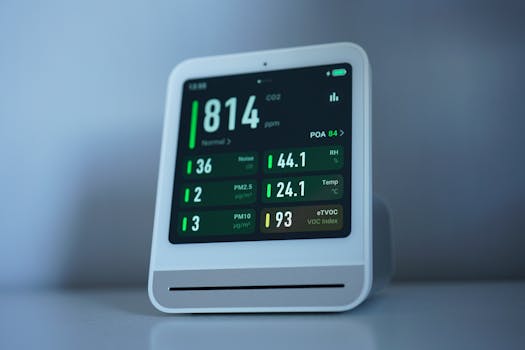
Sleep is not just “rest.” It’s a coordinated recovery process that depends on your nervous system, your breathing patterns, and your body’s ability to regulate temperature and fluid balance. If the air in your bedroom is stale, too dry, or too humid, your body may work harder to maintain comfort and autonomic stability—especially during the hours when you’re trying to downshift.
That’s why indoor air for better sleep recovery CO2 humidity HRV is more than a wellness slogan. Carbon dioxide (CO2) reflects ventilation adequacy. Humidity influences airway comfort and heat transfer. HRV (heart rate variability) provides a window into how flexibly your autonomic nervous system is responding. When these align, many people experience easier sleep onset, fewer awakenings, and more consistent recovery signals.
This article explains the science in plain terms and gives you practical targets you can use in your own bedroom. You’ll also see a real-world scenario to help you translate the data into action.
CO2 as a ventilation signal: what it means for sleep recovery
CO2 isn’t “toxicity”—it’s a proxy for stale air
CO2 levels in a bedroom rise primarily because of your own exhaled breath. In well-ventilated spaces, CO2 stays relatively low. In under-ventilated rooms, CO2 accumulates. Importantly, CO2 also correlates with other indoor air factors (like aerosol buildup and overall air exchange), which can affect comfort and breathing.
For sleep, the key issue is that elevated CO2 can subtly change breathing drive. Even if you don’t feel short of breath, your brain’s control of ventilation may become more sensitive. That can increase micro-arousals—small shifts that fragment sleep depth without you necessarily waking fully.
Practical CO2 targets for the night
You don’t need a “perfect” number, but you do need a reasonable ventilation range. Common indoor guidance often treats:
- Below ~800 ppm as a good target in many homes when outdoor air is being exchanged effectively.
- ~800–1000 ppm as acceptable for many people.
- Above ~1000–1200 ppm as a sign ventilation is likely insufficient for comfortable, stable sleep—especially if levels stay there for hours.
For measurement context: if you leave a bedroom door closed and sleep with multiple people, CO2 can rise quickly. A single adult can push CO2 meaningfully in a poorly ventilated room.
What you can do with CO2 data
If you track CO2, treat it like a “ventilation thermostat.” Use it to decide when to ventilate, how long to run exhaust or fresh-air systems, and whether your bedroom layout is trapping air.
Practical steps often include:
- Pre-ventilate for 10–20 minutes before bedtime (especially if you notice CO2 trending upward).
- Use background ventilation (a cracked window, trickle vent, or controlled ventilation) so CO2 doesn’t rebound after you sleep.
- Run bathroom/kitchen exhaust when appropriate (steam and odors can signal poor air exchange).
- Check for blocked vents or furniture that blocks airflow from HVAC registers.
One important nuance: if you open windows in a noisy area, you may trade air quality for sleep disruption. You’re aiming for stable sleep, so choose the ventilation method that you can maintain without waking yourself.
Humidity and airway comfort: why moisture levels matter
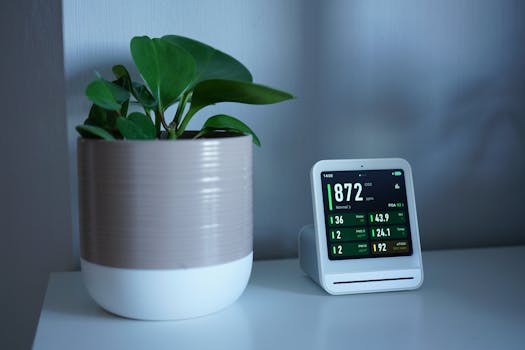
Too dry air can irritate and fragment sleep
Indoor humidity affects the lining of your nose and throat. When air is very dry, mucus becomes less effective at trapping particles. That can lead to dryness, throat irritation, and a sensation of needing to clear your airway. Even mild irritation can increase awakenings or make you more sensitive to allergens and irritants.
Dryness can also influence breathing mechanics. Your body may work harder to keep airways comfortable, and that can subtly shift autonomic balance during the night.
Too humid air can increase respiratory burden
High humidity supports microbial growth and can worsen the presence of dust mites and mold in susceptible spaces. For many people, that translates to more nasal congestion, cough, or allergy-like symptoms, which are direct sleep disruptors.
Humidity also affects perceived temperature. When humidity is high, heat removal becomes less efficient. That can lead to restless sleep, more frequent repositioning, and a higher chance of waking to adjust bedding or clothing.
Humidity targets you can use at night
Many sleep and respiratory comfort guidelines commonly land in the mid-range. A practical target is:
- ~40%–55% relative humidity for many bedrooms
If your humidity is consistently below ~30–35%, you may benefit from adding moisture (or reducing dry heat sources). If it stays above ~60%, you may benefit from dehumidification and improving ventilation.
A real-world scenario: the “winter dry air” pattern
Imagine you live in a colder climate. In winter, your bedroom sits near 20%–30% relative humidity because of forced-air heating. You notice that you wake with a dry throat and mild congestion around 3–5 a.m. Your smartwatch HRV shows a drop on those nights compared with weekends when the windows were open longer. CO2 readings are fine (around 700–900 ppm), so ventilation isn’t the main problem.
In this scenario, adjusting humidity can be the missing piece. A practical approach is to aim for ~45%–50% RH while keeping bedding and airflow comfortable. If you add moisture, do it in a way that avoids overshooting humidity (e.g., monitor with a hygrometer rather than guessing). Over 1–2 weeks, you’d expect fewer throat-related awakenings and improved consistency in recovery signals.
HRV as an autonomic recovery signal: what to look for
HRV reflects flexibility, not “fitness points”
Heart rate variability (HRV) measures the variation in time intervals between heartbeats. In sleep research and clinical contexts, HRV is often used as a proxy for autonomic regulation—how well your body balances sympathetic and parasympathetic influences.
It’s not a direct measure of “sleep quality,” and it’s not a score you should obsess over. But HRV can help you notice patterns: nights with stable breathing and comfortable thermal/air conditions often correspond with more favorable autonomic signals.
When indoor air is uncomfortable—stale CO2, irritating dryness, or humidity-related congestion—your body may shift toward a more “guarded” autonomic state, especially during transitions between sleep stages.
How HRV changes across the night
HRV typically varies by sleep stage. Deep sleep and parasympathetic dominance often correlate with different HRV patterns than lighter sleep or arousal periods. If your bedroom conditions increase micro-arousals, HRV can show more variability and less stable trends across the night.
Tracking HRV alongside CO2 and humidity gives you a practical way to test hypotheses: “Is my sleep recovery worse when air is drier?” or “Does HRV drop on nights when CO2 rises above my target?”
What measurements are realistic at home
Most consumer devices estimate HRV using wearable sensors. The exact metric and timing can differ by brand. Still, the most useful approach is not comparing absolute values across devices; it’s looking for within-device trends over time.
Use at least a 2-week baseline whenever possible. Then adjust one variable at a time (CO2 ventilation strategy or humidity control), and observe whether HRV patterns improve on average.
How CO2, humidity, and HRV connect biologically
Breathing stability influences autonomic regulation
CO2 is a regulator of ventilation. When CO2 rises, your breathing control system responds. That can alter the stability of your breathing rhythm during sleep. Stable breathing tends to support more consistent autonomic cycling.
If breathing becomes more effortful or more frequently interrupted by subtle arousals, your autonomic nervous system may show signs of reduced recovery efficiency. Over repeated nights, this can contribute to feeling less refreshed even if total sleep time is unchanged.
Airway comfort affects arousal threshold
Humidity influences airway surface moisture. Dry air can increase throat discomfort and nasal resistance. High humidity can worsen congestion or irritation. Both pathways can raise the probability of micro-awakenings.
Micro-awakenings may not be dramatic, but they can shift HRV patterns and reduce the “continuity” of deep recovery sleep.
Temperature and humidity interact
Humidity changes how you perceive temperature. Even if your thermostat is unchanged, higher humidity can feel warmer and lead to restlessness. Your nervous system may respond with more frequent sympathetic activation—again, something HRV can reflect.
This is why you should treat humidity as part of a broader “sleep environment stability” picture rather than a standalone variable.
Step-by-step: building an indoor air routine for better recovery
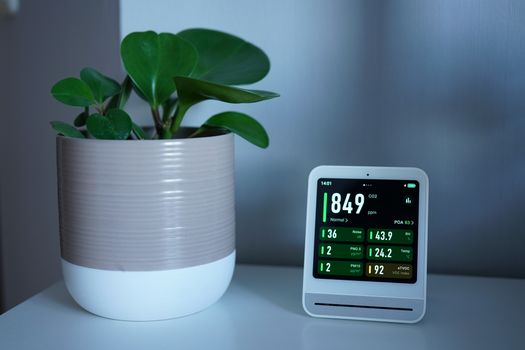
Step 1: Measure for 3–7 nights before changing anything
Start with a simple baseline. Track:
- CO2 (ppm)
- Relative humidity (% RH)
- HRV (whatever your device reports, consistently)
If you can also note bedroom temperature, include it. Even though this article focuses on CO2 and humidity, temperature affects comfort and autonomic tone.
In your notes, add key context: room occupancy (one or two people), whether you slept with windows open, and whether you had a late workout or alcohol. These factors can influence HRV and sleep architecture.
Step 2: Fix CO2 first if it’s persistently high
If your CO2 frequently spends hours above ~1000–1200 ppm, prioritize ventilation. Choose a method you can repeat reliably.
Examples of ventilation strategies that often work:
- Timed night ventilation (run fresh air in the evening and keep it low-level during sleep).
- Door strategy: keep the bedroom door closed if it improves comfort, but ensure the overall home has adequate air exchange.
- Occupancy-aware planning: if you share a room, consider an earlier ventilation window.
After you implement ventilation changes, re-measure for another 1–2 weeks.
Step 3: Adjust humidity gradually, not aggressively
If your humidity is below ~35% for most of the night, you can target ~45%–50%. If it’s above ~60%, aim to bring it down toward ~45%–55%.
Make changes gradually to avoid overshooting. Overshooting humidity can create its own set of problems. Monitoring matters more than guessing.
Also consider the source of humidity or dryness. For example, a very dry forced-air system may require a stable humidification approach, while a leaky bathroom vent or poor airflow can drive humidity upward.
Step 4: Use HRV trends as confirmation, not obsession
Once you adjust CO2 and humidity, look for patterns in HRV across similar nights. You’re looking for:
- More consistent HRV across the latter half of the night
- Fewer nights with sharp drops when conditions are stable
- Improved sleep continuity (fewer awakenings you notice)
If HRV improves but you still feel tired, consider other recovery disruptors: sleep timing irregularity, late caffeine, pain, reflux, or sleep-disordered breathing. Indoor air can be a meaningful lever, but it’s rarely the only one.
Common mistakes that undermine indoor air improvements
Ventilating “once” instead of maintaining air exchange
Pre-ventilating for 10 minutes can help, but CO2 often rebounds as soon as you start sleeping. If you only ventilate at bedtime, you may still end up with high CO2 during the deepest sleep window. The goal is sustained ventilation adequacy.
Chasing numbers without considering comfort
If you open windows and the room becomes too cold or too noisy, sleep quality can degrade. CO2 and humidity are important, but your nervous system also responds to temperature and sensory disruption. The best strategy is the one you can maintain without sacrificing comfort.
Ignoring occupancy and room sealing
A bedroom that’s tightly sealed can trap CO2 quickly. A room with a slightly open vent may keep CO2 steadier. If you live with a partner or family, occupancy changes can be enough to shift CO2 by hundreds of ppm in a single night.
When indoor air changes may not be enough
Even with excellent CO2 and humidity control, some people have sleep disruption from factors that independently affect autonomic regulation and HRV—such as obstructive sleep apnea, periodic limb movements, chronic nasal obstruction, or reflux. If you have loud snoring, witnessed pauses in breathing, or persistent daytime sleepiness, indoor air optimization should be viewed as supportive rather than curative.
Also, if you notice symptoms like persistent wheezing, severe congestion, or signs of mold exposure, address the underlying cause. Indoor air quality improvements work best when the root problem is handled.
Prevention guidance: keep recovery stable across seasons
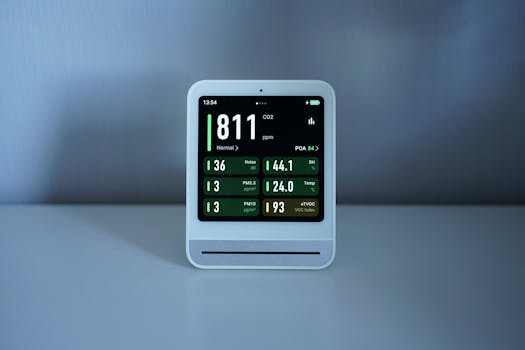
Indoor air problems change with the seasons. In winter, dryness from heating often drives humidity too low. In summer, humidity can rise due to outdoor moisture and indoor airflow patterns. CO2 patterns depend more on ventilation and occupancy than on seasons, but the way you ventilate can change with weather.
A prevention-oriented approach looks like this:
- Seasonal monitoring: re-check CO2 and humidity every few months, not once a year.
- Stable ventilation plan: aim for consistent air exchange rather than occasional “bursts.”
- Humidity guardrails: keep RH roughly in the ~40%–55% zone when feasible.
- Baseline HRV: use 2–3 week windows to understand your personal response.
If you do this, indoor air for better sleep recovery becomes a manageable environmental variable rather than an unpredictable factor that only shows up when you’re already exhausted.
Summary: aligning CO2, humidity, and HRV to support recovery
When you optimize indoor air for sleep recovery, you’re supporting breathing stability, airway comfort, and autonomic flexibility. CO2 helps you judge whether your bedroom ventilation is adequate for hours at a time. Humidity influences whether your airways stay comfortable and whether heat feels manageable. HRV can provide confirmation that your nervous system is regulating more smoothly on nights when the environment is stable.
If you want a practical starting point, aim for:
- CO2 often below about 1000 ppm during sleep (with ~800 ppm as a common “better” target)
- Humidity around 40%–55% RH
- HRV showing improved consistency over 1–2 weeks after changes
You don’t need perfection. You need repeatable conditions that reduce the background load your body carries at night. That’s the foundation for recovery you can feel in the morning.
03.01.2026. 05:39