

Indoor CO2 Levels and Sleep HRV: What to Know

Why indoor CO2 can quietly affect how you sleep and recover
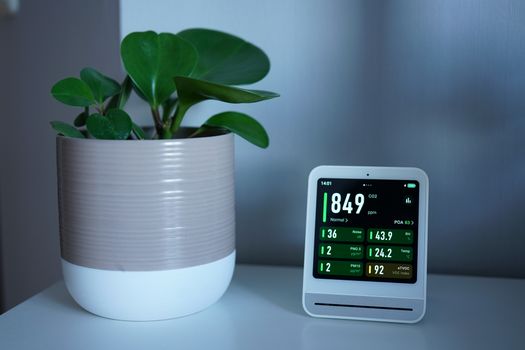
Your sleep is not only about darkness and temperature. It’s also about the air you breathe minute by minute—especially overnight when you’re breathing shallowly, spending hours in the same room, and your body is trying to regulate autonomic balance. One of the most overlooked signals in indoor environments is carbon dioxide (CO2). Even when you don’t feel “stuffy,” elevated CO2 can influence breathing drive, oxygen utilization, and sleep architecture.
At the same time, your heart rate variability (HRV) offers a window into how well your autonomic nervous system is shifting between sympathetic and parasympathetic states during the night. When indoor CO2 rises, it can change the physiological conditions that support stable sleep and autonomic recovery. The result can show up as altered HRV patterns—often subtle, but meaningful when viewed alongside sleep quality, morning symptoms, and day-to-day variability.
In this guide, you’ll learn how indoor CO2 levels relate to sleep, how HRV changes may connect to ventilation and breathing stability, and what you can do to improve the conditions that support restorative sleep.
Understanding indoor CO2: what “high” means in a bedroom
CO2 is a byproduct of human respiration. In a bedroom, CO2 accumulates when ventilation is limited and multiple people are in the space. It’s not directly “toxic” at the levels commonly found indoors, but it can reflect ventilation adequacy and breathing stability.
Typical indoor CO2 ranges:
- Outdoor air: often around 400–420 ppm (parts per million).
- Well-ventilated homes: commonly 600–900 ppm.
- Stagnant or poorly ventilated spaces: often 1,000–2,000+ ppm.
Many indoor air guidelines use thresholds such as:
- ~800 ppm: often treated as a “reasonable” target for good ventilation in occupied spaces.
- ~1,000 ppm: a practical signal that ventilation may be inadequate.
- 1,500–2,000 ppm: levels where people may notice sleepiness, headaches, or reduced comfort—especially overnight.
For sleep specifically, you care about what happens during the hours you’re asleep. A bedroom might average 900 ppm, but if CO2 peaks at 1,800–2,200 ppm in the early morning, you may still experience disrupted breathing stability and next-day fatigue.
How CO2 can influence breathing during sleep
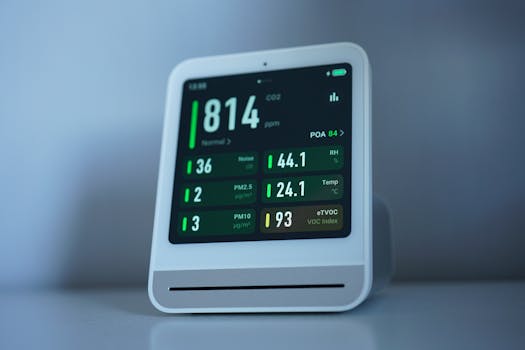
CO2 is a key driver of ventilation. Your brainstem respiratory centers respond to CO2 levels to regulate breathing rate and depth. In simple terms: when CO2 rises, your breathing drive can increase. However, “more breathing” doesn’t always mean “better breathing.”
When CO2 is elevated, several dynamics may occur:
- Increased respiratory drive: This can lead to more frequent micro-adjustments in breathing.
- Altered sleep stability: Breathing-related arousals can fragment sleep, even if you don’t fully wake up.
- Changes in chemoreflex sensitivity: People vary in how strongly they respond to CO2; some show more noticeable effects than others.
- Interaction with other factors: CO2 doesn’t act alone. Humidity, allergens, temperature, and airway resistance (including mild nasal congestion) can amplify the effect.
A practical way to think about it: if your body has to constantly correct breathing patterns because the air quality is drifting, your nervous system may not fully “settle” into the deeper parasympathetic dominance that supports restorative sleep.
What HRV reflects at night and why it matters
HRV measures the variation in time between heartbeats. While it’s influenced by many factors—hydration, stress, caffeine, exercise, illness—HRV is also shaped by autonomic regulation. During sleep, HRV typically shifts as your body cycles through sleep stages and autonomic states.
Two important points for interpreting HRV in the context of CO2 and indoor air:
- HRV is not a single “good vs bad” number. You’re looking for patterns: stability, nightly trends, and how HRV changes after you modify conditions.
- HRV is sensitive to arousal. Even partial arousals—those you don’t consciously notice—can affect autonomic timing and HRV metrics.
Many consumer wearables report HRV using time-domain or frequency-domain approaches. Despite differences in algorithms, the practical takeaway remains: if your sleep is more fragmented or your breathing regulation is less stable, HRV often shows corresponding changes.
Common HRV patterns you might observe (individual results vary):
- Lower nightly HRV: may reflect reduced parasympathetic dominance, more sympathetic activation, or sleep fragmentation.
- Greater night-to-night variability: can indicate unstable sleep conditions, inconsistent ventilation, or changing room occupancy.
- Reduced “recovery slope” across the night: where HRV doesn’t rise or stabilize as expected during deeper sleep.
It’s also possible to see HRV increase in some contexts, especially when the body is compensating. That’s why you should pair HRV with sleep duration, perceived restfulness, morning symptoms, and CO2 trends.
Linking indoor CO2 levels sleep HRV: plausible mechanisms
The connection between indoor CO2 levels sleep HRV isn’t always direct or immediate. Instead, it’s often mediated through breathing stability and sleep micro-arousals that influence autonomic balance.
Here are the most biologically plausible pathways:
- Breathing instability → autonomic shifts: Elevated CO2 can increase respiratory drive and promote subtle arousals. Autonomic transitions during these moments can reduce HRV stability.
- Sleep fragmentation → altered parasympathetic tone: If sleep is lighter or more interrupted, parasympathetic dominance may be less consistent, affecting HRV.
- CO2 as a ventilation proxy: Higher CO2 often means poorer overall ventilation. That can correlate with higher humidity, VOCs, and particulate exposure—factors that can irritate airways and increase breathing effort.
- Interaction with airway resistance: If you have nasal congestion, allergies, reflux, or mild obstructive tendencies, CO2-related breathing drive may amplify instability.
In practice, you’ll usually see the strongest pattern when CO2 is consistently elevated for hours—especially in tightly closed bedrooms.
Real-world scenario: what happens in a closed bedroom overnight
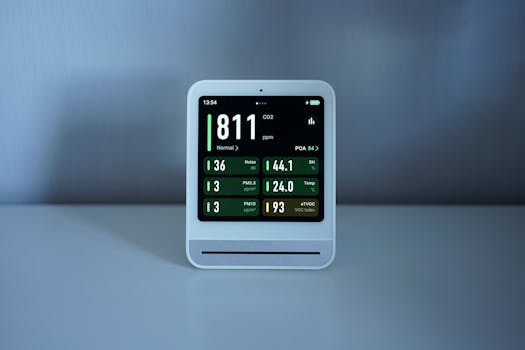
Consider this common scenario: you live in a colder climate. During winter, you keep the bedroom windows closed. You and a partner sleep in the room for eight hours. The door stays shut. You’re using a space heater or central HVAC that doesn’t actively exchange air.
At bedtime, your CO2 monitor reads 750 ppm. By 2 a.m., it rises to 1,600 ppm, and it peaks around 1,900 ppm near dawn. Your wearable shows HRV trending lower after the first half of the night, and you wake with a “not fully rested” feeling.
Now you change one variable: you add controlled ventilation. For example, you crack the window slightly or use a mechanical ventilation strategy that maintains steady air exchange. Over the next week, your CO2 stays mostly between 600 and 950 ppm. Your HRV stabilizes more from night to night, and you notice fewer morning headaches and better perceived sleep depth.
This scenario doesn’t prove causation by itself, but it illustrates a pattern many people recognize: CO2 rises when ventilation is limited, and HRV can shift when sleep breathing stability improves.
How to measure indoor CO2 and interpret it for sleep
If you want to connect indoor CO2 levels sleep HRV in a way that’s actually useful, you need measurement that matches the bedtime timeframe.
Step-by-step measurement approach:
- Place the CO2 sensor near your breathing zone. Ideally 1–2 meters from where you sleep, not directly against a wall vent or the floor.
- Record for at least 3–7 nights. One night can be misleading due to occupancy, illness, or unusual ventilation.
- Track the bedtime window. Focus on the period from when you start sleeping to when you wake (often 7–9 hours).
- Look at peaks and averages. Averages matter, but peaks can correlate with moments of breathing strain and arousal.
- Note changes in occupancy and room use. Cooking, guests, pets in the room, and even certain cleaning activities can affect the environment.
Useful CO2 metrics for sleep decision-making:
- Peak CO2 during the night: often the most “stressful” for breathing stability.
- Time spent above 1,000 ppm: gives you a sense of how long ventilation is inadequate.
- Rate of rise after bedtime: indicates how quickly the room accumulates CO2.
When you see a consistent pattern—such as HRV lowering on nights when CO2 peaks above ~1,500–2,000 ppm—you can treat it as a strong hypothesis to test with ventilation changes.
Monitoring HRV alongside sleep and CO2 without overreacting
HRV is sensitive. If you change too many variables at once, you won’t know what mattered. If you’re trying to understand the ventilation connection, keep the experiment focused.
Practical HRV tracking guidance:
- Use a consistent HRV metric. If your wearable reports “night HRV,” stick with that. Don’t mix daily HRV with nightly HRV mid-study.
- Look for trends, not single nights. A one-off dip can happen from stress, alcohol, late meals, or illness.
- Pair HRV with sleep quality markers. Examples include waking frequency, perceived restfulness, and morning headache or dry mouth.
- Consider timing. If your wearable provides nightly HRV time series, note whether the HRV change occurs early (bedtime ventilation) or late (dawn ventilation and CO2 accumulation).
Realistic expectations: you may not see a dramatic HRV swing in one night. More commonly, you’ll notice improved stability across multiple nights when CO2 peaks are reduced.
Ventilation strategies that lower overnight CO2
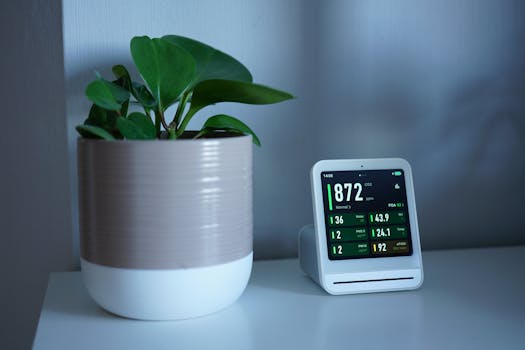
The goal is not simply “lower CO2 at all costs.” The goal is stable, comfortable overnight air exchange without creating new sleep disruptions (drafts, noise, excessive cold, or dry air).
Common ventilation approaches include:
- Cracking a window slightly: Often effective, especially in winter if you manage comfort. Even a small opening can reduce CO2 accumulation over 6–8 hours.
- Using a fan with controlled airflow: If you run an exhaust fan near the source of CO2 (bathroom/kitchen) and balance it with air intake, you can improve air exchange.
- Mechanical ventilation systems: Whole-home ventilation (ERV/HRV systems) can maintain steadier indoor air quality.
- CO2-aware ventilation: Some systems adjust ventilation based on CO2 sensor feedback. This tends to reduce peaks without over-ventilating.
- Door management: Keeping the bedroom door open to adjacent air-conditioned spaces can sometimes reduce CO2 peaks, depending on airflow design.
Comfort constraints matter. If you crack a window and your room becomes too cold, you might increase sympathetic activation from thermal stress. Similarly, strong drafts can dry your nose and increase mouth breathing, which can worsen sleep.
A good strategy is to test small changes and monitor CO2 peaks and HRV trends over several nights.
Humidity, allergens, and airway comfort: the “indirect” factors
Even if CO2 is the focus, sleep breathing stability depends heavily on airway comfort. Elevated CO2 often co-occurs with higher humidity and reduced air exchange. That combination can irritate airways or worsen congestion for some people.
What to consider:
- Dry air: In cold seasons with heating, indoor air can become dry. Dry nasal passages can increase mouth breathing and discomfort, which can affect HRV through arousal and breathing effort.
- Allergens and particulates: Poor ventilation can increase exposure to indoor allergens and particles. If you have sensitivities, symptoms can correlate with HRV changes.
- Mold risk: Persistent high humidity can contribute to mold. That’s a separate health concern, but it can also affect sleep quality and autonomic patterns.
Practical approach: aim for ventilation that keeps CO2 controlled while also maintaining comfortable humidity. Many people find sleep is best when humidity is neither extremely low nor persistently high (often roughly in the mid-range, such as 30–50% indoors, though individual tolerance varies).
How to run a simple 7-night ventilation experiment
If you want actionable insight, use a structured test. You’re not trying to “optimize” everything. You’re trying to see whether lowering CO2 peaks improves sleep stability and HRV patterns.
Here’s a straightforward 7-night plan:
- Nights 1–3 (baseline): Keep your current bedroom setup. Measure CO2 overnight. Record your nightly HRV and your morning restfulness (even a 1–10 rating).
- Nights 4–6 (intervention): Implement one ventilation change—such as cracking a window by a consistent amount, or running a targeted ventilation strategy. Keep everything else the same.
- Night 7 (check): Either continue the intervention or return to baseline depending on what you can safely do. The goal is to confirm whether the change tracks with CO2 and HRV.
What results are most convincing:
- CO2 peaks drop meaningfully (for example, from ~1,700–2,000 ppm down to under ~1,000–1,200 ppm).
- HRV becomes more stable or shifts in the direction associated with more restful sleep.
- You report fewer symptoms like morning headache, dry mouth, or “wired but tired” feelings.
What makes results ambiguous:
- Multiple changes at once (ventilation plus new bedding plus different bedtime).
- Alcohol or heavy exercise changes in the middle of the experiment.
- Illness, travel, or major stress events.
When you keep the experiment focused, you can make a confident connection between indoor air conditions and sleep recovery markers.
Safety and when CO2 is a sign of something else

CO2 is also used as a marker for ventilation adequacy. While typical indoor CO2 levels are not usually dangerous, consistently very high CO2 can reflect a ventilation problem that deserves attention.
Consider escalation beyond self-experimentation if:
- Your CO2 regularly stays above 2,500–3,000 ppm overnight despite basic ventilation steps.
- You have symptoms that suggest more than “air stuffiness,” such as persistent headaches, dizziness, or worsening shortness of breath.
- You suspect combustion-related issues (e.g., gas appliances without proper venting). In that case, CO2 and other combustion products can indicate a serious safety concern.
If you have known sleep-disordered breathing (snoring, witnessed pauses, diagnosed sleep apnea) or chronic lung conditions, CO2 and HRV changes may reflect more complex physiology. In those situations, treating the underlying breathing disorder is the priority.
Practical bedroom setup tips to support autonomic restoration
Beyond ventilation, your bedroom environment can support the autonomic shift that underlies restorative sleep. If you’re aiming to improve HRV patterns, focus on consistency and comfort.
Helpful, education-focused steps:
- Keep bedtime consistent. HRV and sleep stage timing follow circadian rhythms. Irregular schedules can mask ventilation effects.
- Manage temperature and airflow gently. Cooler temperatures often help sleep onset, but avoid direct drafts that irritate airways.
- Reduce late caffeine and heavy meals. These affect sympathetic tone and can lower HRV independent of CO2.
- Address nasal congestion. If nasal breathing is difficult, consider medically appropriate strategies (for example, saline irrigation) rather than relying solely on ventilation changes.
- Be mindful of VOC sources. Strong odors from cleaning products, fragrances, or off-gassing materials can irritate airways and affect breathing stability.
Some people naturally gravitate toward “air cleaning” devices. Air filtration can help with particulates, but it doesn’t directly reduce CO2 because CO2 is a gas. If CO2 peaks are your concern, ventilation is the lever that most directly changes indoor CO2 levels.
That said, devices that improve air exchange or systems that integrate CO2 monitoring can be useful in the context of education and measurement. For example, an indoor CO2 monitor paired with a CO2-aware ventilation controller can help you keep peaks lower without guesswork. The key is that the mechanism is ventilation, not filtration.
Summary: what to do with the indoor CO2 and sleep HRV connection
Indoor CO2 levels can influence sleep by shifting breathing drive and sleep stability. Those changes can show up as altered HRV patterns because HRV reflects autonomic regulation and is sensitive to arousal and fragmentation.
To apply this knowledge:
- Measure overnight CO2 near your sleeping area and focus on peaks and time above ~1,000 ppm.
- Track nightly HRV trends alongside sleep quality and morning symptoms.
- Test one ventilation change at a time for at least 3–7 nights to see whether CO2 peaks drop and HRV stabilizes.
- Support airway comfort through humidity balance and nasal breathing ease, because CO2 and airway irritation can compound.
If you consistently see CO2 peaks above ~1,500–2,000 ppm overnight and your HRV or morning recovery worsens on those nights, improving ventilation is a high-leverage step. Treat the environment as part of your autonomic regulation system—because your nervous system doesn’t separate “air quality” from “sleep recovery.”
FAQ: indoor CO2 levels and sleep HRV

What CO2 level is considered too high for sleep?
A common practical benchmark is around 1,000 ppm as a sign ventilation may be inadequate. Many people notice that overnight peaks above 1,500–2,000 ppm correlate with reduced comfort or sleep quality, especially in closed bedrooms. Your personal threshold can vary, so look for your own CO2 peaks alongside HRV and symptoms.
Can elevated CO2 lower HRV?
It can. Elevated CO2 may increase respiratory drive and promote subtle sleep fragmentation, which can shift autonomic balance and reduce HRV stability. However, HRV responses vary by individual, wearable algorithm, and sleep stage timing—so trend-based interpretation matters more than single-night values.
How quickly does ventilation affect indoor CO2?
CO2 responds within minutes to hours depending on room volume, occupancy, and airflow. In many bedrooms, you can see meaningful changes within the first hour after increasing ventilation, but the clearest evidence comes from overnight measurements across multiple nights.
Does an air purifier reduce CO2?
Most air purifiers target particulates and some gases, but they typically do not significantly reduce CO2 because CO2 is a gas that requires ventilation (or specialized chemical/adsorption systems). If your goal is to lower CO2 peaks, ventilation strategies are usually the most direct approach.
What’s the best way to test whether CO2 affects your HRV?
Run a focused 7-night experiment: record baseline CO2 and nightly HRV for 3 nights, then implement one ventilation change for 3 nights, keeping everything else consistent. Look for reduced CO2 peaks and improved HRV stability or a pattern that matches your perceived restfulness.
Should I worry if my CO2 is high every night?
If CO2 is consistently high (for example, regularly above ~2,500–3,000 ppm), it’s a sign ventilation may be insufficient and you should address it. Also consider safety issues if you have fuel-burning appliances or suspected combustion problems. Persistent symptoms like headaches, dizziness, or breathlessness warrant medical evaluation.
Will better CO2 levels improve sleep even if I don’t snore?
Yes, potentially. CO2 can affect breathing drive and sleep stability even in people without obvious sleep apnea. If you notice morning headaches, dry mouth, or HRV patterns that worsen on high-CO2 nights, improving ventilation may support more consistent autonomic recovery.
28.02.2026. 01:31