

Blue Light at Night vs Day Melatonin Timing: What’s True

Blue light and melatonin timing: the myth versus the reality
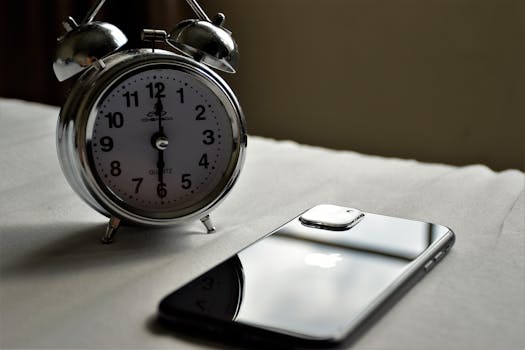
You’ve probably heard a simple version of the story: “Blue light at night kills melatonin,” while “blue light during the day helps you.” That idea isn’t entirely wrong—but it’s oversimplified. The real picture is about timing, intensity, and what your eyes and brain are doing in each period of the day.
In this guide, you’ll learn how blue light at night vs day melatonin timing actually works, what level of risk is realistic, and how to adjust your environment without turning your evenings into a cave.
We’ll focus on practical, evidence-informed guidance: when blue light matters most, how long it matters, and what you can do if you’re trying to fall asleep faster or shift your schedule.
How melatonin timing is controlled: your circadian clock in plain language
Melatonin isn’t just a “sleep hormone.” It’s a signal your brain uses to coordinate night-time biology. Its release is driven by your circadian system—especially the suprachiasmatic nucleus (SCN) in the brain—using light as the main external cue.
When light reaches your retina, specialized photoreceptors (including melanopsin-containing cells) help set the timing of your circadian rhythm. In general:
- Daylight exposure strengthens “day” signaling and helps keep melatonin low at the right times.
- Evening light exposure can delay melatonin onset—meaning your body’s “night signal” starts later than it should.
Two timing concepts matter a lot for what you experience:
- Melatonin onset: the point when melatonin levels begin rising in the evening. Delays here can shift your sleep schedule.
- Melatonin duration: how long melatonin stays elevated overnight. Very bright or prolonged light can reduce total melatonin exposure, not just delay it.
That’s why “blue light” is often discussed in sleep research. But it’s not the only factor—overall brightness and duration are also key.
What “blue light” means biologically (and why wavelength isn’t the whole story)
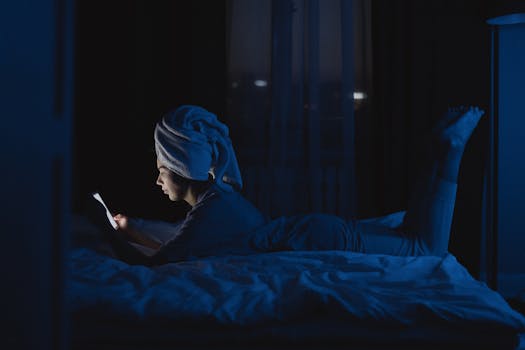
Blue light typically refers to shorter wavelengths (roughly 400–500 nm). These wavelengths are particularly effective at influencing melanopsin photoreceptors, which is why blue light is linked to circadian effects.
However, two important realities get lost in internet summaries:
- Intensity matters. A dim device with a blue component can have a smaller effect than a bright room light.
- Distance and exposure time matter. Light close to your eyes for longer periods tends to have more impact than the same light viewed briefly from across a room.
In other words, the question isn’t only “Is it blue?” It’s also “How much, how long, and when?”
Blue light at night: what it can do to melatonin timing
At night, light can suppress or delay melatonin. The clearest practical takeaway: if you keep your eyes exposed to bright light—especially short-wavelength light—near your usual bedtime, you can push melatonin onset later.
Several controlled studies have shown that exposure to short-wavelength light in the evening can delay melatonin onset by tens of minutes, sometimes more depending on light level and duration. A delay of even 30–60 minutes can be enough to make falling asleep feel harder, particularly if your schedule is already tight.
It’s also useful to understand what “delay” means in real life. If your body normally starts ramping up melatonin at, say, 9:30–10:00 p.m., and evening light pushes that to 10:30 p.m., you may:
- feel less sleepy at your usual bedtime
- take longer to fall asleep
- wake up later if your sleep timing isn’t anchored
Real-world scenario: Imagine you work late and start your evening routine at 10:00 p.m. You’re on a bright tablet in bed, screen brightness at near-max, and you keep it there for an hour. Your room lighting may be dim, but your retina is still receiving strong short-wavelength content close to your eyes. Even if you “feel tired,” your melatonin signal may be delayed, so your brain doesn’t get the same “night cue” it expects.
Blue light during the day: why it doesn’t “ruin” sleep when timed right
During the day, your circadian system uses light to calibrate timing. In this context, short-wavelength (including blue-rich) light can support appropriate circadian alignment—meaning it can help you maintain a consistent sleep-wake rhythm.
That’s why many sleep and chronobiology recommendations emphasize morning or daytime light exposure. In practical terms, you’re aiming for:
- Bright light earlier in the day to reinforce alertness and melatonin suppression during daytime
- Less light exposure later in the evening to allow melatonin to rise
It’s not that blue light “builds melatonin.” Rather, it helps keep melatonin low when it should be, and it supports the timing of your circadian system so melatonin rises when you approach night.
Daytime exposure can also help with sleep timing stability. For example, if you spend mornings indoors with low light levels, your circadian rhythm may drift later. Then evening light has more room to cause noticeable delays.
So is it true that blue light “at night” is bad and “during the day” is good?

The myth is the idea that blue light is inherently harmful at night in every situation, and inherently beneficial during the day in every situation. The reality is more nuanced.
Here’s the accurate framing you can use:
- Blue-enriched light has a stronger circadian effect than many other wavelengths, especially in the evening.
- Evening light is the problem mainly because it reaches your eyes at the wrong time—when your body is preparing to shift into “night mode.”
- Daytime light is helpful because it supports the circadian signal that keeps your rhythm aligned to morning and afternoon.
You can think of it like timing a thermostat. The same “heat” can be helpful or harmful depending on when it’s applied. Light is the cue; timing is the lever.
Timing matters: how long before bed you should dim blue-rich light
When people ask about “blue light at night vs day melatonin timing,” they usually want a simple rule. Unfortunately, there isn’t a single universal cutoff because device brightness, room lighting, screen distance, and individual sensitivity vary.
Still, evidence-informed guidance often lands around a practical window:
- Start reducing bright, blue-rich exposure about 1–2 hours before bedtime.
- If you’re very sensitive or you notice delayed sleep onset, you may need to start earlier—closer to 2–3 hours.
- If you only use screens briefly and in dim conditions, the impact may be smaller.
Why 1–2 hours? Melatonin onset is a process that ramps up in the evening. Light exposure in the period leading up to that ramp can shift the timing.
Practical example: If your target bedtime is 11:00 p.m., you might aim to keep screens bright and close to your face until 9:00 p.m., then gradually reduce brightness, increase room lighting to a comfortable level (without glare), and switch to warmer, dimmer viewing. The goal isn’t to remove light completely—it’s to avoid strong circadian stimulation during the melatonin ramp-up period.
Brightness and duration: the two variables that often outweigh “blue” alone
Two people can both say they “used a blue-light filter,” but one person still struggles to sleep. That’s often because the filter didn’t solve brightness or exposure time.
Consider these factors:
- Screen brightness: If you set brightness to maximum in a dark room, you’re delivering a strong stimulus to the retina.
- Viewing distance: Holding a phone close to your face increases the effective light reaching your eyes.
- Time in the evening: Thirty minutes may be manageable for some people; two hours may be enough to shift melatonin timing.
- Room lighting: A dim room plus a bright screen is different from a moderately lit room with a lower-brightness screen.
If you want a high-impact change, start with reducing brightness and moving screens farther away. Wavelength adjustments are useful, but they don’t replace those basics.
What about “daytime melatonin suppression” and sleepiness the next day?

Another myth is that blue light at night only affects melatonin timing and nothing else. In practice, evening light can influence sleep quality indirectly through circadian misalignment.
When melatonin onset is delayed, your sleep attempt may occur before your body is ready for sleep. That can lead to:
- longer sleep latency (time to fall asleep)
- more fragmented sleep
- reduced sleep efficiency
But daytime effects matter too. If your morning light exposure is too dim, your circadian system may not anchor properly. Then evening light has a stronger chance of pushing your rhythm later.
So your best strategy is often a two-part approach: anchor your day with adequate light, and protect your evening from unnecessary brightness.
How to adjust your routine without making your evenings miserable
You don’t need to eliminate screens. You need a sensible light plan that respects your circadian timing.
Step 1: Anchor the day with brighter light
If possible, get outdoor light exposure in the morning or early afternoon. For many people, even 15–30 minutes outdoors can help reinforce circadian timing—especially compared with staying indoors under low lighting.
If you can’t go outside, bright indoor lighting can still help, but outdoor daylight is usually more effective.
Step 2: Create an evening dimming gradient
As bedtime approaches, reduce overall light intensity. Aim for comfortable lighting in your room, not a dark room with a glowing screen.
- Turn down screen brightness.
- Increase ambient lighting slightly if your room is very dark.
- Keep screens farther from your face (for example, use a stand rather than holding a phone at close range).
Step 3: Use warmer, filtered displays thoughtfully
Warm-color display modes and blue-light filtering features can reduce short-wavelength output. They can be helpful, particularly if you can’t avoid screens in the evening.
However, treat these as one layer—not the only layer. If the screen is still extremely bright and close to your eyes, you may still get enough circadian stimulation to delay melatonin.
Step 4: Consider your “last bright moment”
Pick a realistic cutoff for bright, engaging content (gaming, intense work, fast-scrolling feeds). Even if you don’t fully eliminate it, reducing it 60–120 minutes before bed often makes your sleep timing more predictable.
Special situations: shift work, jet lag, and people with delayed sleep phase
The blue light story changes a bit when your schedule is already out of sync with your body clock.
Shift work
If you work nights, your “day” is your nighttime. In that case, the goal is to use bright light strategically during your work period and dim light before your planned sleep.
For example, if you’re commuting home from a night shift, you may benefit from reducing bright light on the way to bed and creating a dark, quiet sleep environment.
Jet lag
Jet lag involves circadian misalignment across multiple days. Light exposure in the destination’s morning and evening can help reset timing. Blue-enriched light is part of the equation, but the bigger driver is consistent timing of light relative to your new schedule.
Delayed sleep phase
Some people naturally fall asleep and wake up later. They may experience stronger effects from evening light because their melatonin onset is already pushed later. In these cases, reducing evening brightness earlier than 1–2 hours may be more effective, along with morning light anchoring.
What to watch for: signs you’re delaying your melatonin too much
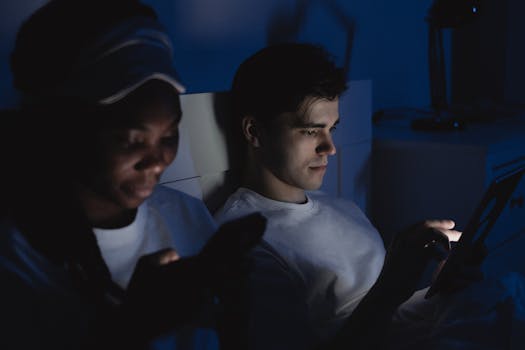
You don’t need lab measurements to notice a pattern. Look for these clues:
- You feel tired but can’t fall asleep for a long time.
- Your sleep timing shifts later on days when you use bright screens late.
- You wake up later or feel groggy because your schedule “drifts.”
- Melatonin-sensitive routines (like taking a warm shower or relaxing) don’t fully help if the light exposure remains bright.
If these match your experience, your evening light environment is a likely contributor. Adjusting light timing for 1–2 weeks often reveals whether the change is meaningful.
Prevention guidance: a simple light plan you can follow
If you want a practical, prevention-focused approach, use this framework:
- Morning/early day: prioritize brighter light exposure (especially outdoors) to anchor your circadian system.
- Evening: reduce brightness and short-wavelength stimulation starting about 1–2 hours before bed.
- Bedtime: keep screens dimmer, farther away, and less central to your routine.
- Consistency: keep wake time steady when possible; consistency helps your body “learn” the timing.
This approach addresses the core mechanism behind melatonin timing: it encourages melatonin onset to occur when you need it, not when light accidentally delays it.
If you still struggle with sleep despite sensible light habits, other factors may be involved—stress, caffeine timing, room temperature, irregular schedule, or underlying sleep disorders. Light is powerful, but it’s rarely the only variable.
Bottom line: how to apply blue light at night vs day melatonin timing
The most accurate takeaway is that blue light at night vs day melatonin timing is about when and how strongly your eyes receive short-wavelength light. In the daytime, blue-rich light helps align your circadian rhythm. In the evening, similar wavelengths can delay melatonin onset—especially when screens are bright, close, and used for long stretches.
You’ll get the best results by pairing daytime light exposure with an evening dimming gradient, starting roughly 1–2 hours before bed. If you do that, you’re not chasing a myth—you’re working with the biology of your circadian clock.
FAQ
Does blue light always suppress melatonin at night?
No. It depends on brightness, duration, distance, and your individual sensitivity. Dimmer light, shorter exposure, and warmer/filtered displays can reduce the circadian impact, though they don’t make light effects disappear entirely.
How long before bed should you reduce blue light exposure?
A common evidence-informed starting point is 1–2 hours before bedtime. If you’re particularly sensitive or already have delayed sleep timing, you may benefit from starting closer to 2–3 hours before bed.
Are blue-light blocking glasses effective?
They can help reduce short-wavelength light reaching your eyes. They’re most useful when evening screen use is unavoidable. However, they work best alongside lowering screen brightness and avoiding very close, prolonged viewing.
Will using night mode on your phone fully solve the problem?
Night mode can reduce blue content, but it doesn’t automatically address brightness or exposure time. If your screen is still very bright or you use it close to your face for a long time, melatonin timing may still shift.
Is it better to avoid screens entirely at night?
Avoiding screens is one option, but it’s not always realistic. For many people, reducing brightness, increasing distance, and cutting back on screen time in the last 60–120 minutes before bed is a more sustainable approach.
Does morning blue light help you sleep better at night?
It can, indirectly. Morning light supports circadian alignment, which helps melatonin rise at the appropriate time. Better alignment often means easier sleep onset and more stable sleep-wake timing.
What if I work night shifts?
For shift work, the “day” and “night” cues swap. Light can still be used strategically: use bright light during your work period to support alertness and reduce light exposure before your planned sleep.
13.03.2026. 03:10