

How Percussive Therapy Works: The Science Behind Recovery

How percussive therapy works, and why it feels so effective
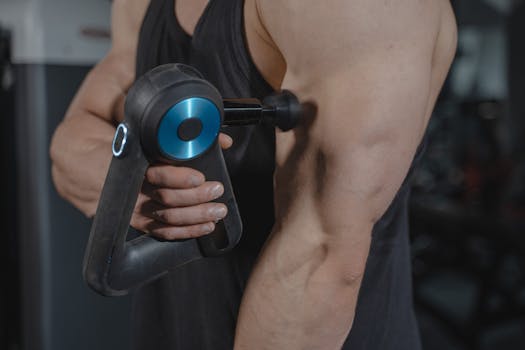
Percussive therapy is a recovery technique that uses rapid, controlled mechanical pulses delivered to the body through a handheld or fixed device. People often describe the sensation as a deep “knock” or vibration-like massage, but the underlying goal is more specific than relaxation: to influence how tissues respond after exercise, strain, or prolonged immobility.
While it’s commonly grouped with massage and vibration tools, percussive therapy is best understood as a form of mechanical stimulation. The pulses create brief pressure and shear forces in skin, connective tissue, and muscle layers. Those forces can affect blood flow, tissue mobility, nerve signaling, and the way the body modulates discomfort. In practice, that means many people use it to support recovery, reduce perceived soreness, and improve how “ready” a body feels for the next training session.
This article explains how percussive therapy works from a science-explainer perspective: what the device is doing, what physiological mechanisms researchers propose, how sessions are typically structured, and how to apply it safely and effectively.
What percussive therapy is delivering: mechanical pulses, not just massage
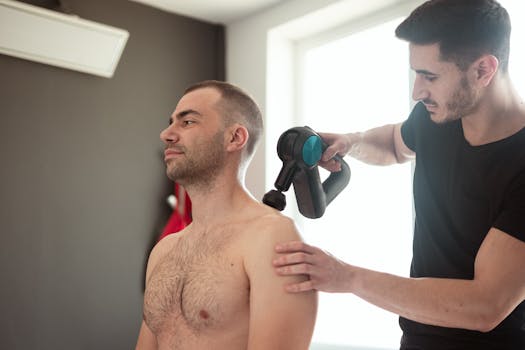
At its core, percussive therapy applies repetitive mechanical impacts to targeted tissue. Unlike slow, sustained pressure, the device delivers short bursts at a relatively high frequency. Depending on the model, the contact head may strike or oscillate against the tissue in a controlled way.
Several variables influence the biological response:
- Amplitude (how strong the pulse feels): Higher intensity generally increases the mechanical load on superficial tissues.
- Frequency (how often pulses occur): Higher frequencies can change how sensory nerves and tissue structures respond moment to moment.
- Contact pressure and technique: The same device can feel very different depending on whether it’s used with light contact or firmer pressure, and whether it’s moved continuously or held in one spot.
- Session duration: Too little stimulation may not produce noticeable effects; too much can increase irritation or soreness.
Because percussive therapy is mechanical, its effects are tied to tissue biomechanics. Muscle and fascia are viscoelastic: they deform under load and recover when the load is removed. Rapid pulses add repeated, time-specific deformation, which may help restore mobility and influence local circulation and sensation.
Immediate effects: sensory input, pain modulation, and “resetting” perception
One reason percussive therapy can feel helpful quickly is that it changes sensory signaling. The skin and superficial tissues contain mechanoreceptors that respond to pressure and vibration-like inputs. Rapid mechanical stimulation can alter how these signals are transmitted to the nervous system.
Several clinically relevant concepts help explain why discomfort can temporarily decrease:
- Gate control mechanisms: Strong non-painful sensory input can reduce the perceived intensity of pain signals traveling to the brain and spinal cord.
- Altered nerve firing patterns: High-frequency mechanical pulses can shift the way sensory nerves encode sensation, often producing a temporary reduction in discomfort.
- Improved local tolerance: After intense training, tissues can become more sensitive. Percussive stimulation may help recalibrate how the nervous system interprets mechanical stress.
It’s important to emphasize that this does not mean percussive therapy “heals” tissue instantly. Instead, it can change perception and local comfort in the short term, which can make movement feel easier and may support better participation in recovery activities.
Circulation and tissue fluid movement: why blood flow can increase
Another proposed mechanism involves local circulation. Mechanical stimulation can influence blood flow through a combination of:
- Local vasodilation: Tissue deformation and sensory input can contribute to changes in blood vessel diameter.
- Muscle pump effects: Even without active exercise, repeated impacts can promote movement of fluid within and between tissue layers.
- Reduced local congestion: After strenuous activity, metabolites accumulate and tissues may feel “stuck.” Mechanical input can help improve the movement of interstitial fluid.
Better local perfusion and fluid movement are often associated with reduced stiffness and improved mobility. However, the relationship between increased circulation and faster tissue repair is complex. Recovery involves inflammation, remodeling, and adaptation over days—not minutes. Percussive therapy may support some aspects of the process, but it should be viewed as an adjunct to sleep, nutrition, and progressive training rather than a standalone fix.
Muscle and connective tissue biomechanics: mobility, stiffness, and fascial response
Muscle stiffness after exercise is influenced by microtrauma, fluid shifts, and changes in the nervous system’s protective tension. Percussive therapy applies mechanical forces that can affect both muscle fibers and the surrounding connective tissues.
Connective tissue—especially fascia—responds to mechanical loading. Rapid pulses can increase local tissue deformation, which may:
- Improve tissue glide: By influencing how fascial layers slide relative to each other, movement can feel smoother.
- Reduce perceived tightness: Even if tissue structure is still healing, improved mobility can translate into better function.
- Influence viscoelastic properties: Repeated mechanical loading may temporarily alter how tissues behave under stretch.
In practical terms, this is why many people use percussive therapy before mobility work or a training session: it can help tissues tolerate movement with less resistance. The effect is often site-specific—meaning the benefits depend on where the pulses are delivered and how the tissue is positioned.
What happens at the cellular level: inflammation, remodeling, and limits of claims
When researchers talk about percussive therapy in a scientific context, they often focus on downstream effects of mechanical stimulation. Cells in muscle and connective tissue can sense mechanical forces through structures such as integrins and the cytoskeleton. Those mechanosensing pathways can influence gene expression and inflammatory signaling.
However, it’s crucial to keep expectations grounded. The intensity and frequency used in percussive therapy devices are typically designed for comfort and tolerance, not for directly replacing medical interventions. Cellular processes that lead to repair generally require time and appropriate biological conditions.
What percussive therapy may do at a cellular level is best described as modulation rather than a direct repair mechanism:
- Modulating local inflammatory signaling: Mechanical input may influence how the tissue transitions from acute inflammation toward remodeling.
- Supporting recovery readiness: By improving perceived comfort and mobility, it can help people move and train more effectively during the recovery window.
- Encouraging adaptation: Recovery is partly about returning to a functional baseline so training can proceed with good mechanics.
Because studies vary in device parameters, treatment protocols, and outcome measures, it’s not always possible to translate results from one study directly to every device or every body region. Still, the overall scientific rationale—mechanical stimulation leading to biological responses—is consistent with how many rehabilitation modalities work.
How percussive therapy differs from other recovery tools
Percussive therapy is sometimes discussed alongside massage guns, vibration devices, and manual soft-tissue work. The distinction is the pattern of stimulation: percussive therapy uses rapid, repetitive pulses that create brief mechanical impacts. This can produce a different sensory and mechanical effect than sustained compression or slower kneading.
From a recovery standpoint, that matters because:
- Timing and sensation: Some tools are better tolerated immediately after training, while others may be more comfortable later when soreness peaks.
- Targeting: Percussive devices can be used to focus on specific areas, which may be useful for localized tightness.
- Consistency: A device can deliver repeatable pulses across sessions, helping standardize a recovery routine.
Even with these differences, percussive therapy should be treated as one component of a broader recovery strategy that includes graded activity, stretching or mobility, and adequate recovery resources.
Typical session structure: intensity, time, and technique
The way percussive therapy is applied strongly influences outcomes and safety. Most protocols follow a simple logic: start conservatively, focus on comfort and tissue response, and avoid prolonged direct pressure on sensitive structures.
A common approach is:
- Start with low to moderate intensity: Use the smallest effective intensity to achieve comfort and improved mobility.
- Move the device continuously rather than “digging”: Sliding or small controlled movements distribute mechanical load across a broader area.
- Use short bouts per spot: Instead of holding one location for an extended period, treat the area like a map—covering it in passes.
- Stop if pain increases: Mild discomfort can be expected, but sharp pain, numbness, or worsening symptoms are not good signs.
Many people use percussive therapy for 1–2 minutes per muscle group, then reassess. If the goal is mobility, they often follow the session with gentle range-of-motion work. If the goal is soreness management, they use it when tissues feel tight rather than when pain is at its worst.
Relevant products can include handheld percussive massage devices such as Theragun models or Hyperice Hypervolt devices, which are designed specifically to deliver controlled percussive pulses. When using any percussive device, the key is to follow the manufacturer’s safety guidance for intensity limits and contraindications, and to adapt session parameters to the individual.
Where to use it: muscles, fascia, and movement patterns
Percussive therapy is generally most appropriate for areas with substantial muscle and connective tissue coverage—such as:
- Quadriceps and hamstrings
- Glutes
- Calves
- Upper back and shoulders (with careful technique)
- Forearms and hands (light intensity only)
Technique should respect anatomy. The goal is to stimulate muscle tissue, not to compress delicate structures. For example, bony prominences and areas with superficial nerves may be more sensitive. In those regions, lower intensity and shorter sessions are often safer.
How you position the body also matters. Mild muscle stretch or relaxed positioning can change how the device interacts with tissue. If you’re targeting a muscle that feels tight during movement, you may find that a percussive session followed by gentle stretching improves comfort and range more than either method alone.
When to avoid or modify treatment: safety and contraindications
Percussive therapy uses mechanical force, so it isn’t appropriate for everyone or every situation. Safety considerations are especially important around:
- Acute injury: If there is a recent strain, suspected fracture, or significant swelling, percussive therapy may worsen symptoms.
- Blood clot risk: People with known or suspected deep vein thrombosis should avoid percussive stimulation without medical guidance.
- Over areas with impaired sensation: If you can’t reliably feel pressure and pain, you may apply too much force.
- Over the front of the neck: Avoid the carotid area unless a clinician specifically directs it.
- Over the eyes and head: Do not apply percussive devices to the eye region.
- Directly over broken skin or infections: Avoid applying stimulation where the skin barrier is compromised.
People with certain medical conditions—such as uncontrolled hypertension, bleeding disorders, or implanted medical devices—should consult a clinician. Even when devices are marketed for general wellness, medical circumstances change the risk profile.
As a practical rule: if pain is sharp, radiating, associated with numbness/tingling, or worsening over time, stop and seek professional evaluation.
Timing around workouts: recovery support without interfering with adaptation
Many users wonder whether percussive therapy helps immediately after training or whether it should wait. There isn’t a single universal answer, but the science-explainer approach is straightforward: the body’s recovery process depends on the training stimulus, and mechanical stimulation should support—rather than disrupt—normal adaptation.
Common timing patterns include:
- After training for comfort: If soreness and tightness reduce your ability to move normally, a short low-intensity session can help you restore mobility for daily activity.
- On rest days: When soreness peaks, percussive therapy may reduce perceived stiffness and help you tolerate gentle mobility work.
- Before training for readiness: Some people use it as part of a warm-up routine to improve range of motion and reduce “stiff-start” feeling.
A useful approach is to treat percussive therapy as a way to manage symptoms so you can do the recovery behaviors that matter: walking, light movement, mobility, and sleep. If a percussive session makes you feel better but leads to overuse or increased training intensity, it can indirectly slow recovery.
How to evaluate whether it’s working for you
Because percussive therapy affects sensation and mobility, the most reliable indicators are functional and subjective changes:
- Range of motion: Can you move through your usual range with less resistance?
- Perceived soreness: Does soreness feel reduced at the same time each day?
- Movement quality: Are you able to walk, squat, run, or reach with better mechanics?
- Tissue response over time: Do symptoms improve over 24–72 hours, or do they flare after sessions?
If percussive therapy consistently increases soreness later, the intensity may be too high, the duration too long, or the timing too close to an acute injury. Adjusting those variables is often more effective than adding more time.
Practical guidance: a safe, effective way to build a percussive routine
If you want to use percussive therapy in a way that aligns with its mechanics and safety principles, consider the following practical steps:
- Choose a target based on symptoms: Focus on the muscle group that feels tight or restricted, not the area you assume is “the problem.”
- Start low and progress slowly: Use the lowest intensity that produces a comfortable response. Increase only if you tolerate it well.
- Limit total session time: Treat percussive therapy as a short recovery tool, not a replacement for full recovery practices.
- Use consistent technique: Keep contact stable, avoid pressing on bony areas, and move the device in controlled passes.
- Pair with movement: If the goal is mobility, do gentle range-of-motion exercises after the percussive session.
- Respect pain signals: Discomfort that escalates during or after treatment is a sign to reduce intensity or stop.
It can also help to standardize your sessions so you can tell what changes. For example, if you always use the same intensity and time on the same muscle group, you can observe whether soreness and stiffness trends improve.
Summary: the key mechanisms behind how percussive therapy works
Percussive therapy works by delivering rapid mechanical pulses that influence both the nervous system and the mechanics of soft tissue. The most immediate benefits are often related to sensory input and pain modulation, which can make tissues feel less sensitive and more mobile. Over the same session window, mechanical stimulation can support local circulation and fluid movement, while also affecting how muscle and connective tissues glide and tolerate range of motion.
At a deeper level, mechanical forces can trigger biological responses through mechanosensing pathways, but percussive therapy is best viewed as a supportive recovery tool. It may help you feel better and move more easily, which can indirectly improve recovery behaviors. It does not eliminate the need for time-based healing, progressive training, sleep, and nutrition.
Used thoughtfully—at appropriate intensity, with safe technique, and with attention to contraindications—percussive therapy can be a practical part of recovery technology. If symptoms worsen or pain signals appear, adjust or discontinue and consider professional assessment.
Prevention and recovery hygiene: getting the most from percussive therapy

Percussive therapy can help manage soreness and stiffness, but prevention is still the foundation. A recovery routine that reduces the need for aggressive symptom management usually includes:
- Gradual training progression: Build volume and intensity gradually to avoid excessive tissue overload.
- Warm-up and mobility: Prepare tissues for movement so they don’t enter the workout overly stiff.
- Sleep and nutrition: Recovery depends on rebuilding processes that require adequate resources.
- Active recovery: Light movement and walking can complement mechanical therapies by supporting circulation and tissue fluid movement.
- Listen to load: If soreness is consistently severe, reduce training stress or adjust programming rather than compensating with more percussive time.
When percussive therapy is used alongside these basics, it’s more likely to support normal recovery rather than mask signals that the training load needs adjustment.
25.12.2025. 01:42