

Wearable Sleep Stage Accuracy: Optical vs Chest Strap

Choosing sleep tracking that matches your expectations
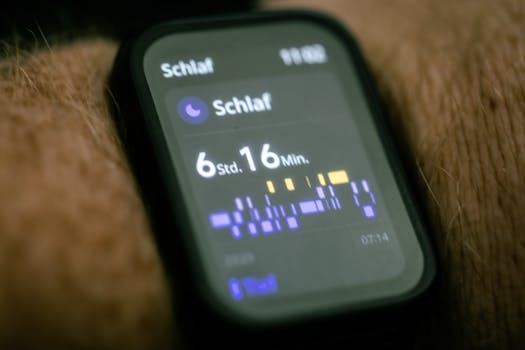
You’re trying to improve your sleep, but your wearable is giving you sleep stages that don’t feel right. Maybe it says you spent 2 hours in deep sleep when you swear you barely slept. Or it shows lots of REM, yet you still wake up unrefreshed. If you’re shopping for a tracker, you’re probably wondering the same thing: how accurate is sleep stage tracking, and is optical (wrist) really enough compared with a chest strap?
This buying guide is built for that exact moment—when you want to spend your money once and get data you can trust. You’ll learn what “sleep stages” actually mean, why optical and chest strap sensors behave differently, and what to prioritize so your results are useful for sleep optimization rather than confusing.
What “sleep stage accuracy” really means (in plain terms)
Most wearables estimate sleep stages by combining signals like heart rate, heart rate variability, movement, and sometimes blood oxygen. Sleep stages typically include:
- Light sleep (often the biggest chunk)
- Deep sleep (recovery-focused, but hardest to detect)
- REM sleep (associated with dreaming and memory processing)
- Awake periods
Important: these devices usually don’t “see” your brain. They infer stages from physiology. That means accuracy can be good for trends over time, but it can vary for individuals and for specific nights.
In practical terms, “accuracy” matters in two ways:
- Stage-by-stage correctness: whether the wearable labels each segment as deep/REM/light correctly.
- Decision usefulness: whether the data helps you adjust bedtime, caffeine timing, room temperature, or training load—and whether your sleep improves.
Most people don’t need perfect matching to lab polysomnography (PSG). You need repeatable measurements that let you make better choices.
Optical sleep tracking: how wrist sensors estimate stages
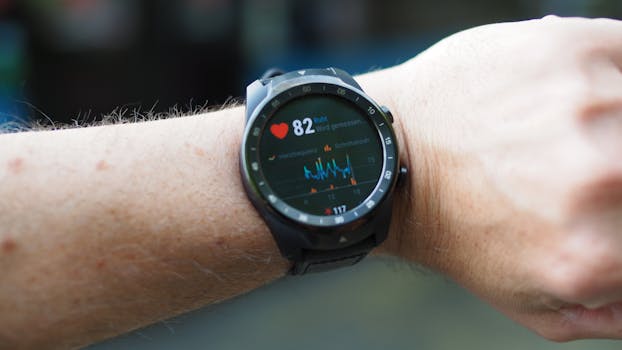
Optical wearables (usually wrist-based) use LEDs and photodiodes to measure blood volume changes in your skin—often called photoplethysmography (PPG). From that signal, the device estimates:
- Heart rate
- Heart rate variability (HRV) trends
- Respiratory-related patterns indirectly (some devices try to infer breathing rhythm)
- Movement from accelerometers (to help separate sleep from restlessness)
Why optical can be inconsistent: PPG is affected by skin contact, wrist position, tattoos, body temperature, and motion. Even small things—like a loose strap or sleeping with your arm tucked under your pillow—can reduce signal quality.
Also, optical signals can become noisier when you’re in deep sleep or when circulation changes slightly. That’s one reason wrist sleep staging may fluctuate more night to night, especially if the fit isn’t consistent.
Chest strap sleep tracking: why it often performs better
Chest straps typically measure electrical heart activity (ECG) or a more stable heart rhythm signal than wrist optical sensors. Many chest strap systems use electrodes to capture a clearer heartbeat waveform. Because the heart signal is more consistent, the device can often estimate HRV and sleep transitions with less noise.
In real-world terms, chest straps often do better when you:
- Move your arms a lot during sleep
- Prefer a tight, consistent fit
- Want more reliable HRV-derived metrics
- Train frequently and care about recovery signals
Chest straps also tend to handle signal quality better when the wrist is cold or when your watch shifts. The tradeoff is comfort and convenience. If the strap feels irritating, you may loosen it or stop wearing it—then accuracy drops because the device can’t capture clean data.
Key features and specifications that affect stage accuracy
When you compare optical vs chest strap sleep stage accuracy, don’t look only at “deep sleep” numbers. Look at the features that influence the underlying signals and the model’s ability to label stages.
1) Sensor type and signal quality
Optical (PPG) depends on consistent skin contact and low motion noise. If your wrist sensor is loose, you’ll often see more missing data or “recovered” stages that smooth out incorrectly.
Chest strap (ECG or high-stability heart sensing) usually produces cleaner waveform data. That can improve the device’s ability to detect transitions and estimate stage likelihoods.
What to do: choose a fit method you’ll actually maintain night after night. A perfectly specced device won’t help if it’s uncomfortable and you end up tightening it only when you remember.
2) Sleep staging model and how it handles uncertainty
Sleep staging is a classification problem. Better systems use algorithms trained on large datasets and incorporate confidence handling (for example, how they treat periods with poor signals). Some devices are more aggressive in labeling every minute into a stage; others are more conservative and mark more “awake” or “unclassified” segments.
For you as a buyer, the practical takeaway is this: if your wearable constantly shows very precise stage percentages but the total sleep time seems off by 30–60 minutes, you may be dealing with a model that guesses rather than measures.
3) Sampling and update frequency
Higher sampling rates can support better HR/HRV estimation and smoother stage transitions. For wrist optical devices, the sampling rate alone doesn’t guarantee performance, but it can help when combined with good signal processing.
When shopping, look for specifications related to heart rate monitoring performance (for daytime and nighttime) and whether the device supports continuous HR/HRV throughout sleep. If a product limits HRV to short windows, it’s less likely to produce stable staging.
4) Fit and comfort system
Comfort is not a “nice to have.” It directly impacts accuracy. Consider these details:
- Strap adjustability (wrist) and electrode contact (chest)
- Materials that reduce skin irritation
- Secure placement so the sensor stays put for 7–9 hours
Real-world scenario: You buy an optical tracker, wear it snug for three nights, then loosen it slightly because your wrist feels tight. The next week, deep sleep drops by 20–30 minutes and REM jumps. That doesn’t necessarily mean your sleep changed that much. It may be the sensor losing contact and the model compensating.
5) Motion detection and sleep vs rest labeling
Most wearables use accelerometers to detect when you’re asleep. If you tend to lie still but wake briefly, a device may label those micro-awakenings as a stage shift. If you’re a restless sleeper, optical devices can misinterpret arm movement as “awake,” especially if the wrist sensor is also moving.
Chest straps typically handle movement differently because the sensor position is more stable relative to your torso. Still, any device can be challenged by heavy movement, so look for good motion handling and consistent sleep time estimates.
6) Battery life and uninterrupted sleep data
A tracker that dies at 3 a.m. is useless for stage accuracy. For most people, you want at least 3–5 days of battery life on the watch/strap system so you don’t rush to charge mid-week. For chest straps, also check whether the transmitter needs charging or battery replacement, and how often.
If you regularly sleep 7–8 hours, uninterrupted monitoring is a big deal for seeing patterns. Aim for a setup that consistently records the entire night.
7) App features that turn stages into actionable insights
Stage accuracy matters most when it helps you act. Look for apps that:
- Show trends over time (not just single-night numbers)
- Provide context like bedtime consistency and wake time variability
- Offer recovery or readiness signals tied to sleep quality
- Allow export or at least clear historical views
Even if two devices have similar stage accuracy, the one that helps you interpret your patterns often wins for sleep optimization.
What you should prioritize when choosing optical vs chest strap
Use this decision logic based on your priorities. Don’t buy based on marketing terms alone.
If you want the most reliable stage labeling, prioritize chest strap sensing
If your top goal is sleep stage accuracy—especially for deep sleep and REM—consider chest straps. They often provide cleaner heart rhythm signals, which can improve HRV estimation and the device’s ability to infer transitions.
Optical can still be useful for trends, but if you’re the type who notices discrepancies and wants tighter matching, chest straps are usually the better bet.
If you want convenience and consistent wear, optical may be the better long-term choice
Wrist optical trackers win when you’ll wear them every night without thinking. If you’re likely to skip a chest strap because it’s bothersome, optical may give you better real-world value because the data is more consistent.
Consistency beats occasional perfect measurement. If you can only tolerate the strap 2–3 nights per week, you might lose the trend clarity you want for optimization.
Choose based on your sleep pattern and environment
Ask yourself:
- Do you sleep with your arms under your pillow or move a lot?
- Is your wrist often cold at night?
- Do you have tattoos or skin conditions that affect optical readings?
- Do you sweat heavily and find chest straps uncomfortable?
If you answered “yes” to arm movement or cold wrists, chest straps often have an edge. If you answered “yes” to comfort concerns, optical may be more sustainable.
Look for compatibility with your training and recovery goals
Many buyers aren’t tracking sleep purely for curiosity. They want better recovery for running, cycling, or strength training. Chest strap ecosystems often appeal to athletes because they integrate with training metrics and HRV more directly.
Wrist ecosystems often appeal to people who want a single dashboard for sleep, activity, and readiness. If you already use a wrist device for daily tracking, adding sleep analysis there can be simpler.
Common purchasing mistakes and misunderstandings
Here are the traps that lead to disappointment when people compare wearable sleep stage accuracy optical vs chest strap.
Mistake 1: Treating “deep sleep minutes” as an exact measurement
Deep sleep is particularly hard to estimate without brainwave data. Even high-quality wearables can disagree on deep sleep duration. Instead of obsessing over one night’s number, look for patterns across 2–4 weeks.
If your deep sleep consistently drops after late dinners or heavy training, that trend is still valuable even if the absolute minutes aren’t perfect.
Mistake 2: Buying based on a single headline feature
“Sleep stages” alone doesn’t mean the system has robust sensing. Some devices can display stages but rely on simplified signals or limited HRV windows. Always check whether the device monitors continuously through the night and whether it’s known for stable nighttime heart sensing.
Mistake 3: Ignoring fit and placement
For optical wearables, a strap that’s too loose can reduce PPG quality. For chest straps, poor electrode contact can cause dropouts.
Practical fix: before you buy, check whether the strap sizing is straightforward and whether replacement electrodes are available. After you buy, test fit for 2–3 nights and watch for missing data.
Mistake 4: Overcorrecting your lifestyle based on noisy nights
Let’s say your wearable shows REM dropping by 30% after you drank coffee at 3 p.m. That might be real. It might also be a one-night artifact from movement, poor sensor contact, or stress.
Instead, run small experiments: change one factor at a time (caffeine timing, room temperature, bedtime window) and compare averages across multiple nights.
Mistake 5: Assuming “more data” automatically means “better accuracy”
Some devices add more sensors, but the stage model might not be better. The key is whether the sensor signals are stable at night and whether the staging algorithm handles uncertainty well.
Mistake 6: Expecting lab-level accuracy without lab-level data
PSG uses brainwave (EEG) signals. Wearables infer stages indirectly. If you want lab-like accuracy for clinical reasons, a consumer wearable won’t replace that. For sleep optimization, though, you can still get meaningful guidance.
Practical buying checklist and decision framework
Use this step-by-step process before you commit.
Step 1: Decide what “good enough” means for you
- Trend tracking (most common): You care about whether sleep improves after changes.
- Stage comparison: You want deep vs REM differences to be directionally correct.
- HRV/recovery integration: You want consistent nighttime HRV signals for training decisions.
If you’re in the second or third bucket, chest strap sensing usually makes more sense.
Step 2: Check comfort and adherence for your lifestyle
Ask: can you wear it every night for at least 14 days without quitting?
- Optical: Will you keep it snug and properly positioned?
- Chest strap: Will you tolerate electrode contact and strap feel through the night?
If you’re not sure, buy with a return policy you trust. Sleep tracking only works when you’re consistent.
Step 3: Look for full-night monitoring and minimal dropouts
When you read product specs or reviews, prioritize mentions of stable nighttime heart tracking. If the device frequently loses signal, stage estimates become less reliable.
After purchase, confirm you’re getting full-night coverage. A good target is 7+ hours of continuous data for most nights.
Step 4: Verify app clarity and exportability
You don’t need a complicated dashboard. You do need clarity. Look for:
- Time-in-stage summaries
- Sleep start and wake time
- Weekly trends
- Ability to compare nights side-by-side or view history
If the app hides the details, you’ll struggle to validate whether the sensor is working.
Step 5: Plan a 2-week validation run
Here’s a practical example you can actually do:
- Week 1: Keep bedtime within a 30-minute window and avoid heavy alcohol.
- Week 2: Keep everything the same, but move caffeine earlier by 6–8 hours before bed.
Then compare averages: total sleep time, number of awakenings, and stage trends (deep and REM directionally). If your device shows consistent changes that align with how you feel, your stage accuracy is good enough to act on.
Step 6: Consider a “hybrid” approach if you’re serious about optimization
If you want the convenience of optical plus the stability of chest sensing, some buyers use both. For example, you might wear a wrist tracker for daily readiness and activity, and a chest strap for deeper sleep analysis on a few key nights per week.
This approach can reduce cost and comfort tradeoffs. It also helps you understand how your wrist sensor behaves for your body.
Final buyer guidance and recommendations for your situation
So, which should you choose—optical or chest strap—for wearable sleep stage accuracy?
If you’re optimizing for stage correctness and recovery signals
Lean toward a chest strap. The cleaner heart waveform can improve HRV estimation and reduce the noise that affects stage inference. If you train for endurance or strength and want your sleep data to influence training decisions, chest straps are often the most satisfying option.
Practical pairing: Many athletes already use devices like Garmin or Polar systems for training. If you’re in that ecosystem, a compatible chest strap can be a straightforward upgrade without changing everything about your routine.
If you want the easiest daily habit and reliable trend insights
Choose optical, but buy with fit and consistency in mind. A wrist sensor is often “good enough” when you treat the numbers as trends rather than absolutes. Focus on whether your sleep improves when you make changes—earlier caffeine, a darker room, cooler temperature, consistent wake time.
For everyday optimization, optical wearables can be the best balance of convenience and insight. Just commit to wearing it snugly in the same position each night.
If you want to spend wisely, don’t chase perfect deep sleep numbers
Instead, aim for something actionable: fewer awakenings, more consistent sleep window, and improved recovery patterns. Whether your wearable labels deep sleep as 70 minutes or 90 minutes matters less than whether your body responds to your adjustments.
How to decide in one minute
- Choose chest strap if you care most about stage accuracy, you move your arms a lot, or you want stable HRV signals for recovery.
- Choose optical if you want comfort, you’ll wear it consistently, and you mainly want trends to guide your sleep routine.
Either way, run a 14-day validation. Pay attention to missing data, fit stability, and whether the trends match how you feel. That’s the real test of wearable sleep stage accuracy optical vs chest strap—whether it helps you sleep better, not just whether it looks precise.
Meta note on product mentions
If you’re deciding between ecosystems, you can naturally narrow options by checking compatibility with your existing phone and training app. For chest straps, compatibility with your watch or training platform matters as much as the sensor itself. For optical devices, strap fit and nighttime signal stability matter most.
03.05.2026. 22:36