

Decision Fatigue: Why It Happens and What the Science Shows

Decision fatigue why it happens: the brain’s choice budget

Decision fatigue refers to the mental wear that accumulates when you make many choices in a row. After a while, decisions can feel harder, slower, or more error-prone. People often notice this as “I can’t think anymore” after long meetings, busy mornings, or days filled with small trade-offs. The science explanation is not that the brain runs out of willpower like a battery. Instead, repeated decisions tax attention, increase cognitive load, and shift how the brain evaluates options—often toward shortcuts that are faster but less optimal.
Understanding decision fatigue why it happens matters because it affects everyday outcomes: what you eat, how you respond to others, whether you stick to plans, and how effectively you solve problems. The good news is that the mechanisms are predictable, which means you can design routines that reduce unnecessary decision load.
The mental mechanics behind decision fatigue
Several research lines converge on a similar picture: decision-making relies on limited cognitive resources. When those resources are repeatedly engaged, performance declines. The key is that “fatigue” is less about exhaustion of effort and more about the cost of maintaining high-quality choice processes.
Why repeated choices increase cognitive load
Each decision requires attention to relevant information, inhibition of distractions, and evaluation of alternatives. Even when the decision seems simple—choosing a snack, responding to an email, picking what to wear—your brain must still allocate mental work. When decisions stack up, the brain spends more effort on filtering, comparing, and updating beliefs.
Over time, that ongoing computation becomes burdensome. The result is a measurable drop in quality: people may become more impulsive, more avoidant, or more likely to choose the default option rather than thoughtfully weigh alternatives.
Decision-making as self-regulation
Many decisions involve self-control: resisting temptations, following rules, or sticking to long-term goals. Self-regulation is demanding because it requires monitoring behavior and suppressing competing impulses. When that monitoring happens repeatedly, it becomes harder to sustain. Importantly, this does not mean the brain is incapable; rather, it becomes more efficient—or more biased—about how it decides.
Neural and psychological shifts during depletion
When cognitive resources are strained, the brain tends to rely more on heuristics: mental rules of thumb that reduce effort. This can be helpful in emergencies, but harmful when the situation requires nuance. Psychologically, strained decision systems can also lead to narrower attention, stronger reliance on immediate cues, and reduced tolerance for ambiguity.
In practical terms, you may notice that after many decisions you become more likely to pick what is easiest, what is already familiar, or what avoids further thinking.
What triggers decision fatigue in real life
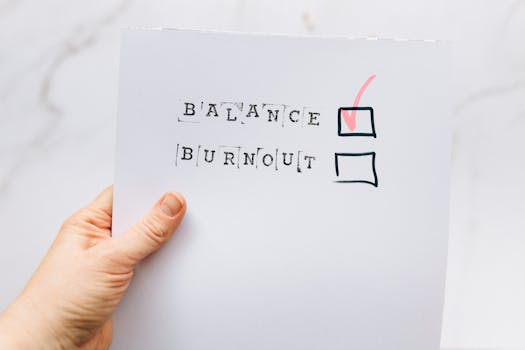
Decision fatigue is not triggered only by “big” choices. It is often produced by the volume of small, frequent decisions and by the emotional or cognitive weight attached to them.
High frequency and low stakes still add up
Low-stakes choices can be deceptive. Because they seem minor, they are made quickly—yet each one still draws on attention and requires evaluation. A day filled with micro-decisions (calendar changes, routing choices, where to sit, what to answer, what to pack) can accumulate quickly.
This is why decision fatigue often feels sudden: performance declines after a threshold where the cumulative burden becomes noticeable.
Emotional decisions and conflict amplify the cost
Choices involving interpersonal tension, moral trade-offs, or uncertainty typically require more mental work. If you have to manage other people’s expectations, interpret subtle cues, or negotiate competing goals, the cognitive load increases. Even if the number of decisions is moderate, the “effort per decision” can be higher.
Decision timing matters: fatigue is time-dependent
Decision fatigue is influenced by circadian factors and daily rhythms. Many people experience a natural decline in cognitive flexibility later in the day, and that decline interacts with decision load. Sleep loss, stress, and hunger can further reduce the brain’s ability to support careful evaluation.
So decision fatigue is often a combination of “how many decisions” and “how much cognitive capacity you have available.”
Uncertainty and too many options increase strain
When options are numerous or ambiguous, the brain has to do extra work to compare them. Choice overload can make decision fatigue worse even if the decisions are not frequent. For example, comparing complex schedules, plans with many variables, or ambiguous recommendations can create a sense of mental “drag.”
In those moments, the brain may default to satisficing—choosing something that is “good enough” rather than optimal.
How decision fatigue affects behavior and performance
Decision fatigue can show up in several predictable ways. These effects are not universal, but they are common enough that researchers and clinicians frequently look for them.
More impulsive choices and weaker restraint
When careful evaluation becomes harder, people may gravitate toward immediate rewards or familiar comforts. This can lead to eating decisions that deviate from intentions, skipping steps in routines, or responding emotionally instead of thoughtfully.
Greater avoidance and procrastination
Decision fatigue can also produce the opposite pattern: you delay choices to avoid the mental effort required. Instead of making the decision, you may postpone it, seek external input, or keep the situation open longer than intended.
Defaulting to routines and defaults
As cognitive load rises, the brain often chooses defaults. This can be efficient when the default matches your goals. It becomes problematic when the default conflicts with what you actually want. In daily life, this may look like always grabbing the same option, sticking to the status quo, or avoiding changes that would improve outcomes.
Increased errors and reduced flexibility
When you are fatigued, you may miss details, misjudge probabilities, or struggle to revise a plan. Flexibility decreases because updating beliefs and re-evaluating alternatives requires mental effort.
For example, after many decisions you may be more likely to commit to a strategy too early and resist switching when new information appears.
Science-based strategies to reduce decision fatigue
The most effective interventions focus on reducing the number of decisions, lowering the effort required per decision, and protecting the cognitive capacity you need for high-stakes choices.
Automate low-stakes decisions with “pre-commitment”
Pre-commitment means deciding in advance so you don’t have to re-decide later. This can be as simple as planning meals, setting recurring work routines, or creating a standard response framework for common messages. The goal is to move decisions out of the fatigued window.
For instance, establishing a consistent morning routine can reduce the number of choices you face before you are fully alert.
Batch decisions and schedule them for peak capacity
Decision quality generally benefits from timing. If possible, group similar decisions together and complete them during periods when you feel most mentally sharp. Save complex choices for times when you have adequate sleep, food, and low stress.
This approach reduces the “decision stream,” helping your brain maintain a steadier evaluation process.
Limit options to reduce choice overload
When there are too many options, the brain spends effort comparing rather than deciding. Reducing the number of alternatives can make decisions faster and less exhausting.
In practice, this can mean defining a small shortlist for recurring categories—like a few go-to meals, a handful of work tasks to prioritize, or a narrow set of acceptable scheduling windows.
Use clear criteria so you don’t reinvent the wheel
Decision fatigue is partly caused by having to generate a decision method each time. Creating simple criteria—such as “choose the option that meets these three conditions”—reduces mental overhead. The brain can apply the same framework repeatedly without starting from scratch.
Criteria can be written or mental, but they must be specific enough to guide action when you are tired.
Protect the fuel: sleep, nutrition, and stress regulation
Even if decision fatigue is not purely “willpower depletion,” cognitive performance still depends on basic physiological conditions. Poor sleep and low blood sugar can increase impulsivity and reduce attention. Stress also raises the cost of decision-making by increasing emotional interference.
Simple supports—regular sleep timing, hydration, balanced meals, and stress-reduction practices—can lower the total burden on your decision system.
Make space for rest to prevent cumulative depletion
Rest is not just recovery from fatigue; it is also time for the brain to reset attention and reduce cognitive load. Short breaks during decision-heavy periods can help prevent the steady slide into defaulting or avoidance.
Even brief pauses—stepping away from a problem, resetting posture, or doing a low-stimulation activity—can reduce the sense of mental overload.
Do supplements and “brain boosters” help with decision fatigue?

People often look for quick fixes when they feel mentally depleted. The scientific picture is mixed. Some interventions can support attention and energy indirectly, but decision fatigue is primarily a cognitive and behavioral phenomenon shaped by load, timing, and self-regulation demands.
That said, certain products may be relevant depending on your situation. For example, caffeine can increase alertness for many people, which may improve performance on tasks that require vigilance. Creatine monohydrate has been studied for cognitive effects in some contexts, and omega-3 fatty acids have research connections to brain health. However, these are not guaranteed solutions for “decision fatigue why it happens,” because fatigue often stems from too many choices rather than a single nutrient deficit.
If you consider any supplement, it’s best to evaluate it as a support for underlying factors (sleep, energy, attention) rather than a direct remedy for the decision process itself. The most reliable strategies remain behavioral: reduce unnecessary choices, batch decisions, and protect cognitive capacity.
Prevention and planning: building a lower-decision lifestyle
Reducing decision fatigue is less about becoming more disciplined and more about designing environments that require fewer repeated choices. Prevention works best when it targets the patterns that create depletion.
- Identify your high-load windows: Track when you feel decision strain most strongly (often late afternoon, after meetings, or after emotionally demanding interactions).
- Move important decisions earlier: Schedule complex choices for times when attention is highest.
- Standardize recurring categories: Use consistent meal plans, clothing routines, and meeting structures where possible.
- Write down decision rules: Simple criteria reduce the mental work required to decide.
- Reduce option volume: Narrow choices so you are not comparing too many alternatives.
- Protect basics: Sleep, nutrition, hydration, and stress management reduce the “cost” of each decision.
When these steps are applied, decision fatigue becomes less likely to reach a tipping point. You may still feel tired, but the quality of your choices can remain more stable.
Summary: the reason decision fatigue happens and how to respond
Decision fatigue happens because repeated choices consume limited cognitive resources and increase the mental effort required for evaluation and self-regulation. As load rises, the brain tends to shift toward shortcuts, defaults, avoidance, or impulsive selections. Triggers include high decision frequency, emotional conflict, uncertainty, and timing effects like sleep loss or late-day dips.
To reduce decision fatigue, focus on prevention: pre-commit to low-stakes choices, batch similar decisions, limit options, use clear decision criteria, and support the basics that sustain attention. These strategies don’t eliminate decision-making, but they reduce the unnecessary burden that drives the fatigue response.
30.01.2026. 15:06