

Attention Span Myth: Losing Focus and the Switching Problem

Why the “attention span myth” keeps spreading

People often talk about attention span as if it were a fixed trait—something you either have or you don’t. That idea fuels the attention span myth: the claim that modern life has permanently shortened everyone’s ability to concentrate. When you find yourself losing focus, it’s easy to blame a “declining attention span” and assume the solution is to push through harder.
But the pattern many people experience—starting a task, drifting off, switching to something else, then coming back with less momentum—is usually better explained by the losing focus switching problem. In other words, the issue is less about a shrinking brain and more about attention being repeatedly interrupted, fragmented, and reallocated.
This myth-busting guide focuses on what’s actually happening when you lose focus, why it feels worse in today’s environment, and how to design your work so attention has fewer reasons to break.
The attention span myth: what’s true and what’s oversimplified
Attention isn’t a single “meter” you can drain
Attention is not one uniform ability. It’s a set of processes: selecting what matters, filtering distractions, sustaining effort, and shifting focus when needed. These processes can be improved with training and context, but they’re also highly sensitive to the environment and to how a task is structured.
So when someone says, “My attention span is worse than it used to be,” that can be partly true in the moment—your current conditions may be making sustained effort harder. However, it’s rarely evidence of a permanent biological reduction. More often, it reflects changes in stimulation, habit loops, expectations, and task demands.
What changed is the rate of interruptions and switching
Modern life makes it easy to check messages, browse feeds, and jump between tabs. Even when you’re not “trying” to multitask, your environment can create frequent micro-interruptions: a notification, a new thought, a lingering curiosity, or the friction of returning to a previous task.
Each return to a task requires reorientation—reloading context, recalibrating your goal, and rebuilding the mental state you had before you drifted. That repeated context rebuilding is a major driver of perceived “short attention.”
Understanding the losing focus switching problem

Switching breaks momentum, not just concentration
The losing focus switching problem describes a common cycle: you begin a task, attention wobbles, you switch to a more immediately rewarding or easier input (a message, a video, a quick search), and then you struggle to resume. The problem isn’t only that you got distracted—it’s that switching creates costs.
Those costs include:
- Context switching: you must reconstruct what you were doing and why.
- Goal re-entry: you need to re-align with the task objective, not just the activity.
- Effort reset: sustained focus often requires a steady investment of mental energy; switching interrupts that investment.
- Increased temptation: once you’ve broken the chain, it becomes easier to do it again.
Why “I’ll just check one thing” becomes a pattern
Many switches are triggered by uncertainty or friction. When a task feels ambiguous—“What do I do next?”—your brain looks for a shortcut: information, reassurance, or stimulation. Quick checks are often a form of coping with uncertainty. The short-term relief is real, but it trains a habit: uncertainty leads to switching, switching leads to more uncertainty on return, and the loop strengthens.
Attention is also shaped by reward expectations
Not all distraction is equal. Content that provides frequent novelty or immediate gratification tends to be more “sticky.” When you alternate between work that requires sustained effort and inputs that deliver rapid rewards, your brain learns to expect fast payoffs. That can make deep work feel slower and less satisfying, even if your underlying capacity hasn’t changed.
Common signs you’re dealing with switching, not a fixed attention span
Before trying to “hack” your willpower, look for patterns that point to the switching problem:
- You can focus for a while on certain topics, but you lose focus when tasks require sustained effort or slow progress.
- You return to a task and immediately feel behind, even if you only stepped away briefly.
- Your distractions are often triggered by notifications, open tabs, or “just one more look” moments.
- You notice fatigue after switching rather than after continuous work.
- You feel mentally scattered right after checking something unrelated, then struggle to re-enter the prior task.
These signs suggest the limiting factor is reorientation and interruption frequency, not a permanently reduced attention capacity.
Practical strategies to reduce losing focus from task switching
Create a “friction plan” for distractions
Willpower is unreliable when distractions are easy. A better approach is to make switching less effortless.
- Control notifications: silence nonessential alerts during focus blocks. If you must receive messages, designate a narrow window for checking.
- Batch communications: schedule email and chat checks at specific times so you’re not constantly deciding whether to switch.
- Reduce open tabs: close anything that acts like a standing invitation to drift.
- Make the next step visible: when you start, write the first concrete action so your brain doesn’t search for certainty later.
This doesn’t require special tools. It’s about removing the “open loop” that makes switching feel necessary.
Use focus blocks designed for re-entry
One reason switching feels so damaging is that returning is harder than starting. You can make re-entry easier by planning your work in short, structured intervals.
Try this approach:
- Start with a short block (for example, 15–30 minutes) to build momentum.
- Define a stopping point before you begin (a deliverable, not a vague “finish”).
- End with a “resume cue”: write one sentence about what you will do next. That reduces the mental cost of coming back.
When you reduce the re-entry penalty, your brain has less reason to avoid returning.
Match task design to attention demands
Some tasks are inherently attention-heavy. If you treat them like you can “power through” without changing structure, you’ll feel like your attention span is failing. Instead, break tasks into segments that are meaningful and finishable.
Examples of task redesign:
- For writing: draft a rough outline first, then write only the first section.
- For studying: use short practice cycles (read, recall, answer, review) rather than long passive sessions.
- For analysis: define the specific question you’re answering in this round, then stop when it’s answered.
This approach reduces uncertainty and gives attention a clear target—two key stabilizers against switching.
Build a “distraction protocol” for inevitable drift
Your mind will wander. The goal is not to eliminate drift completely; it’s to prevent drift from turning into a full switch.
When a distraction appears, do one of the following:
- Capture: write a short note of what you thought about.
- Defer: tell yourself you’ll address it during the next scheduled check or review.
- Return: immediately resume the defined next step.
This keeps the thought from becoming an action. Over time, you train your attention to treat distractions as information, not commands.
Myth-busting: why it feels harder now even if your capacity hasn’t vanished

High stimulation competes with sustained effort
Many modern inputs are optimized for rapid novelty. That doesn’t mean your brain is broken; it means the environment is designed to pull attention quickly. When your work requires slower processing—reading carefully, reasoning, creating—attention has to resist competing cues.
Stress and sleep affect focus more than age does
Fatigue, stress, and poor sleep can reduce the ability to sustain effort and increase susceptibility to distraction. When people say “my attention span is gone,” the underlying driver may be recovery, not capacity. Improving sleep regularity, reducing chronic stress where possible, and taking breaks strategically can noticeably change focus stability.
Expectation of instant progress can create switching
If you expect rapid results, slow tasks feel like failure. That emotional signal increases the urge to switch. Reframing work as iterative—small progress, temporary confusion, and gradual clarity—reduces the “escape urge” that triggers the switching problem.
When “attention training” helps—and when it won’t fix switching
Mindfulness and focus exercises can improve control
Practices like mindfulness, breath-focused attention, or structured concentration drills can strengthen awareness and reduce reactive switching. They help you notice drift sooner and respond deliberately rather than automatically.
But without environment changes, training hits a ceiling
Even strong attention skills struggle against frequent interruptions and constant cues. If your day is packed with message pings, open tabs, and uncertain next steps, you’re constantly being asked to perform attention control. That’s not a character flaw; it’s a workload problem.
In practice, the best results come from combining:
- Environmental design (reduce cues and interruptions)
- Task structuring (clear next steps and meaningful segments)
- Attention skills (notice drift and return deliberately)
This combination addresses the real mechanism behind losing focus: the repeated costs of switching.
Prevention guidance: a simple system to protect focus
If you want a durable approach, aim for prevention rather than constant repair. A prevention-oriented system reduces the number of times you need to “fight” distraction.
- Plan focus blocks with defined deliverables and resume cues.
- Batch switching triggers (messages, email, browsing) into scheduled windows.
- Lower uncertainty at the start by writing the next concrete action.
- Use a capture method for distractions so they don’t become actions.
- Protect recovery through sleep consistency and stress-aware pacing.
Over time, you’ll likely notice something important: you don’t need to “find your attention span” as if it were lost. Instead, you stop breaking it with repeated switching costs.
Summary: losing focus is often a switching problem, not an attention span myth
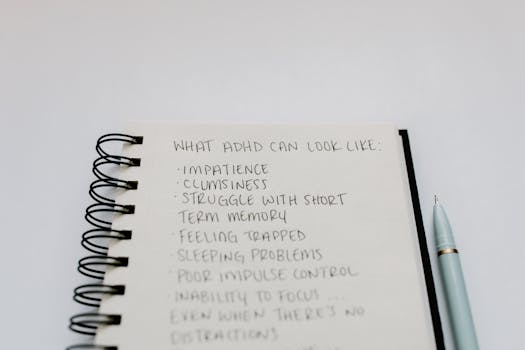
The attention span myth suggests your ability to concentrate has permanently shrunk. The more accurate explanation is that attention is repeatedly interrupted and reallocated, creating a cycle of losing focus and switching. That cycle damages momentum because returning to a task requires context re-entry and effort reset.
To prevent this, reduce interruption cues, structure work into clear focus blocks, and design tasks so the next step is obvious. When distractions arise, capture and defer rather than turning thoughts into actions. With these changes, sustained attention becomes less about fighting yourself and more about building conditions where focus can hold.
FAQ
Is the attention span myth completely false?
It’s oversimplified. People can experience reduced ability to focus in the moment due to stress, fatigue, uncertainty, and frequent interruptions. But that doesn’t necessarily mean a permanent loss of capacity. The more common driver is fragmented attention caused by switching and environmental cues.
What exactly is the losing focus switching problem?
It’s the cycle where attention drifts, you switch to a more immediately rewarding or easier input, and then returning to the original task costs time and mental effort. The damage is not only the distraction—it’s the repeated context rebuilding and momentum loss.
How long should focus sessions be if I keep losing focus?
If you’re struggling, start with shorter blocks (often 15–30 minutes) and end with a clear stopping point plus a resume cue. As you stabilize re-entry, you can gradually increase session length.
Will mindfulness fix my focus issues?
Mindfulness can help you notice drift sooner and respond intentionally. However, if your environment constantly triggers switching (notifications, open tabs, frequent uncertainty), mindfulness alone may not be enough. Pair attention skills with environmental and task structure changes.
Why do distractions feel stronger when I’m stressed?
Stress and fatigue reduce your capacity to sustain effort and increase sensitivity to cues that provide quick relief or clarity. That makes switching more tempting and makes returning to work harder.
What’s the fastest way to reduce switching during work?
Batch communications, silence nonessential notifications during focus blocks, and remove open-tab invitations. Then define a concrete next step before you start so you don’t need to search for certainty mid-task.
29.03.2026. 05:48