

HRV vs Resting Heart Rate vs Respiration Rate for Productivity

How these metrics map to productivity
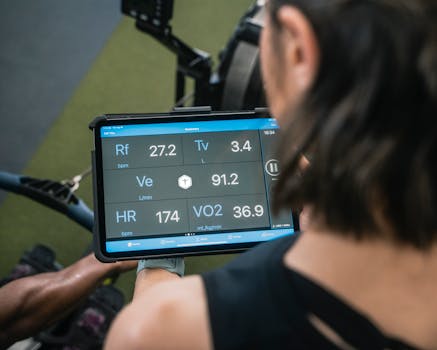
When you’re trying to work at a high level, “productivity” isn’t just output. It’s also your ability to sustain focus, recover from hard days, and keep decision-making sharp. HRV, resting heart rate, and respiration rate are three common signals that people use to estimate how your body is handling stress and recovery.
They don’t measure the same thing, and they don’t perform equally well for the same purpose. HRV (heart rate variability) reflects the timing pattern between heartbeats—often interpreted as how flexible your autonomic nervous system is. Resting heart rate (RHR) is a simpler proxy for overall cardiovascular load and recovery status. Respiration rate (breathing rate) can shift with stress, sleep quality, breathing mechanics, and illness.
For productivity systems, the key question is not “which number is most impressive.” It’s which metric gives you the most actionable signal with the least noise for your routine.
Quick summary: the strongest overall option for most people
If you want one metric that often tracks recovery and stress sensitivity more directly than the others—especially when used as trends over time—HRV usually wins. Resting heart rate can be useful as a secondary indicator, particularly for catching broader fatigue or illness. Respiration rate can help in specific situations (sleep issues, respiratory strain, or heightened stress), but it’s typically more context-dependent.
In practice, many productive people get the best results by using HRV as the primary “readiness” signal and RHR/respiration rate as supporting confirmations.
Side-by-side differences that matter for productivity
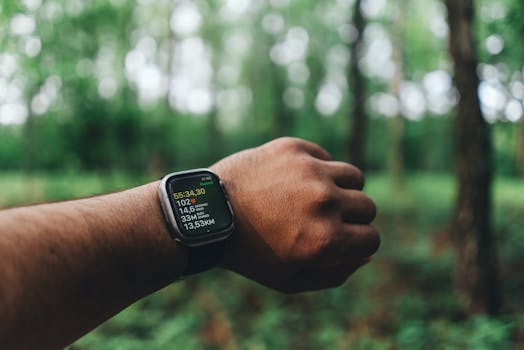
Below is a comparison focused on how each metric behaves, what it tends to reflect, and how reliably it can guide day-to-day productivity decisions.
| Metric | What it measures | What it’s most sensitive to | Typical signal pattern | Best productivity use | Main limitations |
|---|---|---|---|---|---|
| HRV (heart rate variability) | Variation in time between heartbeats (often RMSSD or similar). | Autonomic balance (sympathetic/parasympathetic), recovery status, stress load, sleep quality. | Often higher HRV during recovery; drops after stress, poor sleep, or intense training. | Readiness scoring, training/workload decisions, “should I push or consolidate?” planning. | More sensitive to measurement conditions (sleep stage, timing, posture). Day-to-day noise can be high if you don’t standardize. |
| Resting heart rate (RHR) | Heartbeats per minute at rest (morning or during a consistent resting window). | Overall physiological strain, incomplete recovery, illness, dehydration, caffeine/alcohol effects. | RHR often rises when you’re under-recovered; returns toward baseline as you recover. | Detecting prolonged fatigue, spotting trends that HRV might not catch as clearly, monitoring illness risk. | Less specific to “stress vs recovery.” Can be influenced by temperature, hydration, and measurement time. |
| Respiration rate | Breaths per minute (usually estimated from wearable sensors). | Stress, anxiety, breathing mechanics, sleep quality, respiratory irritation/illness. | Can increase with stress or poor sleep; may normalize when calm and recovered. | Flagging respiratory or stress-related strain; supporting HRV/RHR when something feels “off.” | Often more affected by posture, sensor accuracy, talking/movement, and measurement method. Not always consistent across wearables. |
Real-world performance differences: what you’ll notice first
Numbers don’t matter until they change your decisions. Here are the common patterns people report when using these metrics in a productivity context.
Scenario 1: The “hard meeting day”
Imagine you have a full day of high-stakes meetings. You sleep 6 hours instead of your usual 7.5. The next morning, your HRV drops noticeably—say 15–25% below your 30-day baseline—while RHR is only slightly elevated (for example, up by 2–4 bpm). Your respiration rate may be a bit higher, particularly if you woke early or felt tense.
For productivity, that HRV drop is often the first signal that your nervous system is still “on.” You may choose to schedule deep work later in the day, keep the first 60–90 minutes lighter, or reduce cognitive load.
RHR helps too, but it may lag or be subtler for acute stress. Respiration rate can support the story (“you felt wired” or “your sleep was shallow”), but it’s less reliable as a standalone readiness score.
Scenario 2: The “training overload week”
Now consider a week where your workouts ramp up: extra intervals, longer sessions, and slightly less recovery time. Over 5–7 days, you see HRV trending downward and staying depressed. RHR rises gradually—often by a few bpm—especially if you’re also under-sleeping.
In this case, both HRV and RHR are valuable, but they show different aspects. HRV can tell you your autonomic system is not bouncing back quickly. RHR gives you a broader “physiological load” signal that can persist even when your training intensity changes.
Respiration rate might fluctuate, but unless you’re dealing with respiratory strain or illness, it may not provide additional actionable clarity beyond “you’re carrying more load.”
Scenario 3: Early illness or respiratory irritation
If you start feeling “off” but can’t name why—sore throat, mild congestion, or unusual fatigue—RHR often rises first or becomes more consistently elevated. HRV may drop as well, but sometimes the pattern is less clean if your sleep is broken.
Respiration rate can be especially informative here if it increases alongside symptoms. For example, if your resting breathing rate is normally around 14–16 breaths/min and it shifts to 17–19 for multiple mornings, that can align with respiratory stress.
In this scenario, you’ll likely benefit from using respiration rate and RHR as confirmations rather than treating HRV as the sole truth.
Pros and cons breakdown for each metric
HRV: strengths for recovery-sensitive productivity
- Strength: early warning for nervous system strain. HRV often responds quickly to stress and sleep quality. That makes it useful for adjusting your workload before performance collapses.
- Strength: trend-based decision-making. HRV is often most meaningful when you compare today to your own baseline (for example, your last 30 days).
- Strength: aligns with “readiness.” Many people find HRV correlates with how mentally steady they feel—less jitters, better focus, smoother transitions.
- Con: measurement variability. If you measure at different times, after different sleep durations, or in different postures, the noise can hide the signal.
- Con: not equally interpretable across devices. Different wearables may calculate HRV differently. You should treat your device’s output as a consistent internal metric, not a universal standard.
- Con: acute spikes can mislead. A single abnormal day may reflect a one-off event (late alcohol, travel, a stressful conversation) rather than a persistent readiness problem.
Resting heart rate (RHR): strengths for sustained fatigue and illness signals
- Strength: simple and robust for trend detection. RHR is often easier to interpret because it’s a direct pulse rate measure.
- Strength: useful for multi-day fatigue. If you’re under-recovered across several days, RHR tends to show that cumulative load.
- Strength: confirmation for HRV. When both HRV decreases and RHR increases, the “something is off” signal is stronger.
- Con: less specific to mental stress. RHR can rise from dehydration, caffeine, room temperature, or even poor measurement timing—without meaning your cognitive readiness is truly low.
- Con: baseline drift. Changes in fitness, weight, medications, and long-term habits can shift your baseline, making older comparisons less accurate.
- Con: can normalize while you still feel stressed. You might feel mentally taxed even when RHR looks fine, especially if the stress is more psychological than physiological.
Respiration rate: strengths for stress physiology and breathing-related strain
- Strength: can reflect stress and sleep quality. Breathing patterns often change with anxiety, shallow sleep, or heightened arousal.
- Strength: symptom alignment. If your respiration rate increases alongside congestion, allergies, or chest discomfort, it can support a practical “take it easier” decision.
- Con: sensor accuracy and context dependence. Respiration rate estimates can vary based on motion, wrist placement, and the wearable’s algorithm.
- Con: posture and environment matter. Sit/stand differences, temperature, and even how you breathe while awake can distort readings.
- Con: less consistent as a single productivity score. In many routines, HRV and RHR provide clearer readiness signals than respiration rate alone.
Best use-case recommendations for different buyers
Different people want different outcomes from a productivity system. Choose the metric that matches your decision style and your environment.
If you want an “adjust my day” signal (deep work scheduling)
Use HRV as the primary metric. HRV is often better at capturing the kind of internal state that affects focus and cognitive stamina. Look for changes relative to your own baseline—commonly the last 2–4 weeks—rather than reacting to a single datapoint.
How you’d apply it: if HRV drops for 2 consecutive mornings, you might shift from high-intensity deep work to planning, writing drafts, or lighter tasks for the first half of the day. Then you reassess after your day progresses.
If you want an “am I accumulating fatigue?” detector
Use RHR as a primary metric, with HRV as a confirmation. RHR tends to be practical for identifying prolonged strain. It’s also helpful when you don’t have the patience to interpret more complex HRV patterns.
How you’d apply it: if your RHR is consistently above your personal baseline by a small margin (often a few bpm) across several days, reduce training intensity or raise recovery time. You’ll often see productivity improve as your energy stabilizes.
If you suspect breathing-related stress or early respiratory issues
Use respiration rate as a supporting metric. In real life, this matters when your body feels “tight” or sleep is disrupted by breathing discomfort, allergies, or illness.
How you’d apply it: if respiration rate rises and stays elevated for multiple mornings while you feel less rested, prioritize rest and reduce cognitively demanding work. HRV and RHR can help confirm whether this is general fatigue or more specific to respiratory strain.
If you manage a structured training + work routine
Use HRV + RHR together. That pairing often gives you the clearest picture: HRV for autonomic readiness and RHR for broader physiological load. Respiration rate can be an extra layer if it consistently tracks with how you feel.
Many people find this dual-metric approach reduces false alarms. For example, HRV might dip after a single stressful day, but if RHR stays stable and respiration rate doesn’t shift, you can proceed with normal plans.
Final verdict: which metric suits which need
HRV vs resting heart rate vs respiration rate productivity decisions ultimately come down to what you’re trying to protect: mental steadiness, physiological recovery, or respiratory/stress physiology.
- Choose HRV as your strongest overall productivity signal when your goal is to manage readiness for deep work and adapt daily workload to your nervous system state.
- Choose resting heart rate as your best “accumulated fatigue” indicator when you need a dependable trend signal for multi-day recovery and illness-like strain.
- Use respiration rate as a targeted supporting metric when you suspect breathing-related stress, sleep disruption, or early respiratory symptoms.
If you want one clear winner for most productivity systems: HRV typically provides the most actionable signal for adjusting your day. If you want a second strong layer: RHR helps validate whether the issue is broader physiological load. And if your symptoms point to breathing or sleep mechanics: respiration rate can add useful context.
For best results, treat all three as trend-based inputs, standardize your measurement conditions (especially time and posture), and interpret them alongside how you feel. The most “productive” choice isn’t the one with the most data—it’s the one that changes your decisions in a way that helps you recover and sustain performance.
28.12.2025. 01:23