

CGM vs finger prick glucose accuracy: what to trust

What’s being compared: CGM sensing vs finger prick measurement
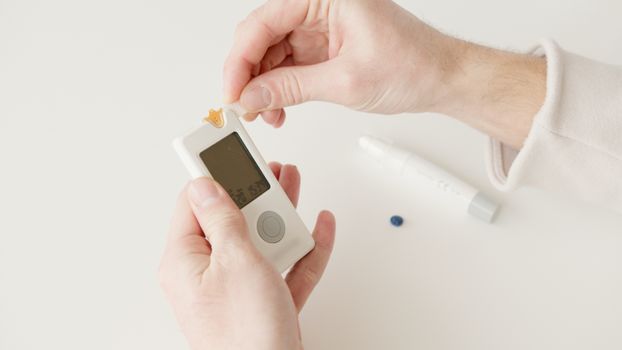
When you compare CGM vs finger prick glucose accuracy, you’re really comparing two different measurement systems and two different time windows.
A continuous glucose monitor (CGM) uses a sensor placed under the skin to estimate glucose in the interstitial fluid (the fluid between cells). Most devices report readings every 1–5 minutes, then apply algorithms to translate sensor signals into glucose values.
A finger prick uses a capillary blood sample (from your fingertip) and a handheld meter. The meter measures glucose in blood directly, typically producing a result in seconds.
Because the compartments differ—interstitial fluid vs capillary blood—accuracy isn’t just about “how close is the number.” It’s also about when each number reflects your body’s current glucose level.
Quick takeaway: CGMs are usually better for tracking trends and catching rapid changes. Finger prick testing is often better for confirming a specific value, especially when decisions depend on a single number.
Quick summary: which option is strongest overall?
For most day-to-day monitoring, CGMs tend to provide the strongest overall practical value because they offer frequent readings and trend information. For situations where you need a confirmatory point—such as calibrating, treating severe hypoglycemia, or verifying a surprising reading—finger prick measurements are the stronger reference.
Side-by-side comparison: accuracy, timing, and error sources
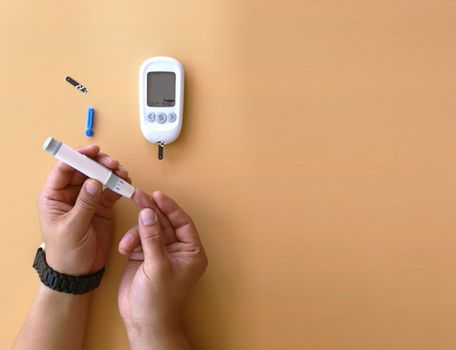
Below is a structured comparison of the two approaches across the factors that most affect accuracy.
| Factor | CGM (interstitial sensor) | Finger prick (capillary blood meter) |
|---|---|---|
| Sampling frequency | Every ~1–5 minutes (device-dependent) | As often as you test (typically once per finger prick) |
| Measured fluid | Interstitial fluid under the skin | Capillary blood from fingertip |
| Time lag vs blood glucose | Commonly ~5–15 minutes behind blood, varies by conditions | Near-instant for the moment of sampling |
| Main sources of discrepancy | Lag during rapid swings, sensor calibration effects, pressure on sensor, local skin factors, compression artifacts, sensor drift | Sampling technique, strip quality, insufficient blood volume, hematocrit effects, reading errors, contamination, wrong coding (older systems) |
| Typical accuracy metrics | Often reported using MARD (mean absolute relative difference); many systems are around the mid-to-high single digits (varies by model and study conditions) | Meters vary by model; many fall in a similar “single-digit to low double-digit” relative error range in validation studies, but real-world technique matters a lot |
| Trend detection | Strong—shows direction and rate of change | Limited—only shows what happened at the exact moment you tested |
| Best use for treatment decisions | Often best for timing and trend-based adjustments; confirm unexpected values as needed | Best for confirming a specific glucose value when CGM seems inconsistent with symptoms or expectations |
How “accuracy” is actually defined
Accuracy can mean different things depending on the metric used. Many CGMs report MARD—a statistical measure of average error relative to reference blood glucose. Even when MARD looks good, you can still see mismatches during rapid glucose changes.
Finger prick meters also have performance ranges, but the largest real-world differences often come from technique: how much blood you collect, whether your fingers were clean and dry, and whether you followed the strip instructions precisely.
In practice, you’ll notice a key pattern: CGMs are usually more reliable for “what’s happening next,” while finger pricks are more reliable for “what number do I have right now?”
The timing gap that changes everything
The most important difference between CGM and finger prick accuracy is the lag. Interstitial glucose tends to follow blood glucose, but not instantly. During periods of rapid change—after meals, with exercise, or during insulin adjustments—the gap can widen.
Example: If your blood glucose rises quickly after a carbohydrate-heavy meal, a CGM may display that rise a few minutes later. If you rely on the CGM to correct immediately, you might “chase” a number that hasn’t caught up yet.
Conversely, if you’re dropping quickly—such as during a period of increased insulin action—the CGM may show the decrease slightly later than capillary blood. That matters most when you’re close to hypoglycemia thresholds.
Real-world performance differences and strengths
Let’s ground this in practical situations you’re likely to face.
Scenario 1: Post-meal spikes
After you eat, blood glucose can rise within 15–30 minutes depending on the meal composition and your insulin timing. A CGM typically provides frequent updates, so you can often see the peak and how fast it’s coming down.
However, the peak displayed on CGM can be slightly delayed compared with finger prick readings. If you test at the peak moment—say 45 minutes after eating—you might find the finger prick is higher than the CGM. That doesn’t automatically mean the CGM is “wrong.” It may simply be reflecting the earlier blood glucose state from several minutes ago.
In many people, this shows up as a CGM peak that is either shifted later or slightly smoothed compared to finger prick values.
Scenario 2: Exercise and glucose drops
Exercise can lower glucose quickly, sometimes within 10–20 minutes of starting activity, especially if you’re insulin-replete. CGM lag means your sensor may show the drop after blood glucose has already started falling.
If you feel symptoms consistent with low glucose—shakiness, sweating, confusion—your priority is safety. A finger prick at that moment gives you an immediate reference. CGM can still be useful for pattern recognition, but during rapid declines, the timing difference becomes more clinically meaningful.
Scenario 3: Compression artifacts during sleep
Many CGMs are sensitive to pressure on the sensor. If you sleep with your body weight on the sensor area, the readings can become unreliable for a period. You might see abrupt spikes or dips that don’t match how you feel.
In that case, finger prick testing can confirm what your blood glucose is doing right then. The CGM is still valuable overall, but this is a common “real-world mismatch” driver that has little to do with the core accuracy of the sensor chemistry and more to do with how you physically wear it.
Scenario 4: Calibrations and individual variability
Not all CGMs require user calibration, but some systems historically relied on calibration or periodic adjustments. Even with calibration-free sensors, the algorithm may perform differently across individuals.
Two people can see different levels of agreement between CGM and finger prick results. Factors include skin characteristics, sensor placement, circulation, and how quickly your glucose changes.
This is why your personal “CGM-to-finger prick relationship” matters. Your best accuracy isn’t only determined by the device—it’s also determined by your physiology and your routine.
Pros and cons breakdown: what you gain and what you trade
CGM pros
- More data points: you typically get a reading every few minutes, which makes patterns easier to spot.
- Trend arrows and rate-of-change: these help you understand whether glucose is rising or falling, not just where it is.
- Faster detection of changing glucose: even with lag, you often catch excursions earlier than with intermittent finger pricks.
- Reduced testing burden: fewer finger pricks for routine monitoring can reduce friction and improve consistency.
CGM cons
- Lag vs blood glucose: CGM may be 5–15 minutes behind, and the gap can widen during rapid changes.
- Occasional sensor errors: sensor drift, signal loss, or local irritation can affect readings.
- Compression artifacts: pressure on the sensor can cause inaccurate values.
- Discrepancies during extremes: near hypoglycemia or very high glucose, mismatches can be more consequential.
Finger prick pros
- Direct blood measurement: the meter measures capillary blood at the moment you test.
- No interstitial lag: you’re not waiting for the sensor to “catch up.”
- Useful for confirmation: when CGM readings don’t match symptoms, finger prick testing can clarify what’s happening.
- Technique can be controlled: you can standardize your cleaning, drying, and sampling routine.
Finger prick cons
- Intermittent view: you only capture glucose at specific moments, so you can miss peaks and troughs between tests.
- Sampling variability: small differences in technique can change results.
- More effort: frequent testing can be burdensome, leading to less consistent monitoring.
- Skin and blood flow issues: cold fingers, dehydration, or calluses can make sampling harder and sometimes less reliable.
Best use-case recommendations for different buyers
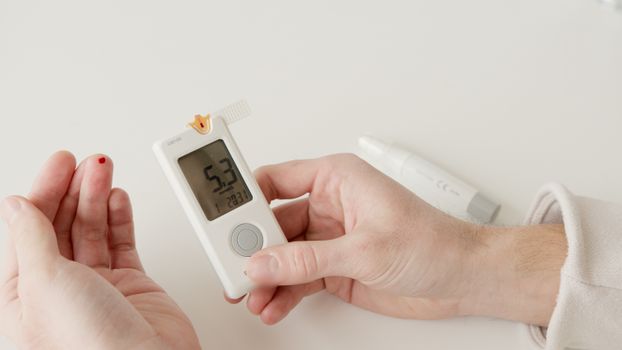
You might not be choosing between “accurate” and “inaccurate.” You’re choosing between continuous trend insight and instant reference values.
If you prioritize trend awareness and fewer finger pricks
CGM is often the better fit because it continuously tracks your glucose trajectory. If your main goal is to see how meals, activity, stress, or insulin timing affect you over the day, CGM’s frequent readings are a major advantage.
This is especially relevant if you’re trying to reduce the number of times you test. Many people find that CGM improves decision-making by showing whether glucose is moving toward or away from a target zone.
If you need a confirmatory reference for critical moments
If you’re someone who wants the most immediate “right now” number—particularly when symptoms don’t match the CGM—finger prick testing is the stronger reference point. This is also important if you’re managing medication decisions that hinge on a single reading.
Real-world example: If you wake up feeling low and your CGM reads near-normal, a finger prick can help you resolve that mismatch quickly. The goal isn’t to discredit the CGM—it’s to verify when the stakes are high.
If your glucose changes rapidly (meals, corrections, exercise)
In fast-changing situations, the CGM’s lag can create temporary disagreement. You can still benefit from CGM trend information, but you may want finger prick checks when you’re making time-sensitive adjustments.
For example, if you correct high glucose and you’re watching closely to avoid over-correction, a combination approach—CGM for trend and finger prick for confirmation at key moments—can reduce confusion.
If you’re sensitive to sensor artifacts or have frequent compression issues
If you notice repeated CGM spikes or dips that correlate with sleep position or pressure, you may find finger prick testing more dependable during those periods. CGM can still be used, but you’ll likely trust it less when the sensor is compressed or when the signal quality is questionable.
If you’re comparing devices (and want practical accuracy expectations)
Different CGM models can show different agreement with finger prick results, but the biggest determinant is often your individual pattern of glucose change and how you wear the sensor. Two devices with similar average MARD may behave differently for you because of lag dynamics, calibration behavior (if applicable), and your day-to-day routines.
Finger prick meters also vary, but technique and strip handling can matter as much as the device model.
Final verdict: which option suits your needs
For most people’s day-to-day monitoring, CGM generally offers the strongest overall value because it provides frequent measurements and clear trends. That trend awareness often improves safety by helping you anticipate highs and lows before they become sudden.
For confirming a specific value—especially when symptoms don’t match, when you suspect sensor compression, when you’re dealing with rapid glucose swings, or when you need an immediate reference—finger prick glucose measurement is typically the more dependable “snapshot.”
So the most accurate approach often isn’t “CGM vs finger prick” as an either/or. It’s using CGM for continuous insight, then using finger prick testing to confirm when the situation demands a precise reference.
If you want a simple rule of thumb: trust CGM for direction and timing, and trust finger prick for confirmation of the exact number when something feels off or decisions are time-critical.
04.04.2026. 09:59