

Wearable Sleep Stages Accuracy: REM, Deep, and Light Explained

Wearable sleep stages accuracy: why the numbers can feel convincing but aren’t always right
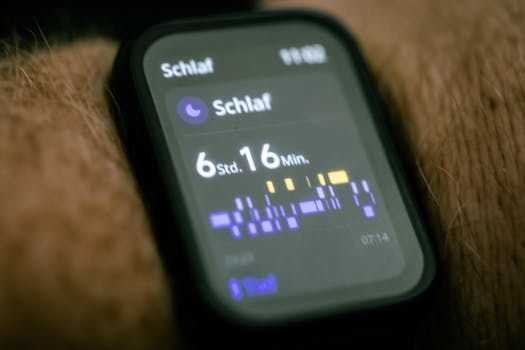
Wearable trackers can estimate sleep duration, sleep timing, and—most notably—sleep stages such as REM, deep, and light. Because the output looks precise (often with color-coded graphs and minute-by-minute transitions), it’s easy to assume the stage labels are measuring the same thing as a clinical sleep study. That assumption is the most common myth.
In reality, most wearables do not directly measure the brain activity that defines REM and non-REM stages. Instead, they infer stages from signals such as heart rate patterns, movement, skin temperature, and sometimes blood oxygen. These estimates can be helpful for trends and habits, but they can also be meaningfully wrong for individuals—especially when you compare stage totals to a polysomnogram (PSG) or even to a home electroencephalography (EEG) device.
This myth-busting guide explains what wearables are likely doing under the hood, where the errors come from, and how to interpret REM, deep, and light data in a way that supports better sleep decisions without overconfidence.
Myth: Wearables measure REM and deep sleep the same way a sleep lab does
The gold standard for sleep staging is a polysomnogram, which typically includes EEG (brain waves), electrooculography (eye movement), and electromyography (muscle activity). REM sleep is defined by specific EEG patterns plus rapid eye movements and muscle atonia. Deep sleep (often corresponding to N3 non-REM) is defined by characteristic slow-wave activity on EEG.
Most consumer wearables do not include EEG. Without brain-wave measurement, the device cannot truly “see” REM or deep sleep in the clinical sense. Instead, it uses algorithms that map physiological patterns to likely stages. That approach can approximate stage distribution for some people and some nights, but it is fundamentally an estimation.
Practical takeaway: Treat wearable sleep stages as a proxy, not a direct measurement. The data may be useful for tracking changes over time, but it shouldn’t be treated as definitive stage-by-stage confirmation.
How wearables estimate sleep stages from heart rate and movement
To understand accuracy, it helps to understand inputs. Common sensors and signals include:
- Photoplethysmography (PPG) for heart rate and heart rate variability (HRV)
- Accelerometers for movement and activity during sleep
- Skin temperature changes that can correlate with sleep physiology
- Blood oxygen (SpO2) in some models, which may reflect breathing disruptions
Algorithms then infer likely stages. For example, periods with lower movement and certain heart rate/HRV patterns may be labeled as “deep” or “light,” while other patterns may be labeled as “REM.” Some devices also incorporate typical sleep architecture expectations (for instance, REM tends to increase in the second half of the night).
However, the signals wearables use are not exclusive to a single stage. Heart rate and HRV vary with stress, caffeine, alcohol, illness, medications, and even posture. Movement can increase for reasons unrelated to arousals. Temperature can be influenced by room conditions and bedding. As a result, the same physiological pattern can map to different stages depending on context.
Practical takeaway: Wearable stage labels are probabilistic. They can be directionally informative, but they are sensitive to confounders.
What “accuracy” really means for wearable sleep stages
When people ask about wearable sleep stages accuracy, they’re often asking a binary question: “Is REM accurate?” But accuracy in sleep staging is multidimensional.
Key concepts include:
- Epoch-level accuracy: How often the device assigns the correct stage for each short time window (often 30 seconds in clinical scoring).
- Total time accuracy: Whether the device’s overall percentage of REM vs. deep vs. light matches a reference study.
- Consistency across nights: Whether the device reliably tracks your own trends even if it’s off in absolute values.
- Bias by stage: Some stages are easier to infer than others from wearable signals.
In many validation studies, wearables show better performance at distinguishing broad categories (awake vs. asleep, or general light vs. deeper sleep) than at identifying exact REM vs. deep boundaries. Even if a device performs reasonably on average, individual differences can be large.
Practical takeaway: A wearable can be “accurate” for trends while still being inaccurate for absolute stage totals.
REM sleep: why the estimate is often the most uncertain
REM sleep has a distinctive physiological signature, but it’s not straightforward to detect without EEG and eye movement channels. Wearables rely on indirect markers, such as:
- Heart rate changes that sometimes accompany REM
- Reduced gross movement (since REM involves muscle atonia, though some small movements can occur)
- Timing patterns (REM is more common toward the morning)
These cues can be influenced by factors that aren’t REM. For example, quiet rest can resemble REM-like patterns, while fragmented sleep can disrupt the expected rhythm. If you have frequent awakenings, irregular breathing, or medication effects, the algorithm may misclassify segments.
Additionally, some people experience atypical REM patterns due to stress, depression, post-traumatic factors, or neurological conditions. A model trained on more typical datasets may not generalize well.
Practical takeaway: If your wearable reports “low REM,” don’t automatically interpret it as a medical problem. Look at the context: sleep duration, awakenings, alcohol/caffeine timing, and whether the pattern persists across many nights.
Deep sleep: why wearables may overestimate or blur it with light
Deep sleep is often associated with slower heart rate and reduced movement. That makes it somewhat easier to infer from wearable signals than REM. Still, deep sleep (N3) is defined by slow-wave EEG activity, and wearables can’t directly measure that.
Common reasons deep sleep estimates can be off include:
- Movement artifacts: Even small movements or repositioning can cause the algorithm to downgrade “deep” even if EEG would show N3.
- Quiet wakefulness: Lying still without true deep sleep may be labeled as deep by some models.
- Breathing-related arousals: Sleep fragmentation from snoring or apnea can change HR/HRV patterns and reduce true slow-wave time.
- Individual physiology: Some people have different autonomic responses to sleep stages.
As a result, a wearable may show deep sleep that looks plausible but doesn’t match EEG-defined N3. It may also blur boundaries between “deep” and “light,” especially when sleep is fragmented.
Practical takeaway: Treat deep sleep as a rough indicator of restorative sleep quality. Use it to spot changes (e.g., after travel, alcohol, or stress), not to confirm a specific percentage of N3.
Light sleep: often the most stable label, but still not a precise stage
Light sleep is typically the “catch-all” category in many wearable models. Because it covers a broader range of non-REM activity and transitions, the wearable may be better at identifying when you’re generally asleep versus awake, and then grouping remaining sleep into “light.”
That can make light sleep appear more consistent. However, consistency doesn’t mean correctness. If the algorithm misclassifies REM as light or deep as light, the light category can look stable while other stages are wrong.
Practical takeaway: If light sleep is changing while deep/REM are stable (or vice versa), don’t assume the stable one is accurate. Consider the full pattern.
Why your wearable can disagree with reality (and with itself)
Even if a wearable is “good,” day-to-day variability is normal. Several factors can affect wearable stage estimation:
- Sleep fragmentation: Frequent awakenings, restless sleep, or early morning wake-ups can distort the algorithm’s assumptions about stage timing and continuity.
- Alcohol and sedatives: These can change sleep architecture and autonomic patterns. A model may label the resulting pattern incorrectly.
- Caffeine timing: Late caffeine can affect heart rate and arousal thresholds, altering the signals used to infer stages.
- Exercise timing: Training close to bedtime can shift temperature, HRV, and movement patterns.
- Skin contact and fit: Loose straps or inconsistent sensor contact can reduce signal quality for HR and movement.
- Room temperature and bedding: Temperature-related signals can influence stage classification.
- Illness, pain, or nasal congestion: These can fragment sleep and change breathing patterns, affecting wearable inference.
Practical takeaway: If your stage graph changes dramatically from one night to the next, check for obvious influences (late alcohol, travel, a new medication, illness) before concluding that your brain’s sleep architecture changed in a specific way.
What wearable stage graphs are best used for: trends, not diagnoses
Wearable sleep staging is often more valuable for behavioral feedback than for clinical conclusions. The strongest use cases tend to be:
- Trend detection: Are REM and deep sleep consistently lower during a stressful week?
- Response to routine changes: Does moving your caffeine earlier improve your stage distribution over several days?
- Sleep regularity: Are your sleep and wake times consistent, and does that correlate with fewer awakenings?
- Consistency of sleep quality markers: Even if stages are imperfect, changes in total sleep time, wake after sleep onset, and night-to-night variability can be meaningful.
Many people get into trouble by treating a single night’s REM or deep sleep as a diagnostic signal. Sleep is dynamic. A good algorithm should still be expected to mislabel some segments; your goal should be to interpret patterns across time.
Practical takeaway: Use stage data to ask “Did my habits or environment change?” rather than “Is my brain producing the correct stages minute-by-minute?”
How to interpret REM, deep, and light numbers responsibly
Here’s a practical way to read wearable sleep stage outputs without overinterpreting them:
- Look at averages over at least 2–3 weeks: Single-night stage totals are too noisy.
- Check sleep duration and fragmentation first: If you slept only 4–5 hours, stage percentages can be misleading.
- Use “direction” more than “absolute value”: If deep sleep drops after late alcohol, that’s actionable even if the exact percentage is wrong.
- Watch for repeated patterns: If REM appears low every night for weeks alongside poor sleep quality, consider discussing it with a clinician.
- Verify sensor quality: Ensure the device is worn as recommended, with adequate contact and stable positioning.
If your wearable provides additional metrics—such as wake events, HRV trends, or SpO2 dips—those can help interpret stage changes. For example, if “deep sleep” drops while frequent oxygen desaturations or repeated high heart rate events occur, the issue may be breathing-related fragmentation rather than a simple stage-label error.
Practical takeaway: Responsible interpretation combines wearable data with context: sleep opportunity, awakenings, breathing, stress, and consistency.
Common myths about improving sleep stages on wearables
Several myths circulate about how to “fix” REM and deep sleep based on wearable graphs. Here are the most common:
- Myth: You can directly control REM minutes. You can influence sleep quality and timing, which may indirectly affect REM distribution, but REM architecture is not something most people can target precisely.
- Myth: More deep sleep always means better sleep. Deep sleep can increase when sleep pressure is high, but overall recovery also depends on continuity, breathing, and whether you feel rested.
- Myth: If the wearable says you’re in deep sleep, you’re fully recovered. A wearable label does not guarantee restorative sleep. Sleep fragmentation, stress physiology, or breathing issues can still impair recovery.
- Myth: Wearables always improve with firmware updates. Updates can change algorithms and sometimes shift stage classification behavior. That means you should be cautious about interpreting changes immediately after an update.
Practical takeaway: The goal is better sleep and better daytime function, not chasing a specific stage chart.
When wearable sleep stage data should prompt professional evaluation
Wearables can be useful for noticing patterns, but they are not a substitute for clinical evaluation. Consider seeking medical advice if you have red-flag symptoms such as:
- Loud snoring, choking/gasping during sleep, or witnessed pauses in breathing (possible sleep-disordered breathing)
- Excessive daytime sleepiness despite adequate time in bed
- Severe insomnia or difficulty maintaining sleep for weeks
- Restless legs symptoms or unusual movements that disrupt sleep
- Significant mood or neurological symptoms that affect sleep
If you suspect a sleep disorder, bring your relevant wearable observations (sleep timing, awakenings, stage trends, and any SpO2 or heart rate patterns) as additional context. A clinician may recommend a PSG or other testing. In that setting, wearable stage graphs can help frame the problem, but the diagnosis should rely on appropriate clinical measurements.
Practical takeaway: Use wearables to support awareness, not to self-diagnose.
Prevention guidance: improve sleep inputs that wearables can’t “fake”
Even if stage labels are imperfect, many evidence-based sleep interventions improve sleep quality and overall architecture. These steps also tend to reduce fragmentation, which wearables can reflect through fewer awakenings and more stable nighttime physiology:
- Keep a consistent sleep-wake schedule: Regular timing supports circadian alignment and can stabilize sleep architecture.
- Manage caffeine: Avoid late-day caffeine to reduce arousal and heart rate effects.
- Be cautious with alcohol near bedtime: Alcohol can fragment sleep and alter REM patterns.
- Optimize the sleep environment: Cool, dark, and quiet conditions can reduce awakenings and improve continuity.
- Use light strategically: Bright light in the morning and reduced light exposure at night supports circadian timing.
- Address breathing issues: If you snore or wake up unrefreshed, consider evaluation for sleep apnea—this can strongly affect restorative sleep.
Practical takeaway: Focus on interventions that improve real sleep quality. Wearable stage accuracy will remain imperfect, but the overall outcome should improve.
Where wearable sleep stage accuracy is likely to be most useful (and where it isn’t)
To summarize the myth-busting message: wearable sleep stages accuracy is best understood as a spectrum of usefulness rather than a single number.
In practice, wearables are often more reliable for:
- Estimating when you are asleep versus awake
- Detecting broad changes in sleep duration and fragmentation
- Showing trends over time in your personal sleep patterns
Wearables are generally less reliable for:
- Minute-by-minute identification of REM vs. deep sleep
- Comparing your stage percentages directly to clinical norms or sleep lab results
- Diagnosing a specific stage deficit from a single night’s graph
Some wearable brands have improved algorithms over time and may perform better than others in certain populations, but the fundamental limitation remains: without EEG, stage labels are inferred. Even well-performing models can misclassify segments for individuals—especially when sleep is irregular or affected by breathing problems, medications, or illness.
Final prevention guidance: Use wearable sleep stages to guide habits and track trends, and use clinical evaluation when symptoms suggest a sleep disorder. If you want stage certainty, only EEG-based testing can deliver that level of confidence.
24.02.2026. 01:48