

Wearable VO2max vs Heart Rate Recovery: What’s More Useful?

What these metrics try to measure, and why the difference matters

Wearable fitness metrics often get grouped together as if they describe the same thing. Wearable VO2max and heart rate recovery (HRR) both relate to cardiovascular fitness, but they are built for different signals and different outcomes.
Wearable VO2max is an estimate of maximal oxygen uptake—roughly, the body’s ability to use oxygen during intense exercise. Many watches and sport watches infer it from heart rate patterns during runs, workouts, or steady efforts, sometimes combined with pace, cadence, and device-specific algorithms.
Heart rate recovery measures how quickly your heart rate drops after exercise. In clinical research, HRR is often assessed as the change in heart rate from peak exertion to a short interval afterward (commonly 1 minute). Wearables typically approximate HRR by tracking the descent of heart rate immediately after activity ends or after a defined high-intensity segment.
Because these metrics come from different physiological processes—oxygen transport/usage capacity versus post-exertional autonomic recovery—your training decisions and health interpretations will differ. The key is to understand what each number responds to, what it predicts, and how wearable methods can bias the result.
Quick summary: the strongest overall choice depends on your goal
If you want a single fitness trend that often aligns with aerobic capacity and training load, wearable VO2max is usually the more actionable metric over weeks and months. If you’re focused on how your body is coping right now—stress, recovery, and day-to-day readiness—heart rate recovery tends to be more sensitive to near-term changes, though it can be noisier due to how the measurement is captured.
In practice, the “best” approach for most people is not choosing one forever, but understanding which metric answers which question. For that reason, the most robust setup is using both, with a clear interpretation framework.
Side-by-side: wearable VO2max vs heart rate recovery
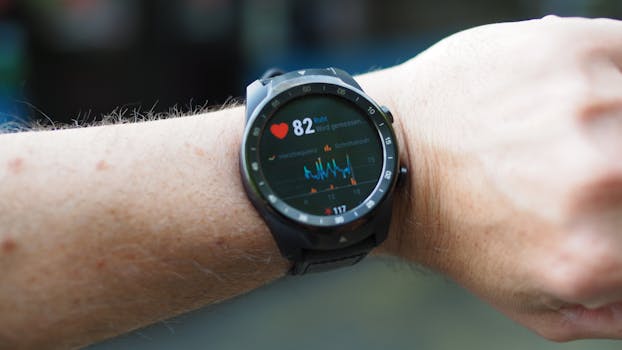
The table below compares what each metric measures, how wearables typically estimate it, what it tends to reflect, and where interpretation can break down.
| Metric | What it represents | How wearables usually estimate it | Time horizon it reflects best | Common strengths | Common limitations |
|---|---|---|---|---|---|
| Wearable VO2max | Estimated maximal oxygen uptake (aerobic capacity) | Algorithmic estimation from HR response during activity (often runs), sometimes using pace/cadence, individual calibration, and proprietary modeling | Weeks to months (trend-based) | Good for tracking aerobic development; helps contextualize training intensity and overall fitness changes | Device-specific algorithms; affected by workout type, HR accuracy, and calibration; single-day changes can be misleading |
| Heart rate recovery (HRR) | Rate of HR decline after peak effort (autonomic recovery) | Approximation from HR drop after stopping activity or after a defined high-effort segment; may use time-to-30s/1-min decline depending on device | Hours to days (readiness and stress response) | Sensitive to recovery status, sleep/stress, illness, and overreaching; can flag “not ready” days | Highly dependent on how you end the workout and whether you stop moving; HR sensor noise can distort the slope |
Real-world performance differences: what you’ll actually notice
1) How quickly the metric reacts to training and stress
Heart rate recovery often changes faster. If you’re under-recovered, sleep-deprived, or carrying stress, your heart may take longer to come down after hard efforts. Many people see HRR worsen after travel, illness, or heavy training blocks.
Wearable VO2max is usually slower to move. Even when your aerobic fitness is improving, VO2max estimates tend to update after the watch has enough high-quality activity data and the model sees consistent patterns. That means it’s more reliable for long-term trends than immediate “today” decisions.
2) Sensitivity to workout structure
HRR depends heavily on the transition from exertion to recovery. If you stop immediately after a sprint, cool down by walking, or sit down right away, the heart-rate decay curve changes. Some wearables attempt to standardize the measurement, but real life introduces variability.
VO2max estimates are also workout-dependent, but in a different way. Many devices require sustained activity with discernible HR/pace relationships. A short interval session, a treadmill day with poor sensor contact, or a highly variable route can reduce confidence in the estimate.
3) Sensor accuracy and measurement conditions
Both metrics rely on heart-rate data, but HRR is especially sensitive to the first minute after peak. If optical HR sensors struggle during high motion (sprints, hills, cadence-heavy running), the HR curve can look artificially steep or flat. This can happen with wrist-based sensors, especially during cold weather, sweat variability, or loose watch fit.
VO2max estimation is often based on longer segments of data, which can dilute momentary sensor errors. Still, if your HR readings are consistently off, the VO2max model can drift.
4) Interpreting “improvement” vs “measurement noise”
With HRR, a single bad reading may reflect how you cooled down, a sensor glitch, or a stressful day rather than true loss of fitness. With VO2max, a single spike can come from an unusually good workout day or algorithmic recalculation after enough data accumulates.
In both cases, you’ll get better signal by looking at patterns across multiple sessions rather than reacting to one number.
Pros and cons breakdown for each metric
Wearable VO2max: advantages and trade-offs
- Pros
- Aerobic capacity focus: VO2max is conceptually tied to endurance fitness, so it aligns with training that improves aerobic systems.
- Trend-friendly: It’s typically more stable over time, which helps you see progress and regressions across training blocks.
- Training context: Many platforms display VO2max alongside training metrics (pace, HR zones, readiness), making it easier to interpret in a broader view.
- Cons
- Algorithm differences: “VO2max” on one brand may not match another because estimation methods differ. Comparisons across devices are often unreliable.
- Workout dependence: If your activity types don’t match what the model expects (e.g., mostly cycling, irregular HR patterns, short sessions), updates may be sparse or less accurate.
- Not a recovery thermometer: VO2max changes are usually too slow to reflect acute overreaching in the moment.
Heart rate recovery: advantages and trade-offs
- Pros
- Acute sensitivity: HRR can respond to fatigue, stress, poor sleep, and illness earlier than VO2max.
- Autonomic signal: Because HRR is tied to recovery of parasympathetic activity, it can be a useful “how am I coping?” metric.
- Useful for pacing decisions: If HRR consistently drops after certain workouts, it can signal that the intensity is landing too hard right now.
- Cons
- Method variability: Wearables may measure HRR after activity ends, and that timing can vary based on how you stop moving.
- Cooling-down behavior matters: Sitting vs walking vs standing can change the HR decline slope.
- More noise from sensor issues: Because the metric depends on the decay curve right after peak effort, wrist HR errors can have outsized impact.
Best use-case recommendations for different buyers
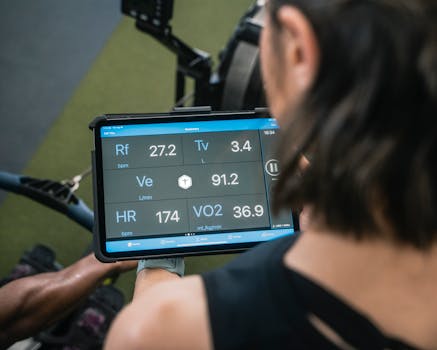
Rather than framing this as “which is always better,” it’s more accurate to match the metric to your primary reason for tracking.
If you train for endurance performance
Lean toward wearable VO2max as the anchor metric for long-term aerobic development. It’s better suited to tracking changes in aerobic capacity that come from structured training.
Use HRR as a supportive signal. For example, if VO2max is trending up but HRR repeatedly worsens during a hard block, you may need to adjust volume, intensity, or recovery practices.
If you want day-to-day readiness signals
Lean toward heart rate recovery. It’s typically the more immediate indicator of how your body is handling stress.
To make HRR more comparable across days, keep your post-exercise behavior consistent: cool down in a similar way, and avoid sudden stopping patterns that alter the HR decay.
If you mostly do strength training or mixed workouts
VO2max estimates may be less frequent or less reliable if your sessions don’t match the model’s expected cardio inputs. HRR can also be tricky because “peak effort” might be unclear—unless your workouts include intervals or repeated bouts that create a distinct high-intensity period.
In this scenario, both metrics can be informative but inconsistent. You may get better value from whichever metric your device updates most reliably based on your activity logs.
If you use wearable heart-rate straps or high-quality sensors
Both metrics improve with more accurate HR data, but HRR benefits the most because it depends on the early recovery curve. If you’re comparing wrist vs strap performance, it’s common to see HRR become more stable with a chest strap, especially during high-motion running.
If you’re monitoring health risk rather than training progress
HRR has a strong clinical association with cardiovascular autonomic function and risk stratification in research settings. Wearable HRR isn’t a clinical test, but it can provide a useful trend indicator for whether your recovery capacity is changing.
VO2max is also clinically relevant in broader research contexts, but wearable estimates are more model-dependent and typically less standardized than controlled lab or standardized field tests.
Final verdict: which one suits different needs?
Choose wearable VO2max when your priority is long-term aerobic fitness tracking. It tends to be more stable and aligned with endurance improvements, making it a better “north star” for weeks and months.
Choose heart rate recovery when your priority is acute recovery and readiness. It often reacts faster to stress and fatigue, but it requires consistent measurement behavior and careful interpretation to avoid overreacting to noise.
Best overall approach for most people: Treat VO2max as your aerobic capacity trend and HRR as your near-term recovery signal. When both move in the same direction—VO2max improving while HRR stays healthy—it usually indicates training is landing well. When HRR worsens while VO2max stalls or drops, it can be a sign to reduce intensity or improve recovery before fitness declines become more visible.
In the wearable world, neither metric is perfect on its own. The value comes from understanding the differences in what they measure, how devices estimate them, and how your training routine shapes the data.
03.04.2026. 17:21