

Indoor CO2 Levels for Sleep: What’s Safe and What to Do

Why CO2 matters for sleep quality
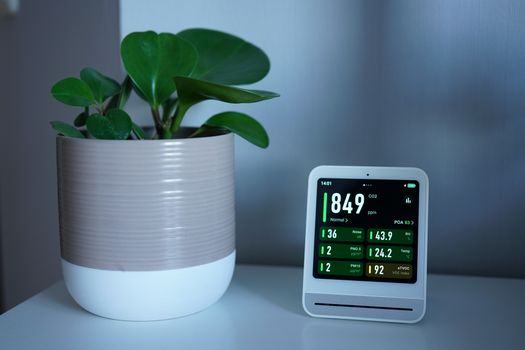
When you settle in for the night, you’re not just breathing air—you’re breathing the air your room has accumulated over hours. Carbon dioxide (CO2) is a key indicator of how much fresh air is reaching you. It isn’t a toxin in the way smoke or certain chemicals are, but elevated indoor CO2 often signals poor ventilation. That matters for sleep because it can coincide with higher humidity, lower oxygen availability, and stale air that can worsen comfort and breathing.
If you’ve ever woken up with a dry throat, a headache, or that “stuffy” feeling, your bedroom’s air may be part of the story. Understanding indoor CO2 levels for sleep helps you separate normal overnight fluctuations from levels that suggest you should improve ventilation.
In this guide, you’ll learn what CO2 numbers mean, what ranges are typically considered acceptable for sleep, how to measure CO2 correctly, and what practical steps you can take—without turning your bedroom into a science project.
What CO2 actually tells you indoors
CO2 is a ventilation signal, not a smell
CO2 is produced mainly by people. You exhale it continuously, and it accumulates when indoor air is not replaced quickly enough with outdoor air. Unlike odors, CO2 isn’t something you can reliably detect by smell. You can have a “fresh smelling” room with elevated CO2, especially if you’re in a tightly sealed space or if windows stay closed for long periods.
Because CO2 correlates with ventilation rate, it’s often used as a practical proxy for indoor air freshness. Higher CO2 generally means lower air exchange, which can also allow other indoor pollutants to rise (for example, volatile organic compounds, aerosol particles, and moisture).
Why sleep is a special case
During sleep, you spend many hours in the same room. Your breathing becomes the dominant indoor CO2 source, and your bedroom may be closed off (doors shut, windows closed). That’s why CO2 levels can climb over the night even if they look fine in the evening.
CO2 can also affect how you feel. While the relationship between CO2 and sleep is complex, elevated CO2 levels can be associated with reduced comfort, perceived air quality issues, and in some people, headaches or disrupted sleep—especially if levels remain high for hours.
Indoor CO2 levels for sleep: practical targets and ranges
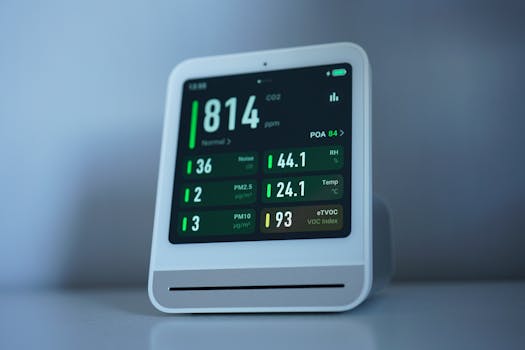
Outdoor baseline vs. indoor reality
Outdoor CO2 levels are typically around 400–450 ppm (parts per million) in many regions, though they vary by season and location. Indoors, you should expect higher numbers because you’re adding CO2 and ventilation may be limited.
For sleep, the goal is not to achieve outdoor levels overnight. It’s to keep CO2 from rising to levels that indicate poor ventilation. The most useful approach is to pick a target that aligns with comfort and ventilation best practices.
Common CO2 benchmarks used for bedrooms
Many indoor air quality guidelines and public health recommendations use CO2 to represent ventilation adequacy. While exact targets vary by organization and context, these practical ranges are commonly used:
- Under ~800 ppm: Often considered good ventilation for occupied spaces. Many bedrooms can fall in this range with normal airflow.
- ~800–1000 ppm: Still generally acceptable for many people, but it suggests ventilation could be improved if you consistently see this range overnight.
- ~1000–1500 ppm: Indicates ventilation is likely insufficient for a sleeping environment that’s occupied for hours. You may notice stuffiness or morning symptoms.
- Above ~1500 ppm: A strong sign that fresh air exchange is inadequate. For sleep, this range is often treated as a “fix ventilation” threshold.
- Above ~2000 ppm: Clearly suggests poor ventilation. If you see this level during sleep, you should treat it as a priority to address.
Remember: CO2 is only one metric. However, if your bedroom repeatedly reaches higher bands, it’s very likely your room is not exchanging air fast enough for comfort and overall air quality.
What “typical” looks like during an overnight period
CO2 can rise gradually after you get into bed. A common pattern is:
- Evening CO2 may be moderate when the room is more ventilated (windows open, HVAC running, or fewer occupants).
- After doors close and the room becomes more sealed, CO2 climbs.
- The highest level often occurs near the end of the sleep period—sometimes 1–3 hours before waking, depending on room volume and ventilation.
If your CO2 peaks early and then stabilizes, that can mean ventilation is steady but limited. If it keeps climbing, ventilation may be too low for the number of hours you’re occupying the room.
How to measure CO2 in your bedroom correctly
Choose a measurement location that reflects your breathing
Place your CO2 monitor where you actually breathe, not where it’s most convenient. A practical rule: position it near your sleeping area, roughly at head height if possible. Avoid placing it directly against a wall corner, under a vent, or in a spot where it will be hit by drafts that don’t represent your breathing zone.
Also consider that CO2 readings can be affected by air mixing. If your bedroom has poor airflow, a monitor near the bed may read higher than one near the door. That’s not a problem—it’s information about your breathing zone.
Use the right time window for sleep decisions
For sleep-related decisions, measure across a full night. A single short reading in the afternoon won’t tell you how the room behaves when closed up for 6–9 hours.
Try this simple plan:
- Run the monitor for at least 3 nights.
- Record the peak CO2 level overnight, not just the average.
- Note the conditions: windows closed/open, HVAC on/off, fan use, and whether the door stayed shut.
If you’re adjusting ventilation, do it one variable at a time so you can understand what changed.
Understand monitor accuracy and calibration
CO2 monitors generally fall into two categories: those with infrared sensing and those with other detection technologies. Many home devices are reasonably accurate for ventilation decisions, but accuracy can drift over time.
Look for:
- Calibration guidance: Some monitors support periodic calibration to outdoor baseline (often around 400–450 ppm). Others calibrate automatically or use factory calibration.
- Response time: If the sensor takes several minutes to stabilize, readings can lag behind changes in ventilation.
- Maintenance instructions: A monitor you ignore for a year may not be reliable.
Even with imperfect accuracy, trends are usually meaningful. If your bedroom CO2 consistently peaks at 1200–1600 ppm, you can act on that pattern.
Real-world scenario: a bedroom that looks “fine” but isn’t
Consider a common situation: you work from home, keep your bedroom door closed at night, and you sleep with the windows shut because of noise or weather. In the evening, your CO2 monitor shows about 650–750 ppm. You assume that’s good. Then you wake up with a headache and a dry mouth.
On the next night, you run the monitor overnight. You notice the CO2 rises steadily and peaks at 1450 ppm around 3:00–4:00 a.m. That tells you the room is gradually accumulating your exhaled CO2 faster than it’s being replaced with outdoor air. The air may not feel offensively stale, but your ventilation may be inadequate for comfort during long sleep.
Now you try a simple change: you crack a window slightly for the first half of the night or you run a bathroom/exhaust fan schedule that improves pressure balance (as appropriate for your home). After the change, the CO2 peak drops to 950–1050 ppm. You still sleep comfortably, and morning symptoms improve. The improvement isn’t magic—it’s ventilation doing what it should: reducing accumulation.
What causes high CO2 in bedrooms
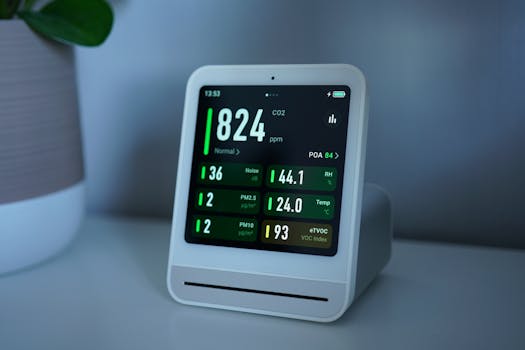
Tight building envelopes and closed windows
Modern homes are often well insulated and airtight. That’s good for energy efficiency, but it can reduce natural air exchange. If you also keep windows closed for sleep, CO2 can rise quickly, especially in smaller rooms.
Basements and apartments with fewer leakage points can be especially prone to CO2 buildup if ventilation isn’t actively managed.
HVAC settings and airflow patterns
Heating and cooling systems can affect ventilation indirectly. Some systems recirculate indoor air rather than bringing in outdoor air. Even if the room feels warm or cool, CO2 may not decrease if fresh air supply is limited.
Additionally, if your HVAC runs intermittently, CO2 may climb during off cycles. A bedroom thermostat schedule that keeps the system from running overnight can mean CO2 steadily increases even though the room temperature is controlled.
Room occupancy and airflow mixing
CO2 accumulation depends on how many people are in the room and how well air mixes. If two people sleep in a small room, CO2 can reach higher peaks than expected. If your bedroom has a ceiling fan or HVAC vent near the bed, mixing may reduce local peaks, but it doesn’t replace fresh air.
Fans can improve comfort by moving air, but they do not necessarily reduce CO2 unless they also change the net ventilation rate (for example, by pulling in outdoor air or exhausting indoor air).
Exhaust and pressure imbalances
Sometimes CO2 isn’t the only issue—pressure imbalance can reduce outdoor air intake. For example, a home may be configured so that exhaust fans (bathroom, kitchen) pull air out, but the replacement air path is limited. That can lower fresh air supply to bedrooms.
It’s also worth noting that combustion appliances (gas stoves, furnaces) can create CO2 and other byproducts. If you use combustion indoors, ventilation needs become more critical. If you ever suspect a combustion safety issue, prioritize professional inspection.
How to lower indoor CO2 for sleep (practical steps)
Increase outdoor air exchange
The most direct way to lower indoor CO2 is to bring in outdoor air and/or exhaust indoor air. Here are practical options, from simplest to more system-level:
- Crack a window: Even a small opening can significantly increase air exchange if outdoor air is not extremely humid or polluted. Try a partial opening for the first few hours of sleep, then reassess.
- Use controlled ventilation: If your home has a mechanical ventilation system (ERV/HRV or balanced ventilation), ensure it runs during sleep. Many systems can be set to a lower “night” mode rather than turning off completely.
- Adjust HVAC fresh air settings: Some systems have outdoor air dampers. If you can increase outdoor air intake overnight, CO2 often drops measurably.
Start with the smallest change you can sustain. The goal is consistent ventilation across the full sleep period, not a one-time burst.
Use exhaust strategically (and safely)
Exhaust fans can reduce CO2 by removing indoor air and encouraging replacement with outdoor air. However, effectiveness depends on the home’s air pathways. If your exhaust fan runs but the replacement air route is blocked, you might create negative pressure without meaningful ventilation improvements in the bedroom.
For bedrooms, exhaust is usually most relevant when it’s part of a whole-home ventilation strategy. If you use bathroom exhaust fans, make sure your home provides adequate make-up air (especially if you have combustion appliances).
Don’t confuse air cleaning with CO2 reduction
Air purifiers and filters can help with particles and some gases, but they don’t remove CO2 in the way ventilation does. CO2 is a gas that typically requires ventilation (outdoor air exchange) or specialized capture systems to reduce it.
So if your primary concern is indoor CO2 levels for sleep, focus on air exchange first. Air filtration can be a helpful complement for particulate matter, but it won’t solve CO2 accumulation by itself.
Consider room size and sleeping arrangements
Small bedrooms with closed doors are more likely to reach higher CO2 peaks. If you have flexibility, you can improve ventilation outcomes by:
- Sleeping in a room with better air exchange (for example, one connected to the main ventilation pathway).
- Keeping the bedroom door slightly open if it doesn’t compromise your sleep comfort and privacy needs.
- Using a consistent airflow approach so CO2 doesn’t spike late in the night.
These changes are about improving ventilation efficiency, not about “optimizing” your lifestyle.
Account for humidity and outdoor conditions
Ventilation changes can affect humidity. In cold climates, cracking a window can lower indoor humidity and reduce some condensation risk, but it can also dry your air. In humid climates, ventilation can increase indoor humidity, which may affect comfort and breathing.
When you adjust ventilation for CO2, watch how you feel and consider humidity. A bedroom that’s too dry can cause throat irritation; one that’s too humid can worsen comfort and promote mold risk. If you control humidity with a humidifier or dehumidifier, coordinate it with ventilation rather than treating CO2 and humidity as separate problems.
How long you need ventilation during sleep
CO2 reduction depends on both ventilation rate and how long the room stays occupied. If you ventilate only for a short time early in the evening, CO2 may still rise later if the room becomes sealed again.
As a practical guideline, aim for ventilation that continues throughout the sleep period, even if it’s at a lower level overnight. If your setup uses outdoor air intermittently, you may need to ensure the room receives fresh air for the full 6–9 hours of sleep, not just the first hour.
When you experiment, track the peak CO2 level. A change that lowers the peak from 1600 ppm to 1050 ppm is more meaningful than a change that only lowers CO2 by 100 ppm at 9 p.m. but leaves late-night accumulation unchanged.
Safety considerations and when CO2 isn’t the only concern
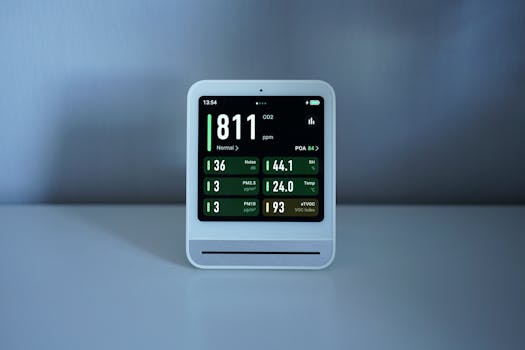
CO2 is not the same as oxygen deprivation
CO2 levels in typical homes are far below concentrations that would directly cause acute CO2 poisoning. The bigger issue is that CO2 acts as a marker for ventilation quality. If CO2 is high, other indoor conditions may also be less favorable.
That said, if you have symptoms that are severe, persistent, or worsening—especially with known combustion sources—CO2 readings should not be your only diagnostic tool.
Combustion appliances and indoor gas safety
If you use gas heaters, gas stoves, fireplaces, or other combustion appliances, ventilation is crucial for safety. CO2 readings don’t replace monitoring for combustion byproducts such as carbon monoxide (CO). If you suspect incomplete combustion or inadequate venting, consult a qualified professional.
Asthma, sleep apnea, and sensitive individuals
People with asthma, allergies, or other respiratory conditions may feel worse when air is stale or when humidity is off. While CO2 itself may not be the primary trigger, poor ventilation can coincide with factors that affect breathing. If you’re managing a respiratory condition, improving ventilation and overall air quality can be especially relevant.
If you use CPAP or other devices, note that air quality around the device and room comfort can influence your experience. CO2 is still about ventilation, but comfort and symptom patterns may guide how aggressively you adjust.
Using CO2 monitors responsibly: common mistakes
Overreacting to a single number
A CO2 reading at one moment doesn’t tell you how your sleep environment functions. CO2 is dynamic. Focus on overnight peak and the trend across multiple nights.
Ignoring placement and airflow patterns
If your monitor is placed near a door where air leaks, it may read lower than the center of the room. If it’s placed right under a vent, it may read artificially low or high depending on mixing. Place it near the breathing zone so the measurement reflects what you experience.
Assuming fans solve the problem
Fans can make a room feel better by increasing air movement across your skin. But CO2 removal requires fresh air exchange. A fan that only recirculates air within the room will not reduce CO2 accumulation by itself.
Maintenance and prevention: keep CO2 under control long-term
After you achieve better CO2 levels during sleep, the next step is preventing drift back to high levels. CO2 problems often return when seasons change, when windows stay closed longer, or when HVAC schedules are adjusted.
Prevention guidance that tends to work:
- Recheck after seasonal shifts: Do a quick overnight check when winter arrives or when you switch from heating to cooling.
- Verify ventilation settings: If your ventilation system has modes (day/night), confirm the night mode isn’t effectively turning off outdoor air supply.
- Watch for changes in room use: New occupancy, a second sleeper, or changes in door habits can increase CO2 peaks.
- Keep humidity in a reasonable range: Ventilation and humidity control are linked to comfort and health. Use your preferred humidity target and adjust ventilation accordingly.
If you use a CO2 monitor with calibration requirements, follow the manufacturer’s instructions. A monitor that drifts can mislead you, especially when you’re trying to determine whether a ventilation change is truly working.
FAQ: indoor CO2 levels for sleep
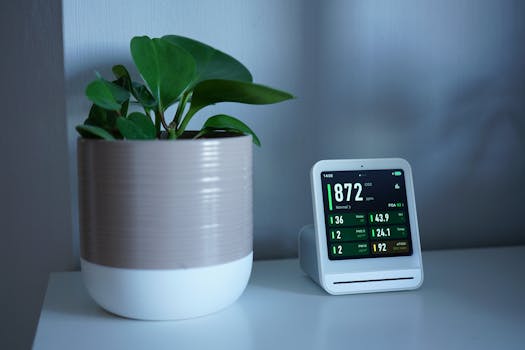
What indoor CO2 levels are considered safe for sleeping?
There isn’t one universal “safe” number, but practical ventilation targets are commonly used. Many bedrooms do well when CO2 stays under about 1000 ppm, and levels below ~800 ppm generally indicate strong ventilation. If your bedroom regularly reaches 1500 ppm or higher overnight, that’s a clear sign ventilation needs improvement.
Is CO2 harmful at typical bedroom levels?
In most homes, bedroom CO2 levels are far below concentrations that would cause acute toxicity. However, elevated CO2 often indicates poor ventilation, which can make the air feel stale and may be associated with headaches, dry air discomfort, or reduced sleep quality in some people.
How high will CO2 get in a bedroom overnight?
It varies widely based on room size, number of people, and ventilation. In well-ventilated rooms, CO2 may stay near outdoor baseline plus a modest increase (often under 800–1000 ppm). In tighter rooms with windows closed and doors shut, CO2 can climb into the 1200–1600 ppm range or higher, especially if ventilation is minimal.
Where should you place a CO2 monitor in the bedroom?
Place it near your breathing zone—ideally around head height when you’re lying down. Avoid placing it right next to a door with strong drafts or directly in line with a vent that doesn’t represent your breathing area.
Do air purifiers lower CO2?
Most standard air purifiers (HEPA filtration and typical carbon filters) are designed to reduce particles and certain odors or some gases, but they generally do not meaningfully reduce CO2. Lowering CO2 for sleep usually requires fresh air exchange (ventilation) rather than filtration alone.
What’s the fastest way to reduce CO2 in a bedroom?
The fastest practical method is to increase outdoor air exchange—such as cracking a window, adjusting HVAC fresh air intake, or ensuring balanced ventilation runs overnight. If you only ventilate briefly and then seal the room again, CO2 can still rise later in the night.
How many nights should you measure CO2 before changing your routine?
Measure for at least 3 nights to capture typical behavior. Track the overnight peak CO2 and note conditions like window position and HVAC schedule so you can interpret what’s driving the results.
18.12.2025. 08:11