

Does Wi‑Fi Cause Health Problems? EMF Evidence Explained

Wi‑Fi and EMF: separating concerns from confirmed health effects
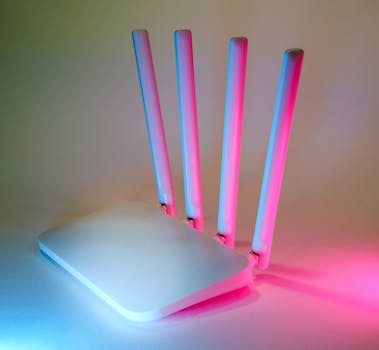
People often ask whether Wi‑Fi causes health problems, especially because Wi‑Fi uses radiofrequency (RF) energy—an electromagnetic field (EMF) type that can be measured. The key question is not whether Wi‑Fi emits EMF (it does), but whether the levels people are typically exposed to are high enough to cause established health harm.
This article focuses on EMF evidence from major research areas: how Wi‑Fi signals work, what exposure levels look like in real homes, what epidemiology and lab studies have found, and what health agencies conclude. The goal is practical: understand what is known, what remains uncertain, and what you can do if you want to reduce exposure.
How Wi‑Fi EMF exposure works in real life
Wi‑Fi operates in the 2.4 GHz and 5 GHz frequency ranges (and sometimes 6 GHz in newer systems). These are non-ionizing RF frequencies. Non-ionizing means the energy is not strong enough to directly break chemical bonds in the way ionizing radiation (like X-rays) can.
Wi‑Fi devices also do not transmit at a constant high power. Instead, they communicate in bursts using power control and adaptive modulation. In most everyday settings, the exposure pattern depends on:
- Distance from the router or device (signal strength drops with distance).
- Whether the device is actively transmitting (idle devices typically emit less).
- Obstructions such as walls, furniture, and human bodies (they can attenuate signals).
- Router settings like transmit power and channel use.
In other words, Wi‑Fi exposure is usually intermittent and position-dependent, not a steady blanket at one intensity.
What “evidence” actually means for EMF and health

When people look for answers, it helps to understand how health evidence is built. For RF exposure and health outcomes, studies commonly fall into three categories:
- Laboratory and mechanistic research (cells, tissues, animals; focuses on biological effects).
- Epidemiology (population studies comparing exposure patterns with health outcomes).
- Risk assessment and regulatory review (health agencies evaluate the full body of evidence and set exposure limits).
Most current conclusions come from the combination of these approaches. A recurring theme is that the RF levels used in many lab experiments that produce measurable effects are often higher than typical real-world exposure, or the effects are inconsistent and not clearly linked to disease in humans.
Do controlled studies show proven harm from Wi‑Fi RF?
Controlled research is designed to answer whether RF exposure at relevant levels produces repeatable health effects. For Wi‑Fi and similar RF sources, the strongest consensus from reviews is that there is no consistent evidence of established health harm at exposure levels that comply with international safety guidelines.
Here’s what is generally supported:
- Thermal effects: At sufficiently high RF intensities, tissue heating can occur. This is the basis for many exposure limits. Wi‑Fi at typical household levels is far below thresholds associated with significant heating.
- Non-thermal effects: Claims of specific non-thermal biological mechanisms have not been consistently confirmed in a way that translates into clear, reproducible health outcomes in people.
- Reproducibility: Some lab findings suggest possible cellular responses, but they often vary between studies and do not reliably map to clinical disease.
Importantly, “no evidence of harm” is not the same as “evidence of no harm.” However, the current weight of evidence does not support the idea that typical Wi‑Fi exposure causes specific diseases.
Epidemiology: what population studies find
Epidemiology examines whether people with higher exposure have higher rates of certain health outcomes (for example, cancer, neurological conditions, or reproductive effects). For RF sources broadly—cell phones and wireless devices—large studies have been conducted, but the results are not consistent enough to confirm a causal link for most outcomes.
For cancer specifically, the most relevant body of evidence often comes from research on mobile phones, which produce RF exposure in the head region. For Wi‑Fi, exposures are generally lower and distributed differently (not concentrated at the head like many phone use patterns). Across major reviews, researchers have not found a clear, consistent increase in cancer risk attributable to RF exposure at levels typical for wireless networks.
As for other outcomes people sometimes worry about—such as headaches, sleep disruption, or fertility effects—study results are mixed. Some individuals report symptoms they attribute to wireless devices, but population-level studies have not established a robust, repeatable pattern that definitively links Wi‑Fi EMF exposure to disease.
Electromagnetic field limits: why they matter

Exposure limits are set using conservative assumptions to protect against known hazards, especially thermal effects. International bodies such as the ICNIRP (International Commission on Non-Ionizing Radiation Protection) and national regulators (for example, in the U.S. by the FCC and in many other regions by health and safety agencies) review scientific data and establish maximum permissible exposure levels.
These limits are designed so that the public is shielded from effects observed at much higher RF intensities. In practical terms, most Wi‑Fi routers operate far below these limits.
That doesn’t mean you should ignore exposure entirely, especially if you want to reduce it. It means the scientific basis for current limits is stronger than the evidence for specific health outcomes at typical household levels.
What about “EMF sensitivity” and symptom reports?
A separate issue from proven disease is symptom perception. Some people describe adverse effects they associate with wireless devices, sometimes referred to as electromagnetic hypersensitivity. Research into this phenomenon has generally found that when exposures are controlled and blinded, symptoms do not reliably correlate with actual RF exposure levels.
This does not invalidate people’s lived experiences. It does mean that, from an evidence standpoint, the specific role of Wi‑Fi EMF in causing measurable physiological harm remains unproven.
If you suspect wireless exposure is affecting you, a practical approach is to reduce exposure while also considering other common contributors to symptoms—such as stress, lighting, temperature, sleep habits, and indoor air quality.
Myth-busting common claims about Wi‑Fi health effects
Myth: Wi‑Fi causes cancer
Evidence status: Large-scale research on RF exposure overall has not produced consistent proof that Wi‑Fi at typical household levels causes cancer. While research continues, the current consensus is that there is no definitive causal link established for Wi‑Fi exposure.
Myth: Wi‑Fi “cooks” the body at home
Evidence status: Wi‑Fi frequencies can heat tissue only at much higher power levels than those used for normal operation. Under typical conditions, Wi‑Fi exposures are not expected to produce harmful temperature rises.
Myth: More bars or faster speeds always mean more risk
Evidence status: Actual exposure depends on transmit power, distance, and whether devices are actively sending data. “More bars” does not directly translate into a predictable health risk.
Myth: If EMF is measurable, it must be dangerous
Evidence status: Many harmless things are measurable. The health relevance depends on intensity, duration, frequency, and whether biological effects translate into disease.
Practical ways to reduce Wi‑Fi exposure (without panic)

If you want to reduce exposure for peace of mind, the most effective actions are also the most straightforward: reduce proximity, reduce transmission time, and improve wired alternatives where convenient. These steps align with common public health guidance based on the precautionary principle, even though the evidence for harm at typical levels is not strong.
- Use wired connections when possible: For desktop computers, gaming consoles, or workstations, Ethernet eliminates Wi‑Fi RF exposure for that device.
- Increase distance from the router: Spending less time in the same spot where the router sits can reduce exposure.
- Turn off Wi‑Fi at night: If your household can function without constant wireless connectivity, switching off during sleep reduces nighttime exposure.
- Place the router thoughtfully: Avoid mounting it directly next to where you sleep or sit for long periods.
- Prefer devices with lower transmit needs: Position devices closer to the router to reduce the need for higher transmit power during connection.
- Use airplane mode or device Wi‑Fi off when not needed: This reduces active transmission.
Some people also consider router settings such as lowering transmit power or disabling features they don’t use. If you adjust settings, do so in a way that doesn’t create networking instability that leads you to compensate by using devices more (for example, by repeatedly reconnecting or moving around constantly).
Where products and settings can matter—without turning it into a marketing issue
Routers and access points differ in transmit power, antenna design, and how they manage connections. If you’re evaluating equipment or configuring a network, focus on technical settings and placement rather than claims of “radiation-free” technology. For example, many users can:
- Check whether their router supports scheduled Wi‑Fi or timed shutdown.
- Review transmit power options if available.
- Confirm whether you can use Ethernet backhaul for devices that don’t need to be wireless.
In practice, the biggest exposure reducers are usually behavioral and environmental (distance, time, wired alternatives), not specific brand claims.
Bottom line: what the current EMF evidence supports
So, does Wi‑Fi cause health problems? Based on the current body of research and major scientific reviews, the most accurate statement is:
There is no strong, consistent evidence that typical Wi‑Fi exposure levels cause established health harm. The strongest known mechanism for RF effects involves heating, and typical Wi‑Fi levels are generally far below thresholds where heating would be expected to be harmful.
That said, uncertainty remains in science—especially for long-term, low-level exposures and specific subgroups. If you want to reduce exposure, practical steps like using Ethernet, increasing distance, and limiting transmission time are reasonable and low cost. They don’t require fear, and they can be tailored to your lifestyle.
Ultimately, the evidence supports informed caution rather than alarm: understand what Wi‑Fi emits, recognize how exposure varies, and choose simple ways to minimize it if that helps you feel more in control.
FAQ: Wi‑Fi, EMF evidence, and health

Does Wi‑Fi radiation cause cancer?
Current EMF evidence does not show a consistent causal link between typical Wi‑Fi exposure and cancer. Research continues, but major reviews have not established Wi‑Fi as a proven cancer risk at household exposure levels.
Is Wi‑Fi EMF harmful to children?
Children may have different exposure patterns because they spend more time indoors and closer to devices. However, the evidence still does not confirm that typical Wi‑Fi levels cause health harm. If you’re concerned, reducing proximity and using wired connections where practical are reasonable precautionary steps.
Can Wi‑Fi cause headaches or sleep problems?
Some individuals report symptoms they associate with wireless devices. Population research has not conclusively tied Wi‑Fi RF exposure to these outcomes. If symptoms occur, reducing exposure (distance, timing, and wired options) plus addressing other common causes of sleep disruption can be a sensible approach.
How much does distance from a router matter?
Distance generally matters because RF signal strength decreases with distance. Moving away from the router or changing where you spend time can reduce exposure, especially in rooms where the router is placed near seating or sleeping areas.
Are Wi‑Fi and cell phone EMF the same risk?
They are not identical. Both involve RF, but cell phones concentrate energy much closer to the head during use, and exposure patterns differ. Evidence for health outcomes is strongest for the most studied use patterns, particularly mobile phone exposure, and Wi‑Fi exposures are typically lower and differently distributed.
What is the most effective way to reduce Wi‑Fi exposure at home?
In most households, the most effective practical steps are using wired connections for stationary activities, increasing distance from the router, and reducing transmission time (for example, turning off Wi‑Fi at night if feasible).
28.11.2025. 07:04