

EMF Mitigation Bedroom Setup: Practical Safety Guide

Why an EMF mitigation bedroom setup matters
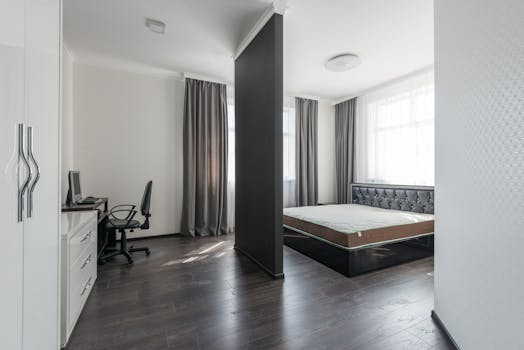
Bedrooms are where you spend the longest continuous stretch of time—often 6 to 9 hours with minimal movement. That makes them a high-impact environment for managing electromagnetic field (EMF) exposure. A well-planned EMF mitigation bedroom setup focuses on lowering everyday sources of radiofrequency (RF) and extremely low frequency (ELF) fields while also improving how electrical systems are arranged and how devices behave at night.
Effective mitigation is rarely about eliminating every possible field. Instead, it’s about reducing the strongest, most constant contributors: nearby Wi‑Fi and cellular signals, sleeping beside power cords or electrical panels, running chargers overnight, and poorly managed wiring that can increase electrical noise. The goal is a bedroom that is quieter electrically and more deliberate in how connectivity and power are used after dark.
Map your bedroom EMF sources before you change anything
Before purchasing anything or making major changes, identify where exposure is coming from. Even a simple walk-through can reveal the main drivers: wireless routers, smart speakers, baby monitors, cordless phone base stations, power strips, bedside chargers, and wiring routes behind walls.
Start with a source inventory
- Wireless transmitters: Wi‑Fi router, mesh nodes, repeaters, smart TV, game consoles, security cameras, and any device with continuous radio activity.
- Cellular and cordless devices: cordless phone bases, DECT systems, baby monitors, and any connected hubs.
- Power and wiring proximity: bed placement relative to outlets, extension cords, under-bed power bricks, and the path of electrical wiring through walls.
- Nighttime charging: phone chargers, tablets, laptop docks, and power banks left plugged in.
- Major electrical infrastructure: breakers, HVAC controls, alarm panels, and any transformer or junction nearby.
Observe patterns that increase exposure at night
Many devices become more active after dark: routers handle automated updates, smart devices maintain connections, and some systems poll sensors intermittently. Also note whether you sleep with a device within arm’s reach or with a charging cable running along the bed.
Reduce RF exposure from Wi‑Fi, cellular, and smart devices
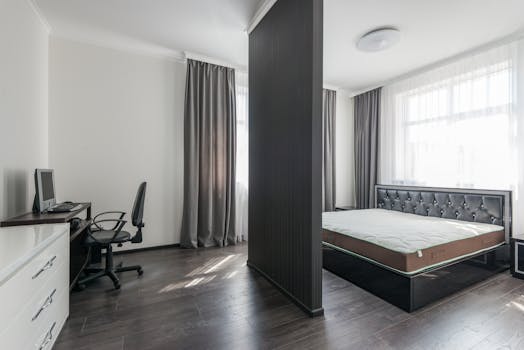
RF mitigation in the bedroom typically targets the strongest sources closest to the bed. The most effective strategy is to reduce transmission time and distance.
Adjust router and wireless behavior
- Move the router away from the bed: If feasible, place the router in a room corner far from where you sleep, ideally not directly behind the headboard wall.
- Change the operating schedule: If your household can tolerate it, turning off Wi‑Fi during sleep reduces RF presence. Some people keep internet access for work needs by using wired connections or scheduling device activity.
- Use wired where practical: For devices that don’t need to be mobile, wired Ethernet can reduce local wireless radio activity.
Handle smart devices intentionally
Smart speakers, hubs, and some TVs can keep radios active for voice or background connectivity. If these devices sit near the sleeping area, consider relocating them to a different room or keeping them powered down during sleep.
Consider cellular environment and device habits
- Keep mobile phones away from the bed: Avoid sleeping with phones in close proximity, even if they are on standby.
- Airplane mode during sleep: For many setups, switching to airplane mode reduces active cellular transmission from the phone.
- Check connected wearable chargers: Charging docks can create strong ELF fields near the bed depending on design and wiring.
Lower ELF fields from power, wiring, and bedside charging
ELF mitigation is often where people see the biggest practical difference because power sources can generate strong fields near sleeping positions. The most common issues include beds positioned too close to outlets, charging bricks directly under or beside the bed, and long power cords routed through the sleeping area.
Reposition the bed relative to outlets and wiring
- Avoid sleeping directly above outlets: If you can, orient the head and body away from wall outlets behind or adjacent to the bed.
- Don’t place the bed against a wall with heavy electrical routing: If you know where cables and conduits run, keep the bed a few feet away.
- Use distance as a first-line tactic: For many EMF sources, moving even a small distance can reduce measured field strength.
Manage charging and power bricks
Charging devices can create both RF and ELF components. To reduce exposure:
- Unplug chargers when not in use: Many chargers continue drawing power and can produce fields even when a device is not actively charging.
- Keep chargers off the bed and off bedside surfaces: Place them on a dresser or in a location away from where your body rests.
- Route cables away from the bed: Avoid running extension cords or charging cables along the mattress or pillow area.
If you need a bedside charging station, consider using a dedicated placement point on a nightstand that is not immediately adjacent to where your head rests, and keep the charging brick positioned away from the sleeping zone.
Use safe grounding and electrical noise control
Electrical grounding and noise management are important because they influence how electrical systems behave. While grounding is not a “shield” in the same way as a physical barrier, a properly designed grounding strategy can reduce unwanted electrical interference and help ensure devices operate predictably.
Verify outlet and grounding conditions
- Check for proper grounding: If outlets are miswired or missing proper grounding, electrical noise can increase.
- Consider having an electrician assess the circuit: If your home has older wiring, frequent tripping, buzzing outlets, or inconsistent outlet behavior, professional evaluation can be worthwhile for safety as well as EMF considerations.
Understand how “filters” fit into mitigation
Some mitigation approaches use electrical filters to reduce certain types of noise. The key is to treat filtering as part of a system, not a substitute for distance and device control. Filters can be useful when they reduce specific electrical interference, but they should not be used in a way that compromises electrical safety or violates wiring standards.
Create a bedroom layout that reduces exposure during sleep

An EMF mitigation bedroom setup is ultimately a spatial plan. The layout should reduce how close wireless transmitters and power sources are to the head and torso.
Place the headboard away from the strongest sources
- Keep the head away from router placement: If the router is in the same room, avoid sleeping with your head aligned toward it.
- Avoid walls with outlets behind the bed: If possible, place the bed so the head rests on a wall with fewer electrical connections.
- Don’t align the body with power cords: A cord running along the bed can increase ELF exposure compared with a cord routed elsewhere.
Control device placement near the bed
Bedside items often become “invisible sources.” A clock radio, wireless charging pad, smart alarm, or decorative LED system can all contribute to electrical fields. If you use a bedside clock, consider whether it relies on a wired adapter, and place that adapter away from your sleeping position.
Shielding and barriers: when they help and when they don’t
Shielding can reduce certain EMF components, but it’s not always a universal fix. The effectiveness depends on the type of EMF, the materials used, the placement, and whether the field is coming from near sources or distant transmitters.
Know the difference between source reduction and shielding
- Source reduction: Turning off Wi‑Fi at night, unplugging chargers, and moving transmitters away from the bed.
- Shielding: Adding barriers or materials that interfere with RF propagation or reduce certain electrical fields.
In most bedrooms, source reduction provides the most consistent benefit. Shielding can be useful when you cannot move a source, or when you need to manage RF entering from a neighboring room or exterior wall. However, shielding must be installed correctly to avoid gaps that let fields through.
Be cautious with “blanket” approaches
Some shielding methods can create other issues: improper electrical practices, false confidence, or materials that are not effective for the specific frequency range. If you use shielding, treat it as a targeted measure and verify results with measurements.
Measure results with an EMF meter and observation
Because homes vary widely, measuring helps confirm whether your EMF mitigation bedroom setup is working. Measurement also helps you avoid spending time on changes that don’t address your dominant sources.
Measure in sleep-relevant positions
- Measure where you sleep: Take readings at head level, torso level, and near the feet.
- Measure with devices in the same mode you use at night: For example, with Wi‑Fi on or off, phone on standby, and chargers plugged or unplugged.
- Repeat after each change: This helps you identify which action actually reduces fields.
Interpret measurements realistically
EMF meters differ in what they detect and how they display results. Use your meter as a trend tool: focus on relative reductions before and after changes, rather than chasing a single “magic” number.
Common bedroom EMF mistakes to avoid
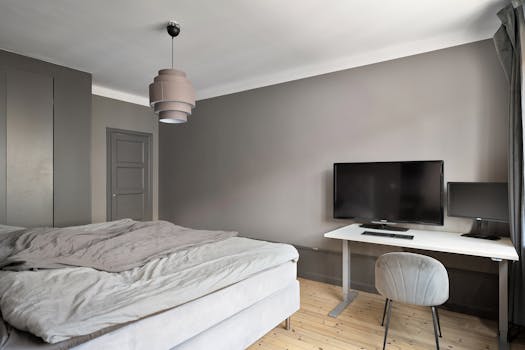
- Sleeping with the phone nearby: Even when not actively used, phones can contribute to RF exposure depending on network conditions.
- Keeping chargers plugged in overnight: Many chargers emit fields and continue to draw power.
- Relying on Wi‑Fi settings alone: Some devices keep radios active even when Wi‑Fi is “mostly” off; check actual device behavior.
- Ignoring the bed’s distance from wiring: Bed placement relative to outlets and wall runs can matter as much as device settings.
- Assuming shielding is a substitute for layout: Barriers work best when you also reduce or move the source.
- Overlooking power strips and extension cords: These can become concentrated sources near the bed if placed too close.
Practical prevention checklist for a safer sleep environment
A strong mitigation plan is simple enough to maintain. Use the following prevention guidance as a routine framework:
- Night mode: Reduce or disable Wi‑Fi and radios during sleep when possible.
- Phone discipline: Keep phones away from the bed and use airplane mode if appropriate for your needs.
- Unplug chargers: Remove power adapters from outlets when not charging.
- Bed placement: Keep your head and torso away from outlets, power strips, and walls with dense wiring.
- Route cables carefully: Avoid running charging cables or extension cords along the sleeping area.
- Keep transmitters out of the line of sleep: Move routers, hubs, and cordless bases away from the bed.
- Verify with measurements: Use an EMF meter to confirm reductions at head level and during your nighttime device conditions.
When these steps are combined, an EMF mitigation bedroom setup becomes less about one-time fixes and more about consistent, measurable reductions in the fields that matter most during sleep.
Safety note and responsible electrical planning
Any work involving electrical wiring, grounding changes, or panel modifications should be handled by qualified professionals. Mitigation should never compromise electrical safety. If you suspect wiring problems, buzzing outlets, overheating, or incorrect grounding, prioritize safe repairs first—then revisit EMF reduction strategies.
FAQ

24.12.2025. 14:46