

Indoor Air Quality for Sleep: CO2, PM2.5, VOCs, and Humidity

Why indoor air quality matters for sleep quality
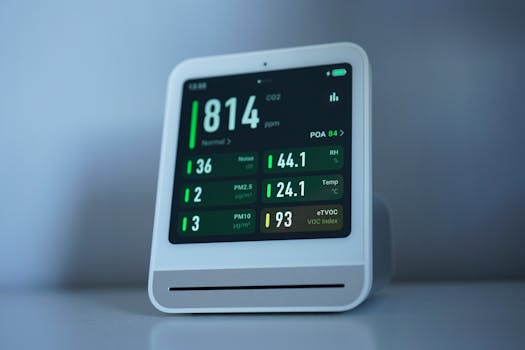
Your sleep is not only about temperature and noise. The air you breathe in your bedroom can influence how quickly you fall asleep, how often you wake up, and how rested you feel the next day. Indoor air quality is shaped by a mix of gases and particles from everyday sources: people exhale carbon dioxide (CO2), cooking and cleaning release volatile organic compounds (VOCs), outdoor pollution can infiltrate indoors as fine particles (PM2.5), and indoor moisture determines whether irritants and allergens thrive.
When you focus on indoor air quality for sleep CO2 PM2.5 VOC humidity, you’re really managing four exposure pathways that can disrupt breathing comfort and sleep physiology: elevated CO2 (a ventilation proxy), fine particulate matter (PM2.5), chemical vapors (VOCs), and humidity (which affects both comfort and biological growth).
This guide helps you understand what each factor means, what “good” looks like with realistic targets, and what you can do in your home with practical, measurable steps.
CO2 in the bedroom: what it signals and why it can affect sleep
CO2 is a ventilation indicator, not a toxic gas in typical bedroom levels
CO2 is produced when you exhale. In a bedroom, higher CO2 generally means the room is accumulating exhaled air faster than it’s being replaced with outdoor air. That matters because exhaled air also carries moisture and aerosols. CO2 itself can contribute to drowsiness and discomfort at higher concentrations, but more often it’s a useful “signal” that ventilation is insufficient.
Think of CO2 like a dashboard light. If CO2 rises overnight, the room is likely not exchanging air at an adequate rate. That can worsen perceived air freshness and may irritate airways for sensitive sleepers.
Reasonable CO2 targets for sleep
There isn’t a single universal threshold, but these are practical benchmarks used in indoor air guidance and ventilation planning:
- Under ~800 ppm: often consistent with good ventilation in a typical home, especially when windows are not sealed.
- ~800–1000 ppm: commonly acceptable for many people, but it can creep upward overnight in tightly sealed bedrooms.
- Over ~1000–1200 ppm: suggests ventilation is likely inadequate for long, still periods like sleep.
- Over ~1500 ppm: usually indicates the room is not ventilating enough; many people notice stale air and reduced comfort.
For sleep specifically, the key is not just the peak. It’s how quickly CO2 climbs after you turn in and how high it gets by the middle of the night.
How to measure CO2 correctly
CO2 sensors are helpful, but placement and interpretation matter. Put your monitor where you actually breathe—commonly within 1–2 meters of the bed—avoid placing it directly next to a supply vent, and don’t mount it right above a radiator. Run it for at least a few nights to capture typical patterns.
If you see CO2 steadily rising over 2–6 hours, that’s a strong sign you need more effective air exchange.
Real-world scenario: a bedroom that feels “stuffy” every morning
Consider this common situation: you keep the bedroom window closed for security or noise reasons, and you sleep with the door shut. You wake with dry throat and a “stale” feeling. A CO2 monitor shows 900 ppm at bedtime and climbs to 1400–1700 ppm by 3 a.m. That pattern aligns with inadequate ventilation. After you adjust ventilation—such as using a trickle vent, improving mechanical ventilation run times, or adding controlled nighttime exhaust—the CO2 curve flattens and morning discomfort often improves within days.
The point isn’t that CO2 is “poisoning” you. It’s that the room’s air exchange is too low to keep exhaled air and moisture from accumulating.
PM2.5 during sleep: how fine particles enter and linger
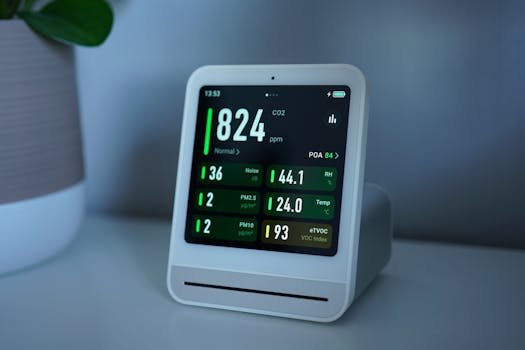
What PM2.5 is and why it’s relevant at night
PM2.5 refers to airborne particles with diameters of 2.5 micrometers or smaller. These particles can penetrate deep into the lungs and may worsen asthma, allergies, and respiratory irritation. PM2.5 can come from outdoor sources such as traffic, wood burning, and wildfires, but it can also be generated indoors by cooking, candles, smoking, and some cleaning activities.
During sleep, you may be exposed for 6–9 hours. Even if outdoor air improves later in the night, indoor particle levels can remain elevated due to infiltration and indoor generation.
Practical PM2.5 targets
Because PM2.5 is measured in micrograms per cubic meter (µg/m³), you can use these general benchmarks:
- Below 10 µg/m³: typically low exposure.
- 10–25 µg/m³: moderate; sensitive individuals may notice effects.
- 25–35 µg/m³: often considered higher; consider mitigation if it persists.
- Above 35 µg/m³: commonly associated with unhealthy air for sensitive groups.
- Above 55 µg/m³: high; mitigation becomes more important, especially overnight.
Local air quality alerts provide context, but indoor PM2.5 can differ from outdoor readings. That’s why indoor monitoring is valuable if you live near traffic, have a fireplace, or are in a wildfire-prone region.
How to reduce PM2.5 exposure at night
PM2.5 control usually comes down to three strategies: reduce indoor sources, limit infiltration, and clean the air.
- Source control: avoid indoor combustion during the evening. If you cook, use a properly vented range hood and keep the bedroom door closed while cooking.
- Infiltration control: during wildfire smoke events or high outdoor PM days, keep windows closed and use mechanical ventilation with filtration if available.
- Air cleaning: portable air cleaners can reduce airborne particles when their filtration is appropriate for fine PM2.5.
If you use an air cleaner, pay attention to clean air delivery rate (CADR) or equivalent performance data, not just the device size. For bedrooms, you want meaningful air cleaning capacity for the room volume. A good rule of thumb is aiming for several air changes per hour (ACH) during sleep, adjusted to your room size and device capability.
Real-world scenario: wildfire smoke and a bedroom that stayed cleaner
During a wildfire season, outdoor PM2.5 can spike overnight. In one household, a CO2 monitor showed ventilation was improving, but a PM2.5 monitor revealed indoor particles remained high when windows were cracked for “fresh air.” The safer approach was to keep windows closed, run filtration continuously in the bedroom, and use ventilation that doesn’t pull unfiltered air from outdoors. Over several nights, indoor PM2.5 stabilized at a lower level than outdoor air, and sleep interruptions decreased for a family member with asthma.
This highlights the tradeoff: ventilation is important, but during smoke episodes it should be paired with filtration.
VOCs in the bedroom: sources, symptoms, and how to manage them
What VOCs are and where they come from
VOCs (volatile organic compounds) are a broad category of chemicals that evaporate into the air. In bedrooms, VOCs can come from:
- Paint, varnish, adhesives, and new furniture
- Cleaning products and fragrances
- Air fresheners, candles, and incense
- Off-gassing from carpets, foam, and some plastics
- Cooking and tobacco smoke
Some VOCs are irritants. Others may worsen headaches, nasal congestion, or eyestrain. Even if your home does not “smell strong,” VOCs can still be present at low levels.
Why VOCs can affect how you sleep
Sleep is vulnerable to airway irritation. If VOCs irritate the nose or throat, you may wake more often, breathe less comfortably, or experience a “dry” feeling. For people with asthma, allergies, or chemical sensitivities, VOC exposure can be a recurring trigger.
VOCs also interact with humidity and ventilation. High humidity can affect how some chemicals partition between air and surfaces, while poor ventilation allows VOCs to accumulate after indoor sources are used.
Measuring VOCs: what monitors can and can’t tell you
Many consumer VOC monitors report “TVOC” (total VOC) or equivalent metrics, but these readings are not always specific to individual chemicals. A higher TVOC reading indicates more overall organic compounds in the air, but it doesn’t identify which ones. That means you should treat VOC monitors as trend tools rather than definitive health diagnostics.
Use the monitor to answer practical questions:
- Do VOC levels rise after cleaning or using scented products?
- Do VOC levels drop after ventilation or air cleaning?
- Does your “night routine” correlate with higher VOC readings at bedtime?
Practical VOC reduction steps that work in real homes
- Ventilate after emission events: if you clean with strong products, or if you bring in new materials, increase ventilation for hours, not minutes. In many homes, a 2–6 hour ventilation window after a high-emission event is a practical starting point.
- Choose lower-emission routines: reduce reliance on fragranced sprays and scented candles in the bedroom.
- Control sources at night: avoid spraying aerosols right before sleep. If you need to clean, do it earlier in the day and let the air clear.
- Consider filtration that targets gases: particle filtration helps PM2.5, but VOCs are gases. Devices that include activated carbon or similar adsorbents can help with VOCs, though performance varies by compound and airflow.
Also remember that “airing out” depends on outdoor conditions. If outdoor air is clean, opening windows can help. If outdoor air is polluted (PM2.5 or smoke), ventilation should be paired with filtration.
Humidity for sleep: comfort, allergens, and moisture-driven problems
Why humidity matters more than you might think
Humidity affects how your body perceives temperature and how easily you can breathe. Too dry air can irritate the nose and throat, increasing dry coughing and discomfort. Too humid air can promote mold growth and dust mites and can make indoor air feel “heavy.”
Humidity also influences the behavior of VOCs and other compounds on surfaces. While the exact chemistry varies, the practical outcome is that moisture management supports cleaner, more comfortable air.
Targets for indoor humidity during sleep
A widely used comfort and risk-management range is:
- About 40%–50% relative humidity: often a good target for comfort and reduced mold risk.
- Below ~30%: can be too dry for many people, especially in winter.
- Above ~60%: increases risk for mold and dust mite-friendly conditions in many homes.
Use a hygrometer to track humidity near the bed. Humidity can vary by room, especially in apartments or homes with uneven airflow.
How to raise or lower humidity safely
Adjust humidity based on whether you’re dealing with dryness or excess moisture.
- If humidity is too low: consider a humidifier designed for safe operation. Use distilled or demineralized water if you can, to reduce mineral dust. Clean the unit regularly to prevent microbial growth.
- If humidity is too high: reduce moisture sources (showers, drying laundry indoors, cooking without exhaust). Use bathroom exhaust fans during and after showers. If needed, run a dehumidifier and keep it maintained.
For sleep, aim for stable humidity. Avoid rapid swings that can occur when you turn a humidifier or dehumidifier on and off without control.
Real-world scenario: winter dryness and throat irritation
In winter, one household kept humidity at around 25% due to heating and tight windows. The result was frequent waking with a dry throat and nasal irritation. After adjusting humidification and targeting roughly 45% relative humidity in the bedroom, sleep became more comfortable within a few nights. The improvement wasn’t instant for everyone, but the pattern—dryness correlating with waking—was clear on their humidity logs.
This is a reminder that “air quality” isn’t only about chemicals and particles. Moisture level changes how irritants behave and how your airways respond.
Building a sleep-focused indoor air quality routine
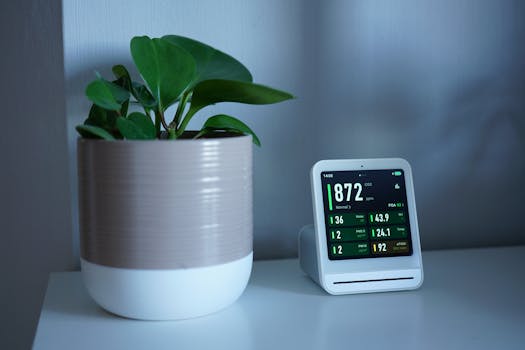
Start with a simple measurement plan
You don’t need a lab setup. A practical approach is to track the variables that map to your concerns:
- CO2: to understand ventilation adequacy overnight
- PM2.5: to see particle exposure trends
- VOC (TVOC or equivalent): to detect changes after cleaning, cooking, or product use
- Humidity: to maintain comfort and reduce moisture-driven issues
Measure for at least 3–7 days to capture weekly patterns. Then look for correlations. For example: does PM2.5 spike after cooking? Does TVOC rise after using air fresheners? Does CO2 climb quickly with the bedroom door closed?
Match ventilation to outdoor conditions
Ventilation is essential, but the “right” ventilation strategy depends on what’s outside. When outdoor air is clean, you can prioritize fresh air. When outdoor PM2.5 or smoke is high, you may prefer filtration and controlled ventilation rather than opening windows.
A common sleep strategy is to increase ventilation before bedtime, then maintain stable conditions overnight. If your home has mechanical ventilation, check whether it runs at night. If it’s adjustable, consider settings that balance air exchange with filtration.
Use a bedroom “source control” checklist
Small source changes can have outsized effects on VOC and PM2.5:
- Keep candles, incense, and aerosols out of the bedroom.
- Use the range hood during and after cooking; close the bedroom door to reduce particle migration.
- Store strong-smelling chemicals in sealed containers and keep them away from sleeping areas.
- After cleaning with strong products, ventilate until readings return toward baseline.
These actions reduce the amount of “work” your ventilation and filtration system must do at night.
Coordinate air cleaning with your goals
Air cleaning is most effective when it’s matched to the pollutant. Particles (PM2.5) respond well to filtration with HEPA-level performance. VOCs require gas-phase approaches like activated carbon or other adsorbent media, and performance varies.
For sleep, many people run air cleaning continuously or on a nighttime schedule. The key is to choose operation settings that maintain stable air without unnecessary noise or drafts. If you use a portable air cleaner, place it where airflow can circulate within the bedroom—not directly blocked by curtains or furniture.
Common mistakes that undermine indoor air quality for sleep
Opening windows during smoke or high PM days
If outdoor air is contaminated, opening windows can increase indoor PM2.5. You may improve ventilation (lower CO2) while simultaneously worsening particle exposure. In these cases, prioritize filtered ventilation and air cleaning rather than uncontrolled window opening.
Relying on CO2 alone as “air quality”
CO2 helps you judge ventilation, but it does not measure particles or VOCs. A bedroom can have relatively low CO2 and still have high PM2.5 if outdoor infiltration is strong. Likewise, VOCs can be high even when CO2 looks fine. Use multiple metrics to avoid blind spots.
Ignoring humidity swings
A humidifier that runs too much can push humidity above 60%, increasing mold risk. A dehumidifier that’s neglected can also become a maintenance problem. The best results come from stable humidity and regular cleaning of any moisture-related equipment.
Using scented products right before bed
Sprays, diffusers, and heavily fragranced cleaning products can raise VOCs. If you notice a pattern—TVOC rising after your evening routine—adjust timing. Ventilate earlier and keep the bedroom free of strong emissions.
How to interpret your readings together (a practical framework)
To manage indoor air quality for sleep CO2 PM2.5 VOC humidity effectively, you want a combined view. Here’s a practical way to reason about patterns without overcomplicating it:
- CO2 high + PM2.5 low: ventilation may be insufficient, but particle sources are controlled. Improve air exchange using filtered ventilation if outdoor air is not clean.
- PM2.5 high + CO2 moderate: particle infiltration or indoor particle generation is the likely issue. Focus on source control and air cleaning; avoid window strategies that pull in smoke.
- TVOC high after specific activities: identify the emission source (cleaning, new products, cooking) and change timing or reduce emissions. Ventilate until readings trend down.
- Humidity persistently high: address moisture sources and improve exhaust. If humidity is low, gently add moisture with safe humidification.
Once you understand which “driver” is dominant, your changes become targeted rather than random.
Prevention guidance for cleaner sleep air
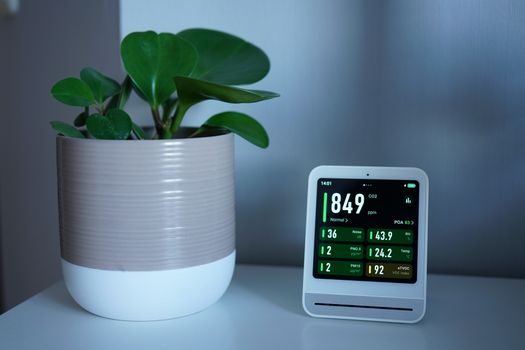
Set up a stable, low-stress nighttime environment
Your goal is not perfection. It’s stable conditions that reduce exposure over the hours you’re asleep. A prevention-focused routine often looks like this:
- Keep bedroom sources low (no aerosols, strong scents, or combustion).
- Ventilate effectively before sleep and maintain overnight ventilation without pulling in pollution.
- Run particle filtration during high PM periods and consider continuous use if outdoor air is frequently poor.
- Maintain humidity around 40%–50% for comfort and reduced moisture risk.
Plan around seasonal risks
Indoor air quality problems shift with the season:
- Winter: dryness and stale air are common. CO2 can rise overnight with sealed windows, and humidity may drop below comfort targets.
- Summer: humidity can climb, and outdoor air may bring more particles or ozone-related irritants. Ventilation strategies need to consider outdoor conditions.
- Wildfire smoke periods: prioritize filtration and reduce infiltration. You may need to rely less on open windows.
- Renovation or new furnishings: VOCs can rise for days or weeks. Ventilate and allow time for off-gassing before normal sleeping routines resume at full intensity.
When to seek medical or professional input
If you have asthma, chronic sinus issues, or symptoms that strongly correlate with time spent indoors, it’s worth discussing air quality with a clinician. Persistent breathing symptoms, wheezing, or severe irritation should not be treated as a DIY-only problem. Professional assessment can help if there’s suspected hidden moisture, mold, or combustion risk.
Summary: what “good” looks like for sleep air
Indoor air quality for sleep CO2 PM2.5 VOC humidity is best understood as a set of manageable variables. CO2 tells you whether your bedroom is ventilating adequately overnight. PM2.5 tells you about fine particle exposure that can worsen respiratory irritation. VOCs reflect chemical emissions from everyday activities and materials. Humidity shapes comfort and the risk of moisture-driven problems.
If you want a practical target set:
- CO2: aim to keep overnight levels from climbing excessively; staying closer to or below ~1000 ppm is often a good goal.
- PM2.5: keep it low, especially overnight; if you see sustained higher levels (e.g., above ~25–35 µg/m³), use source control and air cleaning.
- VOCs: reduce emission sources and ventilate after high-emission events; use monitors as trend indicators.
- Humidity: target roughly 40%–50% relative humidity for comfort and reduced mold risk.
With measurement and targeted adjustments, you can turn your bedroom air into a calmer, more consistent environment—one that supports restful sleep rather than frequent waking and irritation.
19.01.2026. 14:52