

Wearable Data Ethics: HRV, Sleep, SpO2, and Self-Harm Risk

Wearable signals can feel personal—ethics decides how they’re used
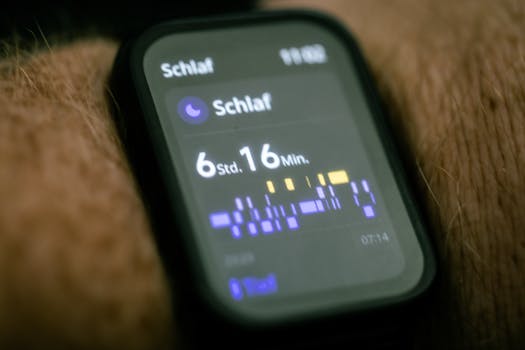
Wearable devices can measure your body in ways that once required a clinic visit. Heart rate variability (HRV), sleep stages, and blood oxygen saturation (SpO2) are now common signals in consumer wearables. They can help you notice patterns, catch health changes early, and support behavior change.
But there’s a darker side: the same data that seems “just for wellness” can affect your job, insurance eligibility, medical decisions, and even how people interpret your mental state. In the context of self-harm risk, the stakes are especially high. A wearable can’t diagnose intent, but it can be used—directly or indirectly—to infer risk.
This article helps you understand wearable data ethics around HRV, sleep, and SpO2, including how misinterpretation happens, where privacy and consent break down, and what practical safeguards you can use when you share data with clinicians, schools, workplaces, or apps.
What HRV, sleep, and SpO2 actually measure (and what they don’t)
Before you evaluate ethical issues, you need to understand the limits of the signals. Most wearables estimate physiology using sensors and algorithms. That means the outputs are not the same as direct clinical measurement.
HRV: variability, not “calmness”
HRV reflects fluctuations in time between heartbeats. Many devices summarize it as an index such as RMSSD (root mean square of successive differences) or a similar metric. Higher HRV is often associated with better stress recovery in research contexts, but the relationship is not universal.
HRV changes with sleep, exercise, hydration status, illness, caffeine, alcohol, menstrual cycle, and even sensor fit. A single low day can reflect a bad night of sleep, not a psychological crisis. Conversely, someone experiencing intense distress can still show “normal” HRV if the body’s autonomic response doesn’t shift in the expected way.
Ethically, you should treat HRV as a signal, not evidence of mental state. When HRV is used as a proxy for emotional safety, it becomes an overreach.
Sleep staging: useful trends, imperfect classification
Sleep tracking typically uses accelerometers plus heart rate or SpO2-derived features. Many consumer devices estimate sleep stages (light, deep, REM) and provide metrics like total sleep time, sleep efficiency, and awakenings.
These stage estimates can be directionally helpful—for example, noticing that your total sleep duration dropped from 7.5 hours to 5.8 hours over a week. But they can be inaccurate for individuals with irregular schedules, restless sleep, or certain medical conditions. Movement artifacts and low sensor contact can shift stage probabilities.
Ethically, sleep data can be used in ways that punish you for your biology. If a workplace or school interprets “reduced sleep” as noncompliance or poor discipline, it can become unfair. Sleep is not purely a behavioral choice; it can be influenced by anxiety, chronic pain, medication, and environmental factors.
SpO2: oxygen saturation estimates with important caveats
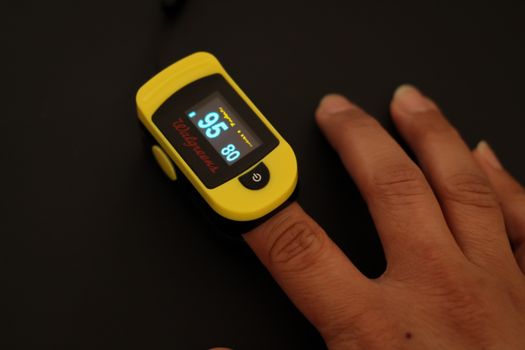
SpO2 is usually measured via pulse oximetry. Wearables estimate oxygen saturation from how light absorption changes with blood flow. In real life, SpO2 readings can be impacted by motion, cold extremities, tattoos, skin tone, nail polish, and poor sensor contact.
Clinically, sustained low oxygen saturation can be serious. For many consumer devices, the “SpO2 trend” is more informative than a single snapshot. Still, the device may miss events or produce false lows during movement.
Ethically, oxygen data can trigger panic if interpreted without context. A transient dip might occur during exercise or while you’re adjusting posture. Yet an app notification or a third party might treat it as proof of deterioration.
Why ethics matters more when wearables intersect with self-harm risk
Self-harm risk is not a single measurable variable. It’s influenced by mental health conditions, social context, coping resources, trauma history, access to means, and moment-to-moment circumstances. HRV, sleep, and SpO2 can correlate with stress, depression, or illness—but correlation is not intent.
Ethical problems arise when wearable outputs are used to:
- Make or justify decisions without clinical assessment
- Infer intent from physiological fluctuations
- Escalate interventions in ways that violate autonomy or privacy
- Label you publicly or in records in a way that harms future opportunities
- Shift responsibility from care systems to individuals (“your data predicted it, so you should have known”)
When self-harm risk is involved, the ethical principle of “do no harm” becomes practical. Harm can include stigma, surveillance, coercive monitoring, and missed opportunities for supportive care.
The risk of false positives and false negatives
Wearable-based risk signals can generate false positives: your HRV drops because you were sick, but someone interprets it as psychological crisis. False negatives also matter: you may be at risk even if your wearable data looks stable.
Ethically, any system that claims predictive power must be transparent about uncertainty. Without calibration, thresholds become blunt instruments. For example, an algorithm might flag a “low HRV” pattern after 3 nights of shorter sleep (e.g., less than 6 hours) and a temporary SpO2 dip below a device-specific baseline. That pattern could reflect many non-crisis causes.
In high-stakes contexts, uncertainty should reduce the system’s authority—not increase it.
Data repurposing: wellness signals becoming safety surveillance
You might wear a device for activity tracking or general health. Later, the data can be repurposed through:
- App updates that change what features are inferred (e.g., stress or “recovery” scores)
- Third-party access through integrations
- Consent mechanisms that are unclear or buried
- Sharing with care teams without a shared understanding of limitations
Ethically, repurposing should require meaningful consent, not just a long terms-of-service page. You should know what inference is being made and how it could affect you.
Consent and transparency: what you should expect before sharing wearable data
Ethical wearable data use depends on informed consent. “Informed” is the key word. You should be able to answer, in plain language, what data is collected, what is inferred, who receives it, and what decisions it could influence.
Ask: what data is collected, at what resolution, and for how long?
Many devices store raw sensor streams (light absorption for SpO2, photoplethysmography signals, movement data) and derived summaries (HRV aggregates, sleep stage timelines). Higher resolution is more revealing. The difference matters ethically.
For example, a sleep summary like “7h 12m total sleep” is less sensitive than a detailed night-by-night timeline that shows frequent awakenings at specific times. Those awakenings can be linked to medication schedules, anxiety episodes, or caregiver interruptions.
Also ask how long the data is retained. Retention periods can be months or years. Longer retention increases the chance of future misuse, breaches, or repurposing.
Ask: what inferences are created from your HRV, sleep, and SpO2?
Wearables often compute “readiness,” “recovery,” “stress,” or “sleep quality” scores. These are algorithmic interpretations. They can be used to infer mental health risk indirectly, even if the device does not claim to diagnose anything.
Ethically, you should know whether the system:
- Uses HRV trends as a stress proxy
- Uses sleep fragmentation as a mental health indicator
- Uses SpO2 drops to infer illness severity
- Combines signals into a risk score or alert
If the system produces a “safety” alert, you should know what triggers it and what steps follow. Alerts should be designed to support you, not punish you.
Ask: who can access your data and under what conditions?
Access can include:
- Care teams you explicitly authorize
- Family members via “shared health” features
- Employers or insurers if you’re required to share
- App developers via integrations
- Data brokers through unclear pathways
Ethically, “access” should not be treated as a casual setting. You should understand whether access is read-only, whether someone can export data, and whether you can revoke it later.
Self-harm risk alerts: ethical design and responsible escalation
Some platforms claim that wearable trends can help identify crisis moments. Even if the intent is protective, the ethical design must be careful. A crisis alert system is not a substitute for human assessment.
What responsible escalation looks like
If a system flags a potential risk, it should follow ethical principles:
- Use uncertainty: treat alerts as prompts for check-in, not proof of intent
- Prefer your agency: ask you what’s happening before escalating to others
- Minimize exposure: share the least amount of data necessary
- Provide context: explain what signals triggered the alert and why it may be wrong
- Document limitations: clarify that physiology is not a direct measure of suicidal intent
In practice, that often means the first response is a supportive message: “We noticed changes in sleep and HRV. Are you safe right now? Would you like resources or to contact someone?” The message should not label you as “at risk” as a fact.
What irresponsible escalation looks like
Ethically problematic patterns include:
- Automatically notifying employers, schools, or family members without your explicit, specific permission
- Using physiological thresholds (e.g., “SpO2 below X%”) as a proxy for self-harm
- Storing alerts in a way that becomes part of a long-term record used for decisions
- Escalating to emergency services without confirming basic safety information
Emergency response can be appropriate, but it must be proportional and grounded in risk assessment—not solely on wearable signals.
Real-world scenario: when HRV and sleep changes trigger the wrong concern
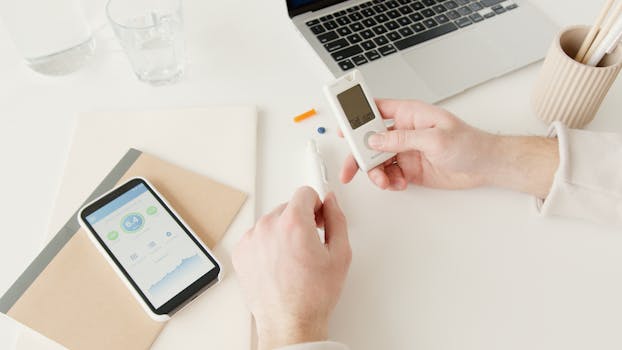
Consider a practical scenario you might recognize. You’re using a wearable that tracks HRV and sleep. Over the course of a week, you sleep 5.5 to 6 hours per night due to work stress and late meetings. Your HRV drops compared with your personal baseline. Your device also reports more awakenings.
One night, you wake up frequently because you feel unwell—maybe a viral infection starting. The next day, your HRV remains lower. The app’s “recovery” score declines. A shared health feature sends a summary to a family member who is concerned. They interpret the HRV decline as a sign you’re “spiraling” and message you with urgent questions.
In reality, your distress is real, but it’s not self-harm intent. The wearable data didn’t cause your emotions, but it changed how others responded to you. The ethical issue is not that the family member cares. The issue is that the system treated physiological changes as a mental health certainty, which increased stress and stigma.
A more ethical approach would have been:
- Clear messaging that HRV and sleep changes can reflect illness and stress, not just crisis
- A check-in that asks what’s going on rather than assuming intent
- Option to view the data and context with a clinician, if needed
How to use wearable data ethically for your own safety
You can’t control how every third party interprets your data, but you can reduce harm by using your data intentionally. The goal is to treat wearables as supportive information, not as an authority over your mental health.
Use baselines and trends, not single-day alarms
For HRV and sleep, look at patterns over at least 2 to 4 weeks rather than reacting to one night. A meaningful trend is often more informative than a spike. If your HRV is consistently below your typical range during a period of illness, that’s different from a sudden change during stable health.
For sleep, consider total sleep time and sleep regularity (going to bed and waking at consistent times). A wearable that shows frequent awakenings might be capturing anxiety, but it might also be capturing noise, temperature, alcohol, or pain.
For SpO2, treat readings as context-dependent. If you see a persistent drop—especially if you have symptoms like shortness of breath—seek medical evaluation rather than relying on the wearable alone.
Document symptoms alongside physiology
Ethical self-use means you connect data to your lived experience. Keep a simple log for 1 to 2 weeks:
- Sleep duration and perceived sleep quality
- Stress level (0–10)
- Alcohol/caffeine timing
- Illness symptoms (fever, sore throat, congestion)
- Medication changes
- Any mental health crisis indicators (e.g., intrusive thoughts, urges)
This helps you interpret why HRV or sleep changed. It also helps a clinician if you decide to share information.
Set boundaries on sharing
If you share data with someone else, you can choose boundaries:
- Share summaries rather than raw streams
- Share only with people who have a care role you trust
- Turn off automatic sharing features unless you explicitly want them
- Re-check permissions after app updates
Ethically, “default sharing” is not consent. You should verify what’s on.
Sharing with clinicians: ethical collaboration without overclaiming
Clinicians can sometimes use wearable data as background context. But it should not replace assessment. The ethical approach is “support, not substitute.”
What to bring to a clinical appointment
Bring a short summary instead of overwhelming logs. For example:
- HRV trend over the last 2 to 4 weeks
- Sleep duration trend and any notable nights
- SpO2 alerts or persistent low readings (if any)
- Symptoms and medication changes during the same period
If you’re concerned about self-harm risk, also bring the most important information clinicians need: your current safety, any urges, and what supports you have.
How clinicians should frame wearable data
Ethically responsible clinical use includes:
- Stating that wearable measures are estimates
- Using physiology as context for stress, sleep, and illness—not as proof of intent
- Ensuring the patient remains the primary source of their own mental state
- Documenting uncertainty and limitations
When clinicians frame wearable data this way, it reduces the chance of harmful overinterpretation.
Privacy and security: protecting sensitive physiology
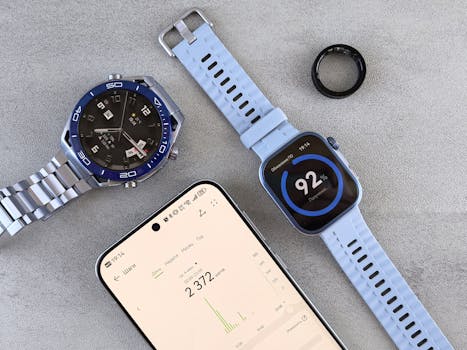
HRV, sleep, and SpO2 are health-related data. Even if you don’t share it directly, it can be inferred. Privacy isn’t just about hiding information; it’s about controlling who can use it and for what purpose.
Why wearable data can be re-identified
Even aggregated health patterns can be sensitive. Sleep timing can reveal routines. HRV patterns can reflect stress cycles. SpO2 trends can reflect illness patterns. Combined with other data—location, calendar events, social interactions—these can become identifiable.
Ethically, you should assume that “de-identified” is not always equivalent to “harmless.”
Practical security steps you can take
- Use strong, unique passwords for your wearable account
- Enable multi-factor authentication if available
- Review connected apps and integrations; remove those you don’t trust
- Check whether data is exported to third parties through settings
- Disable “public health” or “share progress” features if they exist
Security is part of ethics. A privacy breach can lead to stigma, discrimination, and emotional harm—especially when data is tied to mental health concerns.
Work, school, and insurance: when consent becomes coercion
One of the most ethically difficult scenarios is when you feel pressured to share data. Consent in a power-imbalanced context is not truly voluntary.
Employer or school monitoring
If an employer asks for wearable data, you should treat it as a high-stakes decision. Sleep and HRV can become proxies for performance, compliance, or “wellness.” SpO2 could be interpreted as medical incapacity. Even if the organization claims the data is only for “support,” the risk is that it becomes a record used to evaluate you.
Ethically, monitoring should be limited, transparent, and non-punitive. If your job depends on sharing, that’s coercion.
Insurance and discrimination risks
Insurance-related uses of wearable data vary by jurisdiction, but the ethical concern is similar: physiological signals can be used to predict risk categories. HRV and sleep patterns can correlate with health conditions, but they are not definitive diagnoses. If these estimates are used to deny coverage or increase premiums, harm can follow.
Even when laws exist, the ethical question remains: should uncertain consumer-grade signals be used as a basis for life-changing decisions?
What “better” wearable data ethics looks like in practice
Ethics is not only about intent; it’s about systems design and accountability. Better wearable data ethics includes clear governance, responsible algorithms, and user-centered control.
Key ethical safeguards for data holders and developers
- Purpose limitation: collect data for stated health functions, not hidden secondary uses
- Data minimization: store what’s needed, not everything
- Transparent inference: explain what is inferred from HRV, sleep, and SpO2
- Uncertainty communication: show confidence ranges or at least plain-language limitations
- Human-in-the-loop: use clinicians or trained professionals for crisis decisions, not automated conclusions
- Reversible consent: allow you to revoke sharing and delete data when feasible
- Auditability: document how alerts are triggered and how errors are handled
These safeguards reduce the risk that wearable signals become an instrument of stigma or coercive surveillance.
Key safeguards for you as a user
- Choose settings that match your risk tolerance for sharing
- Prefer summaries over raw timelines when possible
- Review your sharing permissions after updates
- Don’t treat HRV and sleep as direct proof of mental state
- Use wearable data to support conversations with trusted people or clinicians
Ethical self-use means you stay in charge of interpretation.
Prevention guidance: safer ways to respond to concerning wearable patterns
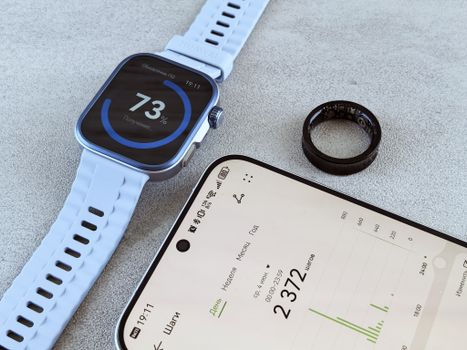
If your wearable shows concerning changes, your response should be proportional and supportive. The goal is to reduce harm, not to self-diagnose or panic.
When to treat physiology as a medical issue
Consider medical evaluation if:
- You have persistent SpO2 low readings along with symptoms (shortness of breath, chest pain, dizziness)
- Your sleep is severely disrupted for weeks and affects daily functioning
- You notice illness symptoms and your wearable metrics worsen in parallel
In these cases, physiologic changes deserve clinical attention, not moral interpretation.
When to treat it as a mental health support need
If you’re worried about self-harm risk, wearable data should be a cue to reach out—not a replacement for help. Practical steps include:
- Contact a mental health professional if you’re experiencing escalating distress
- Use your safety plan if you have one
- Tell someone you trust what’s happening, using your own words rather than only wearable metrics
- If you’re in immediate danger, seek emergency help through local services
Wearable signals can support your decision to seek help, but they can’t determine your safety.
Summary: ethical wearable use means uncertainty, consent, and care-first decisions
Wearable data ethics for HRV, sleep, and SpO2 is ultimately about how uncertain signals are handled. HRV is not a direct measure of calmness. Sleep staging is an estimate, not a verdict. SpO2 readings can be affected by motion and sensor fit. None of these measures can reliably establish self-harm intent.
Ethical systems treat your data as supportive context, not as proof. They prioritize informed consent, transparency about inference, and responsible escalation that protects your autonomy. And they recognize that the most important source of self-harm risk information is you, supported by trained professionals.
If you use wearables, you can reduce harm by focusing on trends over time, documenting symptoms alongside physiology, setting sharing boundaries, and using the data to support care conversations rather than to make high-stakes conclusions on your behalf.
FAQ: Wearable data ethics, HRV sleep SpO2, and self-harm risk
Can HRV predict self-harm risk?
No. HRV may correlate with stress, illness, or sleep disruption, but it cannot determine self-harm intent. Any system claiming predictive power should be evaluated for uncertainty, false positives, and clinical oversight.
Why might my wearable show low SpO2 even if I feel okay?
Motion, cold skin, poor sensor contact, tattoos, or reading artifacts can cause transient low estimates. Persistent low readings with symptoms should be evaluated medically.
Should I share wearable data with family if I’m worried about self-harm?
It can help if you trust them and have a shared plan for supportive check-ins. Ethically, avoid automatic sharing that bypasses your control. Prefer summaries and clear instructions for what to do if data changes.
What’s the safest way to interpret sleep tracking for mental health?
Look at trends (for example, changes over 2–4 weeks) and connect them to your lived experience—stressors, routines, medication, and symptoms. Avoid using a single night’s sleep stage estimate as proof of crisis.
How do I make consent more meaningful when sharing wearable data?
Ask what data is collected, what inferences are created, who can access it, how long it’s retained, and whether you can revoke or delete it. Choose the least sensitive sharing level that still supports care.
What should clinicians do when reviewing wearable HRV, sleep, and SpO2 data?
They should treat wearable outputs as estimates and context, not as diagnostic evidence. The ethical approach is human assessment first, with wearable data used to inform questions and monitor trends.
If my wearable app sends a “risk” alert, what should I do?
Use it as a prompt to check in with yourself and, if needed, contact a trusted person or professional. Don’t assume the alert is definitive proof of self-harm intent. If you’re in immediate danger, seek emergency help through local services.
14.05.2026. 06:38