

Blue Light at Night and Melatonin Suppression: How Much Is Too Much?

Blue light at night and the melatonin myth
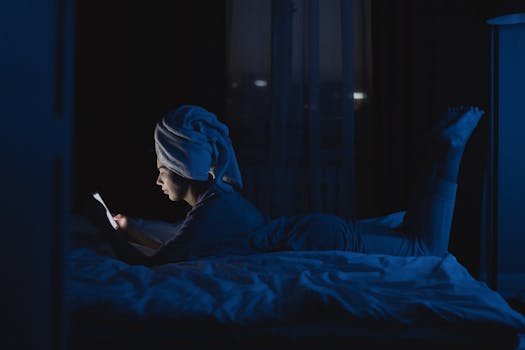
It’s common to hear that blue light at night “shuts off” melatonin and that once you suppress it, sleep is ruined. The reality is more nuanced. Blue light can influence the brain’s light-sensing pathways that help regulate circadian timing, and melatonin is one of the hormones that respond to those signals. However, the idea that any nighttime blue light inevitably causes harmful melatonin suppression is an oversimplification.
This myth-busting guide explains what melatonin suppression actually means, why timing and dose matter, and how to make practical changes that support sleep without chasing an unrealistic goal of eliminating all light.
What melatonin does (and why suppression is not the whole story)
Melatonin is produced by the pineal gland and rises in the evening, helping signal biological night. It supports sleep timing and circadian rhythm alignment more than it directly forces sleep on or off. When the body perceives light—especially light that reaches the retina—melatonin production can be reduced.
So “melatonin suppression” refers to a measurable decrease in melatonin levels in response to light exposure. That does not automatically mean sleep will fail. People can still fall asleep even when melatonin is temporarily suppressed, because sleep is influenced by many factors: sleep pressure (how long you’ve been awake), room temperature, stress, caffeine timing, consistent schedules, and overall light exposure across the day.
In other words, melatonin suppression is a signal that the circadian system is being pulled toward “daytime,” but it’s not a single switch that determines whether sleep happens.
How blue light affects the circadian system
Blue-enriched light has a strong effect on intrinsically photosensitive retinal ganglion cells (ipRGCs), which communicate with the brain’s circadian clock. This pathway is particularly sensitive to shorter wavelengths. When you see bright light at night, your brain treats it as a cue that it’s still daytime.
Two key points often get missed:
- Timing matters: Light exposure closer to bedtime and during the biological night has a bigger impact on circadian signaling.
- Intensity and duration matter: Stronger light and longer exposure generally produce more circadian disruption.
That means your risk is not determined only by the color of light, but by brightness, how close the light source is, how long you’re exposed, and whether you’re already tired and ready for sleep.
“Suppression too much” depends on context
The phrase “blue light at night melatonin suppression too much” is often used to imply a single threshold exists: cross it and you’re harmed. In practice, the relationship between light exposure and melatonin response varies by person and by study design.
Research commonly measures short-term melatonin changes in controlled settings. Those studies can show measurable suppression after exposure to specific light conditions. But translating “measurable suppression” into “clinically significant harm” requires caution. The body’s circadian system can adapt, and many people have adequate sleep even with some nighttime light exposure.
What tends to matter most for real-world sleep outcomes is whether nighttime light exposure:
- Delays your circadian phase (shifts your internal clock later)
- Reduces total melatonin output during the evening
- Co-occurs with other sleep disruptors (late caffeine, irregular bedtime, stress)
- Is bright and sustained right before sleep
If your sleep schedule is consistent, your exposure is moderate, and you’re not using bright screens for long periods in the final hour or two, the impact is often smaller than headlines suggest.
Common sources of blue light at night and why distance matters
Not all blue light exposure is equal. A few everyday sources are more likely to be problematic:
- Phone and tablet screens held close to the face
- Laptops and televisions used at high brightness
- Overhead lighting that keeps the room bright during the pre-bed routine
- Headlamps or spotlights during late-night activity
Distance and angle matter because they affect how much light reaches the eyes. A bright screen close to your face delivers more effective light to the retina than the same screen viewed from across a room. Likewise, lighting from above or behind the device can change glare and perceived brightness.
Practical implication: reducing brightness and increasing viewing distance can reduce circadian impact without needing to “turn off everything.”
Do blue light filters and “night mode” actually work?
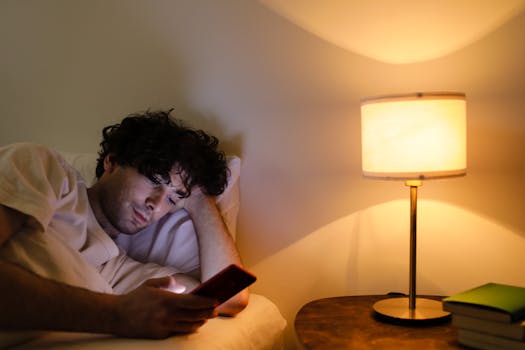
Many devices offer a night mode that shifts the display toward warmer colors. These features can reduce short-wavelength light, which may reduce melatonin suppression compared with a standard display at the same brightness. However, the effect depends on how much the spectrum changes and whether brightness remains high.
Two practical considerations:
- Warm color isn’t the only factor. If the screen is very bright, the overall intensity can still be enough to influence circadian signaling.
- Consistency beats perfection. Using night mode only occasionally is less helpful than applying it during the period you typically unwind before sleep.
In addition to built-in settings, some people use blue-light-blocking eyewear. These can reduce short-wavelength light reaching the eyes, but results vary by lens design, fit, and lighting conditions. The most reliable strategy is still to reduce brightness and limit exposure time in the hour or two before bed.
What about melatonin supplements—do they “cancel out” light?
Melatonin supplements are sometimes used to support sleep timing, especially for delayed schedules or jet lag. But it’s important to understand that melatonin is a signal; it doesn’t erase all effects of nighttime light exposure. If you use a supplement while continuing to expose yourself to bright light late at night, you may still experience circadian misalignment or delayed sleep onset.
Also, melatonin products vary in dose and formulation. Some people benefit from lower doses taken earlier in the evening, while others use higher doses that may not be ideal for their timing needs. Because individual response differs and there are medical considerations, it’s best to treat melatonin as a targeted tool rather than a universal fix for nighttime light.
From an evidence-based sleep perspective, the first lever is reducing light exposure that pushes the circadian system later. Supplements can be considered when appropriate, but they are not a substitute for good light hygiene.
Practical steps to reduce risk without overcorrecting
If you’ve heard that blue light at night causes “too much” melatonin suppression, the goal shouldn’t be to live in darkness. The goal is to make your pre-bed environment dimmer and less circadian-stimulating.
Try these evidence-aligned adjustments:
- Dim the room 60–90 minutes before bed. Use lamps or lower-wattage bulbs instead of bright overhead lighting.
- Lower screen brightness and avoid maximum brightness settings at night.
- Increase distance from screens when possible and avoid holding a glowing device right against your face.
- Reduce exposure time for the final hour. If you must use screens, keep sessions shorter.
- Choose warmer display settings and enable night mode after sunset.
- Use lighting that supports your routine—for example, a dim reading lamp rather than bright general lighting.
These changes reduce effective light reaching your eyes and make it easier for your brain to recognize night cues. Overcorrecting—like completely eliminating all light for everyone—can be impractical and may not provide additional benefit if the main issue is brightness and timing.
Who should take blue light at night more seriously
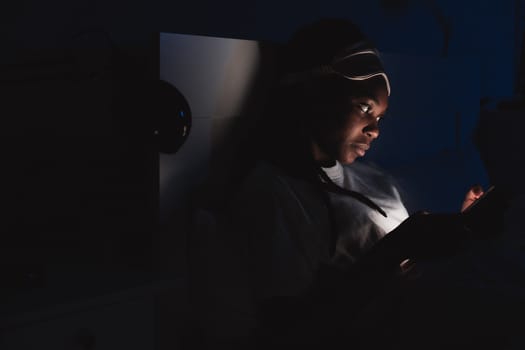
Some people are more sensitive to nighttime light exposure and may notice bigger sleep impacts:
- People with delayed sleep-wake phase (often “night owls” who struggle to fall asleep early)
- Shift workers or those with frequent schedule changes
- People with insomnia who are already hyperaroused at bedtime
- Anyone using bright screens late while also consuming caffeine or staying irregular with bedtimes
If your sleep is consistently delayed or fragmented, improving light hygiene can be one of the highest-impact behavioral changes. If you’re already sleeping well and your light exposure is limited, the effect may be smaller.
Prevention guidance: build a light routine, not a fear routine
The strongest takeaway from myth-busting blue light and melatonin suppression is that the relationship is real but not absolute. Blue light at night can suppress melatonin, but “too much” depends on intensity, duration, timing, and your overall sleep context.
A prevention-focused approach looks like this:
- Create a predictable wind-down window with dim lighting.
- Use device settings that reduce short-wavelength output and keep brightness reasonable.
- Stop chasing perfect darkness and instead aim for “less stimulating light” during the final part of the day.
- Protect other sleep levers (caffeine cutoffs, consistent bedtime) because light interacts with them.
By focusing on practical, repeatable habits, you can reduce circadian disruption without turning melatonin into a source of anxiety.
Summary: melatonin suppression isn’t a simple yes-or-no
Blue light at night can influence melatonin production and circadian timing. Yet the idea that any nighttime blue light causes harmful “too much” melatonin suppression is a myth. Sleep outcomes depend on how bright the light is, how long you’re exposed, and how close it is to your biological night—along with your sleep schedule and other behaviors.
For most people, dimming the environment, reducing late screen brightness, and limiting pre-bed light exposure provides meaningful benefits. If you’re struggling with persistent insomnia or a delayed sleep schedule, addressing nighttime light is a logical first step—ideally as part of a broader sleep routine.
26.11.2025. 07:38