

EMF and Indoor Air Health: What the Science Says

Why “EMF and indoor air health” is a real question
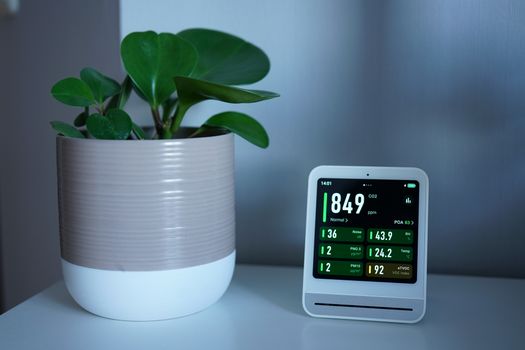
You spend most of your day indoors. That means your exposure to electromagnetic fields (EMFs) and your exposure to indoor air pollutants are happening in the same space, at the same time. It’s natural to ask whether EMFs can affect how your indoor air feels, functions, or impacts your body—especially if you’re dealing with symptoms like headaches, fatigue, irritated airways, poor sleep, or “stuffy” rooms.
Here’s the key: EMFs and indoor air quality are different categories of exposure. EMFs are energy from electric and magnetic fields. Indoor air health is about chemicals, particles, moisture, and biological contaminants. The science doesn’t support a simple “EMF causes bad air” narrative. But there are pathways by which EMFs could influence biological processes, and there are also legitimate ways EMF sources overlap with indoor environments that also contain pollutants (wiring, appliances, combustion sources, HVAC equipment, and humidity control systems).
In this explainer, you’ll get a clear, science-based view of what’s known, what’s uncertain, and what practical steps you can take to improve your indoor health—whether your priority is EMF reduction, ventilation, or both.
EMF basics you can use to think clearly
What counts as EMF indoors
“EMF” is a broad term. In homes, the most relevant categories are:
- Extremely low frequency (ELF) fields (0–300 Hz): Commonly linked to power lines, household wiring, transformers, and some appliances.
- Radiofrequency (RF) fields: Associated with Wi‑Fi routers, cellular devices, cordless phones, Bluetooth, and some smart home systems.
- Static fields: Less common as a health focus in typical homes, but present near certain equipment.
When people talk about “EMF exposure,” they usually mean the strength of these fields in your living space. Measurements are often reported as V/m (electric field strength), A/m (magnetic field strength), or as μT and mG for magnetic flux density. For RF, you may also see power density (e.g., μW/cm²) or SAR (specific absorption rate) in regulatory contexts.
The difference between EMF energy and indoor air pollutants
Air pollutants—like volatile organic compounds (VOCs), nitrogen dioxide (NO₂), fine particles (PM2.5), mold fragments, dust mites, and microbial byproducts—act through well-characterized mechanisms: irritation of airways, oxidative stress, inflammation, and immune modulation.
EMFs, by contrast, are not chemical pollutants. They don’t “add” particles or gases to your air. If EMFs influence health, the mechanism would be through how electromagnetic energy interacts with biological systems (for example, nerve signaling, cellular stress pathways, or melatonin regulation). That’s a different type of causal chain than “EMFs create smog.”
This distinction matters because it shapes what you should measure and what interventions are most likely to help.
How EMFs could theoretically interact with biology
Cellular signaling and stress pathways (the plausible mechanisms)
Most mainstream bioelectromagnetics research focuses on how EMFs may affect cell signaling and stress responses. For ELF fields, the discussion often centers on effects on ion movement and oxidative balance. For RF fields, the focus is frequently on thermal effects at higher intensities and on non-thermal hypotheses at lower intensities.
At typical household levels, thermal effects are generally not expected to be the dominant pathway for RF exposure. That leaves non-thermal mechanisms as the subject of ongoing research. Some studies suggest changes in gene expression or oxidative stress markers, while others find no meaningful effects. The overall literature is mixed, and study design differences (exposure setup, endpoints, sample sizes, and statistical approaches) contribute to uncertainty.
Melatonin, sleep, and circadian rhythm
One reason EMF research keeps resurfacing in indoor health conversations is its relationship to sleep and circadian timing. Melatonin is produced in the dark and is sensitive to light exposure; EMFs are less established as a primary driver of melatonin disruption than light, but some evidence exists for potential influence under certain conditions.
Even if EMFs don’t directly “pollute” your air, sleep disruption can worsen how your body handles inflammation and stress. That can indirectly make you feel worse in the same indoor environment.
Practical implication: If your symptoms include sleep disturbance and you also have indoor air issues (like high humidity, dust, or VOCs), improving both sleep conditions and ventilation may be more effective than focusing on EMFs alone.
Where EMFs and indoor air health overlap in real homes
Appliances, wiring, and “the same room problem”
Many EMF sources are also present in rooms where air quality can be challenged. For example, a bedroom with a Wi‑Fi router, smart speakers, charging stations, and a TV wall often also has:
- limited ventilation (windows closed, HVAC cycling)
- higher humidity from breathing and showers nearby
- more dust accumulation from electronics and textiles
- VOCs from plastics, cleaning products, and building materials
This doesn’t mean EMFs are causing the air problems. It means your exposure context is shared. If you improve ventilation and reduce moisture, you may see symptom improvement regardless of EMF levels.
HVAC systems: EMFs, airflow, and particle transport
HVAC equipment can create both airflow-driven particle movement and measurable electromagnetic fields from motors and control electronics. In some homes, filtration and ventilation decisions also affect electrical noise and device placement (for example, where you mount sensors, where you place routers relative to vents, and how you run power cords).
From an indoor air health perspective, the most important HVAC variables are:
- outdoor air exchange rate (ventilation)
- filtration efficiency (e.g., MERV/HEPA)
- duct leakage and pressure imbalances
- humidity control (targeting roughly 30–50% relative humidity for many climates)
EMFs are a separate variable. But if you’re trying to optimize indoor health, it’s reasonable to consider both because they can coexist.
What the evidence says about EMFs and respiratory or inflammatory outcomes
Respiratory symptoms: why results are inconsistent
When researchers study EMF exposure and respiratory outcomes, they face a major challenge: people who have higher EMF exposure can also differ in many other ways—housing type, building age, socioeconomic factors, smoking exposure, ventilation habits, and occupant behavior.
Additionally, indoor air symptoms are influenced by a wide range of exposures: allergens (dust mites, pet dander, pollen), irritants (ozone from indoor sources or outdoor infiltration), and combustion byproducts (NO₂ from gas stoves). If EMFs correlate with some of these factors, it can look like EMFs matter even when they’re not the causal driver.
Inflammation and oxidative stress findings
Some experimental and observational studies report associations between EMF exposure and biomarkers related to oxidative stress or inflammation. Others show no effect. A major reason for this variability is that “EMF exposure” is rarely measured with the same precision and context across studies. Indoor exposures fluctuate based on device usage, distance, time of day, and building materials.
So, while the biological plausibility exists for certain EMF interactions, the current evidence does not let you confidently conclude that EMFs are a primary cause of indoor air disease.
What you can conclude responsibly: If you’re experiencing respiratory symptoms, you should first treat indoor air quality and moisture control as the main levers. EMF reduction can be considered as a complementary approach if it reduces your overall stress and aligns with your preferences—but it shouldn’t replace ventilation, filtration, and source control.
Common misconceptions that derail indoor air health efforts
“EMFs create mold” or “EMFs turn chemicals into toxins”
These claims are widespread online. The scientific consensus does not support the idea that typical household EMFs directly generate mold or chemically transform indoor pollutants into new toxic substances in ordinary conditions.
Mold growth depends on moisture, building materials, temperature, and spore availability. VOCs come from sources like paints, solvents, adhesives, new furniture, fragrances, combustion, and cleaning products. EMFs don’t replace those drivers.
“If I reduce EMF, my air will automatically improve”
Reducing EMF may change how you feel, especially if you’re sensitive to stimulation or if your sleep improves. But air quality depends on ventilation and pollutant sources. A room can have low EMF and still have high CO₂, high VOCs, or elevated PM2.5.
In practice, your best outcomes usually come from addressing the true air variables: humidity, filtration, outdoor air exchange, and removing or reducing pollutant sources.
Practical ways to improve indoor air health (and how EMF fits in)
Start with ventilation and air exchange
If you want a measurable improvement in indoor air health, ventilation is often the highest-impact step. Two common reference points:
- CO₂ as a ventilation proxy: Many guidance frameworks treat indoor CO₂ above outdoor levels as a sign that ventilation is insufficient. If your indoor CO₂ persistently stays far above outdoor (for example, more than ~800–1000 ppm above outdoor), it suggests you may be accumulating exhaled air and related contaminants.
- Air changes per hour (ACH): Many homes aim for roughly 0.5–2 ACH depending on design and climate. The right number depends on filtration, humidity, and pollutant sources.
Practical steps you can take:
- Use mechanical ventilation if you have it (HRV/ERV) and ensure filters are maintained.
- When outdoor air quality is acceptable, use window ventilation strategically—especially after cooking, cleaning, or showering.
- If you cook with gas, ensure you have a functioning exhaust hood vented outdoors.
Control humidity to prevent moisture-driven problems
Many indoor air health issues are moisture-driven: dust mites thrive at higher humidity, and mold requires sustained dampness. A common target range is 30–50% relative humidity for much of the year in many climates.
Practical steps:
- Use a hygrometer in problem areas (bedrooms, basements, near exterior walls).
- Run dehumidification in damp seasons; use ventilation after showers.
- Fix leaks promptly and address condensation on windows or cold surfaces.
Filtration: choose based on particle control goals
For airborne particles (dust, some allergens, wildfire smoke infiltration), filtration matters. If you’re selecting a filter approach, consider:
- Particle size: PM2.5 is often the target for health-relevant particles.
- CADR (Clean Air Delivery Rate): This reflects how much clean air the device delivers. Higher CADR in a given room volume means faster air cleaning.
- Filter type: HEPA-class filtration is generally effective for fine particles.
You don’t need to obsess over brands. The science-based part is matching CADR and filter efficiency to your room size and maintaining filter replacement schedules.
Source control beats “air magic”
Indoor air health improves most when you reduce the sources:
- Cooking: Use exhaust ventilation when cooking, especially for gas stoves.
- Cleaning: Minimize harsh fragrance-heavy products in occupied spaces; ventilate during and after use.
- Building materials and furnishings: Off-gassing from new materials can be significant in the first days to weeks. Ventilate during the initial period after moving or remodeling.
- Dust: Use damp cleaning and appropriate vacuum filtration (HEPA vacuums can reduce re-aerosolization).
These steps often improve both objective metrics (PM2.5, VOC levels, humidity) and subjective symptoms.
EMF reduction steps that won’t compromise indoor air quality
Use distance and time as your first “EMF tools”
For many EMF sources, distance is a practical lever. If a device is producing fields, moving it away from your body reduces exposure. Time matters too: exposure during sleep is often a bigger concern for people than exposure during the day.
Practical examples you can try without sacrificing air health:
- Bedroom placement: Keep routers and charging stations farther from your headboard. If you need Wi‑Fi, consider putting the router in a central location rather than right next to your bed.
- Power down when feasible: If a device is not needed, turn it off or unplug it. For example, many people unplug unused chargers at night.
- Use wired where convenient: Streaming or work tasks can sometimes be done with Ethernet for long sessions, reducing RF exposure in the immediate area.
Be careful with “EMF shielding” materials
Some shielding approaches involve foil-backed films, metallic paints, or dense materials. These may affect indoor air indirectly if they trap moisture, alter ventilation patterns, or create new issues with off-gassing from coatings.
If you consider shielding, focus on:
- avoiding solutions that seal up vents or create condensation risks
- using materials that are appropriate for indoor use and that don’t introduce new VOC sources
- verifying indoor humidity doesn’t rise after installation
In other words: don’t trade one health risk for another. If your indoor air health is already fragile, prioritize ventilation and moisture control first.
Grounding and electrical safety are not the same as EMF health
People sometimes conflate grounding practices with EMF reduction. Electrical safety (proper grounding, correct wiring, and avoiding shocks) is essential and should follow local code. But grounding a system doesn’t automatically solve EMF exposure in the way many online claims suggest.
If you suspect wiring issues—flickering lights, persistent electrical odors, or hotspots—have the system inspected. Electrical troubleshooting is about safety and function, not about “air health.”
Real-world scenario: improving sleep and symptoms in a Wi‑Fi-heavy bedroom
Consider a realistic situation. You’re in a small apartment with a bedroom that’s also your workspace. You work from home on a laptop, your phone charges overnight, and a Wi‑Fi router sits on a shelf near the bed. You wake up with a dry throat and headaches that feel worse on weekdays than weekends.
Here’s a sensible, evidence-aligned way to approach this, without assuming EMF is the primary cause.
Step 1: Check the air variables you can measure
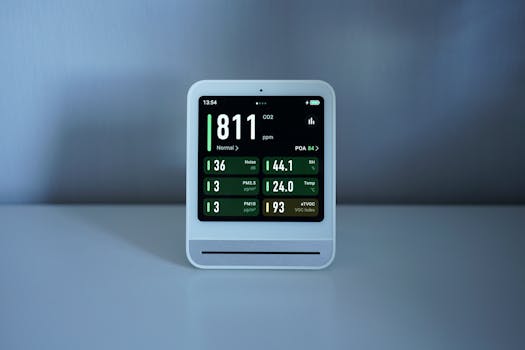
- You measure indoor CO₂ during the evening. It stays consistently high—often 900–1200 ppm above outdoor levels—suggesting limited ventilation.
- You notice relative humidity around 55–60% after cooking or showering nearby.
- Your bedroom has a window that you rarely open because of noise.
You start ventilating for 10–20 minutes after showering and cooking (when outdoor air is acceptable). You aim to bring humidity down toward 40–50%. You also run a HEPA-class air purifier on a medium setting for the bedroom during sleep.
Step 2: Reduce EMF exposure without creating air problems
- You move the router farther from the bed and place it higher or in a corner away from your head.
- You unplug phone chargers at night if they’re not needed.
- For long work sessions, you switch to Ethernet if available or use fewer wireless devices in the immediate bed area.
You keep the room ventilated and you don’t install any materials that could trap moisture.
Step 3: Look for symptom patterns across 2–3 weeks
After 10–21 days, your symptoms improve: fewer headaches and less dry throat. The biggest change is likely ventilation and humidity control. But the EMF adjustments may have contributed to better sleep quality and reduced “hypervigilance” about exposure—both of which can influence how you perceive symptoms.
This scenario illustrates a broader principle: in real life, EMF and indoor air health are usually intertwined through room design and habits. Your best results come from addressing the air first, then using EMF reduction as a secondary, preference-aligned step.
How to measure and interpret EMF and indoor air data responsibly
EMF measurement: what to look for
If you want to quantify EMF, you’ll typically use:
- RF meters for radiofrequency fields (often reported in V/m or μW/cm² depending on device)
- ELF/EMF meters for magnetic and electric fields from wiring (often in μT or mG)
Important: consumer meters vary widely in accuracy, frequency response, and calibration. Use them for relative comparisons within your home (before vs. after moving a device, or near vs. far from a source), not as perfect “diagnostic” tools.
Indoor air measurement: prioritize actionable indicators
Indoor air measurements that often lead to real changes include:
- CO₂ for ventilation proxy
- PM2.5 for particle infiltration and indoor particulate events
- Humidity for moisture-driven risk
- VOC indicators (useful for trends, though they can be imprecise for specific chemicals)
As you improve ventilation and filtration, you should see trends that match your symptoms.
Prevention guidance: a balanced plan for EMF and indoor air health
Build your plan around the highest-impact indoor air levers
If your goal is better indoor health, begin with:
- Ventilation strategy (fresh air when outdoor conditions allow)
- Humidity control (generally 30–50% relative humidity as a common target)
- Filtration for fine particles (HEPA-class or equivalent)
- Source control for combustion and VOCs
These steps address the most established causal drivers of indoor respiratory irritation and inflammation.
Then apply EMF reduction with sensible boundaries
Once indoor air basics are in place, consider EMF reduction as a complementary approach:
- Use distance and time (especially near your sleep area)
- Reduce unnecessary wireless density in your immediate breathing zone
- Unplug or power down nonessential devices at night
- Avoid “shielding” steps that could worsen ventilation, increase condensation, or add new chemical off-gassing
This approach respects both categories of exposure and avoids trading one risk for another.
When to seek help
If you have persistent respiratory symptoms, wheezing, frequent headaches, or symptoms that worsen in specific rooms, it can be worth discussing with a qualified clinician. Indoor air issues can overlap with asthma, allergies, and migraine. A health professional can help you decide whether further evaluation is needed.
Similarly, if you suspect electrical wiring problems or overheating, prioritize safety inspection.
Summary: what you can do today

The relationship between emf and indoor air health is best understood as an overlap in your daily environment rather than a single cause-and-effect chain. EMFs do not replace the core determinants of indoor air quality like ventilation, filtration, humidity, and pollutant sources. At the same time, EMF exposure can influence biological pathways related to stress and sleep in ways that may alter how you experience symptoms.
A practical, science-aligned strategy is:
- Improve indoor air first: ventilation, humidity control, filtration, and source reduction.
- Use EMF reduction second: distance and time near your sleep area, and reduce unnecessary wireless exposure without compromising airflow or increasing moisture.
- Track changes over 2–3 weeks: look for symptom patterns alongside CO₂, humidity, and particle trends.
If you do that, you’ll be acting on the variables most likely to improve your indoor health—while still addressing EMF concerns in a grounded way.
19.12.2025. 02:02