

Foam Rolling vs Stretching vs Percussive Therapy Mobility

Three mobility tools: foam rolling, stretching, and percussive therapy

Mobility routines often mix three different approaches: foam rolling, traditional stretching, and percussive therapy (such as a massage gun). Even though they’re frequently grouped under “mobility,” they target different mechanisms in the body. That matters because the same workout can call for different outcomes—temporary range-of-motion gains, better tissue tolerance, reduced soreness, or improved movement quality.
Foam rolling is typically used for self-myofascial release and tissue tolerance. Stretching focuses on increasing length and improving the nervous system’s willingness to move through a range. Percussive therapy mobility uses rapid mechanical impulses to influence local tissue behavior and the nervous system’s perception of stiffness or discomfort.
Because each method works through different pathways, the “best” option depends on what you want to improve, how your body responds, and how you plan to use the routine (warm-up, between sets, after training, or during recovery).
Quick summary: the strongest overall option depends on your goal
If you want one general-purpose approach for most people, stretching usually offers the most direct route to longer-term mobility improvements (especially when you use consistent stretching positions and progress them over time). For short-term range-of-motion right before training, percussive therapy mobility often produces the fastest “feel” of looseness for many athletes. For improving tissue tolerance and managing tight-feeling muscles, foam rolling is often a strong fit—particularly as a bridge between hard training and more targeted mobility work.
Foam rolling vs stretching vs percussive therapy mobility: side-by-side

The table below compares what each method is trying to change, how it tends to affect mobility, and where it typically fits best.
| Method | Main mechanism (what it targets) | Typical mobility effect | Timing that often works best | Effort and skill | Comfort considerations |
|---|---|---|---|---|---|
| Foam rolling | Self-myofascial release, local circulation changes, desensitization of sensitive tissue, improved tolerance to pressure | Moderate short-term range gains; supports longer-term tolerance when used consistently | Warm-up (light/moderate) or post-training (moderate); often best before more specific mobility | Low to moderate (pressure and positioning matter) | Can be uncomfortable; too much pressure can increase guarding |
| Stretching | Nervous system adaptation, changes in muscle-tendon unit length behavior, improved movement control through a range | Most direct pathway to longer-term mobility; can also produce short-term gains | Warm-up (dynamic or shorter holds) or after training (longer holds) | Moderate (technique, angles, and progression matter) | Discomfort is expected, but sharp pain is a red flag |
| Percussive therapy mobility | Rapid mechanical stimulation, altered sensory input, reduced perceived stiffness, short-term neuromuscular effects | Often noticeable short-term “looseness” and range gains; longer-term changes vary by programming | Pre-training warm-up (brief, targeted) or after training for soreness management | Low (but precision matters—time and pressure should be controlled) | Can feel intense; overuse or aggressive technique can irritate tissue |
How real-world performance differs: what you’ll notice in training
In practice, the differences show up in timing, sensation, and training readiness.
Foam rolling often changes how “tolerant” a muscle feels when you move. Many people report that joints feel less restricted after rolling, but the effect can be subtle and requires consistency. Foam rolling also tends to be better at preparing tissues for the next step—like dynamic mobility or strength work—rather than replacing those steps entirely.
Stretching tends to be the most predictable for mobility goals. If you’re working on hip flexion range, hamstring mobility, or thoracic rotation, stretching more directly addresses the barrier. You may not feel dramatic looseness immediately, but over weeks it’s more likely to translate into improved movement patterns.
Percussive therapy mobility often produces the quickest “ready” sensation. After a brief session with a massage gun-style device, some people feel reduced stiffness and improved range during warm-up movements. However, that benefit may fade faster than stretching-driven mobility changes unless you pair percussive work with movement or stretching.
Pros and cons breakdown for each approach
Foam rolling: strengths and limitations
Pros
- Supports tissue tolerance: helps many people handle pressure and movement better, especially in commonly tight areas like calves, lats, and glutes.
- Easy to integrate: can fit into a warm-up or recovery routine with minimal equipment.
- Useful as a bridge: often pairs well with dynamic mobility and stretching because it prepares the tissues for the next stimulus.
Cons
- Variable results: some people feel little benefit, while others feel soreness that can increase guarding.
- Technique sensitivity: rolling too aggressively or spending too long on one spot can backfire.
- Not as direct for length changes: it can improve tolerance, but it doesn’t replace stretching for longer-term mobility.
Stretching: strengths and limitations
Pros
- Direct mobility pathway: stretching is the most straightforward way to influence range through muscle-tendon behavior and nervous system adaptation.
- Progress is measurable: consistent stretching often produces clear improvements in range and control over time.
- Works across goals: useful for both general mobility and sport-specific limitations.
Cons
- Requires good execution: the “same stretch” can produce different results depending on angle, posture, and duration.
- Warm-up trade-offs: long, intense stretching right before heavy lifting can reduce performance for some people if used incorrectly.
- Can be uncomfortable: pushing into sharp pain or forcing range can irritate tissue and worsen mobility.
Percussive therapy mobility: strengths and limitations
Pros
- Fast short-term effects: commonly improves perceived stiffness and range during a warm-up.
- Low effort: many people can target areas quickly with devices like a massage gun or similar percussive tools.
- May help soreness management: some users find it reduces post-training discomfort, which can support consistency.
Cons
- Short-lived benefits: without stretching or movement, gains may fade quickly.
- Risk of irritation: aggressive pressure, prolonged sessions, or treating sensitive areas can increase soreness.
- Not a substitute for mobility work: it influences sensation and readiness, but it doesn’t directly replace length-focused stretching.
Best use-case recommendations for different buyers
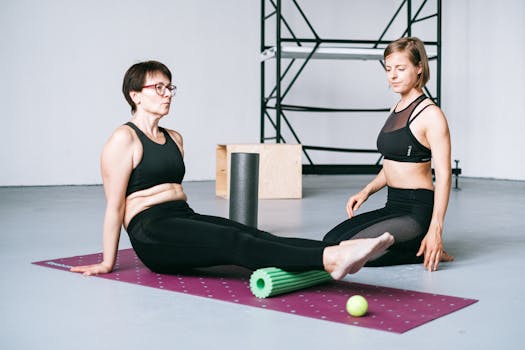
Choosing among foam rolling, stretching, and percussive therapy mobility gets easier when you match the tool to the outcome you care about.
If your primary goal is longer-term mobility gains
Stretching is usually the most reliable foundation. Pair it with light foam rolling if you want better tissue tolerance, but avoid relying on percussive therapy alone for sustained range improvements. Long-term mobility typically requires graded exposure to end ranges and consistent practice.
If your primary goal is feeling looser before training
Percussive therapy mobility often shines for pre-workout readiness because it can reduce perceived stiffness quickly. A brief, targeted session followed by dynamic movement or a few mobility drills can help convert that “looser” feeling into actual range during training.
If you want better tissue tolerance and recovery support
Foam rolling is often the most practical choice for building tolerance and managing tight-feeling areas. It can be especially useful for people who experience frequent muscle tightness around training. The key is moderate pressure, good positioning, and not turning the routine into a painful session.
If you’re dealing with a specific tight area (calves, lats, hip flexors)
For many people, the best strategy is a sequence: light percussive work or gentle foam rolling to reduce guarding, followed by targeted stretching of the specific limitation. This approach uses each method for what it does best—sensory downshift first, length and control second.
If you’re training frequently and need something that fits your schedule
Percussive therapy mobility tends to be the fastest to apply. Stretching usually takes more deliberate time to do well, but it can be structured into short, repeatable routines. Foam rolling is flexible and can be done in small blocks, though it’s easy to overdo.
Final verdict: which method suits different needs
For the specific search intent behind foam rolling vs stretching vs percussive therapy mobility, the clearest answer is not one-size-fits-all—it’s goal-based.
- Choose stretching when you want the most direct, durable improvement in range of motion and movement control.
- Choose percussive therapy mobility when you want the fastest short-term looseness for training warm-ups or when stiffness feels like the main limiter.
- Choose foam rolling when you want to build tissue tolerance, reduce “tight” sensations, and prepare muscles for subsequent mobility and strengthening work.
If you want a practical hierarchy, many people do best with stretching as the backbone, use foam rolling to improve tolerance and comfort, and use percussive therapy as a brief, targeted readiness tool. When used this way, each method supports the others rather than competing for the same role.
02.04.2026. 20:14